Why Athens coastal hotels need a purpose-built wastewater system in 2026
An Athens or Athens-Riviera resort in 2026 discharges into waters that are simultaneously a tourist amenity, a Blue Flag bathing zone, and a regulated receiving body under Greek Common Ministerial Decision 145116/2011, which transposes EU Urban Waste Water Treatment Directive 91/271/EEC into national coastal-discharge limits. For a coastal outfall, the binding targets are BOD₅ ≤ 25 mg/L, TSS ≤ 35 mg/L, and fecal coliforms ≤ 200 CFU/100 mL, with the EYD/YPEKA bathing-water monitoring program adding an effective residual-disinfection floor that the packaged plant must hit on every sample, not only at commissioning. A failure here is recoverable as a compliance issue but not as a brand issue once Vouliagmeni Lake, the Saronic Gulf, or an Athens Riviera Blue Flag beach is in the news.
The geography concentrates the risk. The Four Seasons Astir Palace Vouliagmeni occupies a 30 ha / 75 acre estate with three private beaches on the Aegean (per the operator's published site, accessed 2026-01); the Dolce Athens Attica Riviera sits at Vravrona on the eastern Attic coast; Aldemar Olympian Village discharges to the western Peloponnese coast. Each of these properties sits directly above tourist-grade bathing water, so a packaged plant that achieves its permit on paper but spikes on fecal coliforms after a pool-backwash event can take the Blue Flag status of an adjacent beach with it. EU bathing-water monitoring has been widely adopted on the Athens Riviera, which means a 2026 plant has to demonstrate ongoing compliance through a telemetry log — not a one-off commissioning certificate.
The other split the engineer has to make early is municipal-connection versus on-site treatment. Downtown Athens hotels and city-centre properties sit over the EYDAP trunk network and tie into the Psyttalia or Metamorphosis central plants; a packaged sewage treatment plant is not the right answer for them. Athens Riviera and Aegean island resorts generally do not have a reachable trunk, so the choice in 2026 is on-site treatment with coastal discharge, on-site treatment with reuse, or haulage — and haulage at resort volumes is uneconomic. That decision frames the rest of this article.
What an Athens hotel wastewater stream actually looks like
You cannot size a packaged plant for an Athens resort without putting numbers on the four trouble streams that converge at the STP inlet: guest-room sewage, kitchen and buffet FOG, laundry, and pool/spa backwash. The combined stream is warmer, weaker in organics, and more variable than a European municipal sewage — and it is dominated by occupancy, not by calendar date. The table below gives the typical Mediterranean-resort influent range engineers should plan against; actual values must be confirmed by sampling at the Athens site, but these bands are a defensible starting point.
| Parameter | Typical resort range | Athens-specific note |
|---|---|---|
| BOD₅ | 200–400 mg/L | Diluted by pool backwash in July–August |
| COD | 400–800 mg/L | COD:BOD₅ ratio 2.0–2.2 typical |
| TSS | 150–300 mg/L | Spikes with laundry lint and water-park filter backwash |
| FOG | 50–120 mg/L | Higher with full-board buffets (often >100 mg/L) |
| Total nitrogen | 30–60 mg/L | Driven by guest load, not food prep |
| Total phosphorus | 5–15 mg/L | Detergents dominate in laundry-heavy resorts |
| Temperature | 18–30 °C | Warm influent favours biological kinetics year-round |
| pH | 6.5–8.0 | Laundry surges push pH up to 9–10 in equalization |
| Free / total chlorine | 0.5–3 mg/L (pool backwash) | Can inhibit biological stage if not equalized separately |
The peaking pattern is what makes Athens different from a city hotel. Aegean resort occupancy moves from roughly 20% in February to above 95% in July–August, so the load on the STP swings by a factor of 4–5× across the year (HydropureWater field data on Mediterranean resort STPs, 2026). Pool and water-park backwash amplifies that swing further: a property like Grecotel Olympia Oasis & Aqua Park — operator-published as the largest resort water park in Greece — runs a continuous filter-backwash cycle that adds chlorinated, low-BOD water to the head of the plant in mid-afternoon. The other sub-stream that catches engineers out is the in-house laundry, which delivers high pH, high TSS, and surfactant-rich liquor in short bursts.
For a packaged plant, the practical takeaway is that you need to keep the four streams separated long enough to equalize the FOG, the chlorine, and the pH before they reach the biological stage. That is why a buried A/O plant or a containerized MBR is fed through a rotary bar screen and, where kitchen loads are heavy, a DAF pre-treatment unit — not because the streams cannot be co-mixed, but because the alternative is a membrane or activated-sludge system that gets chlorinated into poor performance every August afternoon.
Three packaged treatment trains that fit Athens coastal resorts
Three packaged trains cover essentially every Athens Riviera and Aegean resort brief that comes across a consulting engineer's desk in 2026. The table compares them head to head; the text below ties each to the property type it actually fits.
| Train | Flow range | Footprint | Best fit | Discharge mode |
|---|---|---|---|---|
| WSZ buried A/O package | 1–80 m³/h | Below grade, garden over | Boutique and ≤ ~100-room properties | Coastal, to sea or irrigation |
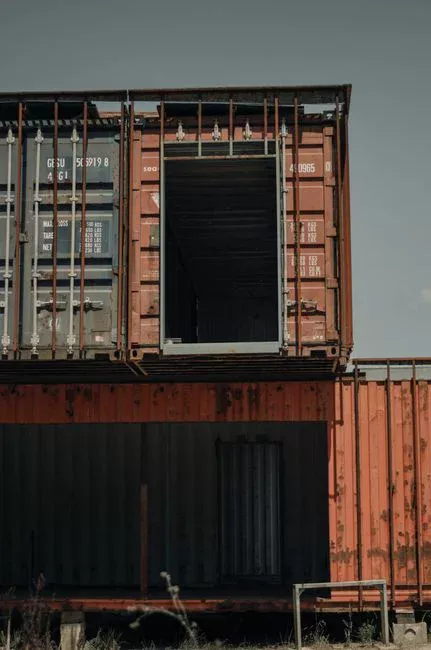
| Containerized MBR | 10–2,000 m³/day | 20 or 40 ft container skid | 150+ key 4-/5-star coastal resorts | Coastal discharge near bathing water |
| MBR + RO reuse | 10–2,000 m³/day + RO polish | Skid + small equipment room + cistern | Water-stressed islands, Green Key / LEED sites | Irrigation reuse, cooling-tower makeup |
Train 1 — WSZ buried A/O package. A single buried tank with anoxic/oxic contact zones, sedimentation, and a disinfection chamber, sized from 1 to 80 m³/h and fully automated with PLC control. The whole unit sits below grade; landscaping, a small pool pump house, or a parking bay can be built above it, which matters on the Athens Riviera where every visible square metre of above-ground plant is a planning objection. The WSZ buried A/O packaged plant is the right call for a 60-room Cycladic-view boutique property, a hilltop resort, or any site under roughly 100 rooms where the budget will not stretch to a membrane system and the discharge is to a non-sensitive outfall.
Train 2 — Containerized MBR. A skid-mounted membrane bioreactor with submerged PVDF hollow-fibre or flat-sheet modules at a nominal pore size below 1 µm, typically delivering 10–2,000 m³/day of filtrate with 60% less footprint than a conventional activated-sludge plant of the same capacity. The containerized MBR membrane bioreactor is the right call for a 150+ key 4- or 5-star resort discharging within a few hundred metres of a Saronic Gulf or Vouliagmeni bathing beach, because the membrane barrier gives a defined TSS and fecal-coliform performance that holds up under the July hydraulic and organic shock of a fully booked property. The MBR's tolerance for variable loading is also why it has become the default train for Athens Riviera properties — operators do not have to babysit it through peak week.
Train 3 — MBR + RO reuse. The same MBR front end, followed by an industrial RO polishing skid at up to 95% recovery, feeding an irrigation or cooling-tower reuse cistern. This is the right answer on water-stressed Aegean islands (Mykonos, Santorini, parts of Crete) and on Athens Riviera properties pursuing Green Key or LEED certification, where EYD potable-water charges make reuse payback real, not theoretical. The industrial RO polishing skid downstream of an MBR lets a resort cut its municipal-water draw by 30–50%, depending on irrigation area and cooling-tower demand (HydropureWater field data, 2026).
All three trains share a pre-treatment front end. A rotary mechanical bar screen (GX series) protects the biological stage from hair, rags, and water-park filter media. A DAF pre-treatment unit (4–300 m³/h) goes in front of Train 2 or Train 3 whenever kitchen and buffet FOG loads run above roughly 80 mg/L, which is most full-board Athens Riviera properties in July. The DAF removes the emulsified oil that would otherwise coat the MBR membranes and force a clean-in-place cycle during peak occupancy — the one moment an operator absolutely cannot afford downtime.
Sizing the plant for Athens summer peaking
The sizing rule we use for Aegean resort STPs is: design flow = peak-day guest load × 0.25–0.35 m³/guest/day, multiplied by a peaking factor of 3–5× for summer to capture the pool-backwash and buffet surges. The 0.25–0.35 m³/guest/day figure is the standard resort design band; the 3–5× peaking factor is what Athens actually adds, because occupancy moves from roughly 20% in February to over 95% in July–August and the pool/buffet sub-streams come online with the heat.
Worked example for a 250-room Athens Riviera resort at 90% August occupancy: 225 guests plus 90 staff, hydraulic load of 60–80 m³/day on average, peaking to 240–320 m³/day across an August afternoon when pool backwash, three sittings of the buffet, and a full laundry shift overlap. That peak flow sits squarely inside the 10–2,000 m³/day MBR range and above the 1–80 m³/h steady-state rating of the WSZ train, which is why Train 2 is the correct selection at this scale and Train 1 would under-perform. The 60 m³/day winter average, by contrast, would leave a 240 m³/day MBR running at 25% of its design flow — which is fine for an MBR (it is built to handle it) but a sizing signal to the owner that the equalization tank is doing more work than the reactor in February.
Equalization is where most Mediterranean resort STPs actually fail. We size the EQ tank at 8–12 hours of average daily flow so that the morning-shower, midday-pool, and evening-buffet peaks all flatten into the same hourly load the biology was sized for. The other point worth flagging is that hydraulic peaks — not organic peaks — are what trips Mediterranean resort STPs in July; a washout event at the EQ overflows the biological stage and slugs the membranes. An MBR with its own internal equalization volume and PLC-controlled flow pacing is markedly more tolerant of that shock than a buried A/O package, which is another reason we move Athens Riviera properties in the 150–500 key range onto Train 2 by default. The engineering detail behind MBR ammonia-nitrogen handling under shock loading is laid out in our MBR ammonia-nitrogen engineering specs.
Meeting the 2026 Greek and EU coastal discharge limits
The compliance bar a packaged plant has to clear in 2026 is the 91/271/EEC-derived coastal-discharge envelope, with the EYD/YPEKA bathing-water fecal-coliform floor layered on top. Anything else is a guess. The table below is the set of targets we engineer to on every Athens Riviera and Aegean coastal brief.
| Parameter | Coastal discharge limit | Driver | How the packaged plant hits it |
|---|---|---|---|
| BOD₅ | ≤ 25 mg/L | 91/271/EEC Annex I (CMD 145116/2011) | MBR or A/O + sedimentation |
| COD | ≤ 125 mg/L | 91/271/EEC Annex I | MBR or A/O + sedimentation |
| TSS | ≤ 35 mg/L | 91/271/EEC Annex I (CMD 145116/2011) | MBR membrane barrier (<1 µm) |
| Total nitrogen | ≤ 15 mg/L | Sensitive-area add-on (91/271/EEC Art. 5) | A/O or MLE configuration in MBR |
| Total phosphorus | ≤ 2 mg/L | Sensitive-area add-on (91/271/EEC Art. 5) | Chemical precipitation stage |
| Fecal coliforms | ≤ 200 CFU/100 mL | EYD/YPEKA bathing-water rules | ClO₂ disinfection polish |
On disinfection, the operational decision is between sodium hypochlorite and an on-site chlorine dioxide generator (50–20,000 g/h). ClO₂ holds residual better in warm Mediterranean water and does not produce the trihalomethane spike that high-chlorine pool backwash would otherwise drive into a NaOCl dosing system; the ClO₂ generator is rated compliant with EU Drinking Water Directive 98/83/EC and WHO guidance for drinking-water applications, which is also the basis on which we use it for the tertiary-disinfection polish on bathing-water-adjacent outfalls.
Sludge handling is the other piece that bites Athens resort operators in shoulder season. A 250-room property generates a meaningful volume of biological sludge over a high season, and the May opening deadline means it has to be dewatered and removed before guests arrive. A plate and frame filter press (1–500 m² filtration area) sized to the season's waste-activated sludge volume is the standard answer; the press cake goes off-site under Greek solid-waste rules, and the pressate returns to the head of the STP. The MBR's lower sludge yield than conventional activated sludge — typically 0.3–0.5 kg TSS/kg BOD removed versus 0.6–0.8 for CAS — is itself a permit advantage on islands and coastal sites where sludge transport is the dominant disposal cost (HydropureWater field data, 2026).
Cost, footprint, and operational reality for an Athens 2026 install
Footprint and operational model are usually the deciding factors once the engineering case is made. The WSZ unit installs below grade and disappears under a garden or parking bay, which is the cheapest visible-impact answer on a tight Riviera site. The MBR skid fits inside a 20 ft or 40 ft ISO container on a concrete pad, with a small blower room and a permeate cistern beside it. The MBR+RO reuse train needs a slightly larger equipment room plus a treated-water cistern, but the water it produces offsets the space through reduced EYD potable draw.
Operationally, both the WSZ and the containerized MBR run unattended on PLC control with remote telemetry — a meaningful point in Greece, where qualified wastewater operators are scarce outside Athens and a 4- or 5-star resort cannot dedicate a full-time operator to a packaged plant in shoulder season. Installation is sequenced to the off-season: environmental impact assessment (where the project size triggers it), EYD approval for the discharge point, civil works from November to February, mechanical install in March, commissioning in April, and a fully operational plant for the May opening — and per operator-published water-park opening patterns, that May target is when the resort's high-revenue season starts. The same sequencing logic applies in cold-climate hotel wastewater sizing guide contexts and is mirrored in the Bogotá hotel wastewater engineering guide, where the install window is also tied to the low-occupancy months.
On cost recovery, the reuse case is the one that closes the budget gap on a Green Key or Blue Flag application. Treated effluent fed to landscape irrigation, golf-course irrigation where present, and cooling-tower makeup reduces EYD water charges and supports the documentation package for sustainability certification, which in turn protects the brand value the bathing-water permit protects. The full train — MBR plus an industrial RO polishing skid — is the configuration we recommend to Athens Riviera owners who can irrigate more than a few hectares of grounds.
Frequently Asked Questions
What packaged wastewater system should a small Athens boutique hotel install in 2026?
For a property under roughly 100 rooms with no reachable municipal trunk, the WSZ buried A/O packaged plant (1–80 m³/h) is the right call: it sits below grade, runs unattended on PLC control, and meets CMD 145116/2011 coastal discharge targets for BOD₅, TSS, and fecal coliforms at Mediterranean resort loading. Pre-treat with a rotary bar screen and a DAF unit when kitchen FOG exceeds 80 mg/L.
Which packaged plant hits the strictest Greek coastal discharge limits for a 4- or 5-star Athens Riviera resort?
The containerized MBR membrane bioreactor at 10–2,000 m³/day hits the toughest 91/271/EEC-derived envelope — BOD₅ ≤ 25 mg/L, TSS ≤ 35 mg/L, fecal coliforms ≤ 200 CFU/100 mL — through a sub-1 µm membrane barrier followed by a chlorine dioxide disinfection polish, and it tolerates the 4–5× summer peaking that defines Aegean resort loading. A plate-and-frame filter press handles the seasonal sludge before the May opening.
How do I size a packaged STP for an Athens resort that swings from 20% to 95% occupancy?
Use design flow = peak-day guest load × 0.25–0.35 m³/guest/day, then apply a 3–5× peaking factor for Aegean summer to capture pool-backwash and buffet surges. Size the equalization tank at 8–12 hours of average daily flow so the morning-shower, midday-pool, and evening-buffet peaks flatten into the load the biological stage was designed for. The MBR's tolerance for shock loading is the reason it is the default train at 150+ keys.
Do I need a permit to discharge treated wastewater to the sea near an Athens Riviera beach?
Yes. Coastal discharges from packaged resort STPs require EYD approval of the discharge point and must meet CMD 145116/2011 (transposing 91/271/EEC) limits for BOD₅, TSS, total nitrogen, total phosphorus, and fecal coliforms, with the EYD/YPEKA bathing-water monitoring program adding an effective residual-disinfection floor. Blue Flag beaches on the Athens Riviera are monitored continuously, so the plant needs telemetry to prove ongoing compliance, not just a one-off commissioning pass.