Why Calgary Hotels Are an Unusual Wastewater Design Problem
Grey Eagle Resort and Casino at 3779 Grey Eagle Drive SW (3779 Grey Eagle Drive Southwest, Calgary, AB T3E 3X8) illustrates the wastewater complexity of a Calgary full-service property: a 2,400-seat Event Center, indoor pool, outdoor hot tub, fitness centre, casino floor, multiple kitchens, and on-site laundry, each acting as a distinct wastewater source with different hydraulic and contaminant profiles. A resort of that scale typically generates 150–300 m³/day, well above the threshold for a packaged plant and into the range where equipment selection and regulatory pathway must be locked in early.
Two factors break conventional municipal design assumptions. First, Calgary's tourism seasonality: KAYAK Grey Eagle data shows the cheapest month is December at an average C$172/night versus a July peak of C$276/night — roughly a 60% swing in demand, which translates into a peak-to-average flow ratio of 1.5–2.0× that municipal engineers normally ignore (KAYAK Grey Eagle Resort listing, 2026-03). Second, the climate: 4–5 months of sub-zero ambient air and ground temperatures below 0°C above the frost line mean above-grade steel tanks, exposed aeration piping, and clarifier weirs fail without insulation, heat tracing, or burial.
The wastewater streams also behave differently from domestic sewage. Blackwater from guest rooms sits at typical domestic strength, but commercial kitchen discharge adds 50–200 mg/L oil & grease (FOG), laundry discharges swing pH to 9–11 and elevate temperature to 50–60°C, and pool/hot tub backwash carries high total dissolved solids (TDS) and free chlorine. Event Center dumps can spike instantaneous flow 2–3× over the daily average within a 2-hour window, the kind of surge that knocks out a clarifier or starves a membrane tank if the equalization basin is undersized.
Alberta Regulatory Pathway: Discharge vs Reuse vs Sewer
Alberta wastewater compliance runs through Alberta Environment and Protected Areas (EPA) under the Environmental Protection and Enhancement Act for any private sewage system. Specific numeric discharge limits — BOD, TSS, total residual chlorine, fecal coliform — must be confirmed against the current Alberta Private Sewage Systems Standard of Practice (PSSSP) and any site-specific EPA approval, because these values are revised periodically and should not be carried over from older projects. Engineers specifying a 2026 build should request the current standard from Alberta EPA before finalizing design parameters.
For a Calgary property connecting to the City of Calgary sanitary sewer, the City of Calgary Water Services pretreatment and approval framework applies. Systems discharging above the City's cubic-metres-per-day approval threshold — typically the 25 m³/day range for non-residential — require formal Water Services review, including a discharge quality application, grease management plan for FOG sources, and confirmation that peak instantaneous flows stay within the receiving trunk capacity. The Calgary Water Services Bylaw additionally governs any on-site non-potable water reuse, and Alberta Health Services plumbing inspection applies to the non-potable distribution system.
Three practical pathways exist for a Calgary resort, summarized below.
| Pathway | Treatment Required | Typical CAPEX Driver | Best Fit |
|---|---|---|---|
| Municipal sewer connection | Primary + biological pretreatment (BOD/TSS reduction to City limits), FOG removal | Civil connection + pretreatment skids; lowest treatment cost | Properties inside Calgary city limits with sewer frontage |
| On-site subsurface discharge | Tertiary treatment (BOD <10 mg/L, TSS <10 mg/L), disinfection, PSSSP-compliant soil treatment | Tertiary plant + large drainfield, requires soil/percolation testing | Rural resort parcels, no municipal sewer |
| On-site non-potable reuse (irrigation, toilet flush, cooling) | MBR-grade effluent (BOD <5 mg/L, TSS <1 mg/L), residual chlorine management | MBR + reuse distribution plumbing + cross-connection control | Resorts targeting water offset and LEED-style credits |
Approval sequence typically runs: site assessment → preliminary engineering → Alberta EPA / City of Calgary application → design review → construction → commissioning and compliance sampling. Skipping the preliminary pathway conversation is the most common reason a packaged plant is later rejected and has to be re-specified.
Core Treatment Technologies: MBR vs Buried A/O Packaged Plant vs Conventional

Three technology classes dominate the 20–300 m³/day hotel and resort range. A membrane bioreactor (MBR) combines activated sludge with submerged PVDF ultrafiltration membranes at roughly 0.1 μm nominal pore size, producing near-reuse-quality effluent (BOD typically <5 mg/L, TSS <1 mg/L) in a footprint roughly 60% smaller than a conventional activated sludge plant of equal capacity. MBR is the strongest fit where the site has poor soil, tight setback distances, or a reuse target. See a typical MBR membrane bioreactor system configuration for reference.
The buried A/O packaged plant — a single buried unit combining anoxic and aerobic contact oxidation, sedimentation, and disinfection in an integrated tank, fully automated with PLC control — is a common fit for Calgary because ground temperature below the local frost line holds at roughly 5–10°C year-round, giving the biomass a stable thermal envelope without active heating. These units are typically rated 1–80 m³/h and are well represented in field deployments across cold regions of North America and northern China. A typical buried A/O packaged sewage treatment plant is the default low-maintenance option for resorts that connect to municipal sewer or discharge to a subsurface field.
Conventional septic plus sand filter or constructed wetland remains the lowest CAPEX path but needs a footprint of roughly 0.5–1.0 m² per guest, struggles with winter BOD removal once the biomat cools, and is rarely practical above 100 rooms. The cold-climate engineering rule of thumb: biological activity approximately halves for every 10°C drop below the 20°C optimum, so a Calgary system either (a) uses buried or insulated tanks to ride on ground heat, (b) adds wall heat tracing to the bioreactor, or (c) oversizes the aeration tank 30–50% to hold BOD removal at low mixed-liquor temperature.
| Parameter | MBR | Buried A/O Packaged Plant | Conventional Septic + Sand Filter |
|---|---|---|---|
| Footprint (per m³/day) | ~0.05–0.10 m² | ~0.10–0.20 m² | ~0.5–1.0 m² (per guest) |
| Effluent BOD (mg/L) | <5 | <20 (sewer) / <10 (reuse via add-on) | 20–30 (variable in winter) |
| Effluent TSS (mg/L) | <1 | <30 | 20–40 |
| Reuse-ready | Yes (direct) | With tertiary add-on | No |
| CAPEX multiplier (vs A/O = 1.0) | 1.8–2.5× | 1.0× (baseline) | 0.5–0.7× |
| Winter reliability | High (membrane decouples clarification) | High (buried, ground heat) | Low (biomat slows in cold) |
For an MBR installation that has to survive a Calgary winter and meet membrane manufacturer warranty terms, the MBR installation and commissioning guide covers the winter commissioning and MLSS ramp-up specifics. Geographic comparisons also help frame the cold-climate problem: see the Yerevan hotel wastewater treatment guide for a continental-cold analogue and the Brisbane hotel wastewater treatment guide for the tropical-fouling counter-case.
Sizing a Calgary Hotel System: Flow, Load, and Peak Factors
Design flow for a Calgary resort should start at 200–300 L per guest per day when the property includes pools, restaurants, and on-site laundry; a limited-service property without those amenities drops to roughly 150 L per guest per day. Apply an annual average occupancy factor of around 80% and a peak summer factor of 100%, then multiply by a peaking factor of 1.5–2.0× to capture the surge from event center dumps, morning shower peaks, and kitchen cleanup cycles. A 150-room Calgary resort therefore lands at roughly 60–90 m³/day average and 90–180 m³/day peak — a 30%–100% swing that the equalization basin must absorb.
Raw hotel influent BOD runs 200–400 mg/L, higher than typical municipal sewage (150–250 mg/L) because of food waste and laundry contribution. Sewer-discharge targets in Calgary typically sit at 20–30 mg/L BOD; reuse targets drop to <10 mg/L BOD and <1 mg/L TSS, which is the MBR operating range. FOG from commercial kitchens routinely lands at 50–200 mg/L oil & grease and must be removed by a properly sized grease interceptor upstream of the biological stage — otherwise FOG coats fine-bubble diffusers, fouls membranes, and disrupts biomass settleability.
Sanity-check rule for vendor proposals: a quoted daily capacity should be at least 1.5× the calculated peak day flow, the equalization basin should hold at least 4–6 hours of average flow, and the biological stage HRT should be 8–24 hours for a packaged A/O plant or 6–12 hours for an MBR. If any of these numbers is missing from a vendor submittal, ask for it in writing.
Cold-Climate Design Details That Calgary Engineers Get Wrong
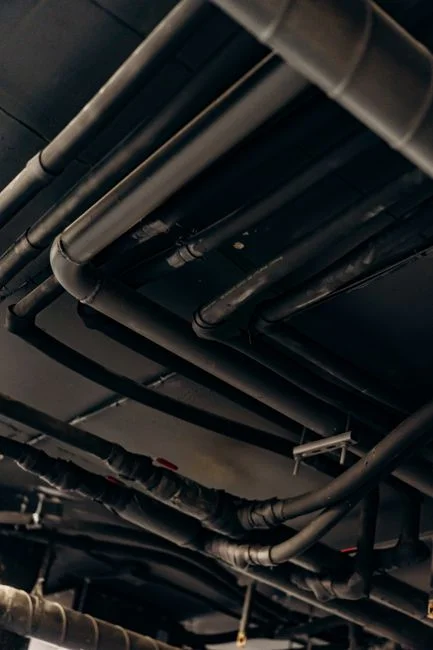
Burial depth is the first thing to get right. Calgary's design frost depth is roughly 1.8–2.4 m depending on soil and exposure; tanks should sit fully below that line, and a 50–100 mm layer of rigid XPS insulation above the tank lid reduces biological heat loss and prevents the lid from becoming a cold sink. Above-grade or partially buried installations in Calgary require full heat tracing and insulated jacketing on all exposed piping and weir troughs, which adds both CAPEX and a winter-failure mode that buried systems avoid.
Aeration system selection matters more in cold mixed liquor than in warm. Fine-bubble diffusers (typically 1–2 mm pore EPDM or silicone membranes) deliver higher standard oxygen transfer efficiency (SOTE) at low temperature than coarse-bubble, which translates into lower blower power per kg BOD removed when dissolved oxygen is held at 1.5–2.0 mg/L. Cold-climate biomass also produces a higher fraction of slowly degrading solids and exhibits poor settleability, which is precisely why MBR's membrane separation sidesteps the clarifier bottleneck and is the more reliable winter choice for any site that cannot tolerate a clarifier washout in February.
The passive-thermal operating window for a buried A/O plant is real: when the influent enters at 15–20°C and ambient air drops to -25°C, mixed-liquor temperature in a properly buried tank holds at 8–12°C, which is adequate for the A/O process to stay within design BOD removal. Unheated above-grade systems in the same conditions collapse to 4–6°C, at which point nitrification essentially halts and BOD removal drops by roughly 40–60% (per standard biological kinetics references). That collapse window is the single most common reason Calgary packaged plants fail compliance sampling in February.
Cost and ROI: What a Calgary Hotel Should Budget in 2026
Budget ranges for a packaged A/O buried plant in the 20–80 m³/day range run roughly USD $25,000–$80,000 for the equipment alone. MBR systems in the same flow band cost roughly 1.8–2.5× that figure because of the membrane modules, cassette frames, and more aggressive aeration system. Engineering design, Alberta EPA permitting, site civil works, and commissioning typically add another 30–50% on top of the equipment line, so a 100–200 room Calgary resort in 2026 should plan for total installed CAPEX in the USD $1M–$3M+ band depending on discharge pathway, with subsurface discharge and reuse options on the higher end.
OPEX for a packaged A/O plant typically lands at USD $0.30–$0.80 per m³ treated, dominated by aeration power and sludge hauling. MBR OPEX runs USD $0.50–$1.20 per m³, with the delta driven by higher membrane aeration demand and a chemical cleaning event (typically a sodium hypochlorite + citric acid CIP) every 6–12 months. Sludge dewatering is a parallel line item worth budgeting: a small plate and frame filter press sized to the plant's waste-activated-sludge production reduces hauling volume by 70–80% and pays back inside 18–30 months for any resort generating more than 50 m³/day.
The water-reuse ROI is real for Calgary because the May–September irrigation season aligns with peak occupancy. A 150-room resort running an MBR and reusing effluent for landscape irrigation can offset 20–40% of municipal water use during the growing season; combined with avoided sewer surcharges on the reused volume, simple payback on the MBR CAPEX premium often lands in the 4–7 year range for a Calgary property targeting reuse from day one.
Frequently Asked Questions
MBR or buried A/O packaged plant for a 100-room Calgary hotel?
For a 100-room property inside Calgary city limits discharging to the municipal sewer, a buried A/O packaged plant is usually the lowest-cost compliant option at 40–60 m³/day. MBR only pulls ahead when the site targets non-potable reuse, has a soil/percolation constraint, or faces a City of Calgary effluent quality requirement below what conventional clarification reliably produces (BOD <10 mg/L, TSS <5 mg/L).
What Alberta approvals does a hotel wastewater system need in 2026?
A private system needs Alberta Environment and Protected Areas approval under the Environmental Protection and Enhancement Act plus compliance with the current Alberta Private Sewage Systems Standard of Practice. A Calgary property connecting to the City sanitary sewer needs City of Calgary Water Services pretreatment approval (typically required above 25 m³/day) and, if reuse is planned, Calgary Water Services Bylaw sign-off plus Alberta Health Services plumbing inspection for the non-potable distribution system.
How deep must a packaged wastewater plant be buried in Calgary?
Below the local frost line, which in the Calgary region runs roughly 1.8–2.4 m below grade depending on soil type and exposure. Add 50–100 mm of rigid insulation above the tank lid to retain biological heat and keep mixed-liquor temperature in the 8–12°C operating window through the coldest months.
What is the typical cost of a packaged wastewater treatment plant for a 150-room Calgary resort?
Equipment-only CAPEX runs USD $25,000–$80,000 for an A/O buried plant in the 20–80 m³/day range, or roughly 1.8–2.5× that for an MBR. With engineering, permitting, civil works, and commissioning added, total installed CAPEX for a 100–200 room Calgary resort in 2026 typically lands in the USD $1M–$3M+ band depending on discharge pathway.