
Why Yerevan Hotels Need a Dedicated Treatment Train in 2026
Yerevan's hospitality sector has shifted decisively toward resort-format properties — indoor and outdoor water parks, multiple food venues, spa and wellness operations, and on-site laundry — all of which push wastewater flows and FOG (fats, oils, grease) loads well above a domestic baseline. A typical 150-key property with a water park, three kitchens, and a 60-cover spa will generate 40–55 m³/day of wastewater at 65–70% occupancy, with peak instantaneous flows reaching 120 m³/day during morning checkout and weekend turnovers. The per-guest loadings the engineer must size against are: water usage 150–250 L/guest-day, BOD 200–400 mg/L, TSS 150–300 mg/L, FOG 30–80 mg/L from kitchens, plus periodic surges from pool backwash (typically 5–15 m³ per backwash cycle) and laundry lint loads of 100–200 mg/L TSS (HydropureWater field data, 2026).
The World Bank's Yerevan Water and Wastewater Project (document 823111468206659367) is upgrading the central interceptor and the main biological treatment plant, but the program targets the consolidated municipal catchment — not outlying resort sites on the Hrazdan corridor or in the Aragatsotn foothills. Those properties cannot rely on municipal treatment and need on-site packaged plants sized for a 2.5–3.0 peak hourly factor versus average daily flow. Without that peak accommodation, hydraulic surges scour mixed liquor suspended solids (MLSS) out of the aeration tank and crash nitrification within hours.
Armenia's 2026 Discharge Compliance Pathway
Armenia's national surface-water discharge framework requires new resort builds to align with EU Urban Waste Water Directive 91/271/EEC thresholds: BOD ≤25 mg/L, COD ≤125 mg/L, TSS ≤35 mg/L, total nitrogen 15 mg/L, total phosphorus 2 mg/L. The World Bank-funded interceptor upgrades make off-site discharge for outlying resorts increasingly viable, but municipal pretreatment ordinances still require BOD and TSS reduction to those limits before discharge to the public sewer — typically achieved by an on-site packaged plant operating as a flow-equalization and biological-reduction step ahead of the municipal connection.
Resorts that reuse treated effluent for landscape irrigation, cooling-tower makeup, or toilet flushing need additional disinfection beyond what the discharge path requires. A ClO₂ residual of 0.5–1.0 mg/L or UV at 40 mJ/cm² brings the MBR (membrane bioreactor) permeate into compliance with WHO Guidelines for Drinking-water Quality for non-potable reuse, which any guest-area irrigation system must meet regardless of whether the discharge is to surface water or sewer. The practical effect: any Yerevan resort commissioning a plant in 2026 should design to UWWTD 91/271/EEC numbers from day one rather than rebuild later when the municipal ordinance tightens.
Comparing MBR, A/O Package, and Containerized MBR for a Yerevan Resort
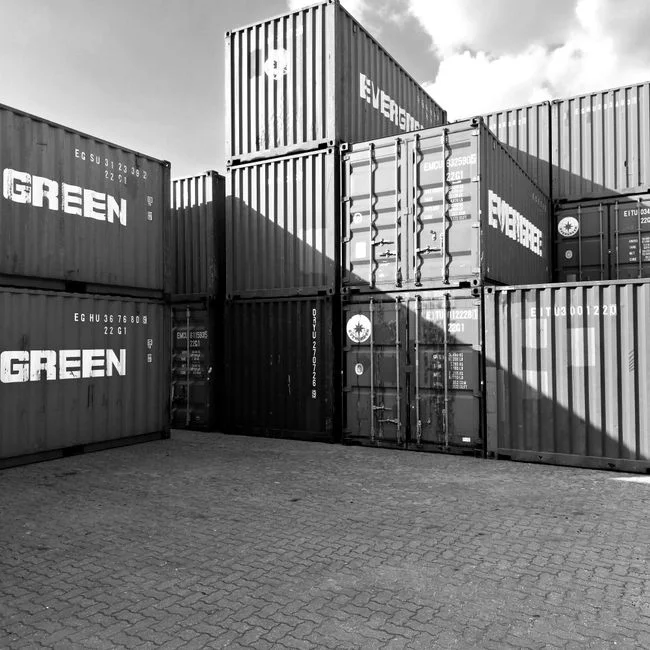
The three process trains that fit a Yerevan resort footprint are a buried A/O (anoxic/oxic) package, a skid-mounted packaged MBR, and a containerized MBR. The head-to-head comparison below uses a 50 m³/day design point, which covers roughly 100–150 keys at 70% occupancy.
| Parameter | Buried A/O (WSZ) | Packaged MBR | Containerized MBR | Concrete-Tank Activated Sludge |
|---|---|---|---|---|
| Footprint per 50 m³/day | 18–25 m² (buried) | 20–30 m² (skid) | Standard 40 ft container ≈ 30 m² | 60–90 m² (above-grade tanks) |
| Effluent BOD (mg/L) | ≤25 (UWWTD) | ≤5 (near-reuse) | ≤5 (near-reuse) | ≤25 (UWWTD) |
| Effluent TSS (mg/L) | ≤35 | ≤1 (0.1 μm barrier) | ≤1 (0.1 μm barrier) | ≤35 |
| Effluent TN (mg/L) | 20–30 (no dedicated anoxic) | ≤10 (with denitrification) | ≤10 (with denitrification) | 25–40 |
| CAPEX band (USD, 50 m³/day) | $25K–$45K | $55K–$90K | $70K–$110K | $80K–$140K + civil works |
| OPEX driver | Sludge hauling, blower kWh | Membrane CIP, scour air kWh | Membrane CIP, trailer HVAC | Sludge hauling, clarifier drag |
| Installation time on site | 4–8 weeks (excavation + civil) | 1–2 weeks (skid set + piping) | 2–5 days (drop and connect) | 12–20 weeks (cast concrete) |
| Best-fit Yerevan use case | ≤30 m³/day, no reuse, available land | 30–200 m³/day, reuse, tight footprint | Construction-window-bound resorts, pilot plants | Large urban hotels with land and capital |
The MBR advantage is decisive for tight resort sites: 60% smaller footprint than concrete-tank activated sludge, near-reuse effluent through the 0.1 μm membrane barrier, no separate clarifier, and tolerance for the 2.5–3.0 peak factor that wrecks conventional clarification. The packaged MBR system for Yerevan resort use cases at 30–200 m³/day hits the size band most 80–200-key properties sit in. For sites under 30 m³/day with no reuse target and adequate burial land, a buried A/O package plant is the lowest-CAPEX option and the simplest to hand to a local operator.
Process Train for a 150-Key Yerevan Resort
The 150-key worked example uses these design inputs: 150 keys × 200 L/guest-day × 0.70 occupancy = 21,000 L/day average; with a 1.9 peaking factor for daily flow and a 3.0 peak hourly factor, the design average is 40 m³/day and the design peak is 120 m³/day. The process train is built around five unit operations.
Step 1 — Headworks. A GX Series rotary mechanical bar screen with 1–3 mm aperture strips rags, plastics, and fibrous debris before biological stages. This is non-negotiable: fibrous material from spa and pool backwash wraps around membrane fibers and causes irreversible fouling within weeks if not removed upstream.
Step 2 — FOG and colloidal removal. A DAF for FOG and colloidal removal (4–300 m³/h range) handles the 30–80 mg/L FOG from kitchens and the colloidal TSS from laundry. Yerevan resort menus — grilled meats, oil-rich sauces, dairy-heavy breakfast buffets — generate sustained FOG loadings that biological stages alone cannot metabolize. DAF pre-treatment drops influent FOG to below 15 mg/L, which keeps the MBR's MLSS at a stable 8,000–10,000 mg/L instead of the 4,000–5,000 mg/L you'd see without it.
Step 3 — Biological stage. A packaged MBR with DF-series flat-sheet MBR cassettes (0.1 μm PVDF, 32–135 m³/day per cassette) sized to handle 40 m³/day average and 120 m³/day peak. The flat-sheet geometry tolerates the peak surges that hollow-fiber modules cannot — the rigid cassette holds its shape under backwash pressure and the 0.1 μm nominal pore size delivers the reuse-quality effluent that downstream disinfection steps assume.
Step 4 — Disinfection. A ClO₂ disinfection generator (50–20,000 g/h range) sized to deliver 0.5–1.0 mg/L residual at peak flow, with a 30-minute contact basin ahead of the reuse storage tank.
Step 5 — Sludge dewatering. A plate and frame filter press (1–500 m² filtration area) handles monthly sludge draw at 2–3% solids feed, producing a 22–28% dry cake for municipal solid-waste disposal.
CAPEX band (2026, equipment-only, FOB): $45K–$90K for the packaged MBR train at 40 m³/day, $15K–$25K for DAF, $8K–$12K for ClO₂, $20K–$35K for the filter press. Civil works, installation, and commissioning typically add 40–70% on top, putting a turnkey 150-key Yerevan resort plant at $130K–$260K depending on site conditions and local labor rates.
OPEX Drivers and Reuse Economics for Yerevan Resorts
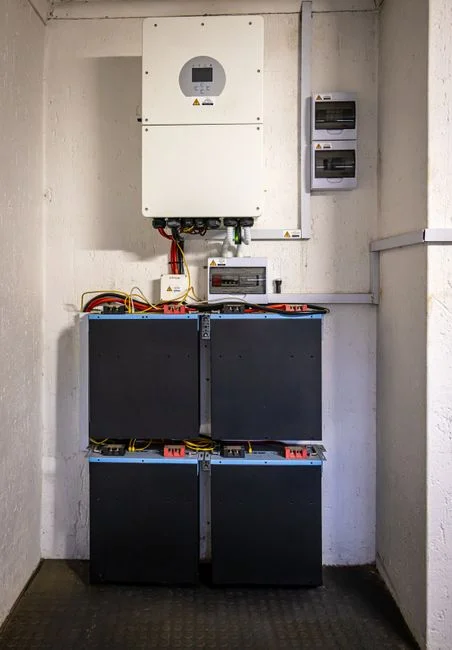
Energy dominates OPEX at 45–60% of the annual run rate, split between aeration blowers (roughly 60% of plant kWh) and membrane scour-air compressors (roughly 25%). Sludge handling adds 15–25%, mostly hauling and polymer. Chemicals — ClO₂ precursor, CIP (clean-in-place) agents for membrane recovery, and pH adjuster — run 5–10%. Labor for a 40 m³/day packaged plant is typically 2–4 hours/day of operator attention, which can be folded into an existing engineering shift.
Water reuse at 30–50% of treated effluent for landscape irrigation typically offsets $3K–$8K/year in freshwater cost for a 150-key property at Yerevan's national utility tariff range, with payback on the disinfection train inside 3–5 years. The more binding operational constraint is cold-season performance: Yerevan winter air temperatures drop to -5 to -10°C from December through February, which means biological kinetics slow and membrane viscosity rises. Buried or insulated biological tanks plus a heated MBR skid room are required to maintain MLSS activity above 6,000 mg/L and prevent membrane damage from ice formation. For resorts weighing SBR (sequencing batch reactor) as an alternative, the 2026 SBR plant OPEX breakdown gives a side-by-side energy and labor comparison worth pulling during vendor evaluation.
2026 Procurement Checklist for a Yerevan Hotel WWTP
Step 1 — Lock the design basis. Before talking to vendors, pin down keys, occupancy profile (transient vs long-stay), kitchen and laundry FOG contribution, peak factor (2.5–3.0 is the Yerevan hospitality norm), and reuse targets. Without these, every quote is non-comparable.
Step 2 — Lock the process train. Headworks (rotary bar screen) → DAF → MBR (or A/O for sub-30 m³/day sites) → ClO₂ → sludge press. Specify the membrane module count, aeration capacity (kg O₂/kg BOD-day), and equalization volume in writing.
Step 3 — Verify compliance documentation. Effluent targets per UWWTD 91/271/EEC (BOD ≤25, COD ≤125, TSS ≤35, TN 15, TP 2 mg/L), factory acceptance test plan with BOD/COD/TSS/NH₃-N logged over 7 consecutive days, and the local Yerevan municipal pretreatment agreement if discharging to the public sewer.
Step 4 — Plan installation. A containerized MBR on a low-loader is viable for resorts with 2–4 week construction windows and is the right call for phased resort developments. Buried WSZ units require excavation, concrete pour, and 6–10 week lead times but yield the lowest visible footprint. The containerized vs permanent wastewater plant 2026 comparison walks the trade-offs in more detail. For broader regional context on packaged plant engineering in cold-climate resort settings, the packaged wastewater plant engineering guide for the Middle East covers parallel design constraints.
Frequently Asked Questions
What size wastewater treatment plant does a 150-key Yerevan hotel need in 2026?
A 150-key property at 70% occupancy generates about 21 m³/day of average flow; sized with a 1.9 daily peaking factor, the design average is 40 m³/day and the design peak is 120 m³/day. The MBR train should be specified at the peak flow, with equalization upstream to buffer surges. Per-guest loadings to use: 200 L/guest-day, BOD 300 mg/L, TSS 250 mg/L, FOG 60 mg/L (HydropureWater field data, 2026).
What effluent standards must a Yerevan resort wastewater plant meet in 2026?
New resort builds should target UWWTD 91/271/EEC thresholds — BOD ≤25 mg/L, COD ≤125 mg/L, TSS ≤35 mg/L, total nitrogen 15 mg/L, total phosphorus 2 mg/L — because Armenia's national framework is converging on these numbers through the World Bank-funded interceptor upgrades. Reuse streams must additionally meet WHO Guidelines for Drinking-water Quality for non-potable applications.
MBR or A/O package plant — which is better for a Yerevan resort under 30 m³/day?
For sub-30 m³/day sites with no reuse requirement and available burial land, a buried A/O (WSZ) package plant is the lowest-CAPEX and simplest-O&M option at $25K–$45K equipment cost. If the resort plans any reuse, or has a constrained footprint, a packaged MBR at $55K–$90K is the right call despite higher membrane CIP (clean-in-place) cost, because the 0.1 μm effluent quality eliminates the need for tertiary sand filtration.
How much does a packaged MBR wastewater plant cost for a 150-key Yerevan resort in 2026?
Equipment-only CAPEX is $45K–$90K for the MBR train at 40 m³/day, plus $15K–$25K for DAF, $8K–$12K for ClO₂ disinfection, and $20K–$35K for the sludge filter press. Civil works, installation, and commissioning add 40–70%, putting a turnkey plant in the $130K–$260K range depending on site conditions and local labor rates.
Can a Yerevan resort discharge treated wastewater to the municipal sewer?
Yes, but only after on-site pretreatment that meets the municipal discharge ordinance, which in practice mirrors UWWTD 91/271/EEC limits — BOD ≤25 mg/L, TSS ≤35 mg/L. The World Bank's Yerevan Water and Wastewater Project has expanded the central interceptor capacity, so outlying resorts can connect once their on-site plant achieves those numbers; without them, the municipal utility will reject the discharge.