Why Bahrain Relies on Packaged Residential Wastewater Treatment
Residential wastewater treatment in Bahrain is dominated by packaged, decentralized systems — modular A/O plants, containerized MBRs, and skid-mounted units — because most housing developments sit outside the main sewered catchments. The Bahrain packaged wastewater treatment market is valued at approximately USD 20 million (Ken Research), with the residential segment leading demand. Typical sizing is 150–200 L/person-day, with effluent targets aligned to Gulf standards for irrigation reuse.
Bahrain's housing pattern explains the architecture of the market. The country has thousands of dispersed villas, gated compounds, and master-planned communities, many of which sit beyond the trunk sewer network operated by the Electricity and Water Authority and the Ministry of Works. For a developer delivering 50–500 dwellings, the build-versus-connect decision is effectively build: extending a gravity sewer across multiple kilometers of undeveloped land in Bahrain's flat, high-water-table terrain is rarely economic below ~500 m³/day. Packaged plants also avoid the long permitting and land-expropriation cycles that come with municipal interceptor extensions, which is why a WSZ underground A/O package plant or a skid-mounted MBR is the default procurement answer for residential clusters.
The country already operates a sophisticated monitoring layer on top of these plants. The Public Health Directorate ran a national wastewater surveillance program from November 2020 to October 2022, testing 387 wastewater samples and reporting 26.6% SARS-CoV-2 positivity, with weekly sampling across multiple catchment areas (Europe PMC, 2023). For a consultant, that is a citable signal: Bahrain's regulators and labs are already instrumented at plant-scale, which means instrumentation, sampling, and remote-monitoring expectations in a 2026 tender should be higher than in less-monitored GCC markets.
Two site conditions drive equipment selection. Summer ambient temperatures routinely exceed 30 °C, which accelerates biological kinetics (nitrification rates roughly double per 10 °C rise) but also raises evaporation losses in open tanks and stresses diffused-aeration membranes. Groundwater in many new development zones is salinity-prone (TDS frequently 5,000–15,000 mg/L), so any buried concrete tank or steel skid must be specified with sulfate-resistant concrete and corrosion allowances. These are the parameters a Bahraini consultant puts on the drawing before the supplier ever opens a quotation.
Regulatory Baseline: Influent Characteristics and Effluent Targets
Every residential STP in Bahrain is sized against a fixed design envelope: the influent load the plant must accept, and the effluent quality the regulator will accept on discharge or reuse. There is no published Bahrain-specific residential influent study in the open literature, so the working envelope for a 2026 tender is the typical Gulf residential range: BOD 250–400 mg/L, COD 500–800 mg/L, TSS 200–350 mg/L, NH₃-N 30–50 mg/L, oil & grease 50–100 mg/L, and fecal coliform 10⁶–10⁷ CFU/100 mL. Per-capita loading is typically 50–70 g BOD/person-day at the head of the plant.
Effluent targets depend on the discharge route. For landscape irrigation reuse within the development, the working targets are BOD ≤20 mg/L, TSS ≤30 mg/L, NH₃-N ≤5 mg/L, and fecal coliform ≤200 CFU/100 mL — consistent with widely applied Gulf irrigation-reuse practice. For tanker discharge to the public sewer, the receiving utility's acceptance limits apply, which are tighter on pH (6.5–8.5) and usually cap NH₃-N at 20–30 mg/L. Final values must be confirmed against the latest Supreme Council for Environment (SCE) decree and the Sewerage Directorate's tanker-discharge rules; do not freeze the spec on numbers from a 2023 article.
The WHO Guidelines for Drinking-water Quality are not a residential discharge standard; they only become relevant if the reused water has any cross-connection risk with potable lines, in which case the reclaimed-water line must be color-coded and backflow-protected per the local plumbing code.
| Parameter | Typical Residential Influent | Irrigation-Reuse Effluent Target | Public-Sewer Discharge (typical) |
|---|---|---|---|
| BOD₅ | 250–400 mg/L | ≤20 mg/L | ≤200 mg/L (site-specific) |
| COD | 500–800 mg/L | ≤100 mg/L | ≤500 mg/L (site-specific) |
| TSS | 200–350 mg/L | ≤30 mg/L | ≤200 mg/L (site-specific) |
| NH₃-N | 30–50 mg/L | ≤5 mg/L | ≤20–30 mg/L (site-specific) |
| Fecal coliform | 10⁶–10⁷ CFU/100 mL | ≤200 CFU/100 mL | Site-specific |
| pH | 6.5–8.0 | 6.5–8.5 | 6.5–8.5 |
| Oil & grease | 50–100 mg/L | ≤5 mg/L | ≤50 mg/L (site-specific) |
Technology Options: A/O, SBR, and MBR Packaged Plants Compared
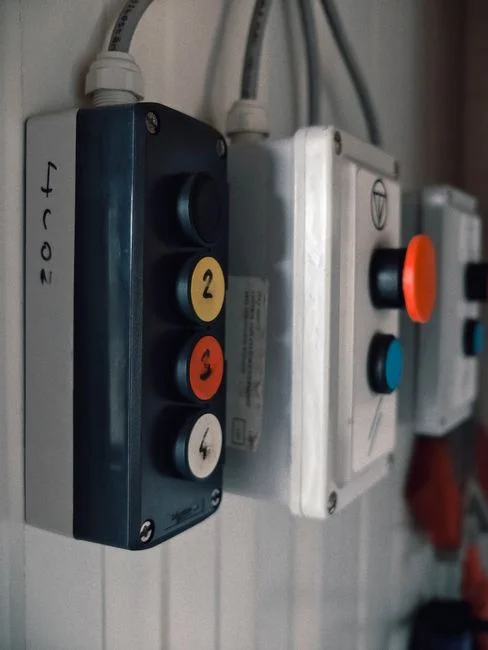
Three packaged configurations cover virtually every residential STP tender in Bahrain: buried A/O packages, sequencing batch reactors (SBR), and submerged membrane bioreactors (MBR). The right pick depends on flow band, reuse target, and the developer's tolerance for operator intervention.
The A/O package is the workhorse for small residential clusters. The WSZ-series underground A/O plant ships in 1–80 m³/h capacity bands, is fully buried to free up the surface for landscaping or parking, runs fully automated with no dedicated operator, and uses conventional activated sludge with anoxic/aerobic zones for partial nitrogen removal. It is the lowest-CAPEX option per m³/day in the 10–50 m³/day band and discharges to sewer or tanker without further polishing.
MBR packages combine a conventional activated-sludge basin with a submerged ultrafiltration membrane module, typically a PVDF flat-sheet element with 0.1 µm nominal pore size. Submerged MBRs draw 10–20× less energy than external cross-flow designs because there is no recirculation pump fighting a high TMP. The combination delivers near-reuse effluent (BOD <5 mg/L, TSS <1 mg/L, fecal coliform effectively zero on the membrane side) and is the right answer for compounds ≥50 m³/day that want to discharge to landscape irrigation. The HydropureWater MBR packaged plant with a DF-series PVDF MBR membrane module is the reference configuration in this class.
SBR sits between the two: one tank runs fill–react–settle–decant–idle on a timed cycle, which handles intermittent and variable flows well but needs more control logic and a larger equalization volume. It is the right pick for compounds with strongly diurnal flow (weekend versus weekday occupancy) but where reuse quality is not required.
| Process | Footprint (m² per m³/day) | Effluent BOD (mg/L) | Effluent TSS (mg/L) | Energy (kWh/m³) | Sludge Yield (kg DS/kg BOD) | Typical OPEX (USD/m³) |
|---|---|---|---|---|---|---|
| A/O package (WSZ) | 0.15–0.25 | ≤20 | ≤30 | 0.4–0.7 | 0.4–0.6 | 0.25–0.40 |
| SBR | 0.20–0.30 | ≤15 | ≤20 | 0.5–0.8 | 0.35–0.55 | 0.30–0.45 |
| Submerged MBR | 0.10–0.18 | ≤5 | ≤1 | 0.7–1.1 | 0.25–0.40 | 0.40–0.55 |
Decision rule for 2026 tenders: MBR for compounds ≥50 m³/day with irrigation-reuse obligation; A/O for clusters <50 m³/day discharging to sewer or tanker; SBR where flow is highly intermittent and reuse is not required.
Sizing a Residential STP in Bahrain: Flow, Load, and Peak Factors
Bahraini villas and compounds are sized on 150–200 L/person-day. Use 150 L for water-efficient fixtures (dual-flush, low-flow taps) and 200 L for compounds with domestic staff, pools, and garden irrigation draw-off. Apply a hydraulic peak factor of 2.5–3.0 (morning and evening overlap) and an organic peak factor of 1.3–1.5. The 50 m³/day line is the practical break point in the Gulf: above it, membrane CAPEX per m³ starts to amortize against lower sludge-handling and reuse revenues; below it, A/O wins on simplicity and capital cost.
| Typology | Occupants (design) | Average Flow (m³/day) | Peak Flow (m³/day, ×2.75) | Recommended Process |
|---|---|---|---|---|
| Single villa | ≤10 | 1.5–2.0 | 4–6 | A/O package (1–5 m³/day unit) |
| Townhouse cluster (5–10 units) | 20–50 | 3–10 | 8–28 | A/O package (10–30 m³/day unit) |
| Low-rise compound | 100–300 | 15–60 | 40–165 | A/O or SBR (30–80 m³/day) |
| High-rise residential / large compound | 500+ | 75–200+ | 200–550 | Submerged MBR (≥50 m³/day) |
Desludging intervals drive annual OPEX. A/O packages running at SRT 10–20 days typically need sludge wasting every 6–12 months; MBR plants running at SRT 30–60 days can extend to 12–24 months before wasting, partly offsetting higher energy OPEX. In a Bahrain tender, lock the desludging contract separately from the plant warranty and price it per m³ of liquid sludge removed, not as a fixed monthly retainer.
2026 Cost Benchmarks: CAPEX, OPEX, and Lifecycle Drivers
For procurement, a Bahraini residential STP in the 10–500 m³/day band installs at USD 8,000–15,000 per m³/day of design capacity as of 2026. A/O packages sit at the lower end (USD 8,000–11,000), SBR in the middle (USD 10,000–13,000), and submerged MBR at the upper end (USD 12,000–15,000). The range reflects tank material (HDPE vs. coated carbon steel vs. concrete), membrane inclusion, and whether the quote includes civil works, MCC, and instrumentation. For sanity-checking, the Abu Dhabi wastewater treatment plant cost benchmark places Gulf utility-scale plants above AED 12M — an order of magnitude larger than a residential package, but a useful upper-bound anchor for the same region.
OPEX is more predictable: USD 0.25–0.55 per m³ treated, dominated by aeration blower energy (60–70% of OPEX) and sludge hauling (15–25%). The remaining 10–20% covers consumables, membrane cleaning chemicals, and remote-monitoring subscriptions. Labs and routine sampling add another 3–5% if the developer pays for compliance testing directly rather than rolling it into a service contract.
| Cost Driver | A/O Package (USD) | SBR (USD) | Submerged MBR (USD) | Notes |
|---|---|---|---|---|
| CAPEX per m³/day installed | 8,000–11,000 | 10,000–13,000 | 12,000–15,000 | Includes tank, equipment, MCC, basic instrumentation; excludes land |
| OPEX per m³ treated | 0.25–0.40 | 0.30–0.45 | 0.40–0.55 | Energy + sludge + consumables |
| Aeration share of OPEX | 60–70% | 55–65% | 50–60% | Drop with high-efficiency blowers |
| Sludge hauling share | 20–30% | 20–25% | 15–20% | Lower with longer SRT (MBR) |
| Expected membrane replacement | N/A | N/A | Every 7–10 years | 0.1 µm PVDF flat sheet |
| Design life | 20–25 years | 20–25 years | 20–25 years (membranes 7–10) | Tank and structural |
The three OPEX levers a consultant can pull in a tender: (1) require IE3 or IE4 high-efficiency blowers with VFD control — typically 15–25% energy saving; (2) for MBR, lock the membrane-cleaning regime (CIP frequency and chemistry) in the OPEX contract to avoid premature fouling; (3) tender desludging as a per-m³ unit rate with a 24-hour callout clause.
Choosing a Supplier in Bahrain: 2026 Evaluation Framework
The active OEM landscape in Bahrain per Ken Research includes Veolia, SUEZ, Xylem, Aquatech, Corodex, MENA-Water, Emvees, Organica Water, Pollution Control Systems, Smith & Loveless, Huber, Gradiant, IDE, Pentair, and Bio-Microbics. For residential projects specifically, the suppliers with the most Bahraini reference plants in the 10–200 m³/day band tend to be MENA-Water, Corodex, Emvees, and Bio-Microbics, with the international majors typically active on larger commercial and hospitality jobs. Pricing varies by 20–30% across the field; engineering depth and after-sales footprint vary much more.
Use a six-criterion framework to score bids: (1) local service footprint — does the supplier have a Bahrain-based service team with 24-hour callout, or do they fly engineers in from Dubai or Saudi? (2) packaged skid lead time — typical residential skids ship in 8–14 weeks ex-works; anything longer signals a queue. (3) reference plants in Bahrain — ask for at least two operating plants ≥12 months old with effluent lab data. (4) effluent warranty — a 12-month performance warranty tied to BOD, TSS, and NH₃-N limits, not just a mechanical warranty. (5) OPEX guarantee — a fixed USD/m³ band for the first 12–24 months, or an energy-consumption ceiling in kWh/m³. (6) remote-monitoring capability — SCADA or IoT telemetry with daily effluent trends, alarm forwarding, and a web dashboard, as detailed in this remote monitoring for residential STPs engineering guide. For cross-jurisdictional comparison on process design, this residential wastewater treatment process guide gives a useful non-GCC reference baseline.
Push hard on the performance warranty language. A mechanical warranty that excludes process performance is industry standard but useless to a developer; an effluent-linked warranty with liquidated damages per mg/L of excursion gives the supplier skin in the game and is the single most important clause in a Bahraini residential STP contract in 2026.
Frequently Asked Questions
What are the typical effluent limits for a residential STP in Bahrain reusing water for irrigation?
The working 2026 targets for landscape irrigation reuse in Bahrain are BOD ≤20 mg/L, TSS ≤30 mg/L, NH₃-N ≤5 mg/L, and fecal coliform ≤200 CFU/100 mL, consistent with Gulf reuse practice. Final values must be confirmed against the latest Supreme Council for Environment decree before tendering — see the regulatory baseline section above.
How do I size a packaged STP for a 100-villa compound in Bahrain?
Use 200 L/person-day × 6 persons per villa × 100 villas = 120 m³/day average flow, then apply a hydraulic peak factor of 2.75 for a peak of ~330 m³/day. For 120 m³/day with an irrigation-reuse obligation, a submerged MBR is the right pick; for sewer discharge, an A/O or SBR package will be lower CAPEX. See the sizing section above for the full typology table.
When should I choose an MBR over an A/O package for a residential project in Bahrain?
Choose MBR when average flow is ≥50 m³/day and the developer needs reuse-quality effluent (BOD <5 mg/L, TSS <1 mg/L) for irrigation, or when footprint is constrained. Choose A/O when flow is <50 m³/day and the effluent goes to sewer or tanker — A/O is 20–30% cheaper on CAPEX and simpler to operate. See the technology comparison table in the section above.
What OPEX should I budget for a residential STP in Bahrain in 2026?
USD 0.25–0.55 per m³ treated across the three main packaged technologies, with aeration at 60–70% of OPEX and sludge hauling at 15–25%. A 100 m³/day MBR at USD 0.50/m³ implies ~USD 18,250 per year in operating cost, excluding desludging callouts and membrane CIP chemicals. See the 2026 cost section above.
Which suppliers should be on a Bahrain residential STP shortlist in 2026?
For the 10–200 m³/day residential band, the most active OEMs in Bahrain per Ken Research are MENA-Water, Corodex, Emvees, and Bio-Microbics, with Veolia, SUEZ, and Xylem active on larger commercial and hospitality projects. Score bidders on local service footprint, skid lead time, Bahraini reference plants, effluent warranty, OPEX guarantee, and remote-monitoring capability — see the supplier evaluation framework section above.
Related Equipment
- Chlorine dioxide generator — specifications, capacity range, and technical data