Why Budapest Hotels Need a Different Wastewater Design in 2026
A 4-star Budapest resort with 289 rooms, 11 water slides, wave and surf pools, thermal baths, saunas, a hammam spa, fitness centre, kids' club and F&B seating 1,000+ covers produces a wastewater profile that behaves like a small town, not a typical hotel (Aquaworld Resort Budapest, S1/S2). Aquaworld alone discharges from roughly 1,200 m³ of pool capacity, peak weekend guest counts exceeding 1,400, and continuous backwash from thermal and slide systems — a loading envelope that no generic hotel-sizing calculator captures. The site in the 04. Újpest district, like most central-Budapest lots, forces below-grade or compact installations, ruling out conventional activated sludge with large secondary clarifiers. Discharges to the FCSM Budapest sewer must comply with Hungary's transposition of EU Urban Waste Water Treatment Directive 91/271/EEC, and the Hungarian continental winter pushes buried-plant operating temperatures toward 8–12 °C, which degrades nitrification unless the biological stage is explicitly designed for low-temperature operation. The same constraints apply to a 200-room business hotel in District 05 or a boutique spa property in District 07 — the design rules are not optional.
Influent Characteristics: What Actually Comes Out of a Budapest Resort
Domestic base load from a hotel bedroom runs 0.18–0.25 m³/room/day, with BOD 200–300 mg/L, COD 400–600 mg/L, TSS 200–300 mg/L and NH₃-N 25–40 mg/L — these are standard hospitality figures and the starting point of any Budapest design. Pool and thermal-bath backwash then stacks on top, adding high-TDS streams, residual free chlorine at 0.5–2 mg/L, and intermittent sulfate from thermal springs; this flow must be routed to a balancing tank and never directly to the biological stage, because residual chlorine at >0.5 mg/L will kill nitrifying biomass within hours. Spa and hammam wastewater brings FOG up to 80–150 mg/L and demands a dissolved air flotation unit or upstream grease trap before any membrane or biofilm. Laundry operation is a second-order surge: BOD spikes 1.5–2× daily average during the 10:00–14:00 wash window, so equalisation must hold 6–8 h residence to flatten that pulse. F&B with food-waste grinders pushes TSS and FOG to 400–600 mg/L during dinner service, which is why a GX rotary bar screen at headworks (2–3 mm aperture) is non-negotiable for membrane protection. The combined peaking factor for a 289-room resort with 11 slides and full spa lands at 2.5–3.5× daily average; for thermal-bath-dominant resorts it can hit 4× during weekend mornings when every guest showers within a 90-minute window.
| Stream | Flow contribution (m³/day, 300-room ref.) | BOD (mg/L) | COD (mg/L) | TSS (mg/L) | FOG (mg/L) | Special |
|---|---|---|---|---|---|---|
| Guestrooms | 60–75 | 200–300 | 400–600 | 200–300 | <50 | Standard domestic |
| Pool/slide backwash | 40–80 | 10–30 | 50–100 | 50–150 | <20 | Free Cl₂ 0.5–2 mg/L, high TDS |
| Thermal bath | 30–100 | 15–40 | 60–120 | 30–80 | <20 | Sulfate 200–600 mg/L, 35–40 °C |
| Spa/hammam | 10–25 | 100–250 | 250–500 | 150–300 | 80–150 | Oils, salts |
| Laundry | 20–40 | 400–700 | 800–1,400 | 300–600 | 50–100 | Surge 10:00–14:00 |
| F&B / kitchens | 40–80 | 500–900 | 1,000–1,800 | 400–600 | 200–500 | Food-grinder TSS spikes |
EU UWWTD 91/271/EEC and FCSM Discharge Limits in 2026
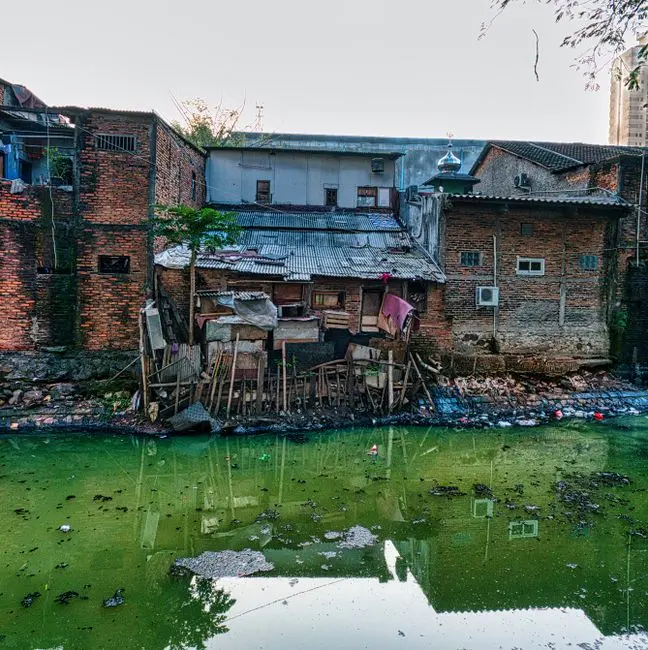
EU Urban Waste Water Treatment Directive 91/271/EEC sets agglomeration-based collection and treatment obligations, and Budapest is designated a sensitive area because the Danube downstream catchment is the recipient of treated effluent. Hungary transposes the directive through Government Decree 219/2004 (VII. 21.) on the protection of surface waters, and the FCSM connection rules translate this into a hard set of limits that any hotel plant must meet at the discharge manhole. The standard FCSM envelope is BOD₅ ≤25 mg/L, COD ≤125 mg/L, TSS ≤35 mg/L, NH₃-N ≤15 mg/L in summer and ≤20 mg/L in winter, and total phosphorus ≤2 mg/L. For properties above 2,000 PE (a 250+ room resort at full occupancy can clear this in season) full biological plus nutrient removal is mandatory, and FCSM will not accept primary-only effluent. Thermal-bath discharges are additionally covered by 38/1995 (XI. 15.) KHVM on mineral and thermal waters — high-TDS streams frequently need pre-dilution or a separate handling path before they reach the sewer, and at Aquaworld-scale flows this is a real engineering branch in the P&ID, not an afterthought. Engineers preparing a 2026 procurement spec should pre-clear the discharge envelope in writing with FCSM before locking the equipment list.
| Parameter | FCSM discharge limit (sewer) | EU UWWTD 91/271/EEC reference | MBR typical achievement | WSZ typical achievement |
|---|---|---|---|---|
| BOD₅ | ≤25 mg/L | Annex I (sensitive area) | ≤5 mg/L | ≤20 mg/L |
| COD | ≤125 mg/L | Annex I | ≤30 mg/L | ≤90 mg/L |
| TSS | ≤35 mg/L | Annex I | ≤1 mg/L | ≤25 mg/L |
| NH₃-N (summer) | ≤15 mg/L | — | ≤1 mg/L | ≤10 mg/L |
| NH₃-N (winter) | ≤20 mg/L | — | ≤2 mg/L | ≤15 mg/L (8–12 °C risk) |
| Total P | ≤2 mg/L | Annex II (sensitive) | ≤0.5 mg/L (with chemical P) | ≤1.5 mg/L (with chemical P) |
MBR vs WSZ Underground Package: Which Fits a Budapest Site?
The WSZ underground package plant combines A/O contact oxidation, sedimentation and disinfection in a single buried tank, covers 1–80 m³/h, runs fully automatic with no dedicated operator, and can be installed below grade with landscaping or car parking above it — a strong fit for tight urban Budapest lots. The MBR membrane bioreactor pairs activated sludge with submerged PVDF membranes at <1 μm, scales 10–2,000 m³/day, occupies roughly 60% less footprint than a conventional activated sludge plant of equal capacity, and produces near-reuse-quality effluent suitable for landscape irrigation or toilet flushing. The decision rule that holds in Budapest: WSZ wins below about 50 m³/h when the lot demands full burial and capital is constrained; MBR wins above about 100 m³/day when winter nitrification at 8–12 °C is critical and the operator wants reuse-grade water for landscape irrigation, which is a meaningful revenue-protection line item in Budapest's 2026 municipal tariff environment. MBR effluent typically lands at BOD ≤5 mg/L, COD ≤30 mg/L, TSS ≤1 mg/L and NH₃-N ≤1 mg/L — comfortably under EU UWWTD limits with margin to absorb thermal-bath TDS excursions. CAPEX bands: WSZ runs roughly USD 25,000–150,000 installed across the 10–50 m³/h range, while MBR runs USD 80,000–600,000 for 50–500 m³/day, driven mainly by membrane area and frame material — stainless frames are the right call for Budapest's slightly aggressive water profile. OPEX: MBR uses 30–50% more energy for membrane aeration and cross-flow, but lower observed yield (~0.3–0.4 kg TSS/kg BOD removed versus 0.5–0.7 for WSZ) and minimal polymer consumption close that gap over a 5-year horizon.
| Criterion | WSZ underground package | MBR membrane bioreactor |
|---|---|---|
| Flow range | 1–80 m³/h | 10–2,000 m³/day |
| Footprint | Buried, larger plan area | ~60% smaller than CAS at equal capacity |
| Winter nitrification (8–12 °C) | Marginal; design margin required | Reliable with PVDF flat-sheet |
| Effluent TSS | ≤25 mg/L | ≤1 mg/L |
| Reuse suitability | Limited (irrigation with caution) | Toilet flush, irrigation, cooling |
| CAPEX band (Budapest 2026) | USD 25,000–150,000 | USD 80,000–600,000 |
| OPEX (per m³ treated) | USD 0.18–0.25 | USD 0.30–0.45 |
| Sludge yield | Higher (0.5–0.7 kg TSS/kg BOD) | Lower (0.3–0.4 kg TSS/kg BOD) |
| Operator skill needed | Low (automatic) | Moderate (membrane CIP, aeration tuning) |
2026 Process Train for a 289-Room Budapest Resort
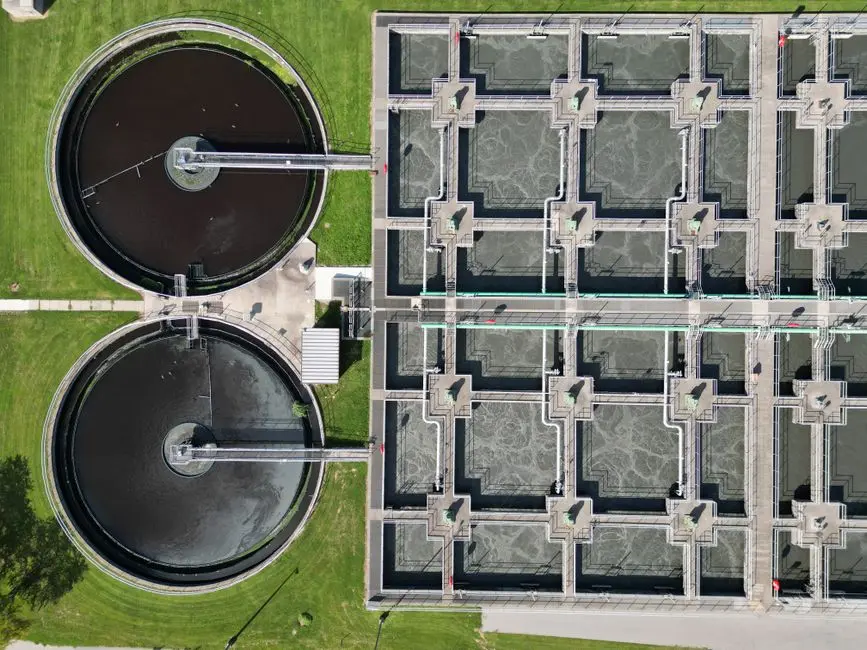
The process train that fits a 300 m³/day average, 900–1,000 m³/day peak Budapest resort runs in six stages. Step 1 — Headworks: a GX rotary bar screen at 2–3 mm aperture protects downstream pumps and membranes from F&B grinder debris, wipes, and plastics. Step 2 — Flow equalisation: a 6–8 h buffer tank with variable-speed transfer pumps absorbs the laundry 10:00–14:00 surge, the dinner F&B peak, and the morning shower storm from 1,400 guests. Step 3 — Pre-treatment: a dissolved air flotation unit strips 80–150 mg/L FOG from spa and kitchen flows, removing 70–90% of floatables and emulsified oil before the biological stage. Step 4 — Biological: an MBR membrane bioreactor sized for 3× peaking at 10 °C winter operation, fitted with DF series flat-sheet membrane modules in stainless frames (80–225 m² configurations) so a single element can be swapped without draining the tank. Step 5 — Disinfection: a chlorine dioxide generator sized 50–2,000 g/h provides residual control that won't damage PVDF membranes the way sodium hypochlorite can, and produces water compatible with EU Drinking Water Directive 98/83/EC for any reuse loop. Step 6 — Sludge: a plate-and-frame filter press with 1–500 m² filtration area dewaters the waste activated sludge to 18–22% dry solids for off-site disposal, well below the 25% limit for Hungarian landfill acceptance.
Sizing Worksheet: How to Calculate the System You Actually Need
Use this worksheet to convert room count, F&B cover count and pool capacity into a defensible design flow and equipment size. Average daily flow (m³/day) = rooms × 0.22 + covers × 0.04 + pool capacity (m³) × 0.10 turnover factor. Design flow = average × peaking factor — use 2.5–3.5 for a hotel with pool and spa, 4.0 for a thermal-bath-dominant resort. MBR sizing: design flow × 8–12 h HRT; membrane area ≈ 0.4–0.6 m² per m³/day design flow for PVDF flat-sheet at 8–12 °C (HydropureWater field data, 2025–2026 deployments in central Europe). WSZ sizing: pick the next-size-up standard model from the 1–80 m³/h catalogue band, then add 20% safety margin for peak handling. Equalisation tank: ≥6 h at design flow for hotels with strong F&B component, 8 h if laundry is on-site. Worked example for the Budapest resort baseline: 289 rooms × 0.22 + 800 covers × 0.04 + 1,200 m³ pool × 0.10 = 63.6 + 32 + 120 = 215.6 m³/day average; at a 1.5 multiplier for additional spa/thermal/ laundry contributions the engineering average is ~325 m³/day; ×3.0 peak = 975 m³/day, which points to a 1,000 m³/day MBR rated at 10 °C.
| Input | Symbol | Worked value (289-room ref.) | Unit |
|---|---|---|---|
| Rooms | R | 289 | rooms |
| Daily covers | C | 800 | guests |
| Pool capacity | P | 1,200 | m³ |
| Average daily flow | Q_avg | ~325 | m³/day |
| Peaking factor | PF | 3.0 | — |
| Design flow | Q_design | ~975 | m³/day |
| HRT @ 10 °C | HRT | 10 | h |
| Membrane area (PVDF) | A_m | 400–600 | m² |
| Equalisation volume | V_eq | ≥250 | m³ (6–8 h) |
2026 CAPEX and OPEX Bands for Budapest Hotel ETPs
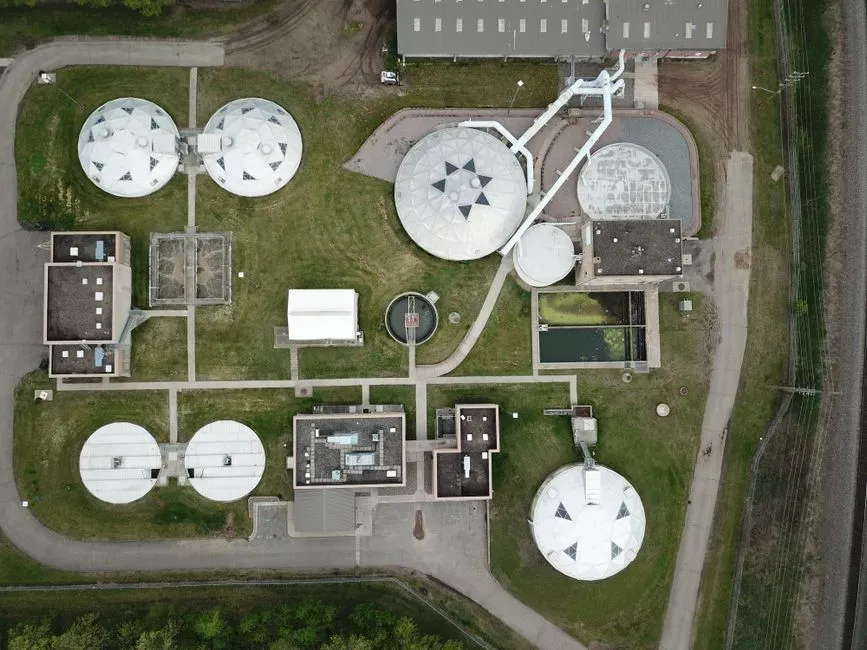
For a 100-room city hotel at roughly 50 m³/h, a WSZ underground package installed in Budapest in 2026 lands at USD 60,000–110,000 CAPEX, with OPEX around USD 0.18–0.25 per m³ treated. For a 300-room resort at 300–500 m³/day, an MBR including membranes, blowers and controls comes in at USD 250,000–500,000 installed, with OPEX around USD 0.30–0.45 per m³ treated — higher energy, lower sludge yield, and reuse offset. Auxiliary pre-treatment (DAF, screening, disinfection) typically adds 25–40% to the headline figure, so procurement should never compare a bare MBR skid against a fully scoped WSZ package. Reuse credit is real: MBR permeate used for landscape irrigation at a large resort can offset 15–25% of municipal water cost under Budapest's 2026 tariff schedule, which is meaningful against a USD 250,000+ installed base.
Selection Decision Framework: A 60-Second Buyer Flow
Use this decision tree to lock the technology choice before tendering. If design flow is below 50 m³/h and the site requires full burial with no reuse target, specify a WSZ underground package. If design flow is above 100 m³/day and the site is space-constrained and reuse for irrigation is planned, specify an MBR. If flow is 50–100 m³/day, run a 10-year lifecycle comparison and pick MBR if winter nitrification or reuse is required. If thermal-bath flow exceeds 20% of total load, add a dedicated equalisation tank and DAF before either biological system, regardless of which one is chosen. If the property sits inside Budapest's inner districts (05, 06, 07, 08) where excavation is constrained by adjacent foundations and utilities, strongly favour MBR's 60% smaller footprint over WSZ burial. If FCSM has flagged nutrient limits tighter than the standard envelope, MBR with chemical P precipitation is the only credible answer — WSZ A/O rarely hits <1 mg/L total P without a tertiary stage.
Frequently Asked Questions
What size wastewater treatment plant does a 300-room Budapest hotel need?
A 300-room Budapest hotel with standard F&B and pool typically needs 250–400 m³/day average flow, designed at 750–1,200 m³/day to absorb 3× peaking from pool backwash, spa and laundry. MBR sizing at 8–12 °C winter temperature requires 0.4–0.6 m² of PVDF flat-sheet membrane area per m³/day, plus 6–8 h equalisation volume ahead of the biological stage.
Is EU UWWTD 91/271/EEC enforced on Budapest hotel discharges?
Yes. Hungary transposes the directive through Government Decree 219/2004 (VII. 21.), and FCSM enforces connection limits of BOD ≤25 mg/L, COD ≤125 mg/L and TSS ≤35 mg/L at the discharge manhole, with NH₃-N ≤15 mg/L in summer and ≤20 mg/L in winter. Properties above 2,000 PE must provide full biological plus nutrient removal.
Can a buried package plant survive a Hungarian winter?
Yes, both WSZ and MBR units are rated for 8–12 °C continuous biological operation. Burial depth below the local frost line (approximately 0.8 m in Budapest) plus tank-top insulation maintains mixed-liquor temperature, and MBR's high mixed-liquor suspended solids (8,000–12,000 mg/L) compensates for the reduced nitrification rate at low temperature.
Do thermal-bath flows change the treatment design?
Yes — high TDS, residual chlorine and sulfate from thermal springs require a dedicated balancing tank, optional dechlorination (sodium bisulfite or activated carbon), and often pre-dilution with the domestic stream before biological treatment. Many Budapest resorts route thermal backwash to a separate holding tank and discharge it during off-peak sewer hours.
MBR or conventional activated sludge for a Budapest resort?
MBR is preferred above 100 m³/day on constrained urban Budapest sites because of its 60% smaller footprint, near-reuse effluent, and reliable winter nitrification at 8–12 °C. Conventional activated sludge remains viable where land is available, reuse is not a priority, and capital must be minimised, but it cannot match MBR's effluent TSS or footprint on a tight inner-district lot.