How Much Wastewater Does a Santiago Hotel Actually Generate?
A Santiago hotel or resort in 2026 typically needs a packaged biological treatment plant rated 1–80 m³/h (WSZ underground A/O package plant) for smaller urban properties, or an MBR membrane bioreactor (10–2,000 m³/day, <1 μm PVDF filtration) where irrigation or toilet-flushing reuse is intended. Both trains must produce effluent that complies with D.S. 609/1998 (discharge to water bodies) and D.S. 90/2000 (discharge to sewer), with NCh 1.333 governing any reuse for landscape irrigation.
The design flow starts with a per-room water footprint, not a generic "hotel number." The Ritz-Carlton Santiago publishes a benchmark of 959.12 L/room-night (S5: Ritz-Carlton, 2026) — a defensible 2026 anchor for any 4- to 5-star Santiago property. Multiplying by 0.85–0.90 converts guest water demand to sewage flow: roughly 815–865 L/room-night reaches the treatment plant as wastewater.
For a notional 120-room Santiago urban hotel at 75% annual occupancy:
- Average dry-weather flow (ADWF) = 120 × 0.86 m³ × 0.75 = 77.4 m³/day ≈ 3.2 m³/h
- Peak wet-weather flow (PWWF) with a 1.4 peaking factor = 4.5 m³/h; design flow with a 1.5× safety margin = 4.8 m³/h
- Seasonal tourism uplift (Fiestas Patrias in September, January–February summer peak, ski-season flow to the Andes corridor) typically adds another 20–30%, lifting design to ~6.0 m³/h
For resorts outside Santiago — coastal Viña del Mar, the lake district, Patagonia — apply the same 959 L benchmark and add 10–15% for pool backwash, on-site laundry, and F&B waste streams. Food-service grease in raw hotel influent typically runs 200–800 mg/L and must be pre-removed by a DAF unit or grease trap ahead of the biological stage to protect downstream membranes or clarifiers.
Finally, Chilean supply exposure is a design driver, not a footnote. The January 2013 Maipo contamination event cut water to ~600,000 families across 21 Santiago districts for roughly 10 hours (S3: BMJ, 2013-01-24). Any 2026 plant in the Santiago Metropolitan Region should include an equalization/buffer tank sized for at least 6–8 hours of peak flow to ride out supply shocks and keep the biological stage fed during a utility interruption.
| Parameter | Notional 120-room Santiago hotel | Resort (lake/coast, +12% F&B uplift) |
|---|---|---|
| Rooms × occupancy (75%) | 120 × 0.75 = 90 occupied | 120 × 0.65 = 78 occupied |
| Water footprint (L/room-night) | 959.12 (S5) | 959.12 + 115 (F&B/pool) |
| Return-as-sewer factor | 0.85–0.90 | 0.85–0.90 |
| ADWF (m³/day) | 73–77 | 76–81 |
| Peaking factor | 1.2–1.5 | 1.3–1.6 (summer peak) |
| Design flow (m³/h) | 4.5–6.0 | 5.0–6.8 |
| Equalization buffer (h) | 6–8 | 6–8 |
The Chilean Compliance Envelope: D.S. 609, D.S. 90 and NCh 1.333
Three Chilean instruments constrain every equipment choice for a hospitality WWTP, and they must be sequenced correctly: D.S. 609/1998 first, D.S. 90/2000 second, NCh 1.Of87 third. Equipment selection flows downstream from this hierarchy, not the other way around.
D.S. 609/1998 (MOP) governs discharges of liquid waste to surface water bodies — rivers, lakes, the Pacific — and is the strictest envelope. It sets limits typically applied to resort outfalls on BOD₅, total suspended solids, oils and greases, pH (6.0–8.5), temperature, and fecal coliforms. Any coastal or lake-district resort discharging to a natural receiving body falls under D.S. 609.
D.S. 90/2000 (Ministry General Secretariat of the Presidency) governs discharges to the public sewer operated by utilities such as Aguas Andinas in greater Santiago, under SISS oversight. D.S. 90 is generally more lenient on BOD₅ and TSS than D.S. 609 but stricter on heavy metals, temperature (≤30 °C typical), and certain industrial contaminants. Urban Santiago hotels in Las Condes, Providencia, and Vitacura almost always discharge to the sewer and answer to D.S. 90.
NCh 1.333.Of87 governs reuse of treated wastewater for irrigation and runs in four quality tiers: 1.33 (highest, food crops eaten raw), 1.32 (ornamental lawns, landscape with public access), 1.31 (restricted-access turf such as golf courses), 1.30 (lowest). Most hotel landscaping in Santiago maps to Category 1.32; resort golf courses map to 1.31.
Above the mandatory layer sits Sello S — Distincion en Turismo Sustentable, a voluntary SERNATUR-administered certification already held by properties such as the Ritz-Carlton Santiago (S5: 2026). Sello S rewards on-site reuse and water-footprint reductions, giving the operator a commercial rationale that goes beyond compliance.
| Instrument | Authority | Applies to | Typical envelope (BOD₅ / TSS / fecal coliforms) |
|---|---|---|---|
| D.S. 609/1998 | MOP | Discharge to surface water | BOD₅ ≤35 mg/L; TSS ≤80 mg/L; fecal coliforms <1,000 NMP/100 mL (typical resort outfall limits) |
| D.S. 90/2000 | Min. Secretaría Gral. de la Presidencia | Discharge to sewer (Aguas Andinas/SISS) | BOD₅ ≤300 mg/L; TSS ≤300 mg/L; T ≤30 °C; pH 5.5–9.0; heavy metals capped per Annex 1 |
| NCh 1.333.Of87 | INN | Reuse for irrigation (Cat. 1.30–1.33) | Cat. 1.32: fecal coliforms <1,000 NMP/100 mL; nematodes <1 egg/L; turbiedad <2 NTU |
Process Train for a 2026 Santiago Hotel WWTP
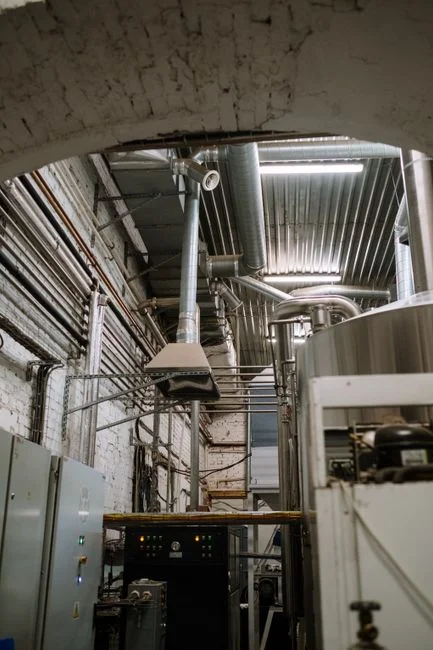
The unit-operation sequence for a 2026 Chilean hotel plant runs: headworks → pre-treatment (FOG removal) → biological stage (WSZ A/O or MBR) → disinfection → sludge handling. Each link is sized by the design flow from the previous section.
Headworks. A rotary mechanical bar screen with 3–6 mm aperture protects downstream pumps and membranes. Use 3 mm spacing if the next stage is an MBR (rags and fibres blind membrane modules faster than they blind clarifiers); 6 mm is acceptable ahead of a conventional WSZ A/O tank.
F&B pre-treatment. Hotel kitchens generate 200–800 mg/L of oil and grease in the raw stream. A properly sized DAF pre-treatment for hotel FOG removes 60–90% of FOG before the biological stage, preventing scum blanket carryover and protecting membrane surfaces in MBR plants.
Biological stage. Two practical options for a 2026 Santiago hotel:
- WSZ underground A/O package plant (1–80 m³/h) for small and medium properties with no reuse target — HRT 6–10 h, MLSS 3,000–5,000 mg/L, fully buried, no operator required.
- MBR membrane bioreactor skid (10–2,000 m³/day, 0.1 μm PVDF) for properties targeting NCh 1.333 reuse — HRT 8–14 h, MLSS 8,000–12,000 mg/L, surface installation.
Disinfection. Specify an on-site chlorine dioxide generator rather than chlorine gas. ClO₂ dosing at 1–3 mg/L with 30–60 minutes contact time hits D.S. 609 fecal-coliform targets, produces no trihalomethanes (THMs), and is generated on-demand from sodium chlorite plus an activator — no cylinder handling, no hazardous gas on a guest-occupied site.
Sludge handling. A small plate-and-frame filter press or decanter centrifuge dewastes the waste-activated sludge stream. Plan for thickened sludge at 18–22% dry solids, with a volumetric yield of roughly 1.5–2.5% of influent flow.
| Unit operation | Specification | Operating range |
|---|---|---|
| Bar screen (rotary) | 3 mm (MBR) / 6 mm (WSZ) | Capture >90% of >aperture solids |
| DAF (FOG removal) | 5–15 m³/h per unit | FOG removal 60–90% |
| WSZ A/O package | 1–80 m³/h, buried | HRT 6–10 h; MLSS 3,000–5,000 mg/L |
| MBR skid | 10–2,000 m³/day | HRT 8–14 h; MLSS 8,000–12,000 mg/L; flux 15–25 LMH |
| ClO₂ generator | 50–500 g/h | Dose 1–3 mg/L, contact 30–60 min |
| Filter press / decanter | 1–4 m³/h capacity | Cake 18–22% DS |
WSZ Package Plant vs MBR: Which One Fits Your Property?
The decision is rarely technical in isolation — it is driven by site constraints, reuse intent, and lifecycle cost. The matrix below is the one a Santiago chief engineer would copy into a board memo for a 150+ room property.
Footprint and aesthetics. The WSZ is fully buried with landscaping recoverable above grade. On urban Santiago sites in Las Condes, Providencia, and Vitacura, where land cost is high and the hotel cannot surrender surface area to a treatment plant, WSZ wins on footprint and visual impact. The MBR needs surface skid plus tankage and is harder to hide in a tight urban parcel.
Effluent quality. WSZ typically produces BOD₅ ≤20 mg/L and TSS ≤20 mg/L — sufficient for D.S. 90 sewer discharge and for D.S. 609 with a polishing step. The MBR membrane bioreactor module routinely produces BOD₅ <5 mg/L and TSS <1 mg/L — sufficient for NCh 1.333 reuse without further filtration.
Reuse economics. At current Santiago potable-water tariffs and the Sello S sustainability premium that follows a documented water-footprint reduction, reuse for landscape irrigation and toilet flushing typically pays back an MBR skid in 4–7 years for a 150+ room hotel. Below ~100 rooms the WSZ-only path is almost always the lower-NPV option.
Operational complexity. WSZ is fully automated and can run unattended — a decisive advantage for smaller properties. MBR requires periodic membrane CIP (clean-in-place) every 3–6 months and disciplined aeration management. Submerged flat-sheet MBR modules consume 10–20× less energy than external cross-flow systems, which is the cost-control lever for any operator worried about lifetime OPEX.
| Decision criterion | WSZ underground A/O | MBR membrane bioreactor |
|---|---|---|
| Flow range | 1–80 m³/h | 10–2,000 m³/day |
| Effluent BOD₅ / TSS | ≤20 / ≤20 mg/L | <5 / <1 mg/L |
| Reuse-ready? | No (polishing required) | Yes (NCh 1.332 / 1.331) |
| Footprint | Buried; recoverable above | Surface skid + tankage |
| Operator required | No (automated) | Yes (CIP every 3–6 mo) |
| Typical payback vs WSZ | — | 4–7 years (150+ rooms) |
| Best fit | Urban sites <100 rooms, sewer discharge | Resorts, 150+ rooms, reuse targets |
Designing for 2026 Risks: Drought, Supply Cuts and Reuse as Resilience
Santiago's supply fragility is no longer hypothetical. The 2013 Maipo contamination event cut water to ~600,000 families across 21 districts for roughly 10 hours (S3: BMJ, 2013-01-24), and the structural urban stress on the Mapocho/Maipo system has not eased. For a 2026 hotel, on-site reuse plus a 6–8 hour equalization buffer is a defensible resilience investment, not an environmental indulgence.
A layered reuse scheme on the MBR effluent path: MBR permeate → NCh 1.333 Category 1.32 storage pond → landscape irrigation + toilet flushing. A 200-room hotel reusing 40% of its treated effluent can offset ~80 m³/day of potable demand — a meaningful hedge against a 10-hour supply cut and a measurable line item on the Sello S water-footprint scorecard.
That hedge lines up directly with the Sello S benchmark. The Ritz-Carlton Santiago, already certified, publishes 959.12 L/room-night water footprint and 25.72 kg CO₂/room-night (S5: 2026). A reuse-equipped MBR attacks both metrics at once: less potable water drawn, less pumping energy, lower carbon per occupied night. Pairing the MBR with a plate-and-frame filter press for sludge dewatering and an automatic chemical dosing system for membrane CIP and pH control closes the loop on operational reliability.
Final permitting gates for 2026: a water-reuse agreement with the local SEREMI de Salud for the irrigation/reuse scheme, and — for any sewer outfall — a discharge permit from the corresponding SISS-regulated utility (Aguas Andinas in greater Santiago, or ESSAL / ESSBIO in other regions). Lock both in before the procurement order, not after.
Frequently Asked Questions
What size wastewater treatment plant does a 120-room Santiago hotel need?
For a 120-room Santiago urban hotel at 75% occupancy, applying the Ritz-Carlton 959.12 L/room-night benchmark (S5: 2026) and a 0.85 return-as-sewer factor, the average dry-weather flow is ~77 m³/day (≈3.2 m³/h). With a 1.5× peaking factor and a 20–30% tourism uplift, the design flow is ~5–6 m³/h, which maps cleanly to a small WSZ underground A/O package plant.
Which Chilean discharge standard applies — D.S. 609 or D.S. 90?
It depends on the outfall. D.S. 609/1998 (MOP) applies to discharges to surface water — rivers, lakes, the Pacific — and is the stricter envelope. D.S. 90/2000 applies to discharges to the public sewer operated by Aguas Andinas under SISS oversight in greater Santiago. Most urban Santiago hotels discharge to sewer and answer to D.S. 90; coastal or lake-district resorts usually face D.S. 609.
Can a Santiago hotel reuse its treated wastewater for irrigation?
Yes, under NCh 1.333.Of87. Most hotel landscaping maps to Category 1.32 (ornamental lawns, public-access landscape); resort golf courses typically map to 1.31 (restricted-access turf). An MBR producing BOD₅ <5 mg/L and TSS <1 mg/L meets these limits directly — see the MBR installation and commissioning guide for the commissioning sequence.
Is a packaged WWTP from a Chinese manufacturer compliant with D.S. 609 and D.S. 90?
Compliance is driven by the effluent envelope the equipment actually produces, not its country of origin. A packaged skid sized and configured to deliver BOD₅ ≤20 mg/L and TSS ≤20 mg/L is suitable for D.S. 90 sewer discharge; a unit delivering BOD₅ <5 mg/L and TSS <1 mg/L can meet D.S. 609 with appropriate disinfection. For a comparable hospitality case study outside Chile, see the Brisbane hotel wastewater 2026 guide.