Why Hotel Wastewater in Sri Lanka Is a 2026 Engineering Priority
Hotel and resort wastewater treatment in Sri Lanka in 2026 is governed by CEA/SLSI discharge parameters and typically uses a packaged biological plant — most commonly an MBR, a buried WSZ-series A/O plant, or a DAF-fed aerobic system — sized for 150–400 L per guest per day and designed to protect coastal bathing waters that already show elevated indicator bacteria during peak season. The Kynrock Hotels & Resorts installation in Kataragama, completed by a Negombo-based environmental consultancy in August 2025, demonstrates that the Sri Lankan hospitality sector is actively commissioning packaged STPs with CEA-approved processes and 25-year process warranties (Eco Engineer's & Consultancy, 2025-08). That single project is the proof point: mid-scale resorts are moving from "septic + soakaway" to engineered plants within the same procurement cycle as a refurbishment.
Reputational exposure is now as important as regulatory compliance. A widely-shared August 2025 post in the Sri Lanka Travel and Tourism group documented housekeeping staff dumping guest-room waste directly into a lagoon at a "highly rated hotel in an exclusive, gated area" — 74 reactions, 12 comments, 11 shares, mostly from international visitors (Sri Lanka Travel and Tourism Facebook group, 2025-08). Tourism contributes roughly 10–12% of Sri Lankan GDP, and a single viral video at a coastal property can depress booking conversion across a brand. Conversely, the Heritance Kandalama case study shows that biophilic design — landscape integration, silence, absence of odor — is a primary driver of guest satisfaction in Sri Lankan resorts (Faculty of Architecture Research Unit, 2022). A buried, odorless, silent STP is therefore not a luxury option; it is a guest-experience specification.
Microbiological risk sharpens the engineering case further. Alahakoon et al. (2015) sampled west-coast bathing sites and recorded total coliform and fecal coliform counts that exceeded WHO 1998/2003 recreational-water guidelines at multiple stations during the south-west monsoon peak. Their reference list pulls directly on WHO coastal and fresh-water recreational guidance (refs 8, 10) and on US-EPA 40 CFR Part 131 criteria. A resort discharging into that same water column inherits the public-health question — and the design target.
Sri Lankan Discharge Standards and Design Basis for Hotels
Every STP selection in Sri Lanka starts from two numbers: the regulatory ceiling (what the CEA will accept at the discharge point) and the hydraulic/loading floor (what the property actually generates). The CEA-approved process certificate referenced in the Kynrock project is a vendor-level credential — it confirms the treatment train has been reviewed against the national framework, which shortens the Site Clearance Letter (SCL) and Environmental Protection Licence (EPL) review. The schedule itself covers BOD, TSS, fecal coliform, pH, oil & grease, and residual chlorine as the typical envelope for hospitality discharges; confirm the latest numerical limits with the CEA at design stage, as schedule revisions are not always published online.
For coastal resorts discharging near bathing beaches, the WHO 1998/2003 recreational-water guidelines add a second envelope on fecal-indicator organisms in the receiving water — that is what Alahakoon et al. (2015) benchmarked against and what a defensible EIA should reference. Inland discharges into streams feeding drinking-water abstractions fall under different SLSI parameter windows and typically demand tighter ammonia and fecal-coliform numbers.
| Parameter | Unit | Hotel design value | Notes |
|---|---|---|---|
| Guest occupancy (assumed) | guests | 1.5–2.0 per occupied room | Use 1.8 for design, 2.0 for peak |
| Water consumption | L/bed/day | 200–350 | Higher for 5-star with laundry, pools, gardens |
| Wastewater generation factor | — | 0.70–0.80 of consumption | Account for pool backwash, irrigation bleed-off |
| Average daily flow (ADF) | m³/day | rooms × guests × L/g/d ÷ 1000 | Used to size biological reactor and clarifier |
| Peak hourly factor | × ADF | 2.0–2.5 | Use 2.5 for resorts with banquet/conference |
| Influent BOD₅ | mg/L | 250–400 | Higher with food-court and staff quarters |
| Influent TSS | mg/L | 250–350 | Lower with grit removal upstream |
| Influent oil & grease | mg/L | 50–150 | Force main kitchen grease trap; pre-DAF if exceeded |
| Influent temperature | °C | 26–32 (coastal) / 18–24 (hill country) | Drives HRT and biological kinetics |
Two derivations the EPC consultant will use repeatedly: design flow for the biological reactor = rooms × guests × L/g/d × 0.75 ÷ 1000, and peak instantaneous flow for the equalization/hydraulic profile = ADF × 2.0 to 2.5. A 60-key boutique at 180 L/g/d with 1.8 guests/room is roughly 16 m³/day ADF and 40 m³/h peak — exactly the envelope a packaged plant is built for. A 250-key five-star with laundry and spa can run 80–110 m³/day ADF, which is the threshold where MBR economics start to dominate.
Process Trains Compared: MBR, Buried A/O Package, and DAF + Biological
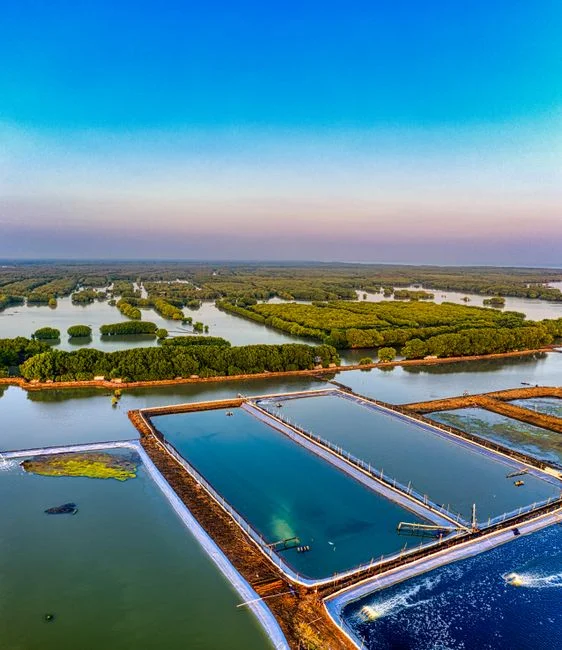
Three architectures dominate the quotes an EPC consultant in Sri Lanka will see for hospitality projects. They are not interchangeable; they target different flow ranges, footprint constraints, and reuse intentions.
MBR (submerged PVDF, <1 µm filtration) couples an anoxic/aerobic basin with immersed ultrafiltration modules. The membrane barrier holds all biomass and most colloids, so effluent typically reads BOD <5 mg/L, TSS <1 mg/L, and turbidity <1 NTU — close to reuse quality without tertiary polishing. Footprint is roughly 60% of a conventional activated-sludge plant at the same load because mixed liquor suspended solids (MLSS) can run 8,000–12,000 mg/L versus 2,500–4,000 mg/L. Capex sits at the high end of the three options, opex is moderate (membrane air-scour + periodic chemical clean-in-place), and sludge yield is the lowest of the three at 0.2–0.3 kg TSS/kg BOD removed. A site-by-site MBR install is documented in the MBR installation and commissioning engineering guide (2026).
Buried WSZ-series A/O package integrates anoxic zone, aerobic zone, sedimentation, and a disinfection chamber inside a single buried tank that sits under a lawn, driveway, or car park. The unit is factory-built, delivered as one or two crates, and operates with no daily operator. It is the default answer for boutique and mid-scale resorts between 1 and 80 m³/day, and the format is the buried WSZ-series A/O package plant most often specified under the lawn of a beach resort. Capex is the lowest of the three, opex is minimal, and the visual/olfactory footprint is zero — which is why it pairs with biophilic briefs like Heritance Kandalama.
DAF + conventional aerobic uses a dissolved air flotation unit ahead of an aeration basin to strip FOG and a fraction of TSS before biology. It earns its place when the kitchen grease load is high — large resorts with central kitchens, banquet operations, or multiple F&B outlets — where grease-trap maintenance would otherwise dominate operator workload. DAF typically removes 60–90% of FOG and 40–70% of TSS at hydraulic residence times of 20–40 minutes, after which a standard aerobic reactor (SBR, MBBR, or oxidation ditch) finishes the job. The DAF pre-treatment stage is sized to peak kitchen flow, not average domestic flow, and protects downstream biology from hydraulic and organic shocks.
| Criterion | MBR (PVDF submerged) | Buried WSZ A/O package | DAF + aerobic reactor |
|---|---|---|---|
| Flow envelope | 80–2,000 m³/day | 1–80 m³/day | 50–500 m³/day |
| Effluent BOD (typical) | <5 mg/L | ≤20 mg/L | ≤20 mg/L (with good biology) |
| Effluent TSS (typical) | <1 mg/L | ≤30 mg/L | ≤30 mg/L |
| Footprint | Smallest (60% of CAS) | Zero (buried) | Largest of the three |
| CAPEX tier | High | Low | Medium-high |
| OPEX tier | Moderate (membrane CIP) | Low | Moderate (DAF air, polymer) |
| Sludge yield | Lowest (0.2–0.3 kg/kg BOD) | Low | Moderate (DAF float is separate stream) |
| Reuse-ready effluent? | Yes — landscape, toilet flush | No (polish required) | No (polish required) |
| Best-fit site | 80+ key, reuse specified, constrained plot | Boutique ≤60 key, no dedicated plant room | Large resort, central kitchen, FOG-heavy |
The MBR option in this comparison is the MBR membrane bioreactor system configuration most frequently specified in the 100–500 m³/day hotel range.
Coastal vs Inland Resort: How Site Conditions Reshape the Design
Site conditions in Sri Lanka change the plant spec as much as the flow does. Coastal properties (Negombo, Bentota, Hikkaduwa, Pasikuda, Trincomalee) face saline intrusion, sand-laden wash water from outdoor showers and beach access, and outfall constraints tied to bathing-water protection. Salt loading above roughly 3,000 mg/L Cl⁻ begins to suppress nitrification, so designers either specify a robust screening and equalization stage that buffers salinity spikes, or they confirm a salinity-tolerant biomass (some MBRs run marine-seeded consortia). The fine screening requirement is non-negotiable on a coastal site: a rotary mechanical bar screen ahead of the membranes protects against sand that would otherwise score the PVDF fibers or settle in biological basins. The outfall itself should be reviewed against the WHO 1998/2003 recreational-water fecal-indicator envelopes that Alahakoon et al. (2015) benchmarked on the west coast.
Inland and hill-country properties (Kandalama, Ella, Nuwara Eliya, knuckles range) face a different constraint: lower ambient temperatures. At 18–22°C average water temperature, nitrification kinetics slow to roughly 50–60% of tropical rate, so either hydraulic residence time extends (typical 14–18 h HRT in the aerobic zone, versus 8–10 h on the coast) or the reactor is covered for thermal stability. Discharge destinations are typically inland streams with stricter fecal limits than coastal outfalls, and ammonia targets tighten. These sites are also the ones where the biophilic-design literature on Heritance Kandalama applies most directly: a buried, silent, odorless package preserves the landscape experience that guests are paying for. The same logic rules out any above-ground activated-sludge plant with an open clarifier within 30 m of a guest area.
Disinfection, Sludge Handling, and Water Reuse for Sri Lankan Resorts
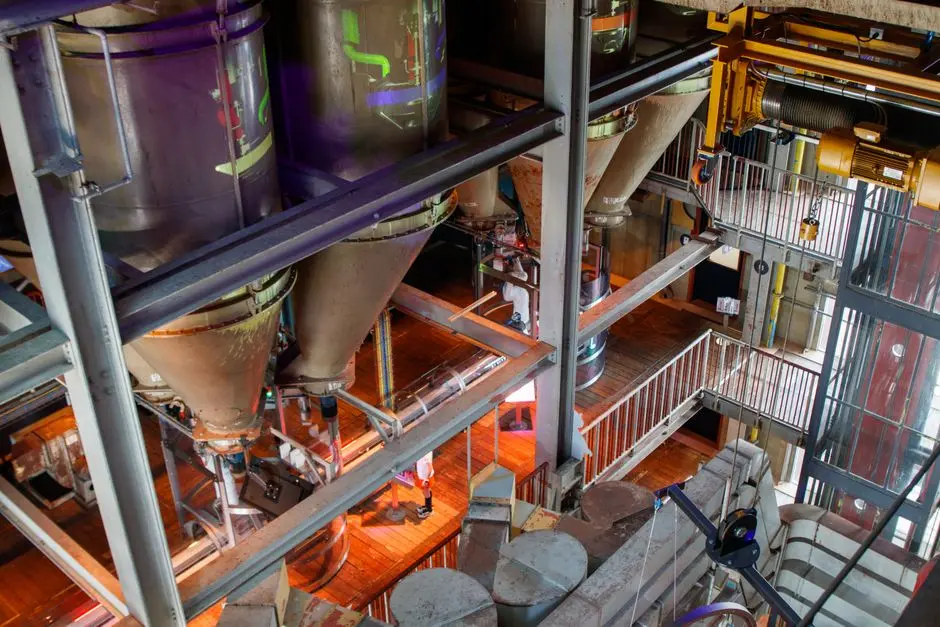
After the biological reactor, three downstream decisions close the mass balance. First, disinfection. An on-site chlorine dioxide generator is the right call for remote resorts where chlorine cylinder logistics are unreliable; ClO₂ is effective across the 6–8 pH band typical of biological effluents and does not form trihalomethanes at the doses used for fecal-coliform control. The target indicator organism is fecal coliform (or E. coli), benchmarked against WHO 1998/2003 recreational-water guidance for coastal discharges (Alahakoon et al. 2015, refs 8, 10).
Second, sludge. A plate-and-frame filter press for sludge dewatering produces a 25–35% dry-solids cake that can be transported off-site by a licensed hauler or composted with green waste on a dedicated pad. This matters in Sri Lanka because resort land is premium — sludge lagoons are no longer acceptable next to a guest lawn. On-site sludge minimization is a real engineering outcome of MBRs and well-designed A/O packages: longer sludge age (SRT 20–30 days) means lower yield and less frequent dewatering campaigns, which is also why the Kynrock marketing literature emphasizes "minimum sludge" as a procurement benefit (Eco Engineer's & Consultancy, 2025-08).
Third, reuse. MBR permeate plus disinfection supports landscape irrigation and toilet flushing directly; an RO polishing stage is only required where the reuse is guest-contact (showers, laundry, pool make-up). For most Sri Lankan resorts, landscape irrigation is the highest-value reuse because it cuts both fresh-water intake and irrigation-fertilizer cost — and it is the reuse case best matched to MBR permeate quality. The selection logic for hotels outside Sri Lanka follows a similar pattern; see the Brisbane hotel wastewater system selection comparison for a parallel tropical-resort case (2026 engineering guide).
2026 Procurement Checklist and CEA Approval Pathway
Before any technical comparison, confirm the vendor holds a CEA-approved treatment process certificate — the Kynrock framing in 2025-08 makes this the single most important pre-qualifier for hospitality projects in Sri Lanka. Without it, the Site Clearance Letter review drags and the EPL timeline slips. Once pre-qualification is established, the technical comparison should run against a fixed scope.
- Request a process design report with influent/effluent parameters, hydraulic profile, and an explicit SLSI/CEA compliance matrix.
- Verify the full scope: screening, biological reactor, clarification, disinfection, sludge dewatering, control panel, and commissioning — not just the reactor.
- Ask for at least two reference installations in Sri Lankan hospitality, with contactable owners and operating data older than 12 months.
- Confirm a 12-month performance warranty on BOD/TSS/fecal-coliform compliance, separate from the 25-year process warranty referenced in the Kynrock marketing claim.
- Specify commissioning support per the MBR installation and commissioning engineering guide (2026) and request a training week for the resort's engineering team before handover.
Two final items outside the technical envelope. First, ask for an operating-cost projection at 60%, 80%, and 100% occupancy — the same plant looks very different at 30 m³/day versus 110 m³/day. Second, ask how the plant's energy intensity is going to evolve with the resort's own decarbonization plan; buried WSZ and MBR both have modest, well-characterized footprints that can be met with on-site solar, but the vendor should be able to model that. The detailed framework for cutting plant energy and water use across hospitality and industrial sites is covered in the industrial water footprint reduction strategies piece (2025).
Frequently Asked Questions
What is the typical design flow per guest for a Sri Lankan hotel STP?
Size at 150–400 L per guest per day depending on star rating, with 0.70–0.80 returned as wastewater and a peak hourly factor of 2.0–2.5× average. A 60-key boutique at 180 L/g/d with 1.8 guests/room is roughly 16 m³/day ADF and 40 m³/h peak — squarely in the buried WSZ envelope. (Per S1 design basis, 2025-08.)
Which process train is best for a 200-key beach resort in Sri Lanka?
Specify an MBR (submerged PVDF, <1 µm) sized for 80–110 m³/day, with a rotary bar screen upstream and a plate-and-frame filter press for sludge. The MBR delivers reuse-quality effluent, 60% smaller footprint than CAS, and the lowest sludge yield of the three options. (Per S1, S3, and MBR engineering guide 2026.)
How are coastal outfalls protected in Sri Lankan resort projects?
Discharge design benchmarks effluent fecal coliform against WHO 1998/2003 recreational-water guidelines and screens outfall siting against the Alahakoon et al. (2015) west-coast microbiological data, not just the SLSI schedule. Disinfection with on-site chlorine dioxide generation is preferred over cylinder chlorine for remote sites. (Per S3 refs 8, 10.)
Is a buried package STP acceptable for a CEA permit in Sri Lanka?
Yes, provided the vendor holds a CEA-approved treatment process certificate and the design report shows compliance with the SLSI effluent parameter schedule. The Kataragama Kynrock installation in 2025-08 confirms that buried packaged plants are routinely approved when documentation is complete. (Per S1, 2025-08.)