Why Lisbon hotels need a dedicated wastewater system in 2026
A Lisbon hotel faces a 2.0–2.5× winter-to-summer occupancy swing, against ~1.3× for an office building of equivalent floor area, so the biological stage must be sized on peak load rather than annual mean. Kitchen FOG (fats, oils, grease) loads of 50–150 mg/L arrive with that peak, and heritage lots in the Baixa, Alfama, and Chiado leave almost no surface area for an above-ground plant. Anecdotal field signal is already on the record: the September 2025 r/Lisbon thread titled "sewage smells in hotels" catalogues complaints from guests in older Baixa properties, indicating that legacy septic and undersized lift stations remain common in 2026 and that operators of new builds cannot rely on municipal-only solutions. The 2022 and 2024 Iberian drought cycles pushed Águas de Portugal and the Câmara Municipal de Lisboa to encourage on-site reuse for non-potable end uses, and the EU Water Reuse Regulation 2020/741, in force since June 2023, gives a Lisbon hotel in 2026 a defined quality envelope for toilet-flush and irrigation reuse that an off-the-shelf municipal connection does not deliver. The result is a packaged, modular process train sized for 10–500 m³/day with a buried envelope, not a 1970s-sized clarifier complex.
The 2026 compliance perimeter: Decree-Law 152/97, EU Directive 91/271/EEC, and APA limits
Decree-Law 152/97 transposes EU Directive 91/271/EEC into Portuguese law and is the document an APA (Agência Portuguesa do Ambiente) inspector will cite on a 2026 site visit. It sets the urban wastewater collection and treatment regime, including the 10,000 PE (population equivalent) threshold above which secondary biological treatment becomes mandatory and a more stringent effluent envelope applies. Most individual Lisbon hotels sit below 10,000 PE (one PE ≈ 60 g BOD₅/day, so a 200-room hotel at 60% occupancy is closer to 240 PE), but cumulatively, Baixa and Avenida da Liberdade hotel clusters can push a sub-catchment above the threshold, and the discharge authorization is then issued against the upper-tier limits. The standard APA discharge envelope for a 2026 hotel authorization in a sensitive area such as the Tagus estuary basin is BOD₅ ≤25 mg/L, COD ≤125 mg/L, TSS ≤35 mg/L, with total phosphorus typically designed at ≤2 mg/L. Where reuse is intended, EU 2020/741 (in force since 2023) layers on reclaimed-water quality classes: Class C (minimum 5-day log reduction for E. coli and ≤10 NTU turbidity) is the entry point for urban irrigation, and Class B (≤10 CFU/100 mL E. coli) is the typical target when a hotel wants to irrigate hotel grounds or flush toilets from treated effluent. The two instruments are not alternatives — Decree-Law 152/97 sets the discharge ceiling, and 2020/741 sets the reuse ceiling, and the same plant must satisfy both.
What a Lisbon hotel effluent actually looks like: flows and loadings
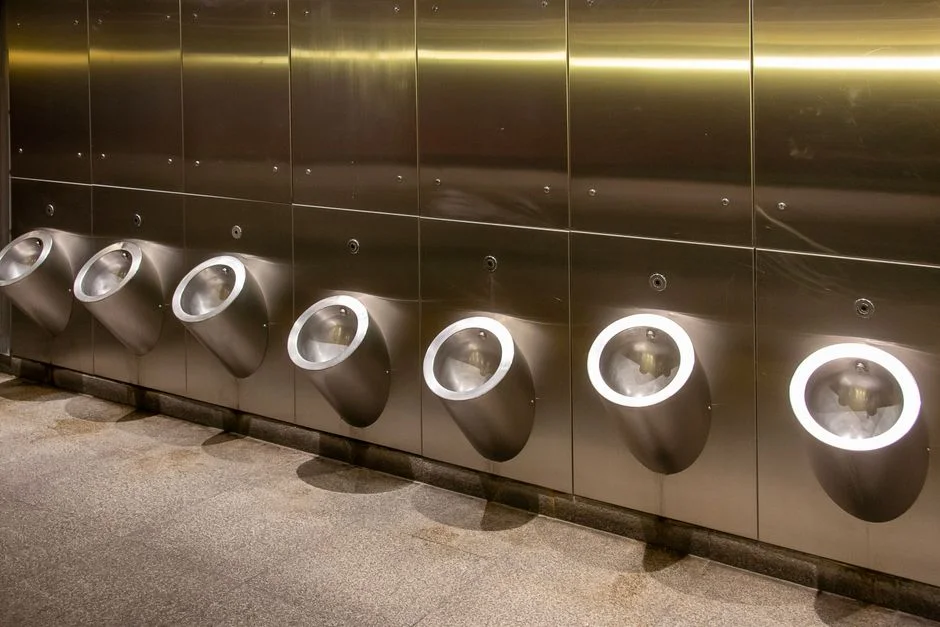
Use 0.20–0.25 m³ per guest per day as the per-capita flow basis (water authority figure for Portuguese hotel design), and multiply by average occupancy of ~0.6 to get dry-weather flow (DWF) for the biological stage. Apply a peak factor of 2.0–2.5 to DWF for sizing equalization, aeration, and membrane flux, capturing the weekend-plus-summer surge that defines a Lisbon coastal or city-center property. The table below consolidates typical 2026 influent characteristics for a 200-room city hotel against the APA discharge target, so the engineer can audit each reduction percentage before specifying equipment. A properly sized WSZ underground package sewage treatment plant is designed to meet these envelopes inside a single factory-built envelope that can be lowered into a 4 m × 8 m excavation in a service yard.
| Parameter | 200-room hotel influent (typical) | APA discharge target | Reduction required |
|---|---|---|---|
| Flow | 0.22 m³/guest·d × 200 × 0.6 = ~26 m³/d (DWF); ~65 m³/d peak | — | — |
| BOD₅ | 250–400 mg/L | ≤25 mg/L | ~92–94% |
| COD | 500–800 mg/L | ≤125 mg/L | ~75–84% |
| TSS | 200–350 mg/L | ≤35 mg/L | ~83–90% |
| FOG (kitchen) | 50–150 mg/L | ≤15 mg/L (typical sewer tariff trigger) | ~85–90% |
| Total nitrogen | 30–60 mg/L | ≤15 mg/L (sensitive area) | ~50–75% |
| Total phosphorus | 4–10 mg/L | ≤2 mg/L | ~50–80% |
The four-stage process train Lisbon hotels actually use in 2026
Stage 1 — pre-treatment — uses a rotary mechanical bar screen with 3–5 mm aperture to protect downstream pumps, followed by a grit chamber sized at 1–3 minutes retention at peak flow. Stage 2 — FOG and starch removal — uses a DAF unit (the DAF unit for FOG removal, covering 4–300 m³/h) positioned ahead of the biological reactor; air-to-solids ratios of 0.02–0.05 kg air/kg TSS and 15–25% recycle rate are typical for hotel kitchen wastewaters. Stage 3 — biological treatment and membrane separation — is the heart of the train: an MBR with submerged PVDF (polyvinylidene fluoride) flat-sheet membranes at 0.1 μm pore size operating at 10–25 LMH (liters per square meter of membrane per hour) flux, MLSS (mixed liquor suspended solids) of 8,000–12,000 mg/L, and SRT (sludge retention time) of 20–40 days, eliminating the secondary clarifier entirely and delivering <1 μm filtered effluent. Stage 4 — disinfection and reuse — uses a chlorine dioxide disinfection generator in the 50–20,000 g/h range sized for a 99%+ microbial kill, or UV at 30–40 mJ/cm² dose, with a tee to a treated-water tank for toilet flushing and landscape irrigation per EU 2020/741 quality classes. Pre-treatment screening should be specified with a rotary mechanical bar screen rated for the DWF, not the average, because peak-flow bypassing of screening is the most common cause of downstream membrane fouling in retrofits.
MBR vs SBR vs IFAS: which biological stage fits a Lisbon hotel
MBR is the 2026 default for most Lisbon hotels because the 0.1 μm membrane step delivers an effluent already below 5 mg/L TSS and below 5 mg/L BOD₅, which clears the APA envelope without a tertiary polishing stage and meets EU 2020/741 Class B turbidity (≤10 NTU) with no additional coagulation. MBR also occupies roughly 60% of the footprint of an equivalent SBR (sequencing batch reactor), which is decisive for buried retrofits in the Baixa, and handles a 2.0–2.5× peak factor through its equalization tank rather than through enlarged aeration basins. SBR is the lower-CAPEX alternative for ground-level resorts outside the heritage zone, where footprint is unconstrained and reuse is not a goal — a single basin with timed fill/react/settle/decant phases can hit 25 mg/L BOD₅ and 35 mg/L TSS at the cost of longer total cycle time (4–6 hours per cycle) and a 30–50% larger basin than an equivalent MBR. IFAS (integrated fixed-film activated sludge), referenced in the IFAS hotel wastewater engineering guide, is the retrofit choice when an existing activated-sludge tank is already in place and the operator wants to lift capacity 30–50% without new civils — biofilm carriers add media surface area of 200–500 m²/m³ at 30–70% fill, while the existing blowers and clarifier stay in service. The table below is the working comparison the buyer should take into a supplier meeting.
| Technology | Footprint index (MBR = 1.0) | CAPEX index | Reuse suitability (EU 2020/741) | Peak-load tolerance | O&M skill level |
|---|---|---|---|---|---|
| MBR | 1.0 | 1.2–1.4 | Class A/B (irrigation + toilet flush) | High (equalization + SRT buffer) | Medium (membrane cleaning) |
| SBR | 1.6–1.8 | 1.0 | Class C only (irrigation, no toilet flush) | Medium (cycle retiming) | Low–Medium (timer + decanter) |
| IFAS | 0.8–1.0 (retrofit) | 0.7–0.9 (retrofit) | Class C; Class B with polishing | High (biofilm buffer) | Low (carrier inspection) |
Footprint, buried installation, and the WSZ underground option
Buried installation is the Lisbon norm in the Baixa, Alfama, and Chiado because a below-grade plant has zero above-grade visual impact, eliminates the odor complaint risk that triggers APA enforcement under Decreto-Lei 152/97, and frees the surface for parking, drop-off, or landscaping — all scarce assets in a heritage district. The WSZ underground package sewage treatment plant integrates A/O (anoxic/oxic) contact oxidation, sedimentation, and disinfection into a single factory-built unit covering 1–80 m³/h, with a covered tank envelope, PLC (programmable logic controller) automation, and no full-time operator required. Noise is contained to <55 dB at 1 m with the standard cover; odor is controlled through the covered tank plus integrated chlorination, and the PLC drives aeration, backwash, and disinfection on a duty/standby cycle. Where the buried plant sits under a hotel drop-off or service yard, specify a traffic-rated slab (typically 25–30 cm reinforced concrete at 10 kN/m² live load) and confirm with the structural engineer that the excavation depth stays above the municipal interceptor invert. For sites with a high water table, specify a buoyancy check (factor of safety ≥1.2 against empty-tank uplift) and an anchored base slab.
2026 cost envelope: CAPEX, OPEX, and the reuse payback math
For a 150–300 room Lisbon hotel in 2026, a packaged MBR + DAF + disinfection system lands at roughly €1,800–€2,800 per room on a turnkey basis, with buried installation adding 15–25% to the civil scope (HydropureWater field data, 2026). OPEX (operating expenditure) is ~€0.45–€0.70 per m³ treated, covering energy (typically 0.8–1.2 kWh/m³ for MBR aeration plus 0.1–0.2 kWh/m³ for membrane scour), chemicals (chlorine dioxide or NaOCl at 2–5 g/m³), and membrane replacement amortized over a 7–10 year membrane life. The reuse payback triggers when the avoided municipal water tariff exceeds the marginal reuse cost: at Lisbon 2026 non-potable tariffs above €3.50/m³, on-site reuse for toilet flushing and irrigation cuts municipal water draw by 30–45% and returns the incremental CAPEX (storage tank, reuse distribution, dual plumbing) in ~5–7 years. Cross-checks against similar mid-density coastal cities confirm the band: the Casablanca hotel wastewater treatment 2026 guide and the Kuala Lumpur hotel wastewater treatment 2026 guide both land within ±15% of the Lisbon envelope once heritage-district burial is excluded from their ground-level resort baselines.
| Cost line | 2026 Lisbon range | Basis |
|---|---|---|
| Packaged MBR + DAF + disinfection, turnkey | €1,800–€2,800 / room | 150–300 room hotel, above-grade |
| Burial premium | +15–25% | Civil works, traffic slab, buoyancy check |
| OPEX (energy + chemicals + membrane amortized) | €0.45–€0.70 / m³ | 7–10 year membrane life, 0.8–1.2 kWh/m³ |
| Reuse payback (toilet flush + irrigation) | 5–7 years | Tariff > €3.50/m³, 30–45% offset |
Decision framework: which system a Lisbon hotel should pick in 2026
Pick the system by hotel size, siting, and reuse target. A 40–80-room boutique in the Baixa or Alfama with no on-site kitchen above reheating should run a single WSZ underground package sewage treatment plant with UV polishing, buried under the service yard, and discharge to the municipal interceptor under the Decree-Law 152/97 baseline. A 100–200-room city hotel with a full kitchen and a reuse target should run the full four-stage train: DAF for FOG, an MBR membrane bioreactor system sized to 2.0–2.5× peak, chlorine dioxide polishing, and a reuse tank feeding toilet flush and landscape irrigation at EU 2020/741 Class B. A 200–400-room resort with golf-course or large landscaped grounds should run MBR + a dedicated irrigation loop at EU 2020/741 Class B, sized on summer occupancy with a 5,000–10,000 m³ reuse tank buffer to ride out the August peak. An existing activated-sludge plant that needs a capacity lift without new civils should follow the IFAS hotel wastewater engineering guide and defer the MBR capex by 5–8 years while clearing the APA envelope.
Frequently Asked Questions
What size wastewater treatment plant does a 200-room Lisbon hotel need in 2026?
A 200-room Lisbon hotel needs a packaged plant of 60–80 m³/day, sized at 0.20–0.25 m³ per guest per day and 0.6 average occupancy, with a 2.0–2.5× peak factor, and typically delivered as an MBR between 50 and 100 m³/day in the HydropureWater MBR membrane bioreactor system range.
What APA effluent limits apply to a Lisbon hotel discharging to the Tagus basin?
The 2026 APA discharge envelope for a hotel discharging to the Tagus basin is BOD₅ ≤25 mg/L, COD ≤125 mg/L, TSS ≤35 mg/L, with total phosphorus typically designed at ≤2 mg/L under Decree-Law 152/97, transposing EU Directive 91/271/EEC for sensitive areas.
Is on-site water reuse for a Lisbon hotel legal in 2026?
Yes, on-site reuse is legal under EU Water Reuse Regulation 2020/741, in force since June 2023, and Lisbon's 2022–2024 drought responses have accelerated permitting for toilet-flush (Class B, ≤10 CFU/100 mL E. coli) and landscape irrigation (Class C, 5-day log E. coli reduction) reuse from packaged MBR effluent.
Can a packaged wastewater plant be buried under a hotel in the Lisbon heritage zone?
Yes, buried installation is the standard 2026 solution in the Baixa, Alfama, and Chiado, using a WSZ underground package sewage treatment plant with a covered tank, integrated disinfection, and PLC automation, sized on a traffic-rated slab where the unit sits under a drop-off or service yard.