Why IFAS Fits Hotel Wastewater Better Than Conventional Activated Sludge
Integrated fixed-film activated sludge, or IFAS, combines suspended activated sludge with biofilm carriers in a single aeration tank, and that hybrid structure is the reason it copes with hotel wastewater when conventional activated sludge fails. A 40-bed ski-resort hotel in the Czech Orlicke Mountains illustrates the problem (Levapor case): the on-site restaurant pushes oil and grease into the sewer, occupancy surges from 40 to 110 guests per day during winter peak weeks, and the original activated-sludge plant never met EU effluent targets. The retrofit path the operators were steered toward was an integrated fixed-film activated sludge configuration, because the biofilm fraction absorbs the FOG and hydraulic surges that wash out a purely suspended-growth biomass.
Hotel wastewater is not municipal wastewater. Five characteristics make it a distinct design case: FOG loads of 50–150 mg/L from kitchens, surfactant spikes from on-site laundry, BOD peaks of 250–400 mg/L during breakfast and linen-change windows, peak-to-average hydraulic ratios of 3–5× over a 24-hour cycle, and seasonal occupancy swings of 3–5× that stress biomass in winter-resort locations. Conventional activated sludge handles the average condition; IFAS handles the peaks because the attached-growth fraction does not wash out.
The Hazen & Sawyer full-scale IFAS pilot at Greensboro, NC (rated 40 mgd at T.Z. Osborne WRF and 16 mgd at North Buffalo Creek WRF) achieved consistent nitrification in less than 50% of the aerobic volume required by a conventional system, a footprint advantage that maps directly onto constrained hotel plant rooms, basement equipment vaults, and underground treatment enclosures. The pilot also confirmed nitrification at approximately 15 °C with a total aerobic SRT of approximately 5.5 days, which is the operating envelope a winter-resort hotel actually runs in, not the 20 °C bench-test condition most municipal designs assume (Hazen & Sawyer field demonstration, 2020–2021). For deeper regional context, the Budapest hotel wastewater treatment engineering guide walks through similar hydraulic and temperature constraints in Central Europe.
IFAS Process Design Parameters for Hotel Applications
IFAS design is parametric, not recipe-based. The numbers below are the working envelope a consulting engineer can use to pre-size a hotel plant or audit a vendor proposal. They are anchored on the Hazen & Sawyer Greensboro pilot and adjusted for hotel-strength wastewater.
| Parameter | IFAS Design Range (Hotel Application) | Conventional AS Reference | Source / Designer Note |
|---|---|---|---|
| Aeration-tank dissolved oxygen (suspended phase) | 3–4 mg/L | 1.5–2 mg/L | Hazen & Sawyer pilot. Higher DO offsets oxygen diffusion loss through biofilm. |
| Media fill fraction | 35% (AnoxKaldnes K3 or equivalent) | N/A | Hazen & Sawyer pilot, Cells D/E/F. Higher fill risks media escape and mixing energy loss. |
| Attached biomass on media | 5–15 g TSS/m² | N/A | Hazen & Sawyer pilot. Fixed-film can represent up to 50% of total biomass. |
| Total aerobic SRT | ~5.5 days | 7–10 days | Hazen & Sawyer pilot at 15 °C. |
| Suspended-phase aerobic SRT | as low as 3.6 days | 5–8 days | Attached biomass carries nitrification during cold periods. |
| Hotel-load MLSS (suspended fraction) | 2,500–3,500 mg/L | 2,000–3,000 mg/L | Designer note: push toward the high end of the range when restaurant FOG and laundry surfactants are present. |
| HRT in IFAS zone (BOD 250–400 mg/L influent) | 6–10 hours | 8–14 hours | Shorter HRT is acceptable because biofilm contribution adds effective SRT. |
| Upstream bar screen aperture | <6 mm openings | 10–25 mm | Hazen & Sawyer: <6 mm mandatory to keep rags and laundry lint out of IFAS cells. |
| Effluent media-retention screen | Perforated cylinder or vertical bar, sized for peak flow | N/A | Trend headloss weekly; size for breakfast + check-out overlap. |
Two design realities are worth flagging. First, the 3–4 mg/L DO setpoint is not optional: biofilm oxygen diffusion falls off sharply below 3 mg/L, and nitrification collapses even when the suspended MLSS looks healthy. Second, hotel laundry lint and food solids reach the headworks as a combined rag and FOG slurry; a coarse bar screen lets through exactly the material that fouls carriers. A rotary mechanical bar screen for hotel headworks with sub-6 mm openings is the single most important upstream protection for an IFAS installation, ahead of grit removal and flow equalization. For hotel projects in tropical or sub-tropical Asia, the operating envelope shifts; the Hong Kong hotel wastewater treatment guide discusses the higher-temperature, higher-rainfall adaptation.
IFAS vs MBBR vs MBR: Which Process for Which Hotel Project

The three biofilm-and-membrane options a hotel engineer is most often asked to compare are IFAS, MBBR, and MBR. They are not interchangeable. The matrix below is tuned to hotel scenarios: FOG from kitchens, hydraulic peaks from breakfast and turn-over, winter temperature drops, and the reuse question for irrigation and toilet flush.
| Criterion | IFAS | MBBR | MBR |
|---|---|---|---|
| Mechanism | Hybrid suspended AS + biofilm carriers, sludge return | Biofilm only, no sludge return | Suspended AS + submerged membrane (<1 μm filtration) |
| Footprint (relative) | Medium | Smallest | Largest equipment envelope, but eliminates clarifier |
| FOG tolerance | Good (sludge return dilutes shock loads) | Moderate (biofilm adsorbs but does not regenerate quickly) | Good, but membrane fouling risk if FOG not removed upstream |
| Nitrification at 12–15 °C | Reliable (Hazen & Sawyer: confirmed at 15 °C, SRT 5.5 d) | Stable but slower kinetics | Reliable; higher SRT inside the bioreactor |
| Denitrification | Partial, via anoxic zone upstream of IFAS cells | Weak (requires separate anoxic MBBR stage) | Strong, anoxic + aerobic zoning built in |
| Effluent TSS | ~10–20 mg/L after secondary clarifier | ~15–30 mg/L | <1 mg/L |
| Reuse suitability (landscape, toilet flush) | Insufficient alone; needs tertiary polish | Insufficient alone; needs tertiary polish | Direct reuse, subject to disinfection |
| CAPEX class | Medium | Lowest | Highest |
| OPEX driver | Aeration energy (higher DO setpoint) | Lowest | Membrane replacement, cleaning energy |
| Best-fit hotel scenario | Mid-to-large hotel, 100–500 rooms, seasonal peaks, discharge permit with TN/ammonia cap | Small boutique hotel or resort, <80 rooms, limited operator skill, discharge only | Luxury or water-scarce hotel, on-site reuse mandate, or coastal discharge with tight TSS limits |
The decision rule that follows from the matrix: choose by effluent goal. If the project is discharge-only with a BOD/ammonia permit, IFAS and MBBR are both viable; IFAS wins when winter nitrification and partial denitrification are required, MBBR wins when CAPEX and operator simplicity drive the choice. If the project is reuse-driven, MBR is the only single-stage option that delivers reuse-grade TSS without a separate tertiary filter, and a downstream MBR polish stage for hotel water reuse can also be paired with an IFAS core when the influent loads would otherwise overwhelm a standalone membrane bioreactor. The DF-series MBR module is the typical polish step in that hybrid configuration.
Hotel Effluent Compliance: How IFAS Helps Meet EU, Chinese, and Tourism-Region Limits
Hotel projects are not discharged into a vacuum; they are discharged into a permit envelope, and IFAS performance has to be mapped to that envelope before the technology is specified. Three regulatory frames cover most hotel developments worldwide.
Under the EU Urban Waste Water Directive 91/271/EEC, hotels in sensitive areas face BOD ≤25 mg/L, COD ≤125 mg/L, and total ammonium ≤2 mg/L (1 mg/L for >10,000 PE equivalent), with tightened phosphorus limits in designated zones. IFAS reliably meets these thresholds because the biofilm fraction sustains nitrification through the winter low-temperature window (15 °C at SRT 5.5 days, per the Hazen & Sawyer pilot), and the attached growth compensates when suspended-growth activity drops. For urban hotels with constrained plant-room volume, the <50% aerobic-volume advantage documented at Greensboro is the permit-defensible argument for choosing IFAS over a conventional retrofit.
The Greensboro TMDL target of 5.3 mg/L TN at maximum month flow is a real-world IFAS benchmark for what the technology can deliver at municipal scale; translating to hotel scale, a 200-room property targeting a 15 mg/L TN discharge limit can specify IFAS with an upstream anoxic zone and meet the cap on first-pass design without tertiary denitrification.
For Chinese resort and tourist-area projects, the relevant reuse standard is GB/T 18920-2020 "urban miscellaneous water quality" — applicable to landscape irrigation, toilet flushing, and vehicle washing. IFAS alone does not meet the turbidity and TSS caps in GB/T 18920-2020 (typically ≤5 NTU and ≤10 mg/L for toilet flushing); the standard remedy is an IFAS biological core followed by a disc filter or MBR polish. Where total nitrogen is the gating parameter, an anoxic zone ahead of the IFAS cells reliably drops TN below the GB/T 18920-2020 threshold of 15 mg/L for miscellaneous reuse.
Coastal Mediterranean and island hotel projects in Greece, Spain, and Cyprus increasingly face seawater-discharge limits on BOD, TSS, and in some cases nutrients. IFAS is suitable as the biological core, but FOG must be removed upstream via DAF to protect biofilm activity and prevent media fouling; the FOG load from a hotel kitchen is the single most common cause of premature IFAS performance loss in tourist-area installations. A DAF unit for restaurant and laundry FOG removal ahead of the IFAS tank is the standard pretreatment train in these climates.
Common IFAS Operational Issues in Hotel Plants and How to Prevent Them
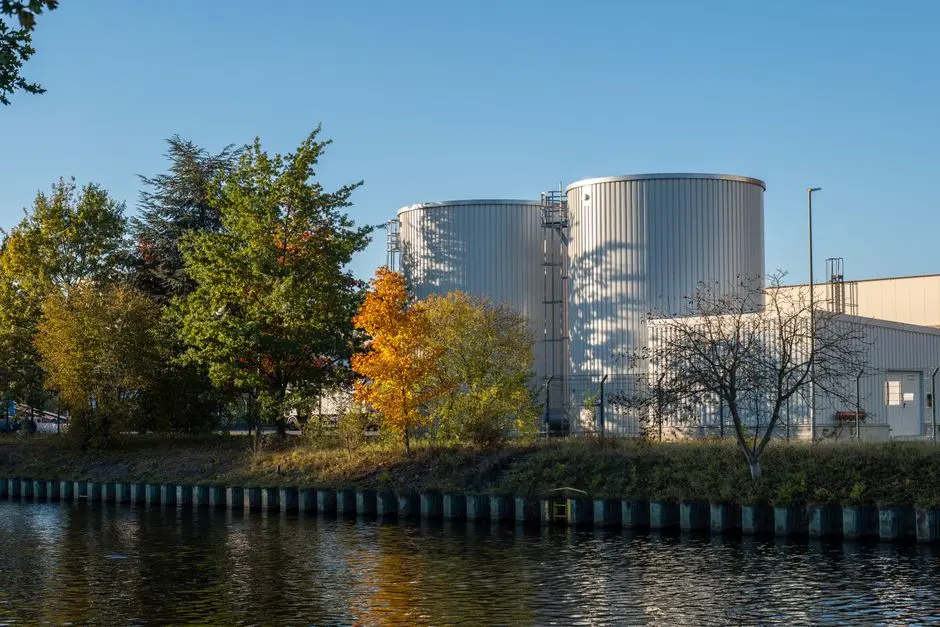
IFAS is robust when specified correctly, but four failure modes recur in hotel installations. Each is preventable with the right combination of upstream screening, foam management, and winter design margin.
Foam accumulation. Root cause: media-retention screens form a natural foam trap. The Hazen & Sawyer pilot team addressed this with a 1/4-inch vertical bar screen with an integrated spray nozzle — the screen retains carriers while letting foam pass, and the spray keeps the bars clear. The field-proven backup is defoamant dosing, but the mechanical screen fix is preferred because it removes the root cause rather than masking it. Operators looking for a deeper treatment of foam mechanics should consult the dedicated wastewater treatment foam control guide.
Media washout. Cause: effluent cylindrical screens operating above manufacturer headloss limits, or screen damage during a high-flow event. Prevention: size screens for the breakfast-plus-check-out overlap (typically the design peak hour for a resort hotel), trend headloss weekly, and inspect screen integrity after any flow event that exceeds 1.5× the design peak.
Debris and FOG fouling. Cause: inadequate upstream screening and absence of FOG removal. The Levapor Czech case is the cautionary tale — a 40-bed hotel with a working restaurant that overwhelmed its biological plant on FOG and peak hydraulics. The prevention is mechanical: <6 mm bar screens plus a DAF or grease trap on restaurant effluent, with the same protection on the laundry line because surfactants disrupt biofilm attachment kinetics as severely as FOG.
Loss of nitrification in cold weather. Cause: biofilm kinetic slowdown below 12 °C. Prevention is design-stage: cover the IFAS tank, install below grade where the soil mass buffers temperature, or design the hotel MLSS toward the high end of the 5–15 g TSS/m² attached-biomass range so the biofilm has enough active mass to ride out a cold snap. Winter-resort hotels in alpine and northern European locations should treat 12 °C as the design minimum, not 15 °C.
Frequently Asked Questions
What is IFAS and why use it for hotel wastewater?
IFAS (integrated fixed-film activated sludge) is a hybrid biological process that runs suspended activated sludge and biofilm carriers in the same aeration tank. For hotels, the Hazen & Sawyer pilot demonstrated nitrification in less than 50% of the volume of a conventional system, with 5–15 g TSS/m² attached biomass carrying nitrification through peak loads and winter temperature drops.
Can IFAS handle hotel peak hydraulic loads?
Yes. IFAS is specified precisely because hotel peak-to-average hydraulic ratios run 3–5× over a 24-hour cycle. The biofilm fraction (5–15 g TSS/m², up to 50% of total biomass) does not wash out during morning breakfast or linen-change surges the way a purely suspended-growth system can.
IFAS vs MBBR for a 150-room hotel — which is better?
For a 150-room hotel with discharge-only permits and partial denitrification needs, IFAS is the stronger choice because it supports a separate anoxic zone and maintains nitrification reliably at 15 °C. MBBR is the better fit for smaller properties with limited operator skill, lower capital budgets, and no denitrification requirement.
Does IFAS effluent meet hotel water-reuse standards?
Not on its own. IFAS produces secondary effluent of approximately 10–20 mg/L TSS, which exceeds the GB/T 18920-2020 reuse caps (≤10 mg/L TSS, ≤5 NTU turbidity for toilet flushing). Pair IFAS with an MBR polish or a disc-filter stage to meet reuse standards.
What dissolved oxygen should an IFAS hotel tank hold?
3–4 mg/L in the suspended phase, per the Hazen & Sawyer Greensboro IFAS pilot. This setpoint is roughly double the conventional activated-sludge target and is required to offset oxygen diffusion loss through the biofilm; dropping below 3 mg/L will collapse nitrification even when MLSS and SRT look healthy.