Why Hong Kong Hotels Face a Different Treatment Problem in 2026
Hong Kong consolidates sludge from 11 sewage treatment works into a single fluidised-bed incinerator at T·PARK, rated for 2,000 tonnes of dry solids per day and roughly 90% mass reduction, with up to 2 MW of surplus electricity exported to the public grid (source: Arup T·PARK project profile). This setup directly impacts hotel engineers: every kilogram of dewatered cake leaving the property feeds that asset, so on-site moisture content determines both transport tonnage and incinerator throughput. The same facility demonstrates a closed-loop site — a 600 m³/day desalination plant, treated wastewater reused for irrigation, and zero liquid discharge across the 70% landscaped envelope (source: Arup T·PARK project profile, BEAM Plus Provisional Platinum). The Water Pollution Control Ordinance, Cap. 358, and its Technical Memorandum on Effluent Standards remain the binding discharge framework in 2026, while Hong Kong's land scarcity forces buried or skid-mounted systems rather than open concrete tanks. For hotels in dense districts such as Mong Kok, Tsim Sha Tsui, or the resort clusters of Lantau and Repulse Bay, this constraint eliminates a CAS tank farm as a design option. A packaged MBR or buried A/O plant, paired with a dewatering step that meets T·PARK's intake spec, is the only practical starting point — and the same logic that drives hotel wastewater treatment design in other 2026 regional markets begins with the local sludge chain, not the equipment catalogue.
Influent Characterisation for a Hong Kong Hotel or Resort
Hong Kong hotel wastewater contains higher and more variable pollutant loads than typical municipal sewage due to food-and-beverage operations, central laundry, and pool backwash sharing the same drainage system. Design flow should be set at 0.3–0.6 m³ per occupied room per day, with a peak factor of 2.5–3.0 to absorb the morning shower and laundry overlap (HydropureWater field data, 2026). Typical pollutant concentrations include BOD 200–500 mg/L, COD 400–900 mg/L, TSS 150–350 mg/L, FOG 50–150 mg/L (driven by kitchen effluent), and ammonia 20–40 mg/L. Surfactant loading presents a challenge — laundry detergents, spa discharge, and pool backwash push readings above domestic sewer levels, making a coarse screen and FOG interceptor upstream of the biological stage essential. For example, a 300-room property at 70% occupancy generates roughly 95 m³/day on average and about 285 m³/day at morning peak, which defines the equalisation tank capacity and biological reactor sizing to prevent breakthrough.
| Parameter | Typical Hong Kong hotel range | Design value to size against |
|---|---|---|
| Flow per occupied room | 0.3–0.6 m³/day | 0.45 m³/day |
| Peak factor (morning/evening) | 2.5–3.0× | 2.8× |
| BOD (influent) | 200–500 mg/L | 400 mg/L |
| COD (influent) | 400–900 mg/L | 700 mg/L |
| TSS (influent) | 150–350 mg/L | 250 mg/L |
| FOG (kitchen-dominated) | 50–150 mg/L | 100 mg/L |
| Ammonia-N | 20–40 mg/L | 30 mg/L |
| Surfactants | Elevated vs. domestic | Pre-screen + FOG interceptor |
Three Process Trains That Work in Hong Kong in 2026
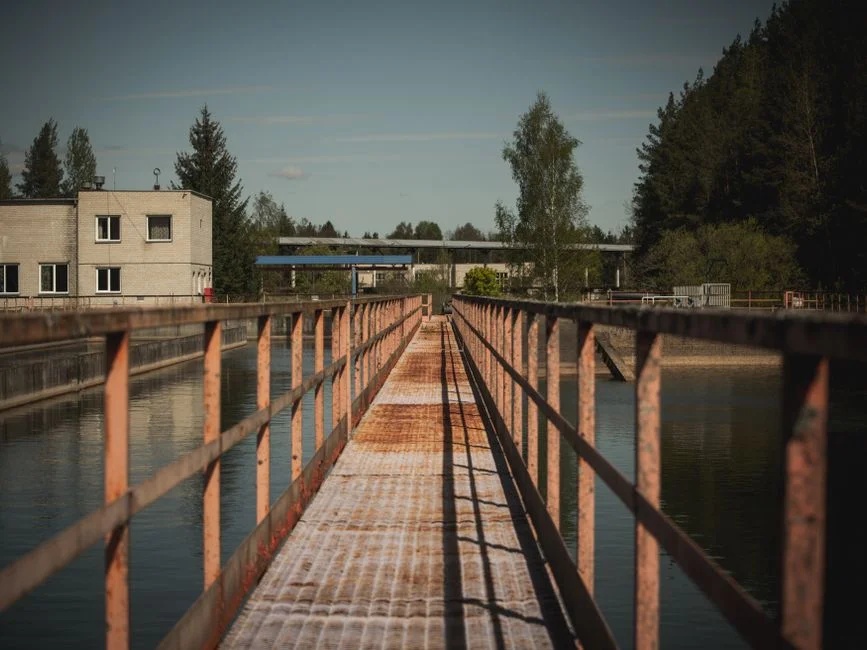
Packaged wastewater treatment systems for Hong Kong hotels in 2026 typically fall into three architectures, selected based on room count, FOG load, and reuse requirements. The first option is a WSZ buried A/O package plant rated 1–80 m³/h, combining anoxic and aerobic zones, sedimentation, and disinfection in a single buried unit with no operator presence required — ideal for 50–400-room properties discharging to sewer with no reuse target. The second is a submerged PVDF MBR system in the 10–2,000 m³/day range, featuring 0.1–1 μm membranes that reduce footprint by about 60% compared to conventional activated sludge while producing near-reuse effluent — suitable for premium, boutique, or resort properties needing water reuse or minimal visual impact. The third is a DAF pre-treatment stage (4–300 m³/h, 90%+ TSS and FOG removal) feeding a downstream biological and clarification train, justified when FOG loads dominate — such as in large banquet kitchens, central laundry operations, or retrofits of existing concrete tanks. All three trains require a disinfection finish; a chlorine dioxide generator in the 50–20,000 g/h range is standard where trihalomethane formation is a concern for the receiving sewer.
| Train | Capacity range | Footprint vs. CAS | Best-fit property | Reuse-ready? |
|---|---|---|---|---|
| WSZ buried A/O | 1–80 m³/h | ~30% smaller (buried) | 50–400 rooms, sewer discharge | No (irrigation only after polish) |
| Submerged MBR | 10–2,000 m³/day | ~60% smaller | Premium, boutique, resort | Yes (multi-media + RO polish) |
| DAF + biological | 4–300 m³/h FOG stage | Larger (two-stage) | ≥500 rooms, banquet/FOG-heavy | Optional with downstream MBR |
Meeting Cap. 358 Discharge Standards and Sludge Rules
The Technical Memorandum on Effluent Standards under Cap. 358 establishes the legal discharge limits for hotels in 2026: BOD ≤20 mg/L, TSS ≤30 mg/L, and ammonia ≤5 mg/L where the receiving sewage treatment works is nitrogen-sensitive (per EPD Technical Memorandum, 2026). These limits form the basis of discharge licences, and biological treatment alone cannot consistently meet them for Hong Kong hotel wastewater without additional polishing. Sludge handling must align with the T·PARK chain: a plate-and-frame filter press with 1–500 m² filtration area is the standard method to achieve ≤80% moisture cake, reducing the tonnage hauled into the 2,000 t/d incineration stream. For properties pursuing on-site reuse — such as landscape irrigation, toilet flushing, or cooling-tower makeup — a multi-media filter can reduce SDI below 5, while an industrial RO unit at 75–95% recovery can produce reuse-grade water from MBR permeate. Resort properties targeting BEAM Plus certification may use the 70% green-roof and landscape benchmark from T·PARK as a design reference, where higher reuse fractions simplify credit attainment.
Sizing and Selection Matrix for Hong Kong Properties
Three practical guidelines cover most Hong Kong hotel wastewater treatment specifications in 2026. For properties with up to 150 rooms discharging to sewer with no reuse, a single WSZ buried A/O package plant sized at 0.45 m³/room-day handles the flow without operator intervention and meets Cap. 358 limits after disinfection. For 150–500-room properties discharging to sewer with partial reuse for irrigation and toilet flushing, a submerged MBR skid with multi-media polishing and a 30–50% reuse target provides the best solution — its smaller footprint enables site layouts that would be impossible with a CAS plant. For properties with 500+ rooms or those featuring heavy banquet kitchens or central laundry operations, a DAF guard stage followed by an MBR — finished with RO polishing and a chlorine dioxide generator — is the most reliable configuration, while a plate-and-frame filter press ensures sludge meets T·PARK specifications. Indicative 2026 budgets range from USD 30,000–150,000 for WSZ plants to USD 80,000–400,000 for MBR skids, depending on capacity and reuse scope — final costs should be confirmed with an EPC contractor based on actual room count and peak factor, not list prices. Similar room-count logic applies to cold-climate hotel wastewater design and high-altitude hotel wastewater engineering, though biological kinetics and dewatering requirements may differ.
| Property profile | Recommended train | Disinfection | Sludge handling | Indicative 2026 budget (USD) |
|---|---|---|---|---|
| ≤150 rooms, sewer, no reuse | WSZ buried A/O | ClO₂ generator | Bag dewatering or skip | 30,000–150,000 |
| 150–500 rooms, partial reuse | Submerged MBR + multi-media | ClO₂ generator | Plate-and-frame press (≤80% moisture) | 80,000–400,000 |
| ≥500 rooms, banquet/FOG-heavy, full reuse | DAF + MBR + RO | ClO₂ generator | Plate-and-frame press to T·PARK spec | 200,000–800,000+ |
Frequently Asked Questions
What effluent limits apply to a Hong Kong hotel discharging to the public sewer in 2026?
The Technical Memorandum on Effluent Standards under the Water Pollution Control Ordinance (Cap. 358) sets limits of BOD ≤20 mg/L, TSS ≤30 mg/L, and ammonia ≤5 mg/L where the receiving sewage treatment works is nitrogen-sensitive (per EPD Technical Memorandum, 2026).
How dry does hotel sludge cake need to be before it goes to T·PARK?
Dewatered cake must reach ≤80% moisture to minimise transport tonnage into the 2,000 t/d T·PARK incineration chain and ensure the fluidised-bed furnace operates at design capacity (per Arup T·PARK project profile).