Why Hospital Wastewater in Yaoundé Demands a Different Design
Yaoundé and Douala hospital effluent is a documented reservoir of drug-resistant Pseudomonas aeruginosa, with a statistically significant resistance difference versus municipal sewage (2024 Douala & Yaoundé groundwater-vulnerability study). That finding is the design anchor for any 2026 hospital wastewater treatment in Yaoundé: the public-health stakes are concrete, the regulatory ceiling is enforceable, and the engineering response has to clear both bars simultaneously.
Three operational realities make a generic packaged plant inadequate. First, conventional secondary biological treatment alone does not deliver the log-4 to log-6 disinfection credit required to interrupt AMR gene export via effluent-irrigation or drain discharge. Second, tropical influent at 24–32 °C accelerates biological kinetics, but warm temperatures also mask viable but non-culturable resistant strains that survive and re-emerge in receiving groundwater. Heat is not a substitute for engineered disinfection. Third, the pharmaceutical loading a Yaoundé tertiary hospital should be designed for sits in the cotinine 6,700 ng/L, sulfamethoxazole 1,500 ng/L range reported in the Springer Slovakia/Czechia benchmark of 74 pharmaceuticals — even where African concentration data is sparser, designing to that envelope is the defensible posture.
On the regulatory side, the ceiling is Cameroon MINEPDED Arrêté n° 0072/MINEPDED hospital-sector discharge limits, anchored in donor-funded projects to the EU Urban Waste Water Directive 91/271/EEC as a sanity benchmark. A plant that meets 91/271/EEC parameters will generally clear Arrêté 0072; the reverse is not always true.
Influent Characteristics and 2026 Discharge Limits in Cameroon
The design envelope for a Yaoundé hospital plant is bounded by the raw wastewater coming in and the legal ceiling going out. Both are non-negotiable. The table below consolidates typical tropical hospital influent ranges (per WHO hospital wastewater references) against the 2026 Cameroon MINEPDED Arrêté n° 0072 discharge ceiling.
| Parameter | Hospital Influent Range | MINEPDED Arrêté 0072 Discharge Limit |
|---|---|---|
| BOD₅ | 150–400 mg/L | ≤30 mg/L |
| COD | 300–900 mg/L | ≤90 mg/L |
| TSS | 100–350 mg/L | ≤50 mg/L |
| Total Nitrogen | 30–80 mg/L | Site-specific (typically ≤15 mg/L for reuse) |
| Total Phosphorus | 5–15 mg/L | Site-specific (typically ≤2 mg/L for reuse) |
| pH | 6.0–8.0 | 6.5–8.5 |
| Fecal Coliform | 10⁶–10⁸ CFU/100 mL | ≤10³ CFU/100 mL |
| Residual Chlorine | — | ≥0.5 mg/L after 30 min contact |
The residual-chlorine compliance gap is the single most common reason Yaoundé hospital packaged plants fail regulatory audit. Most imported packaged STPs do not include a ClO₂ or chlorine dosing skid, and many do not even include a contact tank sized for 30 minutes at peak flow. A plant sized to hit COD ≤90 mg/L but missing the residual-chlorine envelope is a non-starter for MINEPDED sign-off.
Pharmaceuticals, contrast media, hormones, and endocrine disruptors are not separately regulated under Arrêté 0072 in 2026, but they are increasingly a World Bank, AfDB, and Gavi conditionality on Cameroon hospital projects. The defensible design posture is AOP-ready polishing — a contactor footprint, a power feed, and a dosing panel that can be commissioned in year two if donor conditionality tightens. This also lets the plant bid against EU-financed specifications that adopt the EU Urban Waste Water Directive 91/271/EEC, which is why a medical wastewater treatment system built to 91/271/EEC envelopes covers both regulatory and donor tracks.
The 2026 Process Train for a Yaoundé Hospital Plant
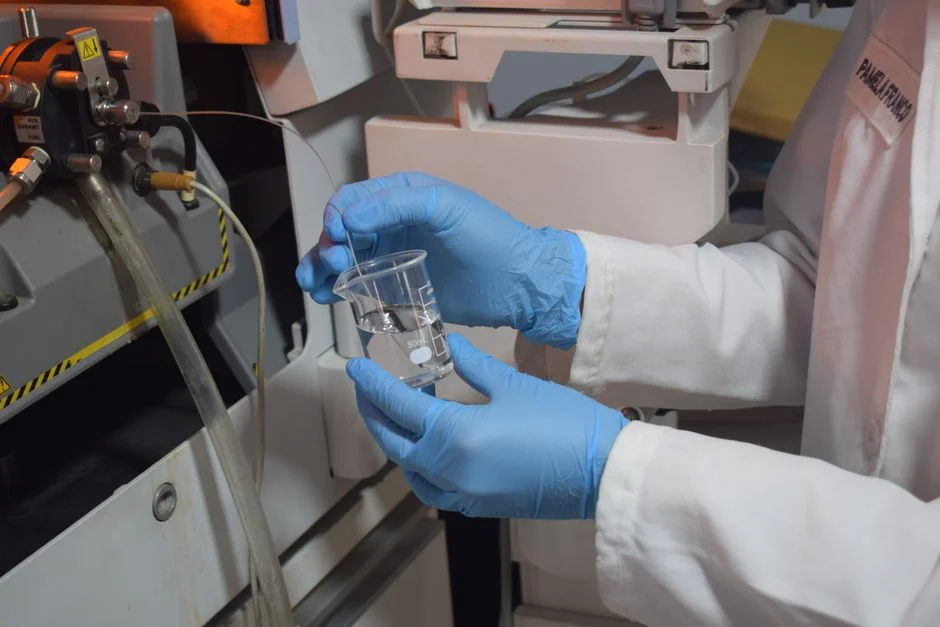
Stage 1 — Fine screening. Hospital sewage carries gauze, catheter plastics, suture packs, and surgical swabs that wreck downstream pumps and membranes. A GX Series rotary mechanical bar screen at 3–5 mm aperture upstream of the biological stage is the lowest-cost insurance in the train.
Stage 2 — Equalization. Morning surgical-list discharges in a Yaoundé hospital spike BOD and flow 2–3× overnight baseline. An 8–24 h HRT equalization tank buffers the surge and prevents shock loading the biological stage. This is non-optional in tropical facilities with intermittent grid power.
Stage 3 — Biological treatment. Two parallel options, chosen on bed count and power profile. For 50–200 bed facilities with intermittent grid, a WSZ underground integrated sewage treatment plant with A/O contact-oxidation handles the bulk organics with passive sludge holdover during outages. For 200+ bed flagship sites where AMR-sensitive effluent and reuse are priorities, an MBR integrated wastewater treatment system with submerged PVDF membranes (0.1 μm nominal pore) cuts effluent TSS to ≤5 mg/L and removes most suspended-resistant cells in a single step.
Stage 4 — Clarification. Downstream of WSZ, a lamella clarifier at 20–40 m/h surface loading handles the humus sludge. The MBR option eliminates this stage entirely and shrinks the footprint by roughly 60% versus a WSZ + clarifier combination at the same throughput — a decisive advantage on space-constrained Yaoundé hospital compounds.
Stage 5 — Disinfection. A chlorine dioxide generator sized 50–2,000 g/h on-site ClO₂ generation is the Yaoundé default: no chlorine gas transport through the city, no H₂SO₄ bulk storage, and a 99%+ kill rate on fecal coliform at 1.5–3 mg/L dose with 30 min contact. For flagship MBR + reuse trains, ozone is the upscale option and offers the additional benefit of partial pharmaceutical oxidation. Initial mechanical screening at the head of the train via a rotary mechanical bar screen is what keeps the disinfection stage performing to spec.
Stage 6 — Sludge handling. Hospitals generating <30 kg DS/day typically use a plate-and-frame filter press at 1–30 m² filtration area, producing a 25–28% dry-solids cake suitable for off-site incineration or contained landfill. The 2025 iScience special issue on wastewater recovery confirms UV and RO as emerging reuse-loop add-ons — flag RO as a reuse upgrade, not a baseline 2026 requirement.
AOP Polishing: Fenton vs Ozone vs ClO₂ vs BDDE for AMR Loads
For hospitals near open drains, irrigation reuse, or groundwater-vulnerable sites, polishing with an advanced oxidation process delivers the pharmaceutical and resistant-bacteria credit that secondary biology alone cannot. The Springer Slovakia/Czechia benchmark (Environmental Science and Pollution Research, 2019) is the only head-to-head AOP study in the SERP and is the spine of the comparison below. All four AOPs achieved complete antibiotic-resistant bacteria inactivation; the differentiation is on pharmaceutical spectrum, cost, and Yaoundé operability.
| AOP | Pharmaceutical Removal (74-panel) | CAPEX Band (USD) | OPEX (USD/m³) | Power Demand | Yaoundé Fit |
|---|---|---|---|---|---|
| Modified Fenton | >90% on broad spectrum | 20,000–60,000 | 0.30–0.70 | Low (mixing only) | Retrofit / high-COD effluents |
| Ozone (O₃) | >85% on most panels | 60,000–150,000 | 0.25–0.55 | High (0.8–1.2 kWh/m³) | Flagship, 24/7 power, reuse |
| ClO₂ | 80–90% on key panels | 15,000–40,000 | 0.20–0.45 | Low | Default Yaoundé choice |
| BDDE | >90% on broad spectrum | 80,000–250,000 | 0.60–1.20 | High | 2026 cost-prohibitive locally |
ClO₂ at 1.5–3 mg/L dose is the Yaoundé default: low CAPEX, on-site generation eliminates the H₂SO₄ and NaClO₂ logistics headache of inland Central Africa, and it is the only option that satisfies the MINEPDED residual-chlorine envelope without a separate disinfectant stream. Ozone is the upscale path for flagship hospitals with 24/7 stable power and reuse targets — higher CAPEX, no bulk chemical storage, but it punishes any power-quality drop. Fenton fits retrofit scenarios where the existing clarifier effluent is high-COD (>200 mg/L) and a sludge-contact reactor footprint is available. Boron-doped diamond electrode (BDDE) achieves the best pharmaceutical removal but at 3–5× the CAPEX of Fenton — flag for completeness on EU-financed reuse projects, not for default specification in Cameroon in 2026.
CAPEX and OPEX Benchmarks for a Yaoundé Hospital Plant (USD + XAF)
The procurement-side conversation lives or dies on a defensible budget band. The table below ties bed count to total CAPEX, OPEX, and power demand, with the 2026 recommended train for each tier. XAF figures use a 615 XAF/USD reference rate (Q1 2026).
| Hospital Size | CAPEX (USD) | CAPEX (XAF, millions) | OPEX (USD/m³) | Power (kWh/m³) | Recommended Train |
|---|---|---|---|---|---|
| 50 beds | 18,000–38,000 | 11–23 | 0.55–0.95 | 0.6–0.9 | WSZ + ClO₂ |
| 100 beds | 40,000–85,000 | 25–52 | 0.50–0.85 | 0.6–1.0 | WSZ + ClO₂, MBR-ready |
| 200 beds | 90,000–200,000 | 55–123 | 0.45–0.80 | 0.8–1.2 | MBR + ClO₂ |
| 500 beds | 180,000–420,000 | 111–258 | 0.40–0.80 | 1.0–1.4 | MBR + ozone or ClO₂ |
Power is the silent CAPEX driver. Yaoundé grid reliability runs 8–14 h/day in 2026 (Eneo operational references), which means non-MBR trains need 1.5× aeration redundancy and MBR trains need generator backup as a default — not an option. Donor co-financing context: AfDB, World Bank IDA, and Gavi-eligible projects in Cameroon typically fund 60–85% of hospital WWT CAPEX in 2026, so the numbers above are best framed as the unfunded co-share, not the headline project cost. A 5-year lifecycle comparison favors the WSZ + ClO₂ option on small-to-mid bed counts, and the MBR + ozone option on flagship + reuse sites. A skid-mounted automatic chemical dosing system is the small-ticket addition that locks in residual-chlorine compliance for either train.
Selection Framework: Matching Plant Size, Power, and AMR Risk
Four decision rules distill the article into a procurement-meeting-ready framework.
Rule 1 — Bed count. Under 100 beds, a WSZ underground package sewage treatment plant paired with a ClO₂ generator is the cost-correct default. Between 100 and 300 beds, an MBR + ClO₂ configuration is the AMR-conscious default. Above 300 beds, the train steps up to MBR + ozone, with BDDE reserved for donor-funded, reuse-eligible flagship projects.
Rule 2 — Power availability. Under 12 h/day grid reliability, favor WSZ passive aeration over MBR. MBR membranes foul rapidly when aeration is interrupted, and the cleaning cost erases any biological-treatment savings. For an MBR train on intermittent power, the design must include a generator-backed aeration panel and a membrane relaxation protocol during outages.
Rule 3 — Discharge mode. If the hospital connects to a municipal sewer that itself disinfects, MINEPDED compliance is the ceiling. If the effluent discharges to an open drain or is reused for irrigation — common at Yaoundé compounds with on-site green space — add AOP polishing and target the EU UWWTD 91/271/EEC reuse envelope. The DF series MBR membrane bioreactor module and an integrated high-efficiency sedimentation tank upstream of the AOP contactor are the standard reuse-loop additions.
Rule 4 — AMR risk weighting. If the hospital hosts a TB, oncology, or burn unit, escalate by one tier regardless of bed count: WSZ becomes MBR, ClO₂ becomes ozone. Mycobacteria and multidrug-resistant P. aeruginosa from burn wards are the AMR vectors the 2024 Douala/Yaoundé study flagged, and they are the reason the tier escalation exists.
Frequently Asked Questions
What are the 2026 Cameroon MINEPDED discharge limits for hospital wastewater? Per Arrêté n° 0072/MINEPDED: COD ≤90 mg/L, BOD₅ ≤30 mg/L, TSS ≤50 mg/L, pH 6.5–8.5, fecal coliform ≤10³ CFU/100 mL, residual chlorine ≥0.5 mg/L after 30 min contact.
How much does a hospital wastewater treatment plant cost in Yaoundé? For a 50-bed facility, USD 18,000–38,000 CAPEX with USD 0.55–0.95/m³ OPEX (WSZ + ClO₂). For a 500-bed flagship, USD 180,000–420,000 CAPEX with USD 0.40–0.80/m³ OPEX (MBR + ozone or ClO₂).
Is MBR necessary for a Yaoundé hospital, or is conventional biological treatment enough? Conventional secondary biology is sufficient for organics, but the 2024 Douala/Yaoundé finding of hospital effluent as a drug-resistant P. aeruginosa reservoir argues for MBR plus AOP/disinfection polishing on the 200+ bed tier or any facility with a high-risk unit.
Which disinfection method is best — chlorine, ClO₂, or ozone — for a Yaoundé hospital? ClO₂ on-site generation is the 2026 default: no chlorine gas transport, no bulk acid logistics, and direct compliance with the MINEPDED residual-chlorine envelope. Ozone is the upscale option for flagship + reuse trains with stable power. Chlorine gas is discouraged due to transport safety and downstream THM formation.
Does Yaoundé hospital wastewater contain antibiotic-resistant bacteria? Yes. The 2024 Douala and Yaoundé study confirmed hospital effluent as a reservoir of drug-resistant Pseudomonas aeruginosa with a statistically significant resistance difference versus municipal sewage. The implication is direct: polishing with a log-4 to log-6 disinfection or AOP step is required, not optional, on the Yaoundé plant train. The same logic is what shapes the process design of hospital wastewater treatment in Bali and other tropical, donor-funded hospital projects.
Related Equipment
- Medical wastewater treatment system — specifications, capacity range, and technical data