Why Abidjan’s Industrial Wastewater Treatment is a 2025 Priority
In Abidjan, industrial wastewater treatment is critical for compliance with Ivory Coast’s 2025 discharge standards (COD ≤300 mg/L, BOD5 ≤100 mg/L, TSS ≤2 mg/L). Facilities generating high organic loads—such as food processing, textiles, and petrochemical plants—face fines or shutdowns if untreated effluent exceeds these limits. MBR (Membrane Bioreactor) systems are increasingly adopted, achieving 92–97% COD removal (from 4,500 mg/L to ≤300 mg/L) and 99% TSS reduction, but costs range from $80,000 for small-scale units to $2M+ for municipal plants. This guide provides 2025 engineering specs, cost benchmarks, and a decision framework for selecting the right technology for your facility.
Ivory Coast’s 2025 discharge standards mirror EU Directive 91/271/EEC, requiring tertiary-level treatment for industrial operators to protect the Ebrié Lagoon and surrounding coastal ecosystems. According to 2023 Ministry of Environment data, Abidjan generates approximately 120 million m³ of industrial wastewater annually, yet 60% of this volume remains either untreated or non-compliant with current environmental codes. The city's annual urbanization growth rate of 4.7% (World Bank 2024) has put pressure on existing municipal infrastructure, necessitating decentralized, high-efficiency treatment systems in zones like Yopougon and Vridi.
The operational risk for industrial managers is no longer just a matter of corporate social responsibility; it is a financial necessity. A 2023 case study of an Abidjan-based food processing plant illustrates this shift: by upgrading to MBR systems for high-efficiency COD and TSS removal in Abidjan, the facility reduced its raw effluent COD from 4,500 mg/L to consistently below 300 mg/L. This technical upgrade allowed the plant to avoid $50,000 per year in non-compliance discharge fees while securing its long-term operating permit. Failure to meet these 2025 benchmarks carries the risk of immediate permit revocation and significant reputational damage in a tightening regulatory environment.
Abidjan’s Wastewater Characteristics: What Your Treatment System Must Handle
The industrial effluent in Abidjan poses significant treatment challenges.Industrial effluent in Abidjan is characterized by high variability in organic loading and chemical complexity, requiring a precise understanding of COD and BOD in Abidjan’s industrial wastewater before selecting equipment. Food processing facilities, particularly those involved in cocoa and palm oil production, generate wastewater with COD levels ranging from 3,000 to 10,000 mg/L and significant concentrations of Fats, Oils, and Grease (FOG). Without adequate pretreatment, these high organic loads quickly foul biological reactors and membrane surfaces.
The textile industry in Ivory Coast presents a different challenge, often producing effluent with a high pH (9–12) and significant concentrations of synthetic dyes and heavy metals like chromium and copper. These parameters necessitate robust equalization and neutralization stages. Similarly, the petrochemical sector in the Vridi industrial zone deals with emulsified oils (500–3,000 mg/L) and volatile organic compounds (VOCs) that require advanced physical-chemical separation before any biological treatment can occur. Pharmaceutical manufacturers must address high BOD levels (up to 5,000 mg/L) alongside the removal of active pharmaceutical ingredients (APIs) and endocrine disruptors, which are increasingly targeted by local environmental inspectors.
| Industry Sector | COD (mg/L) | BOD5 (mg/L) | TSS (mg/L) | Key Contaminants | Typical Abidjan Source |
|---|---|---|---|---|---|
| Food Processing | 3,000–10,000 | 1,500–5,000 | 500–2,000 | FOG, Nitrogen | Cocoa/Palm Oil Plants |
| Textiles | 1,000–3,500 | 400–1,200 | 200–800 | Dyes, High pH, Metals | Garment Manufacturing |
| Petrochemicals | 2,000–8,000 | 800–3,000 | 300–1,500 | Hydrocarbons, Phenols | Vridi Industrial Zone |
| Pharmaceuticals | 2,000–6,000 | 1,000–5,000 | 100–500 | APIs, Solvents | Local Lab Facilities |
To address these diverse profiles, engineers must prioritize DAF systems for FOG and TSS removal in food processing and petrochemical plants as a primary treatment step. This ensures that the downstream biological processes are not overwhelmed by solids or inhibitory chemical concentrations.
Technology Comparison: MBR vs. DAF vs. Conventional Activated Sludge for Abidjan’s Needs
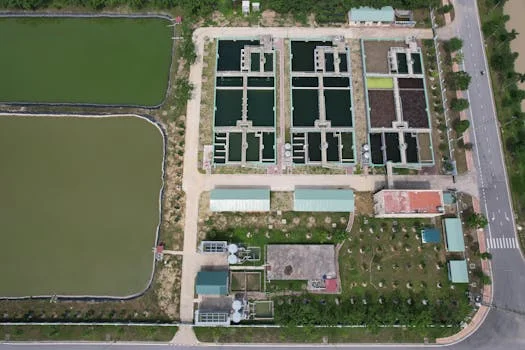
Selecting the appropriate technology for Abidjan’s industrial landscape requires a balance between effluent quality, land availability, and operational complexity. Membrane Bioreactor (MBR) technology has emerged as a frontrunner for facilities with limited space or those seeking water reuse. MBR systems combine biological degradation with membrane filtration, effectively replacing the secondary clarifier found in conventional systems. This results in a footprint that is 60% smaller than traditional plants while producing effluent that meets the strictest 2025 standards (TSS ≤2 mg/L). While the capital expenditure for MBR is higher, ranging from $80,000 to over $2M, the high volumetric loading rate and superior effluent quality often justify the investment for high-COD applications.
Dissolved Air Flotation (DAF) is the preferred solution for primary treatment where high concentrations of FOG or suspended solids are present. By injecting micro-bubbles into the wastewater, DAF units float light contaminants to the surface for mechanical skimming. In Abidjan’s food processing sector, DAF systems typically achieve 90–98% removal of oils and solids. However, DAF is rarely a standalone solution for meeting 2025 COD limits; it requires automated chemical dosing for pH adjustment and coagulation in Abidjan’s industrial wastewater treatment to optimize performance and must usually be followed by a biological stage like MBR or Activated Sludge.
Conventional Activated Sludge (CAS) remains a viable option for large-scale facilities where land is inexpensive and effluent requirements are less stringent. CAS systems have lower upfront costs but suffer from a larger footprint and lower removal efficiency (70–85% COD removal). In the context of Abidjan’s 2025 standards, CAS often requires additional tertiary filtration to meet TSS limits, which can negate its initial cost advantages. For most modern industrial upgrades in Ivory Coast, the transition is moving toward integrated MBR or DAF-MBR configurations to ensure long-term compliance.
| Feature | MBR (Membrane Bioreactor) | DAF (Dissolved Air Flotation) | Conventional Activated Sludge |
|---|---|---|---|
| Effluent Quality | Ultra-low TSS (≤2 mg/L), High COD removal | Excellent FOG/TSS removal, moderate COD | Moderate COD/TSS removal |
| Footprint | Compact (40% of CAS) | Small to Medium | Large (requires clarifiers) |
| Energy Use | High (due to aeration/scouring) | Low to Moderate | Moderate |
| Capital Cost | $1,000–$2,000 per m³/day | $400–$1,000 per m³/day | $600–$1,200 per m³/day |
| Maintenance | Membrane cleaning/replacement | Skimmer & pump maintenance | Sludge bulking management |
Cost Breakdown: 2025 Wastewater Treatment Plant Costs in Abidjan
Budgeting for a wastewater treatment plant in Abidjan must account for both initial capital expenditure (CAPEX) and ongoing operational expenditure (OPEX). For an MBR system, the CAPEX typically starts at $80,000 for a 50 m³/day plant and can exceed $2,000,000 for large-scale municipal or industrial installations (1,000 m³/day+). On a per-cubic-meter basis, small systems cost between $1,600 and $2,000, while larger systems benefit from economies of scale, dropping to $1,000–$1,500 per m³/day (HydropureWater field data, 2025). These costs include the bioreactor tanks, membrane modules, aeration systems, and control logic.
Operational costs are heavily influenced by local electricity rates and chemical prices. Energy consumption for MBR systems in Abidjan typically ranges from $0.05 to $0.20 per m³ of treated water. Chemical costs, primarily for membrane cleaning and pH adjustment via automated chemical dosing, add another $0.05 to $0.50 per m³. For DAF systems, chemical dosing is the primary OPEX driver, costing between $0.10 and $0.30 per m³ depending on the coagulant and polymer requirements. Sludge management is another critical factor; utilizing sludge dewatering solutions for Abidjan’s industrial wastewater treatment plants can significantly reduce disposal volumes, with disposal costs in the region averaging $50–$100 per ton.
The Return on Investment (ROI) for these systems is increasingly favorable due to Abidjan’s discharge fee structure. Currently, non-compliant facilities face fees ranging from $0.50 to $2.00 per m³ of effluent. For a plant discharging 200 m³/day, non-compliance could cost up to $146,000 annually. By investing in a $500,000 MBR system, a facility can achieve a simple payback in less than 3.5 years, solely based on avoided fines. When water reuse for cooling towers or irrigation is factored in—supported by emerging water reuse incentives from the Ministry of Environment—the payback period can drop below 2.5 years.
| System Capacity | MBR Estimated CAPEX | DAF Estimated CAPEX | Estimated Annual OPEX |
|---|---|---|---|
| 50 m³/day | $80,000 – $110,000 | $30,000 – $50,000 | $12,000 – $18,000 |
| 200 m³/day | $350,000 – $500,000 | $120,000 – $180,000 | $35,000 – $55,000 |
| 500 m³/day | $750,000 – $1.1M | $300,000 – $500,000 | $70,000 – $110,000 |
| 1,000 m³/day | $1.5M – $2.2M | $600,000 – $900,000 | $130,000 – $200,000 |