Municipal Sewage Treatment Plant in Balochistan, Pakistan: 2025 Engineering Guide with Local Compliance, Cost Data & Equipment Checklist
Balochistan’s municipal sewage treatment gap is critical: only 40% of urban areas had adequate sanitation in 2023 (World Bank), and untreated wastewater in Quetta, Sibi, and Chaman contaminates groundwater, driving waterborne disease rates per WHO 2024. For towns like Gwadar (population 138,000) and Turbat (205,000), decentralized systems (e.g., MBBR or SBR) achieve NEQS compliance (BOD <30 mg/L, TSS <50 mg/L) at 20–30% lower CAPEX than centralized plants. PPP models, such as Quetta’s BPPPA initiative, offer predictable cash flows for private operators, with Sabzal STP’s $12M upgrade (BWSPIP) serving as a benchmark for cost and performance.
Balochistan’s Municipal Sewage Crisis: Engineering Challenges and Public Health Risks
Only 38% of Balochistan’s urban population had access to adequate sanitation in 2023 according to World Bank data, a stark contrast to the 72% coverage reported in Punjab by the Pakistan Bureau of Statistics in 2024. This disparity is not merely a matter of investment but a reflection of the province's unique geographical and demographic constraints. Quetta’s groundwater contamination has reached alarming levels, with 68% of samples exceeding WHO drinking water limits for fecal coliform (WHO 2024 Pakistan Report), primarily due to the lack of functional secondary treatment facilities.
The engineering gap in Balochistan is driven by three primary factors: an arid climate where evaporation rates far exceed annual rainfall, a highly dispersed population with an average density of just 25 people/km², and the absence of gravity-fed sewer networks in most secondary towns. According to the Balochistan Water Security and Productivity Improvement Project (BWSPIP 2025), the cost of installing traditional underground piping in the province's rocky terrain can be prohibitively high, leading to the direct discharge of raw sewage into seasonal nullahs and rivers.
The public health impact of this infrastructure failure is measurable and severe. Waterborne diseases, including cholera and dysentery, currently account for 18% of all hospital admissions in Quetta, as reported by the Balochistan Health Department in 2024. A critical case study is the 2023 cholera outbreak in Chaman, which a UNICEF rapid assessment linked directly to untreated sewage discharge into the Khojak River. For municipal engineers, the challenge is to deploy systems that can operate reliably in remote, water-stressed environments while meeting the stringent National Environmental Quality Standards (NEQS).
Centralized vs. Decentralized Sewage Treatment: Which Model Fits Balochistan’s Geography?
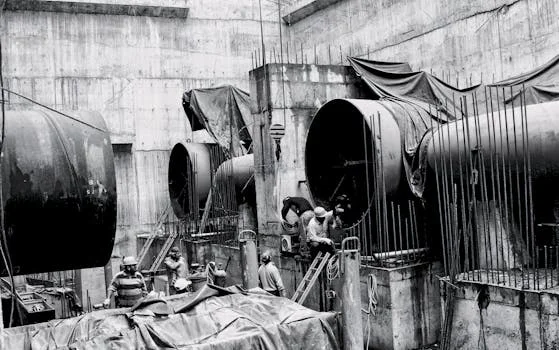
Centralized sewage treatment systems, such as the Sabzal STP in Quetta with a 50,000 m³/day capacity, require extensive and expensive sewer networks that cost between $1.2M and $2.5M per kilometer to install in Balochistan’s rocky terrain. In contrast, decentralized systems or containerized sewage treatment options for remote Balochistan towns reduce pipeline CAPEX by 60–70% by treating waste at the source. These modular systems, typically ranging from 100 to 1,000 m³/day, can be deployed within 3–6 months, compared to the 3–5 years required for large-scale municipal works.
The following table compares the two models within the context of Balochistan’s specific climate and logistical constraints:
| Parameter | Centralized System (5,000 m³/day) | Decentralized System (500 m³/day) |
|---|---|---|
| Average CAPEX (per m³) | $800 – $1,200 | $500 – $750 |
| Pipeline Infrastructure | Extensive (High Cost) | Minimal (Low Cost) |
| Land Requirement | 2.0 – 3.5 Hectares | 0.1 – 0.2 Hectares |
| Energy Intensity | 0.6 – 0.8 kWh/m³ | 0.3 – 0.5 kWh/m³ (MBBR) |
| Sludge Handling | On-site processing required | Periodic removal (3-6 months) |
A benchmark for decentralized success is Gwadar’s 2024 pilot project. Three 500 m³/day Moving Bed Biofilm Reactor (MBBR) plants were commissioned by the Gwadar Development Authority. These units reduced influent BOD from 180 mg/L to a consistent 22 mg/L, achieving NEQS compliance with 40% lower energy consumption than traditional Sequencing Batch Reactors (SBR). However, engineers must account for the fact that decentralized systems require more frequent sludge management—typically every 3 to 6 months—compared to the 12-month cycles possible in larger, centralized aerobic digesters.
NEQS Compliance in 2025: Which Treatment Technologies Meet Balochistan’s Effluent Standards?
The Pakistan Environmental Protection Agency (EPA) 2024 update to NEQS requires municipal effluent to meet strict limits: BOD <30 mg/L, TSS <50 mg/L, and fecal coliform <1,000 MPN/100mL. Selecting the correct technology is dependent on the influent profile, which in Balochistan often features high salinity and high TSS due to dust ingress. For high-purity requirements, MBR systems for near-reuse-quality effluent in water-scarce regions like Gwadar are becoming the standard for non-potable reuse in irrigation.
| Technology | BOD Removal Efficiency | TSS Removal Efficiency | Footprint | NEQS 2025 Compliance |
|---|---|---|---|---|
| MBBR | 92% – 95% | 90% – 93% | Small | Yes (Secondary) |
| SBR | 88% – 92% | 85% – 90% | Medium | Yes (Secondary) |
| MBR | 98% – 99% | 99% + | Very Small | Yes (Tertiary/Reuse) |
| A/O Process | 85% – 90% | 80% – 85% | Large | Conditional |
MBBR technology offers a significant advantage for towns like Ziarat, where seasonal tourism creates highly variable hydraulic and organic loads. MBBR biofilm is more resilient to "shock loads" than suspended growth systems. This was demonstrated during the Sabzal STP upgrade in 2025, where the transition from activated sludge to MBBR media reduced effluent BOD from 45 mg/L to 22 mg/L while simultaneously cutting energy use by 22% (BWSPIP project report).
Disinfection strategy is equally critical for groundwater protection. While UV radiation is effective, it requires pre-filtration to ensure TSS is below 10 mg/L to prevent shadowing. In most Balochistan municipal applications, on-site ClO₂ generators for residual-free disinfection in municipal plants are preferred. Chlorine dioxide achieves a 99.9% kill rate for fecal coliform at a 1.5 mg/L dose and maintains a residual that prevents regrowth in the effluent discharge channel, which is vital when treated water is used for downstream agriculture.
Cost Breakdown for Municipal Sewage Treatment Plants in Balochistan: CAPEX, OPEX, and Funding Sources

Budgeting for a municipal sewage treatment plant in Balochistan requires a granular understanding of local cost drivers. Land costs can account for 20–30% of the budget in Quetta’s urban core, whereas in rural areas, this drops to 5–10%. Civil works remain the largest variable, often reaching 40% of CAPEX in regions with hard rock or high seismic activity. To compare, one can look at cost benchmarks from Punjab’s municipal plants for Balochistan projects, though Balochistan typically sees a 15-20% premium due to logistics.
| Plant Capacity (m³/day) | Technology Type | Estimated CAPEX | Estimated OPEX ($/m³) |
|---|---|---|---|
| 500 | MBBR (Package) | $350,000 – $450,000 | $0.15 – $0.18 |
| 2,000 | SBR (Civil/Mech) | $2.8M – $3.2M | $0.20 – $0.24 |
| 10,000 | MBR (Advanced) | $12M – $15M | $0.28 – $0.35 |
Funding for these projects is increasingly moving toward multi-lateral support and Public-Private Partnerships. The World Bank’s BWSPIP has allocated $120M for Balochistan, while the Asian Development Bank (ADB) has committed $80M specifically for Gwadar’s water and sanitation infrastructure. Additionally, the federal Public Sector Development Programme (PSDP) has allocated PKR 1.2B for the 2025–2026 fiscal year to address sewage gaps in border towns. A notable example is the Turbat 2,000 m³/day SBR plant completed in 2024; funded via an ADB grant and PSDP, it operates at an OPEX of $0.22/m³ and is projected to reach its payback period in 12 years under a managed PPP model.
PPP Models for Balochistan: How to Structure a Bankable Sewage Treatment Project
The Balochistan Public Private Partnership Authority (BPPPA) has established a framework specifically designed to attract private investment into the sanitation sector. The Quetta model utilizes a 25-year concession agreement with a guaranteed 15% Internal Rate of Return (IRR) for the operator. To mitigate risk, the Balochistan 2024 PPP Act allows for government-backed guarantees regarding demand risk, ensuring the private partner is paid for at least 80% of the plant's designed capacity, regardless of actual influent flow during the initial ramp-up period.
Checklist for a Bankable PPP Project in Balochistan:
- Comprehensive Feasibility: Must include 12 months of influent characterization to account for seasonal salinity spikes.
- Risk Allocation Matrix: Clearly define responsibility for "Force Majeure" events common in the region (e.g., extreme drought or seismic events).
- Tariff Indexation: Ensure the service fee is indexed to inflation and electricity price hikes to protect the operator's margin.
- O&M Handover Standards: Define technical benchmarks that must be met at the end of the 25-year concession.
- Sludge Disposal Agreement: Secure municipal land for long-term sludge composting or landfilling before the bid process.
Quetta’s $45M sewerage PPP (2025) is currently the largest of its kind in the province. With a 100,000 m³/day capacity and a $0.35/m³ tariff, it serves as the primary template for future projects in Gwadar and Lasbela. A common pitfall identified in BPPPA’s 2024 lessons learned report was the underestimation of sludge disposal costs, which can account for up to 20% of total OPEX if transport distances exceed 30 kilometers.
Equipment Checklist for Municipal Sewage Treatment Plants in Balochistan
Procuring equipment for Balochistan requires a focus on durability and ease of maintenance in remote locations. Dust, extreme temperature fluctuations (from -10°C in Quetta winters to 45°C in Gwadar summers), and high influent grit levels are the primary stressors. For smaller towns, compact A/O package plants for decentralized systems in Balochistan provide a robust solution that minimizes civil footprint.
- Headworks: Rotary mechanical bar screens (GX Series) are essential for handling the high TSS (>500 mg/L) common in Quetta’s open-drain influent.
- Biological Media: High-density polyethylene (HDPE) MBBR media with a specific surface area of 300–500 m²/m³; must be UV-stabilized if used in open tanks.
- Aeration Systems: Stainless steel fine-bubble diffusers are recommended over EPDM membranes to resist degradation in high-temperature, saline environments.
- Sludge Dewatering: Plate and frame filter presses are preferred over centrifuges for municipal sludge in Balochistan because they achieve 30% solids concentration, reducing transport volume by 40%.
- Electrical & Automation: PLC-controlled chemical dosing systems with IP65-rated dust-proof enclosures. Inverters should be oversized to handle the frequent voltage fluctuations common in the local power grid.
Given the logistical difficulty of reaching towns like Panjgur or Kharan, municipal engineers should mandate a "Two-Year Critical Spares" inventory as part of the initial procurement contract. This includes spare blowers, submersible pumps, and PLC modules to prevent months of downtime while waiting for parts from Karachi or overseas.
Frequently Asked Questions
What are the NEQS effluent standards for municipal sewage in Pakistan?
The Pakistan EPA 2024 standards require BOD <30 mg/L, TSS <50 mg/L, fecal coliform <1,000 MPN/100mL, and a pH between 6 and 9. Technologies like MBBR and SBR are typically required to meet these levels, as primary treatment alone is insufficient. You can see how Sindh’s industrial wastewater standards compare to Balochistan’s municipal NEQS for broader regional context.
How much does a 2,000 m³/day sewage treatment plant cost in Balochistan?
CAPEX for a 2,000 m³/day plant ranges from $2.8M for an SBR system to $3.5M for an MBR system. OPEX typically falls between $0.18 and $0.25 per cubic meter treated. PPP models can reduce the government's upfront CAPEX burden by up to 40% through private equity participation.
Can decentralized sewage treatment plants work in Balochistan’s arid climate?
Yes. Gwadar’s 2024 pilot project proved that MBBR plants can achieve 92% BOD removal even at 45°C ambient temperatures. The key is using evaporative cooling for aeration blowers and ensuring biological tanks are partially buried to maintain stable liquor temperatures.
What funding is available for municipal sewage projects in Balochistan?
Primary funding sources include the World Bank (BWSPIP), the Asian Development Bank (ADB), the federal PSDP, and the Balochistan Public Private Partnership Authority (BPPPA). International donors often prioritize projects that include a water-reuse component for urban greening or agriculture.
How do I choose between MBBR and SBR for a small town in Balochistan?
MBBR is generally preferred for towns with variable populations or tourist seasons (like Ziarat) because the biofilm is more resilient to load fluctuations. SBR is more cost-effective for towns with consistent, steady flows (like Turbat) where land is available for the larger batch tanks. MBBR also offers a 30% smaller footprint and lower energy consumption (0.3–0.4 kWh/m³).