Containerized Wastewater Treatment Specifications 2026
Containerized wastewater treatment specifications 2026 cover ISO 20–40 ft plants at about 1–200 m³/h (24–4,800 m³/day). MBR pores are 0.04–0.1 μm, with HRT often 4–12 h. Energy sits near 0.6–1.2 kWh/m³ when aeration is balanced. US secondary floors remain BOD5 and SS of 30 mg/L as 30-day averages under 40 CFR 133.102.
Remote camps, mining exploration pads, disaster relief, and industrial sites with short lead times are the usual fit. A 2023 copper mine in Chile used a 50 m³/h MBR container to meet discharge limits during exploration. Some manufacturer fleets, including Smith & Loveless units cited for continuous duty, have run more than 15 years across dozens of countries when membranes, pumps, and controls are maintained on schedule.
Capacity alone does not decide fit. Plants generally need robust pretreatment when influent TSS exceeds about 5,000 mg/L, or when COD is highly variable. In those cases a DAF system for containerized pretreatment or an equivalent solids/oil step is often added as a separate module. Ambient envelopes near −10°C to 50°C are common in catalogs; colder or hotter climates usually need insulation, heat tracing, or HVAC that raise both footprint and kWh/m³.
Most plants we size for remote camps run at the lower end of the 1–200 m³/h band. A single 20 ft or 40 ft box can cover biology at that scale. Sludge storage and chemical day tanks still need a separate plan before the shell count is frozen.
Screening Ranges for MBR, IFAS, and Activated Sludge
Screening bands for MBR, IFAS, conventional activated sludge, and extended aeration differ mainly in effluent solids, footprint, and energy. The ranges below are 2025 engineering bands used for screening, including HydropureWater MBR product envelopes. A typical HydropureWater MBR containerized wastewater treatment system is sized to hit the tighter TSS/BOD cells when membranes and pretreatment are matched to the influent.
Actual effluent quality tracks influent strength, temperature, and sludge age. Pilot testing is strongly recommended when influent COD exceeds about 2,000 mg/L. Municipal secondary baselines in the USA are set under EPA 40 CFR Part 133, not biosolids rules. Industrial permits may be tighter under NPDES or local law.
According to US EPA in 40 CFR 133.102, as displayed on the eCFR on 23 September 2026, the 30-day BOD5 and SS averages shall not exceed 30 mg/L. The 7-day averages shall not exceed 45 mg/L, and 30-day removal shall not be less than 85 percent. A permitting authority may substitute CBOD5 at 25 mg/L as a 30-day average and 40 mg/L as a 7-day average. Effluent pH shall stay within 6.0 to 9.0 unless the works meets the stated exceptions.
| Parameter | MBR | IFAS | Conventional Activated Sludge | Extended Aeration |
|---|---|---|---|---|
| Influent Capacity (m³/h) | 1 - 200 | 5 - 150 | 10 - 300 | 10 - 250 |
| Effluent TSS (mg/L) | < 5 | < 10 | < 15-30 | < 15-30 |
| Effluent BOD (mg/L) | < 5 | < 10-20 | < 20-40 | < 10-20 |
| Effluent COD (mg/L) | < 20-50 | < 30-60 | < 50-100 | < 30-60 |
| Effluent TN (mg/L) | < 5-10 (with nitrification/denitrification) | < 10-15 (with nitrification/denitrification) | < 15-30 (with nitrification/denitrification) | < 10-20 (with nitrification/denitrification) |
| Effluent TP (mg/L) | < 1-3 (with chemical P removal) | < 2-5 (with chemical P removal) | < 3-8 (with chemical P removal) | < 2-5 (with chemical P removal) |
| Footprint (m² per m³/h) | 0.5 - 1.5 | 1.0 - 2.0 | 1.5 - 3.0 | 2.0 - 4.0 |
| Energy Consumption (kWh/m³) | 0.8 - 1.5 | 0.6 - 1.0 | 0.4 - 0.8 | 0.5 - 0.9 |
| Sludge Production (kg TSS/kg BOD removed) | 0.05 - 0.15 | 0.10 - 0.20 | 0.30 - 0.50 | 0.10 - 0.25 |
| Hydraulic Retention Time (hours) | 4 - 12 | 8 - 24 | 6 - 18 | 18 - 36+ |
| Membrane Pore Size (μm) | 0.04 - 0.1 (UF/MF) | N/A (Biofilm) | N/A (Settling) | N/A (Settling) |
| Operating Temperature Range (°C) | 5 - 40 | 5 - 40 | 5 - 40 | 5 - 40 |
| Noise Level (dB) | 60 - 75 | 65 - 80 | 60 - 75 | 60 - 70 |
1Actual performance varies by influent characteristics; pilot testing recommended for >2,000 mg/L COD.
How MBR, IFAS, and Conventional Trains Compare in Containers
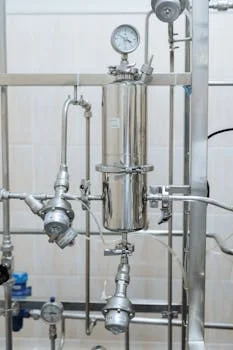
MBR, IFAS, conventional activated sludge, and extended aeration each trade effluent quality against footprint and power inside a container envelope. Selection usually starts from the permit or reuse target, then from available plot length in 20 ft or 40 ft boxes.
MBR systems use submerged UF/MF membranes (about 0.04–0.1 μm) to retain biomass. Higher MLSS supports a smaller bioreactor and often >99% TSS and pathogen removal when pretreatment is adequate. Energy rises because membrane scour air and permeate pumps add load. Fouling risk climbs if oils, fibers, or sharp TSS spikes reach the cassette.
IFAS technology adds fixed media to a suspended-growth tank so biofilm and floc share the load. Most plants we size for mixed industrial/municipal feed run IFAS when shock loads are expected but reuse-grade turbidity is not mandatory. Footprint sits between MBR and conventional CAS. Media clogging and slightly higher effluent solids versus MBR are the usual limits.
Conventional Activated Sludge (CAS) keeps capital and controls simpler, yet clarifiers consume length that containers rarely spare. Effluent TSS is more sensitive to sludge settleability. Extended aeration lengthens HRT (often 18–36+ h), lowers sludge yield, and stabilizes operation. Tank volume grows fast inside ISO shells.
For shell-length trade-offs between common box sizes, see container cimentation on water treatment differences from 40 feet vs 45 feets when comparing multi-box layouts.
| Process | Effluent Quality (TSS/BOD) | Footprint | Energy Use | Sludge Production | Capital Cost | O&M Cost |
|---|---|---|---|---|---|---|
| MBR | Excellent (<10 mg/L TSS, <20 mg/L BOD) | Very Compact | High | Low | High | Moderate to High |
| IFAS | Good (<10-15 mg/L TSS, <20-30 mg/L BOD) | Compact | Moderate | Moderate | Moderate to High | Moderate |
| Conventional Activated Sludge | Fair (<15-30 mg/L TSS, <20-40 mg/L BOD) | Large | Moderate | High | Low to Moderate | Low to Moderate |
| Extended Aeration | Good (<15-20 mg/L TSS, <10-20 mg/L BOD) | Large to Very Large | Moderate to High | Low | Moderate | Moderate |
iso container wastewater treatment system selection guide
An ISO container wastewater treatment system selection guide starts from measured or projected flow. For camps, Q = (Population × Per Capita Flow) + Industrial Wastewater. A 1,000-person camp at 200 L/person/day needs about 200 m³/day (~8.3 m³/h). Industrial sites should use metered process water and sewer data, not brochure averages.
Shell Layout and Process Flow
A 40-ft high-cube shell is roughly 12 m long × 2.4 m wide × 2.9 m high. Flows above about 100 m³/h usually need multiple boxes, with biology in one and membranes or disinfection in another. A dedicated controls or chemical container is sometimes added beside those boxes. On jobs we lay out, clear aisles for cassette pulls, blower service, and electrical lockout take real floor length.
A typical HydropureWater MBR containerized wastewater treatment system flow path is:
- Influent Reception & Screening: Coarse screens remove rags and debris before pumps.
- Equalization Tank: Buffers flow and load swings so the bioreactor sees a steadier feed.
- MBR Unit: Aeration, biology, and membrane filtration separate permeate from MLSS.
- Disinfection: UV or chlorination meets pathogen limits for discharge or reuse.
- Effluent Discharge: Treated water goes to sewer, receiving water, or reuse storage.
Selection checklist most EPC reviews use covers seven gates. Record peak and average m³/h, then COD, BOD, TSS, oil, and temperature. Fix the discharge versus reuse target before picking membranes. Check container count, crane access, power quality, the kWh budget, sludge haul or on-skid dewatering, and operator skill plus remote monitoring.
Compliance and Effluent Standards by Region
Regional discharge tables set the minimum bar for technology choice inside the container. Earlier vendor sheets often labeled US municipal limits as EPA 40 CFR Part 503. Part 503 covers sewage sludge use and disposal, not secondary effluent. Secondary numeric floors sit in 40 CFR 133.102, and the table note already states the 30 mg/L 30-day averages for BOD5 and SS.
EU projects still reference Urban Waste Water Directive 91/271/EEC for collection and secondary treatment, with site permits fixing the final numbers. According to the European Commission, the revised Urban Wastewater Treatment Directive entered into force on 1 January 2025. The revised directive requires collection and treatment for urban areas of more than 1,000 inhabitants, tertiary nutrient removal, and quaternary treatment for micropollutants.
China buyers should keep the GB 18918-2002 daily cells in the table and add the 2026 amendment on top. According to MEE Announcement 2025 No. 24, the amendment took effect on 1 March 2026 and is mandatory. The 7 January 2026 MEE briefing adds instantaneous limits for COD, ammonia nitrogen, total nitrogen, and total phosphorus at about 1.2–2 times the daily mean. Non-reuse Grade I-A fecal coliform moves to 10,000 MPN/L, while the screening table still shows the older Class I pathogen cell.
pH, color, and fecal coliform are now judged on instantaneous samples, not only a daily mean. Exceeding either the daily mean or the instantaneous cap counts as a breach for COD, ammonia, total nitrogen, and total phosphorus. According to the 7 January 2026 MEE briefing, plants need not change process and the amendment adds no economic pressure. The same briefing says operators must control abnormal influent and shock loads, because either limit can be used for enforcement.
| Region | Standard | TSS (mg/L) | BOD (mg/L) | COD (mg/L) | TN (mg/L) | TP (mg/L) | Pathogens (E. coli/100 mL) | Notes |
|---|---|---|---|---|---|---|---|---|
| USA | EPA 40 CFR Part 503 (Municipal) | < 30 (secondary treatment) | < 30 (secondary treatment) | Varies | Varies (nutrient removal may be required) | Varies (nutrient removal may be required) | < 200-1000 (depending on use) | National Pollutant Discharge Elimination System (NPDES) permits specify limits. Secondary-treatment numeric floors are in 40 CFR 133.102 (BOD5/SS 30 mg/L as 30-day averages). |
| EU | Urban Waste Water Directive 91/271/EEC | < 35 (secondary treatment) | < 125 (secondary treatment) | Varies | < 15 (eutrophication sensitive areas) | < 2 (eutrophication sensitive areas) | < 100-500 (depending on use) | More stringent limits for sensitive areas and discharges to specific water bodies. Confirm Annex I tables and national transposition for each site. |
| China | GB 18918-2002 | < 20 (Class I) | < 20 (Class I) | < 100 (Class I) | < 15 (Class I, A level) | < 1.0 (Class I, A level) | < 1000 (Class I) | Class I A and B standards; stricter limits for certain industries. |
| Middle East | GCC Standardization Organization (GSO) Standards | < 30-50 | < 20-30 | < 50-100 | Varies (nutrient removal often required) | Varies (nutrient removal often required) | < 200-1000 | Standards may vary by country within the GCC. |
| Australia | ANZECC Guidelines | Varies by receiving water type | Varies by receiving water type | Varies by receiving water type | Varies by receiving water type | Varies by receiving water type | Varies by receiving water type | Focus on protecting environmental values; specific limits are site-dependent. |
2Always verify with local authorities; some regions require pilot testing for new technologies.
What Egyptian Nile discharge rules should buyers check?
Law No. 48 of 1982 on protection of the Nile and water channels still governs these discharges, together with current ministry executive regulations. Plants need a discharge license, monitoring, and effluent standards that differ for freshwater channels versus drains. A Beni Suef–class power plant should pull the licensed parameter list from the competent ministry, not a generic municipal table. Containerized MBR or IFAS packages are then sized to those licensed limits plus any cooler or process reuse targets.
Why design below the permit when discharge looks easy?
Permit numbers are the legal floor for discharge, not always the design basis for the process train. Teams often set internal targets tighter than the red-box limits when reuse, seasonal low flow, or future nutrient rules are expected. That choice raises CAPEX and OPEX through longer HRT, membranes, or chemical phosphorus removal. If reuse is not planned and the permit is stable, a simpler CAS or IFAS container usually costs less to own than a later retrofit.
2025 Cost Drivers for Containerized Plants
Capital cost for 2025 packaged plants commonly spans about $50,000–$200,000 at 1–10 m³/h, then $200,000–$800,000 at 10–50 m³/h. The 50–200 m³/h class commonly spans about $800,000–$2,500,000. A working split is equipment ~60%, installation/commissioning ~20%, shipping ~10%, and site works ~10%. These containerized wastewater treatment specifications 2026 keep those 2025 bands, since the effluent updates checked here publish no new equipment price list.
Operating cost often lands near $0.10–$0.50 per m³, with energy roughly 40% of OPEX when blowers dominate. MBR packages typically run 20–30% higher CAPEX than simple activated-sludge containers because of membranes and scour air. Extreme climates can add about 10–15% for insulation and HVAC. High COD or oily influent pulls in pretreatment and dosing skids such as HydropureWater automatic chemical dosing skids for containerized systems, which move both CAPEX and chemical OPEX.
A simple payback screen is ROI = (Annual Savings − Annual O&M) / Capital Cost. Example: a $300,000 plant that avoids $120,000/year in fees and penalties can approach a ~2.5-year payback if O&M is already netted in the savings figure. Quotes we compare usually land near the middle of a band once pretreatment is specified, not at the brochure floor.
| Cost Component | Typical Range (per m³) | Breakdown Example (CAPEX) | Breakdown Example (OPEX) |
|---|---|---|---|
| Capital Cost (System Dependent) | $5.00 - $15.00 (for 10-50 m³/h class, amortized) | Equipment: 60% | Energy: 40% |
| Operating Cost | $0.10 - $0.50 | Installation: 20% | Chemicals: 20% |
| - Energy | $0.04 - $0.20 | Shipping: 10% | Maintenance: 20% |
| - Chemicals | $0.02 - $0.10 | Commissioning: 10% | Labor: 20% |
| - Maintenance | $0.02 - $0.10 | ||
| - Labor | $0.02 - $0.10 |
3Costs are indicative and can vary significantly based on system size, technology, location, and specific supplier.
Who This Is For / Next Step
This guide is for plant engineers, EPC contractors, and procurement teams comparing containerized MBR or IFAS options on flow, effluent, footprint, and cost. Look elsewhere if you need a permanent multi-MLD civil works plant with deep tanks, or if influent is extreme hazardous waste outside normal industrial wastewater envelopes. For a sized layout and budget band matched to your influent and permit, request a technical quotation via HydropureWater containerized system inquiry.
Frequently Asked Questions
What is the typical lifespan of a containerized wastewater treatment system?
Containerized plants commonly last 15–25 years when membranes, pumps, and instruments are replaced on schedule. That span matches many fixed package plants of similar duty. Field reports for continuously operated fleets, including Smith & Loveless references in the source material, cite reliable service beyond 15 years. Operators keep scour air, CIP, and spare parts current to hold that life.
Can containerized systems treat high-COD industrial wastewater?
Yes, when pretreatment and biology are matched to the load. Basic municipal containers struggle above roughly 2,000 mg/L COD without equalization, DAF or oil removal, or chemical conditioning. Industrial packages often add those modules first, then size blowers and membrane area. Pilot testing remains the practical gate before freezing membrane area and blower power.
How is sludge handled from a containerized plant?
Biological processes produce waste sludge that is thickened and either dewatered on a companion skid or hauled liquid to an off-site facility. Yield depends on SRT and process type. MBR and extended aeration yield less solids per kilogram BOD removed than conventional CAS, at 0.05–0.15 and 0.10–0.25 kg TSS/kg BOD removed in the table. For equipment ranges, see sludge dewatering specifications for containerized systems.
When is MBR better than IFAS in a container?
MBR is the usual pick when reuse turbidity, pathogen barriers, or ultra-tight plot length dominate the decision. IFAS fits shock-prone industrial feeds where good, but not membrane-grade, effluent is enough and energy must stay moderate. Detailed membrane effluent bands are summarized in detailed MBR effluent quality specifications and compliance standards. Screening energy is 0.8–1.5 kWh/m³ for MBR and 0.6–1.0 kWh/m³ for IFAS, with MBR footprint at 0.5–1.5 m² per m³/h.
Do operators need special training for containerized systems?
Yes, operators need commissioning training, though the scope is practical rather than academic. Most vendors provide that training for daily checks, CIP, and alarm response. Highly automated multi-container trains still need staff who can read DO and MLSS trends and lock out blowers safely. Remote monitoring reduces travel time but does not replace on-site mechanical competence for pumps and membranes.