Industrial wastewater treatment in Sindh is now a core plant-engineering duty for textile, pharmaceutical, and food facilities in Karachi’s SITE, Korangi, Landhi, Nooriabad, and Port Qasim zones. Under the Sindh Environmental Protection Act 2014 and SEQS 2016, inland discharge limits include BOD₅ 80 mg/L, COD 150 mg/L, TSS 200 mg/L, TDS 3,500 mg/L, oil and grease 10 mg/L, and pH 6–9. Earlier guidance often cited PEPA 1997 NEQS figures. Many plant RFQs still target TSS below 30 mg/L as a tighter internal or reuse goal. SEPA’s 2023 enforcement report attributed about 40% of penalties to textiles, where untreated BOD₅ commonly runs 300–1,200 mg/L. Coastal plants also see TDS up to 5,000 mg/L, which can suppress conventional biology.
Industrial wastewater treatment in Sindh: 2026 compliance baseline
SEQS 2016 sets inland BOD₅ at 80 mg/L, COD at 150 mg/L, TSS at 200 mg/L, TDS at 3,500 mg/L, and oil and grease at 10 mg/L with pH 6–9. Textile dyeing streams often arrive at BOD₅ 300–1,200 mg/L and pH 9–12, so equalization precedes biology. Cited fines run PKR 50,000 to PKR 1 million per violation.
SEPA’s 2023 actions concentrated on high-pollution industrial belts, with roughly 40% of penalties on textiles, 25% on pharmaceuticals, and 15% on food processing. Yunus Textile Mills in Landhi reported about PKR 12 million per year in avoided penalties after upgrading to a 50 m³/h treatment train. Freshwater scarcity continues to push reuse. Earlier project briefs cited about 40 MIGD of recycled industrial water from Karachi’s TP-IV concept. The Sindh PPP Unit now describes a 135 MIGD WWTP with a 44 MIGD recycling facility for Korangi Industrial Area and Korangi Creek Industrial Park, still at feasibility stage.
Sindh-Specific Effluent Characteristics: What Your Plant’s Wastewater Really Contains
Textile effluent in Karachi zones typically shows BOD₅ 300–1,200 mg/L, COD 800–2,500 mg/L, pH 9–12 from dyeing, and color 500–2,000 Pt-Co. Pharmaceutical streams from Landhi often exceed COD 3,000 mg/L, with TSS 200–800 mg/L and chromium or nickel in the 10–50 mg/L range when metal finishing is present. Those loads need dedicated pharmaceutical wastewater COD removal before discharge or reuse polishing.
Food-processing effluent around Nooriabad commonly runs BOD₅ 500–1,500 mg/L, FOG 100–400 mg/L, and TDS 1,000–3,000 mg/L. Coastal sites near Port Qasim can reach TDS 1,500–5,000 mg/L, which raises salt stress on activated sludge and can force longer HRT or salt-tolerant designs. Most plants we size in these belts run equalization at the lower end of hydraulic peaks so downstream DAF or biology sees a steadier load.
The table compares typical influent ranges with commonly cited SEPA discharge targets. SEQS 2016 sets inland TSS at 200 mg/L. That differs from the <30 mg/L still written into many RFQs. Metal limits also vary by element: chromium, copper, and nickel at 1.0 mg/L each, lead at 0.5 mg/L, and cadmium at 0.1 mg/L, rather than a single <0.5 mg/L cap for every metal.
| Parameter | Textile Effluent (Karachi) | Pharmaceutical Effluent (Landhi) | Food Processing Effluent (Nooriabad) | Coastal Industries (Port Qasim) | SEPA Discharge Limit |
|---|---|---|---|---|---|
| BOD₅ (mg/L) | 300–1,200 | 100–500 | 500–1,500 | 200–800 | <80 |
| COD (mg/L) | 800–2,500 | Up to 3,000 | 1,200–3,500 | 500–2,000 | <150 |
| TSS (mg/L) | 150–600 | 200–800 | 250–700 | 100–400 | <30 |
| pH | 9–12 | 6–8 | 5–9 | 7–8.5 | 6–9 |
| Color (Pt-Co) | 500–2,000 | NA | 50–200 | NA | <150 |
| Heavy Metals (mg/L) | 0.5–5 (Cr, Cu) | 10–50 (Cr, Ni) | NA | NA | <0.5 (for individual metals) |
| FOG (mg/L) | 50–150 | NA | 100–400 | NA | <10 |
| TDS (mg/L) | 1,000–2,500 | 800–2,000 | 1,000–3,000 | 1,500–5,000 | <3,500 |
Treatment Technologies Compared: Which System Works Best for Sindh Industries?
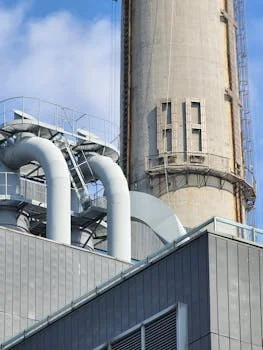
Match technology to the limiting pollutant, not to a brochure label. DAF systems for high-efficiency FOG and TSS removal in Sindh’s textile and food processing plants suit pretreatment where FOG and floatable solids dominate. DAF units covering about 4–300 m³/h typically deliver 90–95% TSS removal and 70–90% FOG removal when air saturation and polymer dose are tuned to the influent.
High-COD pharmaceutical or compact urban plots often need MBR systems for high-COD pharmaceutical effluent and space-constrained plants in Karachi. DF-series MBR membranes at about 0.1 µm pore size can hold mixed liquor higher than conventional aeration tanks and target greater than 95% BOD/COD removal with essentially complete TSS retention. In a typical Karachi pharma design case, cutting influent COD from about 2,500 mg/L to below 50 mg/L is a realistic sizing target when pretreatment removes inhibitors first.
Textile color and alkaline pH respond well to automatic chemical dosing for pH adjustment and color removal in textile effluent ahead of clarification. Dosing skids in the 0.1–500 L/h range support coagulation, flocculation, and metal precipitation before biology. Where land is scarce and municipal-style flows are modest, an Underground Package Sewage Treatment Plant (WSZ Series) can cover the biological stage after DAF or chemical pretreatment, provided influent toxicity is controlled.
| Technology | Influent Type Suitability | Key Removal Efficiencies | Footprint | Energy Consumption | Typical CAPEX | Typical OPEX | SEPA Compliance Suitability |
|---|---|---|---|---|---|---|---|
| Dissolved Air Flotation (DAF) | High FOG, TSS (Food, Textile) | 90-95% TSS, 70-90% FOG | Medium-Small | Moderate | Medium | Medium | Pretreatment for TSS/FOG |
| Membrane Bioreactor (MBR) | High COD, BOD, TSS (Pharma, Textile) | >95% BOD/COD, 100% TSS | Smallest | Moderate-High | High | Medium-High | Excellent for stringent limits |
| Chemical Dosing + Sedimentation | High pH, Color, Heavy Metals, TSS (Textile) | 70-90% Color, 60-80% TSS, pH adj. | Medium-Large | Low-Moderate | Low-Medium | Medium | Pretreatment, pH/Color correction |
Cost Breakdown: How Much Does an Industrial Wastewater Treatment Plant Cost in Sindh?
CAPEX in Sindh usually splits as pretreatment 15–20%, biological treatment 30–40%, tertiary polishing 25–35%, and sludge handling plus sludge dewatering solutions for industrial wastewater treatment at 10–15%. For 10–100 m³/h packages, recent industrial budgets still cluster around PKR 5 million to PKR 50 million. Larger 200–1,000 m³/h trains often land between PKR 100 million and PKR 500 million, depending on MBR or RO reuse scope.
OPEX is dominated by energy at 30–40%, then chemicals 20–30%, maintenance 15–20%, and labor 10–15%. A practical ROI sheet should list capacity (m³/h), influent BOD/COD, SEQS limits, current penalty exposure (PKR/year), reuse volume (m³/day), and freshwater cost (PKR/m³). Outputs should include CAPEX, annual OPEX, penalty avoidance, reuse savings, and payback years. Financing paths still include PPP structures similar to TP-IV and supplier payment plans of about 3–5 years.
| Plant Capacity (m³/h) | Estimated CAPEX Range (PKR) | Estimated Annual OPEX Range (PKR/year) | Key CAPEX Components |
|---|---|---|---|
| 10–50 | 5M–25M | 1.5M–5M | Pretreatment, Biological (Activated Sludge/MBR), Sludge Dewatering |
| 50–100 | 25M–50M | 5M–12M | Pretreatment, Biological (MBR/Extended Aeration), Tertiary Filtration, Sludge Handling |
| 200–500 | 100M–250M | 20M–50M | Advanced Pretreatment, MBR/Advanced Biological, Tertiary (RO/UF), Automated Sludge Management |
| 500–1,000 | 250M–500M | 50M–120M | Customized Integrated Systems, Large-scale MBR/SBR, RO/UF for High Reuse, Energy Recovery |
What do disinfection costs for tanks and piping typically cover?
Disinfection of piping, tanks, structures, and equipment typically covers chemical oxidant or sanitizer dose, labor and confined-space entry, downtime while lines are out of service, and verification sampling after rinse. For industrial ETPs in Sindh, these costs sit inside OPEX and turnaround budgets rather than main CAPEX. Plants with frequent CIP of equalization, DAF, or clean-in-place loops should line-item them separately when comparing bids.
Supplier Selection Checklist: How to Choose a Wastewater Treatment Equipment Vendor in Sindh
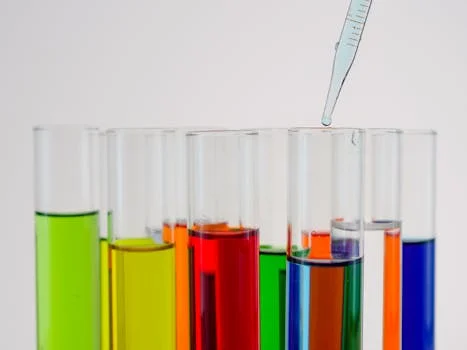
Ask for Sindh references on textile, pharma, or food effluent close to your COD, salinity, and color profile. Require ISO 9001, CE where imported skids apply, and a written guarantee against SEQS inland limits—BOD₅ 80 mg/L, COD 150 mg/L, and the applicable TSS and metal values—not vague “EPA compliance” language. Confirm spare-parts lead times in Karachi and named technicians who can attend within an agreed SLA.
Use this selection checklist before award:
- Pilot or jar-test data on your real effluent, not only generic curves.
- Mass balance for BOD, COD, TSS, FOG, and color through each unit process.
- Warranty terms for membranes, blowers, and dosing pumps in months and operating hours.
- Operator training hours and local spare holding list.
- Red flags: no Sindh references, non-committal compliance letters, or no stocked wear parts.
Compact sites that need a packaged biological train after pretreatment can evaluate an Underground Package Sewage Treatment Plant (WSZ Series) against above-ground MBR footprints on the same duty.
Who this is for / Next step
This guide is for plant engineers, EPC contractors, and procurement managers sizing or upgrading ETPs in Sindh’s industrial estates. Look elsewhere if you only need municipal sewage without industrial COD, color, or salinity spikes. To size a DAF, MBR, dosing, or package biological train against your SEQS duty, request a technical quote with your influent data.
Frequently Asked Questions
What are the SEPA discharge limits for industrial wastewater in Sindh?
For inland waters, SEQS 2016 sets BOD₅ at 80 mg/L, COD at 150 mg/L, TSS at 200 mg/L, TDS at 3,500 mg/L, oil and grease at 10 mg/L, and pH 6–9. Into sewage treatment works, BOD₅ and COD rise to 250 and 400 mg/L respectively. Many plant RFQs still specify TSS below 30 mg/L as a tighter internal target. Metal limits vary by element under SEQS rather than one uniform cap.
How much does a 50 m³/h wastewater treatment plant cost in Karachi?
A 50 m³/h industrial train in Karachi typically budgets about PKR 25M–40M for DAF plus conventional biology, and about PKR 35M–50M for an MBR-based package including installation. Final price moves with influent COD, color treatment, sludge dewatering, and any RO/UF reuse stage. Always compare OPEX energy and chemicals on the same duty point.
What is the best treatment technology for textile effluent in Sindh?
Most textile plants in Sindh need pH correction and DAF or clarification for TSS/FOG and color, then biological treatment for BOD/COD. MBR is preferred when land is tight or reuse quality is strict. Tertiary carbon or oxidation is added only when residual color still fails the plant’s discharge or buyer specification after biology.
Can treated wastewater be reused in industrial processes in Sindh?
Yes, after tertiary treatment such as UF or RO matched to process-water specs. Earlier TP-IV briefs cited about 40 MIGD of recycled industrial supply. The Sindh PPP Unit now describes a 44 MIGD recycling facility fed by a 135 MIGD WWTP for Korangi industries, still at feasibility stage. On-site reuse remains the faster path for individual factories.
What are the penalties for non-compliance with SEPA regulations?
Penalties commonly cited under provincial enforcement range from PKR 50,000 to PKR 1 million per violation, with escalating action and possible shutdown for repeat offenders. Yunus Textile’s reported PKR 12 million per year avoidance after a 50 m³/h upgrade shows how quickly fines and downtime can exceed equipment CAPEX. Maintain continuous monitoring against SEQS parameters, not only spot tests.