Why Indian Industrial Effluent Rules Tightened in 2024–2026
The 2019 MoEFCC Zero Liquid Discharge (ZLD) notification placed textile, distillery, tannery, pulp & paper, sugar, fertilizer, and dye-intermediate units on a hard "no-liquid-discharge" footing; the 2020 amendment added pharma, pesticides, and bulk-drug manufacturers, and the 2024 CPCB expansion extended ZLD-style consent conditions to seven more sector categories including petrochemical, iron & steel, oil & gas upstream, and CETPs handling hazardous waste (CPCB Office Memorandum, 2024-09). In the Ganga basin, the Namami Gange programme (NMCG) has pushed State PCBs to write tighter consent conditions even for CETP-connected industries, and most state boards now require six-monthly treated-effluent compliance uploads to the OCEMS portal (Online Continuous Effluent Monitoring System). The consent-to-operate renewal cycle under the Water (Prevention and Control of Pollution) Act 1974 and Air Act 1981 now runs with these continuous data feeds as a default, not an exception. Discharge norms under CPCB Schedule VI for inland surface water are 100 mg/L suspended solids, 250 mg/L COD, 30 mg/L BOD, and 2,100 mg/L TDS for discharge onto land, with stricter values for direct inland-surface-water discharge (CPCB Schedule VI, 2023 reprint). Tamil Nadu, Gujarat, and Maharashtra PCBs have all tightened consent renewal scrutiny since mid-2024, with TNPCB issuing individual ZLD directions to Tirupur dyeing units from 2023 onward.
Effluent Characteristics by Industry: The Five Sectors Driving Indian ETP Demand
No single ETP design works across Indian industry because influent COD, TDS, biodegradability, and toxicity vary by an order of magnitude between sectors. The five sectors below account for the majority of greenfield and retrofit ETP enquiries in 2026, and each one drives a different downstream equipment choice. The data points below are typical operating ranges seen in Indian plant audits; treat them as scoping values, not guarantees.
| Sector | Influent COD (mg/L) | Influent BOD (mg/L) | TDS (mg/L) | Key stressor | Typical treated-effluent target |
|---|---|---|---|---|---|
| Textile (dyeing & printing) | 1,500–5,000 | 400–1,200 | 2,000–8,000 | Color 500–2,500 Pt-Co, pH 6–11, temp 40–60°C | COD <250, TDS <2,100, color <100 Pt-Co |
| Pharma (API + formulation) | 5,000–25,000 | BOD:COD <0.3 | 3,000–15,000 | Residual antibiotics, mixed solvents, occasional heavy metals | COD <250, no solvent carryover, trace-antibiotic limits per NMCG |
| Distillery (spent wash) | 80,000–120,000 | 40,000–50,000 | 20,000–40,000 | High potassium, dark color, recalcitrant melanoidins | ZLD only; concentration to ash or bio-composting |
| Tannery | 4,000–10,000 | 1,500–4,000 | 8,000–25,000 | Sulfide 50–300 mg/L, total chromium 50–500 mg/L, high salinity | Chrome recovery >90%, sulfide oxidation, ZLD on concentrated stream |
| Dairy and food processing | 2,000–10,000 | 1,000–6,000 | 1,000–3,000 | FOG 200–1,500 mg/L, pH-sensitive, easily biodegradable | COD <250, FOG <10 mg/L, reuse-quality for boiler/Cooling |
Chemical and petrochemical plants are the emerging ZLD cohort under the 2024 expansion, with influent COD typically 1,000–8,000 mg/L, TDS 5,000–30,000 mg/L, and frequent phenol/cyanide spikes that demand dedicated stripping or oxidation steps before biological treatment.
The Modern Indian ETP Process Train: Primary to ZLD
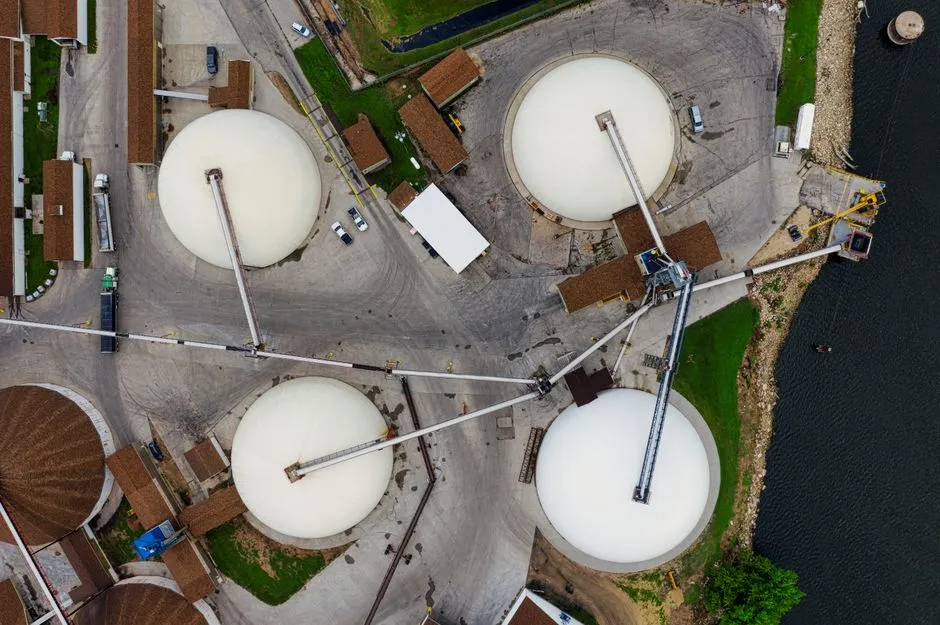
The 2026 Indian ETP process train is a five-stage sequence: primary clarification, biological oxidation, tertiary polishing, membrane separation, and a ZLD finish for the membrane reject. Equipment selection at each stage is driven by influent variability, footprint, and the treated-effluent target set by the state PCB. A typical headworks starts with a rotary mechanical bar screen for ETP headworks at 5–10 mm opening, followed by grit removal, flow equalization, and a primary clarifier to drop suspended solids and protect downstream biology. Biological treatment in 2026 is most often MBBR for high-BOD textile and dairy waste or MBR membrane bioreactor for tight-footprint Indian ETP upgrades, where submerged PVDF membranes deliver <1 μm filtration at roughly 60% smaller footprint than conventional activated sludge. SBR remains common in pharma batch operations. Tertiary treatment uses a lamella clarifier for high-rate primary and tertiary sedimentation at 20–40 m/h surface loading, multi-media filtration, and activated carbon polishing, with a PLC-controlled automatic chemical dosing for ETP cutting coagulant use by 20–30% versus manual dosing (HydropureWater field data, 2025-11). Membrane separation is handled by an industrial RO system for ZLD tertiary treatment at 75–95% recovery, and the remaining 5–25% reject goes to a brine concentrator and forced-evaporation crystallizer — solar evaporation ponds are being phased out across most state PCBs. Final disinfection uses a chlorine dioxide generator for treated-effluent disinfection sized from 50 g/h to 20,000 g/h and compliant with EPA/EU/WHO drinking-water limits where reuse is intended.
| Stage | Typical removal/contribution | Key operating parameter |
|---|---|---|
| Primary clarification | 50–70% TSS, 25–40% COD | Surface overflow 1–2 m/h |
| MBBR / MBR biological | 80–95% BOD, 60–85% COD | HRT 6–24 h, MLSS 6,000–12,000 mg/L (MBR) |
| Lamella / multimedia | Polishing to <30 NTU turbidity | Surface loading 20–40 m/h (lamella) |
| RO membrane | 95–99% TDS, 75–95% recovery | Flux 15–25 LMH, pressure 10–30 bar |
| ZLD crystallizer | Zero liquid discharge, salt recovery | Steam economy 0.3–0.5 kg steam per kg water |
2026 CAPEX and OPEX: What an Indian ETP Really Costs
Indian plant buyers consistently under-budget ETP projects by 30–50% because OEM quotes rarely break out civil, electrical, ZLD, and sludge-disposal line items. The 2026 benchmark figures below are drawn from recent HydropureWater project quotes in Tamil Nadu, Gujarat, and Maharashtra (Q1 2026) and should be used as a sanity check against vendor bids, not a fixed quotation. CAPEX scales sharply with capacity, and ZLD adders are larger than most first-time buyers expect.
| Plant capacity (m³/day) | CAPEX (₹ lakh per 10 m³/day, excl. ZLD) | ZLD adder on total project cost | Typical OPEX (₹/m³) |
|---|---|---|---|
| 50 | 12–18 | +40–60% (textile/distillery) | 40–70 (textile), 60–90 (pharma) |
| 100 | 10–15 | +35–55% | 35–60 (textile), 50–85 (tannery) |
| 250 | 8–12 | +30–50% | 50–85 (tannery), 80–120 (ZLD textile) |
| 500+ | 6–10 | +30–45% | 30–55 (dairy), 70–110 (ZLD pharma) |
OPEX is dominated by power at 35–50% (industrial tariff ₹7–10/kWh is common in 2026), chemicals at 15–25% (coagulants, flocculants, antiscalant, CIP chemicals), sludge disposal at 10–20% (₹1,500–4,000/ton disposal cost depending on hazardous classification), and operator plus maintenance at 15–25%. Sludge dewatering is the single biggest OPEX lever — a plate-and-frame filter press for industrial sludge dewatering at 1–500 m² filtration area, or a screw press for continuous high-volume operation, cuts sludge volume by 75–85% before disposal and is the most cost-effective reduction in annual opex for any Indian ETP. For a deeper comparison of disposal routes, the 2026 sludge disposal cost and methods comparison breaks down landfill, incineration, and co-processing economics by sector.
Own ETP vs. CETP: The 2026 Decision Framework
The CETP-versus-own-ETP decision in 2026 is no longer just a cost question — state PCBs are now refusing CETP membership for industries that fall under the 2024 ZLD expansion, and Tirupur's CETPs have been under TNPCB scrutiny since 2023 with individual ZLD norms pushed to member units. A CETP connection is typically viable only when the plant sits inside a notified industrial estate, the effluent is biodegradable with TDS below 2,100 mg/L and no heavy metals, and the CETP operator holds valid consent with spare hydraulic capacity. An own ETP becomes mandatory when the effluent contains non-biodegradable organics (reactive dyes, solvents, residual antibiotics), TDS exceeds 2,100 mg/L requiring RO or ZLD, the state PCB has refused CETP membership, or the production schedule cannot tolerate shared-network downtime. A third model is gaining ground in Gujarat Vatva and Maharashtra Taloja clusters: own primary plus biological treatment on site, with the RO concentrate sent to a common ZLD facility for shared evaporation and crystallization. For a state-specific deep dive, the Tamil Nadu-specific ETP compliance and engineering guide covers TNPCB consent-to-operate procedure, Tirupur cluster status, and sector-specific CAPEX benchmarks. The 2026 water-reuse outlook for industrial plants also changes the math: plants that reuse 60–80% of treated effluent for cooling or boiler makeup cut freshwater purchase and sewage discharge levy simultaneously, and the ROI on RO + MBR retrofits has shortened to 3–5 years for most textile and pharma sites (HydropureWater field data, 2026-Q1). For plants considering AI-based process control on top of a new ETP, the AI and process-control trends in 2026 wastewater plants notes that aeration and chemical-dosing optimization typically delivers 8–15% OPEX reduction within 12 months of commissioning.
Frequently Asked Questions
What does a 100 m³/day industrial ETP cost in India in 2026?
CAPEX is ₹10–15 lakh per 10 m³/day excluding ZLD (₹1.0–1.5 crore total for 100 m³/day), and OPEX runs ₹35–90 per m³ depending on sector; pharma and ZLD textile sit at the upper end, dairy and food at the lower end (HydropureWater field data, 2026-Q1).
Which industries are now under mandatory ZLD in India after the 2024 CPCB expansion?
ZLD now covers 17 sector categories including textile, distillery, tannery, pulp & paper, sugar, fertilizer, dye intermediates, pharma, pesticides, bulk drugs, and the seven added in 2024 — petrochemical, iron & steel, oil & gas upstream, and CETPs handling hazardous waste (CPCB Office Memorandum, 2024-09).
What are the key CPCB Schedule VI effluent limits for inland surface water discharge?
Suspended solids 100 mg/L, COD 250 mg/L, BOD 30 mg/L, and TDS 2,100 mg/L for discharge onto land; values for direct inland-surface-water discharge are tighter and enforced via state PCB consent conditions (CPCB Schedule VI).
Should I choose MBR or conventional activated sludge for a tight-footprint Indian ETP retrofit?
MBR delivers <1 μm filtration, 60% smaller footprint than conventional activated sludge, and reuse-quality effluent suitable for boiler or cooling-tower makeup, but it costs 25–40% more in CAPEX and requires stricter MLSS control (HydropureWater field data, 2025-11).
How is consent-to-operate renewal handled under the Water Act 1974 in 2026?
State PCBs now require six-monthly OCEMS portal uploads of treated-effluent data, valid format-III analysis reports, and a paid consent fee; non-upload or exceedance triggers show-cause notice and potential refusal of renewal under the Water (Prevention and Control of Pollution) Act 1974.