What Is a DAF System and Why It Matters in Qatar
Dissolved Air Flotation (DAF) removes 90–98% of suspended solids and 85–95% of oil and grease from industrial wastewater in Qatar. The technology injects micro‑bubbles (10–100 µm) into a pressurized flotation tank, causing fine particles, fats, oils, and greases (FOG) to rise and form a scum layer that is skimmed off. Qatar’s fast‑growing food‑processing, petrochemical, and textile sectors routinely generate waste streams with TSS > 500 mg/L and grease loads exceeding 300 mg/L, far above the National Effluent Quality (NEQ) limits set by the Ministry of Municipality. In an arid climate where water reuse and zero‑liquid‑discharge (ZLD) initiatives are national priorities, DAF serves as the preferred pretreatment step before reverse osmosis (RO) or membrane bioreactor (MBR) systems, dramatically reducing downstream chemical and energy demand.
Beyond compliance, the Qatari government’s Qatar National Water Strategy 2030 emphasizes a 30% increase in water reuse by 2030. DAF’s high removal efficiency directly supports this goal by producing water that meets the stringent criteria for non‑potable reuse in cooling towers, irrigation, and even secondary industrial processes. A recent case study at a Doha dairy plant showed that after installing a 80 m³/h DAF unit, the plant’s overall water consumption dropped by 22% within six months, illustrating the technology’s tangible contribution to national water‑security objectives.
How DAF Systems Work: From Bubble Generation to Sludge Removal
In a DAF unit, water saturated with air at 4–6 bar is released into the flotation tank, creating 10–100 µm micro‑bubbles that attach to contaminants. The process begins with a pressurised air‑solubiliser where clean water is mixed with compressed air; the mixture is then discharged through a diffuser into the flotation chamber. As the pressure drops, dissolved air expands into micro‑bubbles that instantly bind to suspended solids, oil droplets, and colloidal organics. The mixture is allowed a hydraulic retention time (HRT) of 20–30 minutes, providing sufficient contact for bubble‑particle attachment. Automatic skimmers, operated on a programmable cycle of 5–15 minutes, lift the floating sludge to a collection trough. A recycle ratio of 15–30% of the total flow is recirculated to maintain bubble density while optimising energy consumption. The remaining clarified water exits the DAF tank for further treatment.
Modern DAF designs often incorporate fine‑pore ceramic or venturi diffusers, which generate a more uniform bubble size distribution and improve attachment efficiency by up to 10 %. Energy consumption can be fine‑tuned through variable‑frequency drives (VFDs) on the air‑solubiliser, typically resulting in an electricity demand of 0.15–0.25 kWh per cubic metre of treated water. Advanced control systems also monitor dissolved oxygen levels in real time, automatically adjusting air pressure to maintain optimal bubble saturation and reduce wear on mechanical components.
Performance Metrics: What Removal Efficiencies to Expect
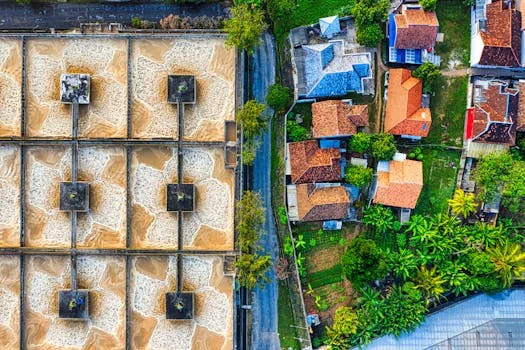
Field data from HydropureWater show TSS reductions from 200–1,000 mg/L down to below 20 mg/L, corresponding to 90–98% removal. When paired with upstream coagulation‑flocculation, DAF also delivers significant reductions in chemical oxygen demand (COD) and biochemical oxygen demand (BOD). The table below summarises typical performance figures observed in Qatar‑based installations.
| Parameter | Typical Influent Range (mg/L) | Typical Removal Efficiency (%) | Typical Effluent (mg/L) – Qatar NEQ |
|---|---|---|---|
| TSS | 200–1,000 | 90–98 | <100 (NEQ limit 100) |
| FOG / Oil | 150–500 | 85–95 | <10 (NEQ limit 10) |
| COD | 1,000–4,000 | 60–80 | 800–1,600 (depends on downstream process) |
| BOD | 400–1,200 | 50–70 | 200–360 (NEQ limit 60 for final discharge, after biological stage) |
These results are consistent across the food‑processing, petrochemical, and textile sectors, confirming DAF’s suitability as a universal pretreatment platform. For projects that require tighter COD limits, the integrated chemical dosing for DAF coagulation can boost removal by up to an additional 15%.
Operators typically install online turbidity meters and inline COD analyzers to verify performance on a continuous basis. Data logging software can generate daily efficiency reports, allowing plant managers to quickly identify any drift in removal rates and adjust coagulant dosing or recycle ratios before non‑compliance occurs.
DAF System Applications in Qatar’s Key Industries
The food‑and‑beverage sector in Doha Industrial Area routinely installs 20–150 m³/h DAF units to meet NEQ limits for grease and turbidity. Slaughterhouses, dairy plants, and confectionery factories generate high‑fat waste streams; a DAF system can achieve 95% FOG removal while delivering effluent TSS < 20 mg/L, enabling direct reuse for cooling tower makeup water. In the petrochemical industry, DAF is paired with API oil‑water separators to extract free oil and suspended solids from refinery runoff, protecting downstream catalytic units and reducing fouling on RO membranes. Textile manufacturers employ coagulation‑assisted DAF to strip dye‑laden colloids, achieving 90% colour and turbidity reduction before biological treatment. Municipal wastewater treatment plants (WWTPs) in Qatar use DAF as a pretreatment stage for industrial inflows, handling capacities from 50 m³/h up to 300 m³/h to safeguard activated sludge performance. For rapid deployment, many EPC contractors choose modular DAF‑integrated treatment plants for rapid deployment, which can be shipped on a single container and commissioned within weeks.
Emerging sectors such as offshore desalination pre‑treatment and solar‑thermal power‑plant cooling circuits are also beginning to adopt DAF technology. In a recent pilot at a Ras Laffan seawater intake, a 30 m³/h DAF unit reduced bio‑fouling precursor levels by 80%, extending the intervals between chemical cleaning of the reverse‑osmosis membranes and delivering an estimated savings of US$120,000 per year.
Cost of DAF Systems in Qatar: CAPEX, OPEX, and ROI
A 4–20 m³/h DAF plant with manual skimming starts at approximately US$50,000, while a fully automated 100–300 m³/h system can cost up to US$500,000. Capital costs scale with capacity, level of automation, and material selection (SS316 vs. FRP). Basic units include a flotation tank, air‑solubiliser, and manual skimmer; advanced models add programmable logic controllers (PLC), remote monitoring, and integrated chemical dosing. Annual operating expenses (OPEX) are driven by electricity (pump and air‑solubiliser), chemicals (coagulant, flocculant), and routine maintenance. Typical OPEX ranges from US$15,000 for a small plant to US$40,000 for a large automated unit. Savings arise from reduced sludge hauling (up to 30% less volume) and lower downstream treatment chemical demand, often delivering a payback period of 2–4 years.
| Capacity (m³/h) | CAPEX (US$) | Automation Level | Annual OPEX (US$) | Typical Payback (years) |
|---|---|---|---|---|
| 4–20 | 50,000–120,000 | Manual skimmer, basic controls | 15,000–22,000 | 3.5–4.0 |
| 50–100 | 150,000–250,000 | PLC‑controlled skimmer, basic dosing | 22,000–30,000 | 2.8–3.2 |
| 100–300 | 250,000–500,000 | Fully automated, remote monitoring, integrated dosing | 30,000–40,000 | 2.0–2.5 |
When evaluating ROI, include avoided fines for non‑compliance (average penalty ≈ US$100,000 per breach) and the value of reclaimed water (≈ US$0.30 per cubic metre in Qatar). These factors often tip the financial balance in favour of DAF even for modest‑size plants.
Financing options such as vendor‑backed leases or Islamic financing structures are increasingly available in the region, allowing operators to spread CAPEX over a 5‑year term while preserving cash flow. In many projects, the reduction in energy consumption for downstream RO (often 10–15% lower) further improves the overall economic picture.
Choosing the Right DAF Supplier in Qatar
Local service presence, 24/7 technical support, and proven compliance with Kahramaa and Ministry of Municipality standards are the top three criteria for selecting a DAF supplier. Buyers should verify the following:
| Evaluation Criterion | Why It Matters | How to Verify |
|---|---|---|
| Local After‑Sales Service | Harsh ambient temperatures (up to 45 °C) accelerate wear on pumps and seals. | Request a service agreement that includes on‑site spares and 24/7 hotline response times. |
| Compliance Track Record | Projects must meet Qatar General Electricity & Water Corporation (Kahramaa) and Ministry of Municipality effluent limits. | Ask for certifications, past project reports, and references from similar industries in Doha Industrial Area. |
| Integrated Solutions | Combining DAF with chemical dosing and sludge dewatering reduces total plant footprint. | Confirm that the supplier offers the high‑efficiency DAF system for industrial wastewater together with optional automatic chemical dosing and screw‑press dewatering. |
| Technical Documentation | Accurate design data (HRT, recycle ratio, skimmer cycle) ensures proper sizing. | Review detailed engineering datasheets and ask for a pilot‑scale test report. |
| Thickener Compatibility | Choosing between a DAF thickener and a gravity thickener impacts sludge handling costs. | Read the DAF thickener vs gravity thickener comparison to assess which fits your sludge volume and energy budget. |
| Warranty and Training | Extended warranties (up to 5 years) and on‑site operator training reduce long‑term risk. | Ask the supplier to provide a written warranty schedule and a training programme for your maintenance team. |
Frequently Asked Questions
- How much does a DAF system cost? Small units (4–20 m³/h) start at US$50,000; large automated systems (100–300 m³/h) range from US$250,000 to US$500,000 in Qatar.
- What is the difference between DAF and SAF? DAF dissolves air under pressure to generate micro‑bubbles, achieving finer particle capture; SAF (Shear Air Flotation) injects air mechanically, which is less effective for sub‑10 µm particles.
- What is the water law in Qatar? The Ministry of Municipality enforces National Effluent Quality Standards (NEQs) with limits of TSS < 100 mg/L, BOD < 60 mg/L, and oil & grease < 10 mg/L for industrial discharge.
- Can DAF systems work in high‑temperature environments? Yes, provided the tank, pump, and diffuser are fabricated from corrosion‑resistant materials such as SS316 or FRP, and skimmer cycles are adjusted for faster scum formation.
- How often does a DAF system need maintenance? Recommended schedule: weekly visual inspections, monthly pump and diffuser servicing, annual structural integrity checks, and quarterly calibration of chemical dosing units.
- What environmental benefits does DAF provide? By removing the majority of oil, grease, and suspended solids at the source, DAF reduces the biological oxygen demand on receiving water bodies, helps protect marine ecosystems in the Gulf, and lowers the overall carbon footprint of a plant by decreasing the energy required for downstream membrane processes.