2026 Sludge Disposal Cost Per Ton: What You Actually Pay
Sludge disposal cost per ton in 2026 ranges from $40–$70 per metric ton for landfilling, $90–$130 for incineration, and $25–$60 for composting or land application, with industrial haulers typically billing by wet ton (Solenis, 2025). The single biggest cost lever is on-site dewatering: lifting cake solids from 20% to 25% cuts tonnage hauled by 20%, saving roughly $13 per wet ton at a $65/ton disposal fee. Industrial haulers handling paper, food, or chemical sludge commonly bill $80–$200 per wet ton — well above the municipal bands — because the material is often classified as non-hazardous industrial waste with elevated handling surcharges.
Three units hide inside the phrase "per ton," and confusing them is the most expensive mistake in sludge budgeting. A wet ton is whatever goes on the truck — typically 75–95% water for liquid sludge, 65–80% water for pressed cake. A dry ton is the dry-solids mass only, the unit regulators and most academic cost models use. A metric ton is 1,000 kg, while a short ton (US) is 2,000 lb = 0.907 metric tons. Worked example: 100 wet tons of pressed cake at 20% solids contains 20 dry tons of solids and weighs 20 / 0.907 = ~22 metric tons. The $40–$70 landfill figure from Solenis is per metric ton of dry solids delivered, not per wet ton of liquid sludge — a distinction that explains why a plant manager and a hauler can read the same invoice and disagree on the unit price by a factor of five.
Most public cost data describes municipal biosolids. Industrial sludge from food, paper, textile, and chemical plants often runs 1.5–2x municipal rates because of higher trace-contaminant screening, dedicated trucks, and tipping-fee surcharges at industrial-class landfills. When you see a 2026 industry estimate below $50/wet ton, assume municipal biosolids; when you see $80–$200/wet ton, assume industrial.
Disposal Method Comparison: Cost, Risk, and Regulation in 2026
No single disposal route wins on every axis. Landfill is cheapest but constrained by siting and PFAS-driven restrictions tightening through 2026 under the EU Sewage Sludge Directive 86/278/EEC and parallel US EPA 40 CFR Part 503 rule updates. Incineration eliminates volume and recovers energy — the Zurich Werdhölzli facility exports ~70 GWh/year of heat — but costs roughly twice landfill and demands emissions permitting under EU IED 2010/75/EU. Composting and land application sit at the bottom of the cost band only when the cake passes heavy-metal and pathogen limits.
| Method | Cost per ton (2026, USD) | Pre-treatment required | Regulatory framework | Best for | Major downside |
|---|---|---|---|---|---|
| Landfill | $40–$70/metric ton dry solids | Dewatering to ≥20% cake; characterization | EU SSD 86/278/EEC; US 40 CFR Part 503; local siting permits | Sporadic volumes; flexible contract terms | Siting scarcity; rising PFAS restrictions in 2026 |
| Incineration | $90–$130/metric ton | Mechanical dewatering; often thermal drying | EU IED 2010/75/EU; US CAA Section 129 | High-volume urban plants; energy recovery viable | High CAPEX; emissions permitting; 90% rate in Japan, 90% in Germany (Solenis) |
| Composting / Land Application | $25–$60/wet ton | Stabilization; heavy-metal and pathogen testing | US 40 CFR Part 503; EU SSD 86/278/EEC (2026 PFAS revisions) | Municipal biosolids with low metals | Industrial sludges usually fail metals or PFAS ceilings |
| Anaerobic Digestion | $9–$18/dry ton operating | Thickening to 10–20% solids upstream | EU SSD 86/278/EEC; US 40 CFR Part 503 | Plants with biogas utilization; municipal WWTPs | 10–20% feed-solids requirement rules out dilute DAF skimmings |
| Ocean/Sea Dumping | Phased out | None historically | EU banned since 1998; London Convention 1996 | Not applicable in 2026 | Globally declining; banned in EU, US, China |
Decision rule: if your sludge is below 2% solids — typical of dissolved air flotation (DAF) float or waste-activated sludge — digestion is uneconomic without upstream thickening, and dewatering must come first. The $5.8M/year savings at a 5M-PE plant documented by Solenis came from a filter press pushing cake from 20% to 25% solids before hauling — not from switching disposal routes.
Wet Ton vs. Dry Ton: The Unit That Changes Your Bill 4–5x
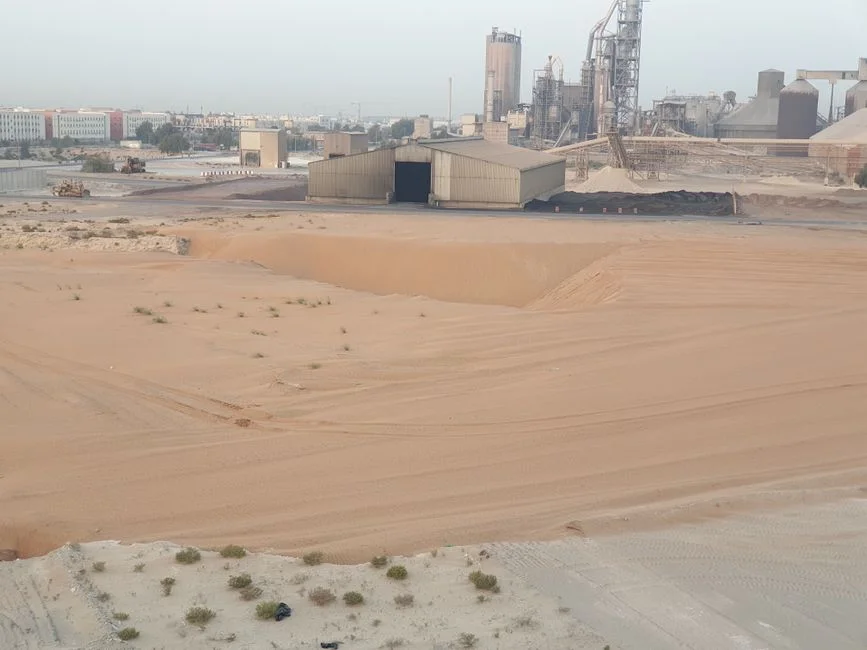
Two engineers can quote "$65 per ton" and disagree on the annual bill by $400,000 because they are talking about different tons. The unit that goes on the hauler's truck is a wet ton — water plus solids. The unit regulators and most engineering references quote is a dry ton — solids only. The conversion is mechanical: Wet tons hauled = Dry tons ÷ (solids fraction).
| Sludge form | Solids % | Wet tons to deliver 20 dry tons | Cost @ $65/dry ton | Cost @ $80/wet ton |
|---|---|---|---|---|
| Liquid WAS (1% solids) | 1% | 2,000 | $1,300 | $160,000 |
| DAF float (5% solids) | 5% | 400 | $1,300 | $32,000 |
| Thickened (8% solids) | 8% | 250 | $1,300 | $20,000 |
| Filter-pressed cake (25%) | 25% | 80 | $1,300 | $6,400 |
Worked example for a 100 wet tons/day stream: at 1% solids, the hauler bills 100 wet tons/day and you are paying to move 99 tons of water. At 25% cake, the same 100 wet tons contain 25 dry tons instead of 1 — but you are now hauling only 80 wet tons for the same solids payload, a 20% cut in hauler fees. At $65/dry ton the disposal cost is identical ($65 × 25 = $1,625/day for the dry-solids bill), but the wet-ton invoice drops from $5,200 to $4,160. That gap — the $13/wet ton figure in the opening paragraph — is where the savings actually appear in your hauling contract, not in the regulator's per-dry-ton letter.
This is the error pattern I see most often in 2026 budget reviews: procurement quotes the hauler's wet-ton rate, finance reads the environmental compliance report's dry-ton rate, and the variance gets booked as a forecast error instead of a unit mismatch.
How Dewatering Cuts Sludge Disposal Cost Per Ton
On-site dewatering is the highest-leverage cost-control investment in any sludge-handling budget, and the data behind that claim is unusually clean. Solenis's 5-million-population-equivalent municipal case shows a $5.8M/year saving from lifting cake dryness from 20% to 25% at a $65/ton disposal fee — a 5-point dryness lift that produces a 20% reduction in tonnage hauled (Solenis, 2025). The same arithmetic applies directly to industrial plants; the difference is that industrial tipping fees are higher, so the dollar saving is larger.
| Starting cake dryness | Ending cake dryness | Wet tons hauled (per 20 dry tons) | Reduction vs. baseline | Saving @ $65/ton disposal (per 20 dry tons) | Saving @ $100/ton (per 20 dry tons) |
|---|---|---|---|---|---|
| 18% | 18% | 111 | baseline | — | — |
| 20% | 20% | 100 | −10% | — | — |
| 22% | 22% | 91 | −18% | $585 | $900 |
| 25% | 25% | 80 | −28% | $2,015 | $3,100 |
| 30% | 30% | 67 | −40% | $2,860 | $4,400 |
Per wet-ton savings at the typical $65/ton industrial disposal fee work out to roughly $10–$13 per wet ton for an 18%-to-25% lift; at $100/ton (industrial hazardous or restricted landfill) the same lift saves $15–$20/wet ton. The mechanical step that delivers this is usually a plate-and-frame filter press running with an automatic chemical dosing system for polymer conditioning. Polymer (PAM) dosing at $0.05–$0.20/lb typically lifts cake dryness 2–4 points before any mechanical change — the cheapest first step, often returning payback in under three months on chemical cost alone (HydropureWater field data, 2026).
Dewatering itself is not free: per-dry-ton costs run $10–$100 depending on technology, with sand beds at the low end and vacuum filters at the high end (Springer/Burd). The net equation is straightforward — net saving = disposal saving − dewatering operating cost − polymer cost — and at industrial tipping fees the disposal saving dominates by an order of magnitude over dewatering opex for any technology that achieves 22%+ cake.
Equipment Choices That Move the Cost-per-Ton Number
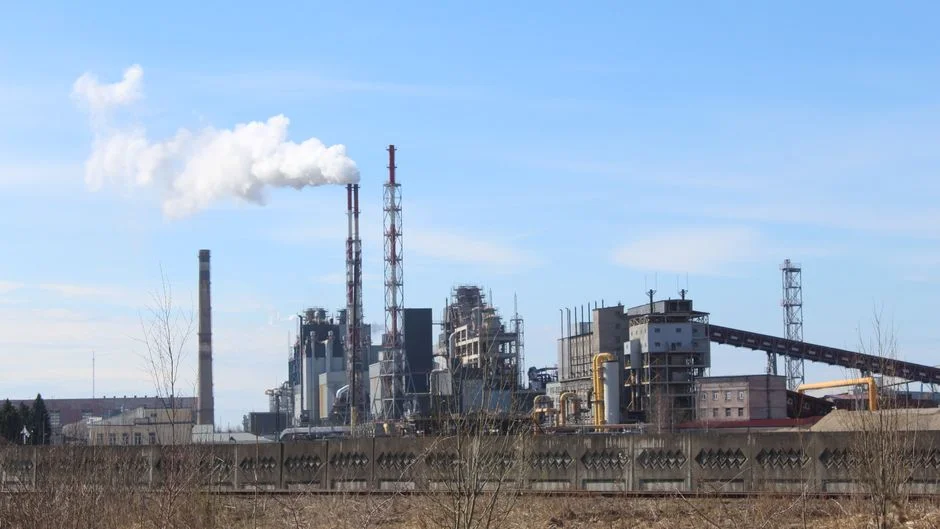
Translating the cost levers above into specific equipment decisions keeps the budget conversation concrete. Three pieces of equipment cover the majority of mid-scale industrial dewatering lines, and each one moves a different number on the per-ton invoice.
The workhorse is a plate-and-frame filter press producing 25–35% dry cake from feed sludge at 1.5–4% solids, available in 1–500 m² filtration areas, and best suited to batch operation at small-to-mid plants. Payback on disposal-fee savings alone typically runs 12–24 months at industrial tipping fees, shorter for plants currently paying $100+/wet ton. The second piece is an automatic chemical dosing system for PAM or other flocculants — PLC-controlled precision dosing at $0.05–$0.20/lb of polymer that consistently lifts cake solids 2–4 points and is the highest-ROI sub-investment in any dewatering line. The third is a dissolved air flotation (DAF) system upstream, which thickens float to 3–6% solids before the press and reduces press cycle time and chemical demand by 15–30% (HydropureWater field data, 2026).
For context, centrifuges hit 20–28% cake at higher energy cost ($0.08–$0.15/kWh operating) and belt presses reach 18–22% cake but need a larger footprint — both valid choices in specific layouts, though they sit below the filter press on the cost-per-ton curve for batch industrial operations. A broader wastewater treatment operating cost breakdown shows where dewatering CAPEX sits against energy and labor in the overall plant budget, and a filter press supplier comparison for Indonesia walks through regional CAPEX variations for Southeast Asian plants. For Northeast Asian plant specs, the South Korea sludge dewatering equipment decision framework gives a side-by-side equipment matrix.
ROI Example: A 20 m³/day Industrial Sludge Plant in 2026
Worked payback for a representative mid-size industrial plant: 20 m³/day of waste-activated sludge at 0.8% solids = 0.16 dry tons/day = ~53 dry tons/year over 330 operating days. Currently hauled as liquid at $80/wet ton, with 1 m³ ≈ 1 wet ton for water-rich WAS: 20 × 330 × $80 = $528,000/year in disposal fees alone.
| Line item | Before dewatering (liquid haul) | After 5 m² filter press + PAM dosing (25% cake) |
|---|---|---|
| Daily sludge volume | 20 m³/day liquid WAS | 0.64 m³/day pressed cake |
| Solids concentration | 0.8% | 25% |
| Wet tons hauled per year | 6,600 | 211 |
| Disposal rate | $80/wet ton (liquid) | $50/wet ton (solid waste, lower surcharge) |
| Annual disposal cost | $528,000 | $10,560 |
| Polymer cost (PAM, ~$0.10/lb × 8 lb/day) | — | $264/year |
| Net annual disposal saving | — | ~$517,000 |
| Equipment CAPEX (5 m² press + dosing skid) | — | $80,000–$150,000 |
| Payback period | — | Under 5 months on disposal cost alone |
Two caveats keep the number honest. First, the post-dewatering rate of $50/wet ton assumes the cake is accepted as solid waste rather than liquid; some haulers will re-quote per dry ton once solids exceed ~20%, which is usually cheaper still. Second, polymer cost, labor, and press power (typically 5–15 kWh/m³ of filtrate for a 5 m² press) need to be added to opex — the table above isolates disposal savings only. For a plant-specific model, run the numbers against your actual local tipping fee and polymer quote; the order-of-magnitude result is the same, with payback comfortably under 12 months in 2026 industrial settings.
Frequently Asked Questions
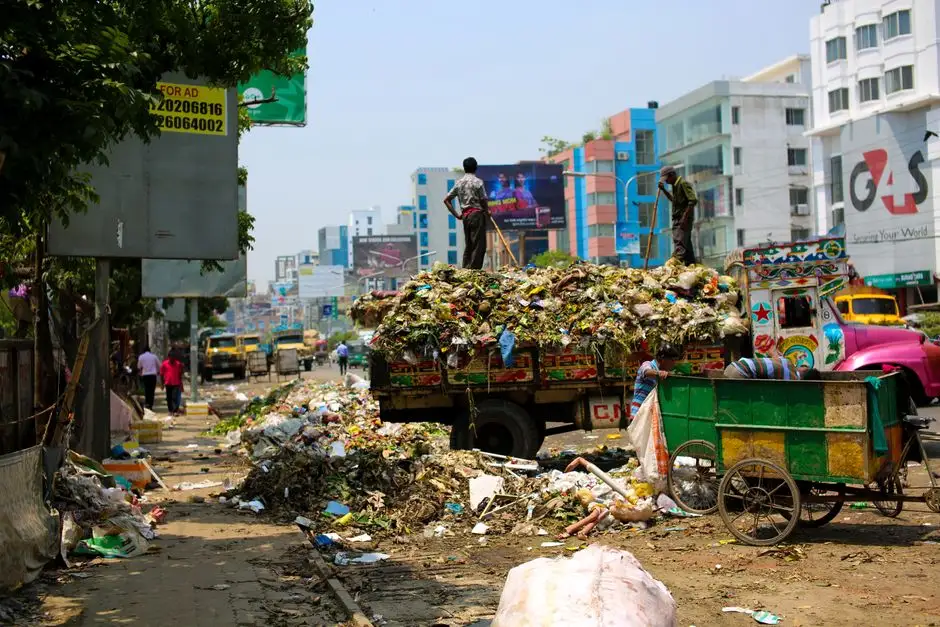
What is the average sludge disposal cost per ton in 2026? Sludge disposal in 2026 averages $40–$70 per metric ton of dry solids for landfill, $90–$130 for incineration, and $25–$60 per wet ton for composting or land application, with industrial haulers typically billing $80–$200 per wet ton (Solenis, 2025). The wide spread reflects unit confusion as much as real price differences — most "per ton" quotes without a unit specified are wet tons.
How much does industrial sludge hauling cost per wet ton? Industrial sludge hauling in 2026 runs $80–$200 per wet ton for non-hazardous material, with hazardous or PFAS-impacted sludge reaching $250–$400 per wet ton at restricted landfills. Industrial rates run 1.5–2x municipal biosolids rates because of dedicated trucks, manifests, and trace-contaminant testing (HydropureWater field data, 2026).
How does cake dryness affect sludge disposal cost per ton? Raising cake dryness from 20% to 25% cuts wet tons hauled by 20% for the same dry-solids payload, saving roughly $10–$13 per wet ton at a $65/ton disposal fee and $15–$20 per wet ton at a $100/ton industrial rate. A 5M-PE municipal plant documented $5.8M/year in savings from this exact lift (Solenis, 2025).
What PFAS sludge regulations take effect in 2026? The 2026 revision cycle of the EU Sewage Sludge Directive 86/278/EEC introduces tighter PFAS ceilings for land application, with parallel US EPA action under 40 CFR Part 503 narrowing the land-application pathway for impacted biosolids. Industrial plants should expect restricted-landfill surcharges of $20–$60/wet ton on PFAS-positive loads through 2026.
Is anaerobic digestion cheaper than dewatering for industrial sludge? Anaerobic digestion costs $9–$18 per dry ton to operate (Springer/Burd) but requires 10–20% feed solids, which rules out dilute industrial streams below 2% solids. For waste-activated sludge or DAF float, dewatering is the necessary first step before digestion or hauling becomes economic.