Why Tabuk's Industrial Boom Is Reshaping Wastewater Demand in 2026
Tabuk's industrial water demand grew an estimated 8–12% CAGR between 2022 and 2025 based on MOMRA utility reports, while installed treatment capacity has lagged by roughly 18–24 months. Under Saudi Vision 2030, the Royal Commission for Jubail and Yanbu (RCJY) has fast-tracked new industrial plots around Tabuk and the wider northwestern region, drawing cement, food processing, mining, and downstream chemicals projects that each need their own discharge permit. The Saudi Water Authority and SWCC 2025 reuse roadmap targets 50% industrial wastewater reuse by 2030, which means the 2026 tender cycle in Tabuk is no longer just about "treat to drain" — it is increasingly "treat to reuse." EPC engineers evaluating bids in Q1–Q2 2026 are reporting 2–3 new wastewater tenders per quarter in the Tabuk region alone, against a regional EPC base that has limited prior track record. For context on how similar arid-climate tenders are scoped elsewhere, see this industrial wastewater treatment in tropical-climate EPC projects engineering guide.
The Regulatory Stack Every Tabuk Plant Must Clear
Four Saudi regulators can hold authority over a single Tabuk discharge, and the binding limit depends on plot location, not on the technology chosen. Inside RCJY-managed industrial cities (Tabuk City, Tayma, and the planned Wadi Al-Khanjar cluster), the Royal Commission's environmental directive applies: BOD ≤50 mg/L, COD ≤150 mg/L, TSS ≤50 mg/L, oil & grease ≤10 mg/L, and residual chlorine ≥1 mg/L at the discharge point. Outside RCJY jurisdiction, the National Center for Environmental Compliance (NCEC) enforces national limits, typically tighter on TDS and chloride — chlorides are often capped at 1,500 mg/L for surface discharge and 600 mg/L for irrigation reuse. The Presidential Mandate on Environment (PME) overlays hazardous-pollutant controls, including heavy metals, cyanide, and phenols relevant to Tabuk's mining and mineral-processing flows. Finally, if the treated effluent is sold or transferred for cooling, boiler feed, or landscape use, SWCC reuse-quality rules apply: TDS <2,000 mg/L, BOD <40 mg/L, and turbidity <2 NTU for cooling-tower make-up.
| Regulator | Jurisdiction in Tabuk | Key Effluent Limits | Trigger |
|---|---|---|---|
| RCJY (Royal Commission) | Inside industrial cities | BOD 50 / COD 150 / TSS 50 / O&G 10 mg/L | Plot is inside RCJY-administered land |
| NCEC (National Center for Environmental Compliance) | Outside RCJY; national default | Tighter TDS, chloride 1,500 mg/L (surface), pH 6–9 | Free-zone or non-RCJY plot |
| PME (Presidential Mandate on Environment) | National overlay | Heavy metals, cyanide, phenols per hazardous list | Mining, mineral processing, refinery streams |
| SWCC (Saline Water Conversion Corporation) | Reuse off-taker | TDS <2,000 mg/L, BOD <40 mg/L, turbidity <2 NTU | Effluent sold for cooling, irrigation, or industrial reuse |
Tabuk Influent Characteristics That Drive Equipment Selection
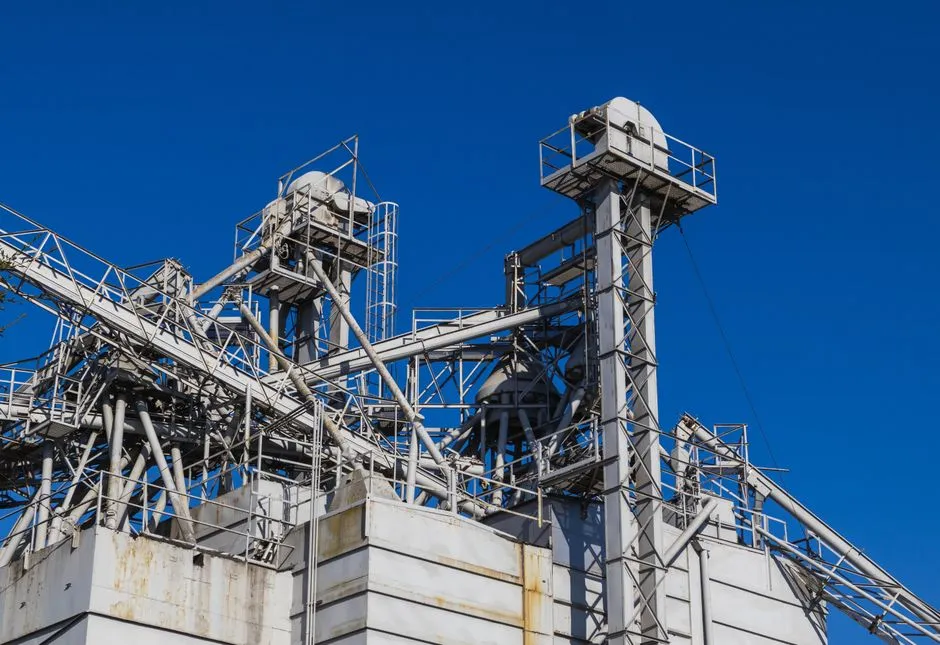
Tabuk's influent does not behave like a textbook Saudi municipal feed, and oversizing for the wrong profile is the most common cause of post-commissioning compliance failure. Typical Tabuk industrial streams carry COD 800–5,000 mg/L, BOD 400–2,500 mg/L, TSS 200–1,500 mg/L, and TDS 1,500–8,000 mg/L depending on whether the source is food processing, cement washwater, or mining. Summer ambient temperatures of 35–45 °C push biological reactors past the mesophilic comfort zone; above 38 °C nitrification efficiency drops roughly 10–20% unless biomass is acclimated, mixed liquor dissolved oxygen is held above 2 mg/L, or partial cooling is added. Salinity is the second design driver: chloride >2,000 mg/L suppresses nitrification by 30–50% (per peer-reviewed salinity-impact data cited in Metcalf & Eddy, 2024 ed.), which pushes designers toward MBR or SBR over conventional activated sludge. A third factor specific to Tabuk is abrasive sand load from cement and mining flows — a durable rotary mechanical bar screen with 3–6 mm aperture should sit ahead of any biological stage, and pump impellers should be specified to high-chrome alloy rather than standard cast iron.
MBR vs DAF vs SBR: Matching Process to Wastewater Type
Process selection in Tabuk comes down to three questions: how biodegradable is the COD, how much FOG or floatable solids must be removed upstream, and is the final effluent going to drain or to reuse. An MBR membrane bioreactor system delivers 95–98% COD removal with effluent TSS <1 mg/L in a footprint roughly 60% smaller than conventional activated sludge — making it the workhorse for food, dairy, pharma, and mixed municipal-industrial flows in the 200–5,000 m³/d range (HydropureWater field data, 2025–2026). A DAF system targets 90–95% TSS and FOG removal and is the correct front-end for refinery, edible-oil, and slaughterhouse streams, with throughputs of 4–300 m³/h per unit (HydropureWater, 2026 catalog). SBR (sequencing batch reactor) offers the lowest CAPEX for variable-load sites between 100–2,000 m³/d but trades footprint and operator attention for that savings. For high-strength streams above 5,000 mg/L COD — Tabuk ethanol, food concentrate, or pulp — anaerobic options (UASB, IC) produce 0.2–0.35 m³ biogas per kg COD removed, which can offset thermal demand in a cement or food plant. Final polishing to SWCC reuse grade is handled by an industrial RO polishing system, but on high-TDS Tabuk feed expect 75–85% recovery versus 95% on low-TDS municipal feed, and oversize the high-pressure pump accordingly. For a deeper head-to-head, the DAF vs alternative flotation technologies engineering comparison is useful background.
| Process | Removal Efficiency | Footprint | CAPEX Band (per m³/d) | OPEX Band (per m³) | Best-Fit Tabuk Sector |
|---|---|---|---|---|---|
| MBR (Membrane Bioreactor) | 95–98% COD, TSS <1 mg/L | ~60% of CAS footprint | USD 1,400–2,800 | USD 0.22–0.40 | Food, dairy, pharma, mixed industrial |
| DAF (Dissolved Air Flotation) | 90–95% TSS/FOG | Compact, vertical | USD 400–900 (pretreatment) | USD 0.05–0.12 | Refinery, edible oil, slaughterhouse |
| SBR (Sequencing Batch Reactor) | 85–92% COD, 90–95% BOD | Larger than MBR, timer-based | USD 900–1,600 | USD 0.18–0.30 | Variable load 100–2,000 m³/d |
| UASB / IC (Anaerobic) | 70–85% COD (followed by aerobic) | Compact, tall | USD 700–1,400 | USD 0.08–0.15 (with biogas credit) | Ethanol, pulp, food concentrate, high-COD |
| RO (Reverse Osmosis, polishing) | 95–99% TDS, >99% divalent ions | Process building required | USD 1,800–3,500 | USD 0.20–0.45 | Reuse, cooling-tower make-up, boiler feed |
Designing for Reuse: RO Polishing and Sludge Handling
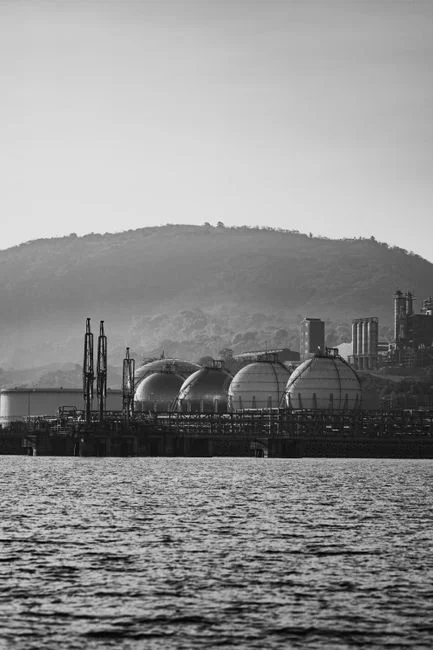
A Tabuk plant designed only for compliance discharge leaves 60–70% of the project value on the table — reuse is where the OPEX savings compound. RO polishing brings the MBR or SBR permeate to SWCC reuse grade (TDS <2,000 mg/L, turbidity <2 NTU) at 75–85% recovery on Tabuk feed, with CIP intervals ≤90 days when antiscalant is dosed correctly for a Langelier Saturation Index below 0.5. Disinfection of the RO permeate before the cooling loop is typically handled by a chlorine dioxide generator at 0.3–0.8 mg/L ClO₂ residual, which avoids the trihalomethane formation risk of free chlorine on recycled cooling water. Sludge is the sidestream many buyers forget to budget: a plate and frame filter press combined with a multi-media filter for filtrate polishing produces cake at 20–25% dry solids, suitable for cement-kiln co-firing where PME and RCJY both permit it. A 500 m³/d Tabuk plant typically generates 8–12 t/d dewatered cake at 22% DS, which translates to roughly 3–4 truck-tippers per day and a landfill-volume reduction of about 75% versus un-dewatered sludge. For a broader primer on biological removal upstream of RO, the BOD removal engineering guide is a useful reference.
2026 CAPEX and OPEX Benchmarks for Tabuk Projects
Cost benchmarks below are derived from 2025–2026 HydropureWater EPC proposals to Saudi clients plus public SWCC and MOMRA utility tariffs, expressed in both USD and SAR at the 1 USD = 3.75 SAR peg. These are turnkey, installed, commissioned figures — not ex-factory skids only.
| Plant Scale | Typical Process Train | CAPEX (USD) | CAPEX (SAR) | OPEX (USD/m³) | OPEX (SAR/m³) |
|---|---|---|---|---|---|
| 50–200 m³/d package plant | Bar screen + DAF + MBR | 180,000–450,000 | 675,000–1,687,500 | 0.18–0.32 | 0.68–1.20 |
| 500–1,500 m³/d mid-scale | Bar screen + DAF + MBR + RO (partial) | 1,200,000–3,500,000 | 4,500,000–13,125,000 | 0.22–0.40 | 0.83–1.50 |
| ≥5,000 m³/d large | Bar screen + DAF + MBR + full RO reuse | 8,000,000–22,000,000 | 30,000,000–82,500,000 | 0.30–0.55 | 1.13–2.06 |
Sludge dewatering adds 8–12% to CAPEX across all three scales. Land cost in Tabuk industrial city is low (typical plots ~SAR 50–120/m²), so footprint savings from MBR are more about civil and pipework than land — the larger the plant, the more that 60%-footprint reduction is worth. Reuse economics are decisive: SWCC potable water for industry runs roughly SAR 4–6/m³, so any reuse offset above ~30% of plant flow delivers a payback under 3 years at most Tabuk sites. For the underlying membrane line-item driving the OPEX band, the MBR membrane module cost price 2026 buyer's guide breaks down the per-m² replacement economics.
Saudi Procurement Checklist: What to Require From Your Equipment Supplier
A short, enforceable vendor scorecard beats a long technical questionnaire. Insist on these five items in any 2026 Tabuk bid:
- Documentation pack: ASME pressure-vessel certificates, ISO 9001 quality system, IECEx for any equipment in classified zones, plus a documented 45 °C+ heat-tolerance test report and a minimum 2-year membrane warranty.
- Pre-shipment evidence: Factory acceptance test (FAT) video for every skid ≥10 m³/d, plus a pre-shipment witness clause allowing the buyer's engineer to attend at the Chinese factory or at the Jeddah/Dammam port before containerization.
- Local service: Named service partner inside KSA with a contractual ≤72-hour on-site response, plus English-Arabic bilingual O&M manuals and a guaranteed spare-parts holding in Riyadh or Jeddah.
- Performance guarantee: Process-performance guarantee bonded to the influent values declared by the buyer, with a liquidated-damages clause of 0.5–1.0% of contract value per percentage point of shortfall on COD or TDS, capped at 10%.
- Reference sites: At least two operating Middle East reference sites (KSA, UAE, or Egypt) of similar capacity within the last 36 months, with contactable end-user references willing to host a site visit.
Frequently Asked Questions
What discharge limits apply to a food-processing plant inside the Tabuk RCJY industrial city in 2026? Inside RCJY jurisdiction, treated effluent must meet BOD ≤50 mg/L, COD ≤150 mg/L, TSS ≤50 mg/L, oil & grease ≤10 mg/L, and residual chlorine ≥1 mg/L at the discharge point per RCJY Environmental Directive (2024 update). An MBR membrane bioreactor system sized at HRT 6–8 h and SRT 20–30 d typically clears these limits on Tabuk food influent in a single biological stage.
Which process is most cost-effective for an edible-oil or refinery stream with high FOG in Tabuk? A DAF system as the primary stage, achieving 90–95% TSS and FOG removal, followed by biological polishing. Stand-alone DAF without biological polishing will not meet RCJY or NCEC BOD/COD limits, so the DAF should always be coupled to a downstream MBR or SBR.
Can treated industrial wastewater from Tabuk be reused for cooling-tower make-up? Yes, provided the RO permeate meets SWCC reuse quality: TDS <2,000 mg/L, BOD <40 mg/L, turbidity <2 NTU, and free chlorine residual in the cooling loop kept at 0.5–1.0 mg/L to control Legionella. Typical RO recovery on Tabuk feed is 75–85%, so concentrate management (usually 15–25% of flow) must be included in the disposal design.
How does Tabuk's summer temperature affect biological treatment design? Sustained reactor temperatures above 38 °C reduce nitrification efficiency by 10–20% unless biomass is acclimated and DO is held above 2 mg/L. Practical responses include partial shade or reactor cooling for MBR basins, halving the mixed liquor suspended solids target, or stepping up to a heat-tolerant biomass adapted over 2–4 sludge ages.