What Tyler-Mining Sites Need to Confirm Before Choosing
For mining and metals wastewater in Tyler, MBR is usually the stronger choice when flows are moderate, the site is footprint-constrained, mining shocks or variable runoff are frequent, and treated water has a defined reuse value. MBR retains biomass at 8,000-12,000 mg/L MLSS and can reduce footprint by about 60%, while avoiding dependence on clarifier settling. CAS can cost less for large, stable, dilute flows, especially where existing aeration basins remain useful. Neither process independently removes dissolved metals: upstream precipitation remains necessary, and the final decision must use Tyler’s current NPDES permit, actual influent, power tariff, reuse value, and pilot results.
Before comparing equipment, obtain the current Tyler Texas NPDES permit, applicable 40 CFR Part 440 subpart, monitoring frequencies, discharge limits, and any Texas-specific discharge or reuse conditions. The supplied research does not provide a Tyler-specific permit or numeric state overlay, so those terms must be verified rather than inferred. The federal framework identifies the Ore Mining and Dressing Point Source Category, but the operation’s applicable subpart and permit language still determine the actual compliance basis.
Characterize the wastewater across the operating cycle, not just at one sampling point. Required inputs include flow duration and variability, pH, hardness, sulfate, TDS, BOD/COD ratio, cyanide, ammonia, thiosulfate, and metals. Also document available plot area, the condition and remaining life of existing aeration basins, electrical tariff, blower redundancy, make-up-water cost, brine-disposal cost, and the destination and value of reused water.
Do not treat generic regional assumptions as verified Tyler facts. HydropureWater’s 2026 field data identifies power cost and water value as economic drivers, but the supplied research contains no Tyler tariff, reuse price, or site-influent dataset. These are mandatory inputs to the comparison, and they should be carried into the MBR cost and sizing guide for 2026 before any bid comparison begins.
How MBR and Conventional Activated Sludge Process Mining Wastewater
Conventional activated sludge separates biological treatment from solids separation: aeration oxidizes organics, a secondary clarifier settles the floc, return activated sludge is recycled, and excess sludge is wasted. MBR retains biomass inside a submerged PVDF membrane module, so effluent quality does not depend on whether the biological floc settles well.
HydropureWater field data for 2026 contrasts MBR at 8,000-12,000 mg/L MLSS with CAS at 2,000-4,000 mg/L and reports 30-60 day MBR SRT versus 5-15 day CAS SRT in the cited mining comparison. The supplied EPA-based MBR data reports effluent turbidity of 0.01-1.31 NTU and BOD of 0.10-0.72 mg/L. These are cited performance ranges, not guarantees for every mining feed.
Neither process is the principal dissolved-metals removal step. Lime, caustic, or sulfide precipitation upstream is needed to remove metals before biological treatment and membrane separation. MBR then improves capture of precipitated metal-hydroxide fines and suspended solids; it does not convert dissolved metals into removable solids by itself.
| Design element | Membrane bioreactor | Conventional activated sludge |
|---|---|---|
| Solids separation | Submerged PVDF membrane retains biomass independently of settleability | Secondary clarifier separates floc by gravity |
| MLSS | 8,000-12,000 mg/L | 2,000-4,000 mg/L |
| SRT in the cited mining comparison | 30-60 days | 5-15 days |
| Cited effluent turbidity | 0.01-1.31 NTU | Not established by the supplied research |
| Cited effluent BOD | 0.10-0.72 mg/L | Not established by the supplied research |
| Dissolved-metals removal | Requires upstream precipitation | Requires upstream precipitation |
| Principal risk | Membrane fouling, CIP demand, and air scour | Clarifier carryover and settling instability |
For a new installation, compare the integrated MBR wastewater treatment system against a complete CAS train. For a brownfield evaluation, also price DF-series flat-sheet MBR modules as a possible cassette retrofit rather than assuming the entire biological train must be replaced.
How Variable Mining Influent Changes the Choice
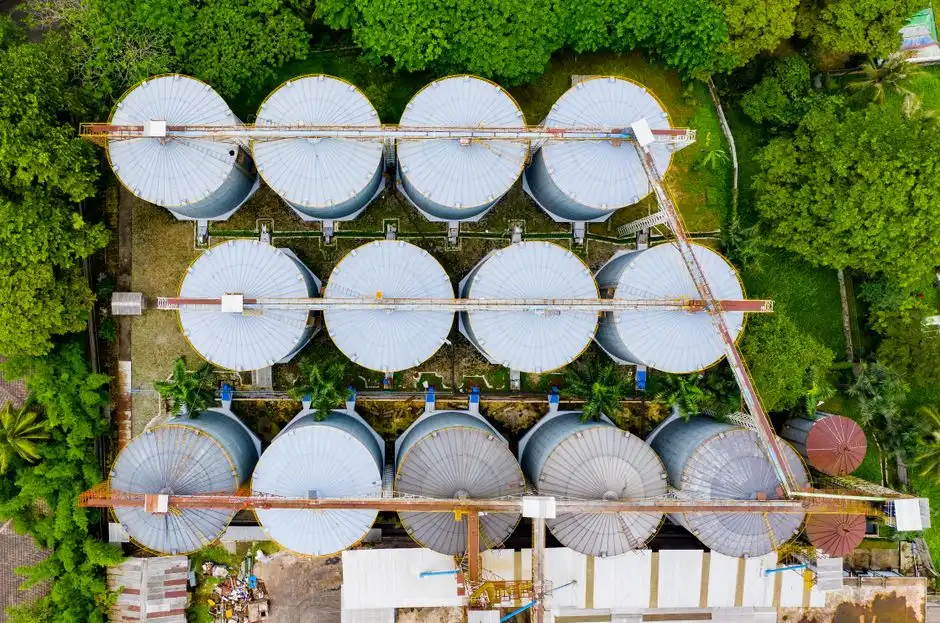
Mining feeds can combine low biodegradability, high salinity, high hardness, variable pH, cyanide, flotation reagents, and intermittent metal pulses. These conditions can impair biological treatment and clarifier settling at the same time. MBR improves solids retention, but it does not remove the need to control the chemistry entering the membranes.
HydropureWater field data for 2026 states that CAS may lose 30-60% of removal efficiency for 24-72 hours after a metal pulse, while MBR continues retaining biomass during the upset. S5 describes a clarifier losing its blanket within 2-4 hours during a mining upset while an MBR continues filtering. These figures represent supplier field experience rather than universal performance guarantees, so the relevant pilot criterion is recovery after representative site shocks rather than a generic recovery time.
Evaluate equalization, precipitation, pH control, and screening upstream of either process. MBR is not a substitute for these pretreatment steps. The supplied research calls for fine screening, pH adjustment, and precipitation upstream, with screening requirements varying by module format.
For high-turbidity or oil-laden influent, a DAF unit may be needed ahead of equalization. Floatation reagents and excess solids can otherwise increase membrane-fouling and screen-maintenance risk. Compare the dissolved-air flotation machine for upstream floatables removal as part of the complete train, not as an optional accessory added after fouling appears.
- Establish the peak and duration of each runoff or process-water event.
- Characterize pH, metals, cyanide, sulfate, hardness, TDS, oil, and flotation reagents.
- Verify equalization and precipitation performance upstream of the biological process.
- Screen solids according to the selected module format.
- Pilot membrane recovery and CIP response using representative shocks.
A rotary mechanical bar screen for mining headworks should be evaluated against the actual solids inventory and the selected membrane manufacturer’s screening specification.
The Permit and Metals-Removal Reality
40 CFR Part 440 is the federal Ore Mining and Dressing Point Source Category, and a membrane bioreactor is not a substitute for metals precipitation. S5 identifies subpart 440.20 for gold ore, 440.50 for base and precious metals, and 440.60 for iron ore. The supplied research identifies daily-maximum and monthly-average requirements for arsenic, lead, zinc, copper, nickel, and cadmium, while other parameters and subpart requirements depend on the operation.
The permit decision therefore has two separate layers. First, upstream chemistry must remove dissolved metals in a form that can be filtered or settled. Second, the biological system must prevent the resulting metal-hydroxide fines from escaping with the effluent. MBR improves the second layer through physical solids retention, but it cannot compensate for incomplete precipitation or a pH-control failure.
S2 reports typical precipitation conditions of pH 8.5-9.5 for a CAS train and pH 6.5-7.5 before an MBR train. These are process ranges, not universal permit settings. The selected chemistry must follow the metals, sludge, biological, and reuse requirements rather than treating either pH range as a default.
Use the current permit to determine whether additional polishing, disinfection, reuse treatment, or monitoring is required. The supplied research does not establish a Tyler-specific permit, state numeric limit, or reuse approval. The permit writer and reuse recipient should therefore confirm whether MBR permeate requires further treatment for its intended use.
Include chemical metering, mixing, and control as upstream process equipment rather than treating precipitation as an ancillary cost. An automatic chemical dosing system for precipitation and pH control should be evaluated for its turndown, control logic, chemical compatibility, and operator intervention requirements against the actual mining feed.
Footprint, Energy, Maintenance, and Sludge Consequences
MBR’s compact footprint can offset its added equipment complexity, but only when plot space or reuse value has measurable economic value. HydropureWater field data for 2026 reports an approximately 60% footprint reduction for MBR. S5 gives a Tyler-relevant planning illustration of 350-500 m² for a 200 m³/day CAS layout versus 140-200 m² for MBR.
S2 reports MBR CAPEX at 20-40% above equivalent-flow CAS for a 1,000 m³/day mining plant and MBR OPEX at 15-30% higher per m³ because of air scour, CIP, and membrane replacement. S5 separately reports 2026 US Midwest installed cost of $1.2-1.8 million for 200 m³/day CAS and $1.8-2.6 million for 200 m³/day MBR, with OPEX of $0.6-0.9/m³ and $0.9-1.4/m³ respectively. These are scoped regional benchmarks, not Tyler quotations.
The maintenance transfer is substantial. Mining MBR modules typically require CIP every 1-3 months according to S5. Supplied service-life estimates range from 5-8 years in S5 to 7-12 years in S2 under rigorous pretreatment and disciplined CIP. Buyers should request membrane warranty terms, replacement-cost escalation, minimum pretreatment requirements, and the protocol used to define CIP frequency.
Sludge remains a disposal issue regardless of process. S5 reports that plate-and-frame filtration can produce metal-laden cake at 35-45% dry solids. Metal-bearing sludge classification and disposal obligations must be assessed for both technologies; MBR should not be credited with eliminating a disposal liability merely because solids remain inside the membrane tank longer.
| Cost or operating consequence | MBR | CAS |
|---|---|---|
| 200 m³/day installed-cost benchmark | $1.8-2.6 million, US Midwest 2026 benchmark | $1.2-1.8 million, US Midwest 2026 benchmark |
| Operating-cost benchmark | $0.9-1.4/m³ | $0.6-0.9/m³ |
| Footprint illustration for 200 m³/day | 140-200 m² | 350-500 m² |
| Added operating systems | Membrane scour, CIP, screening, permeate pumping, controls, and replacement reserve | Clarifier, RAS/WAS handling, and settling-related operator attention |
| CIP frequency in mining service | Every 1-3 months according to S5 | Not applicable |
| Membrane service-life estimate | 5-8 years in S5; 7-12 years in S2 under specified conditions | Not applicable |
| Sludge consequence | Metal-bearing solids still require assessment, dewatering, and permitted disposal | Metal-bearing solids still require assessment, dewatering, and permitted disposal |
Compare solids handling on the same basis. A plate-and-frame filter press for metal-bearing sludge should be priced against actual cake characteristics rather than a generic dry-solids percentage. The disposal route, analytical classification, haul distance, and acceptance conditions remain site-specific inputs.
A Tyler Decision Framework for MBR or CAS
Favor MBR when the site has moderate flow, a constrained plot, variable runoff, toxic or metal shocks, and a valuable reuse stream. Favor CAS when flow is large and dilute, the feed is stable, electricity is comparatively inexpensive, no reuse or zero-liquid-discharge driver exists, and the existing aeration basin and clarifier have substantial remaining life.
S2 identifies flows below roughly 2,000 m³/day, footprints below about 500 m², and a water-reuse driver as practical MBR factors, while CAS is generally favored above roughly 5,000 m³/day under the conditions described. The HydropureWater 2026 integrated-system specification covers 10-2,000 m³/day. These are screening thresholds, not a substitute for a Tyler-specific design.
Consider a hybrid when a conventional clarifier is adequate for bulk flow but membrane polishing is valuable on the reuse stream. Do not make the final decision from national generic benchmarks alone. Combine the current Tyler permit, actual pilot removal results, plot constraints, and a lifecycle cost model.
| Decision condition | Preferred direction | Required verification |
|---|---|---|
| Moderate flow, constrained footprint, variable runoff, and valuable reuse | MBR | Pilot shock recovery, CIP frequency, membrane life, and reuse quality |
| Large, stable, dilute flow with usable existing basins and no reuse driver | CAS | Clarifier settling, remaining basin life, aeration capacity, and power tariff |
| Bulk flow manageable by CAS but reuse stream requires polishing | Hybrid | Hydraulic split, polishing objectives, controls, and duplicate treatment costs |
| Tyler permit or site influent remains unresolved | No final selection | Current permit, applicable subpart, site characterization, and representative pilot |
Where bulk clarification remains desirable, evaluate a high-efficiency sedimentation tank for solids removal in the conventional train and test whether it can perform consistently during wet-weather and process shocks.
Pilot Testing and Total-Cost Evaluation Before Procurement
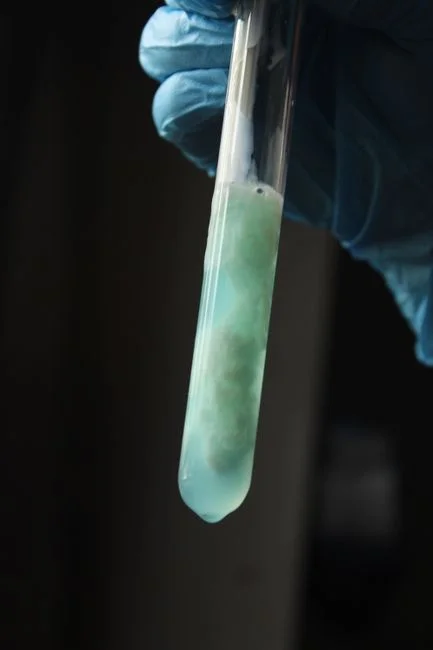
Run a 60-90 day cassette or representative pilot using the actual site feed, according to S2. Verify metals removal, turbidity, membrane fouling, chemical-cleaning frequency, and recovery after representative shocks. The pilot should cover ordinary operation, peak flow, wet-weather variation, chemical excursions, and the metal-pulse conditions most likely to affect biological health and clarifier settling.
Use the same flow, duty, pretreatment, and reuse assumptions for MBR and CAS bids. That common basis should include screening, blowers, CIP, controls, civil work, electrical service, chemical dosing, dewatering, sludge hauling, operator labor, and disposal. Omitting any of these items can make the cheaper-looking bid the more expensive plant.
Calculate lifecycle cost rather than comparing tank price alone. Include annual energy, chemicals for pH adjustment and CIP, membrane replacement, sludge dewatering and hauling, operator labor, and disposal constraints. A practical comparison is annualized lifecycle cost minus verified avoided water, chemical, and disposal costs. Enter Tyler’s actual tariff and reuse value rather than applying a threshold from another region.
- Establish the current permit basis and the full treatment-train boundary.
- Run the representative pilot and document removals, fouling, cleaning, and upset recovery.
- Obtain like-for-like CAPEX and OPEX bids with the same exclusions and assumptions.
- Model membrane replacement, CIP, sludge handling, and disposal over the planned operating horizon.
- Credit reuse only when its destination, quality requirement, quantity, and value are documented.
For brownfield sites, evaluate whether existing basins can accept submerged cassettes, whether module depth and aeration are adequate, and which clarification, sand-filtration, RAS, or tertiary equipment can be retired. Use the MBR cost and sizing guide for 2026 to structure that retrofit review, then validate every design input against the current permit and pilot results.
Frequently Asked Questions
How much more does MBR cost than conventional activated sludge for a mining wastewater plant?
HydropureWater field data for 2026 reports MBR CAPEX at 20-40% above equivalent-flow CAS for a 1,000 m³/day mining plant and MBR OPEX at 15-30% higher per m³. Obtain site-specific quotations for pretreatment, screening, blowers, controls, civil work, CIP, membrane replacement, sludge dewatering, labor, and disposal. Then subtract documented avoided water, chemical, and disposal costs rather than assuming the premium is justified by reuse alone.
Is MBR required for compliance under 40 CFR Part 440?
The supplied research does not establish that MBR is required. Part 440 provides the federal Ore Mining and Dressing framework, but MBR can improve solids separation and capture precipitated fines. Upstream metals precipitation, the current permit, and demonstrated effluent performance remain the compliance test. Request a permit-by-permit gap analysis covering the applicable subpart and any Texas conditions.
What flow is the right size for an MBR?
HydropureWater’s 2026 integrated-system specification covers 10-2,000 m³/day, while the supplied guidance identifies flows below roughly 2,000 m³/day as a common MBR band and above roughly 5,000 m³/day as a CAS-favoring scenario when the other conditions align. Size from peak hydraulic demand, actual feed variability, biological loading, module format, redundancy, and the reuse duty—not a nominal average flow alone.
Which pretreatment is required before MBR?
The supplied research calls for fine screening, pH adjustment, and precipitation upstream, with screening requirements varying by module format. Evaluate DAF when floatables or oil are present. Make the pilot use the proposed screening cutoff, precipitation chemistry, and equalization sequence because membrane performance and CIP frequency depend on the complete upstream train.
Should a mining operator buy MBR modules or a complete integrated system?
Use a representative pilot and a bid comparison to decide between a modular cassette retrofit and an integrated train. Check basin geometry, aeration, controls, electrical service, redundancy, reuse demand, operator competence, and maintenance responsibility. Ask each supplier to state what is included, what remains site-provided, how performance is guaranteed, and how membrane replacement and CIP are costed. The integrated MBR wastewater treatment system should therefore be compared against a module-and-retrofit package on the same complete-train basis.