What Pasig City Data Center Wastewater Must Be Treated
A Pasig City data center should segregate cooling-tower blowdown, RO reject, humidifier or air-handling drain-down, generator coolant, floor wash, stormwater runoff, and sanitary sewage before selecting treatment. Cooling blowdown is the principal process stream because evaporation concentrates dissolved materials in the circulating loop, making periodic purging necessary to control scale and corrosion. The Metro Manila guide reports blowdown at 25–30% of make-up water at four cycles of concentration, with TDS of 1,200–6,000 mg/L. A practical reuse train begins with solids control and chemical conditioning, then UF and BWRO. Pasig design must also establish the drain destination, applicable DENR and sewer requirements, discharge limits, and whether project-level environmental review applies.
Cooling-tower blowdown is water purged to remove dissolved materials that accumulate as evaporation concentrates the circulating loop. Its flow and chemistry must come from the mechanical design and measured operation, not from a generic data-center assumption. The Metro Manila guide reports blowdown TDS of 1,200–6,000 mg/L and suspended solids of 10–50 mg/L at four to six cycles of concentration, but these are regional screening values rather than Pasig limits (HydropureWater, 2026).
Actual blowdown can exceed theoretical calculations by 15–30% because of unmeasured losses and emergency dumps (Genesis Water Technologies, undated). Meanwhile, IDE gives a broad industry reference in which a 100-megawatt facility can use up to 2 million liters per day; that is not a Pasig design estimate (IDE, 2026).
| Stream | Controlling design issue | Initial routing decision |
|---|---|---|
| Cooling-tower blowdown | Concentrated salts, residual biocides, antiscalants, corrosion inhibitors, suspended solids | Candidate for CTBD reuse treatment |
| RO reject | Elevated TDS and flow tied to upstream RO operation | Assess separately or blend only after mass balance |
| Humidifier or air-handling drain-down | Variable chemistry and intermittent flow | Characterize before combining with CTBD |
| Generator coolant | Possible oil, heat and corrosion products | Segregate; remove oil before membranes |
| Floor wash | Cleaning chemicals, oil, dirt and variable concentration | Dedicated collection and pretreatment |
| Stormwater runoff | Seasonal solids spikes and possible contamination | Keep separate from process reuse |
| Sanitary sewage | Organic load, nutrients and pathogens | Evaluate biological treatment and sewer route |
Oily generator coolant and contaminated floor wash must not enter a CTBD membrane train unchanged. An ultrafiltration pretreatment for cooling-tower blowdown can protect downstream membranes, but it does not make incompatible streams safe to mix.
Characterize Pasig Makeup Water and Blowdown Before Sizing Equipment
Equipment sizing should begin with current Pasig source-water and blowdown analyses, not with regional chemistry presented as site data. Request TDS or conductivity, suspended solids, pH, temperature, silica, hardness, chloride, sulfate, calcium, residual biocides, antiscalants and corrosion inhibitors. Include the water-treatment vendors’ make-up water because the same analysis defines the cooling loop’s scaling and biological-control envelope.
The Metro Manila guide gives the following screening values: blowdown at 1,200–6,000 mg/L TDS and 10–50 mg/L suspended solids; make-up reuse targets of 500–1,500 mg/L TDS, 10–25 mg/L suspended solids, pH 6.5–8.5 and silica below 150 mg/L (HydropureWater, 2026). These figures support preliminary RFQ descriptions, but they are neither Pasig measurements nor automatic discharge standards.
Cycles of concentration must be calculated consistently. The blowdown-to-make-up relation supplied by Genesis Water Technologies is 1/(CoC − 1). At four cycles, blowdown is 25% of make-up; at six cycles, it is 20%. Moving from four to six cycles therefore reduces blowdown by 20%, not 50%, while increasing scaling and biological-control demands (Genesis Water Technologies, undated).
| RFQ or pilot input | Metro Manila screening reference | Pasig design requirement |
|---|---|---|
| Blowdown TDS | 1,200–6,000 mg/L | Current source-water and blowdown analysis |
| Blowdown suspended solids | 10–50 mg/L | Representative operational sample |
| Reuse make-up TDS | 500–1,500 mg/L | Confirm against cooling design and scaling analysis |
| Reuse make-up suspended solids | 10–25 mg/L | Confirm with treatment and cooling vendors |
| Reuse pH | 6.5–8.5 | Confirm against source chemistry and dosing plan |
| Reuse silica | Below 150 mg/L | Assess concentration limit and recovery basis |
Pasig’s tropical climate and possible source-water salinity cannot be converted into final equipment parameters without current site data. Black & Veatch’s project account reinforces the need to sample actual blowdown before deciding whether added treatment or discharge is appropriate (Black & Veatch, undated). Require at least one representative sample during representative cooling operation because temperature and residual treatment chemicals affect membrane and biological loading.
Use the measured results to specify treatment parts, valves and filter media for compatibility with the submitted water chemistry, temperature and control philosophy.
Build a Treatment Train That Fits Each Discharge Route
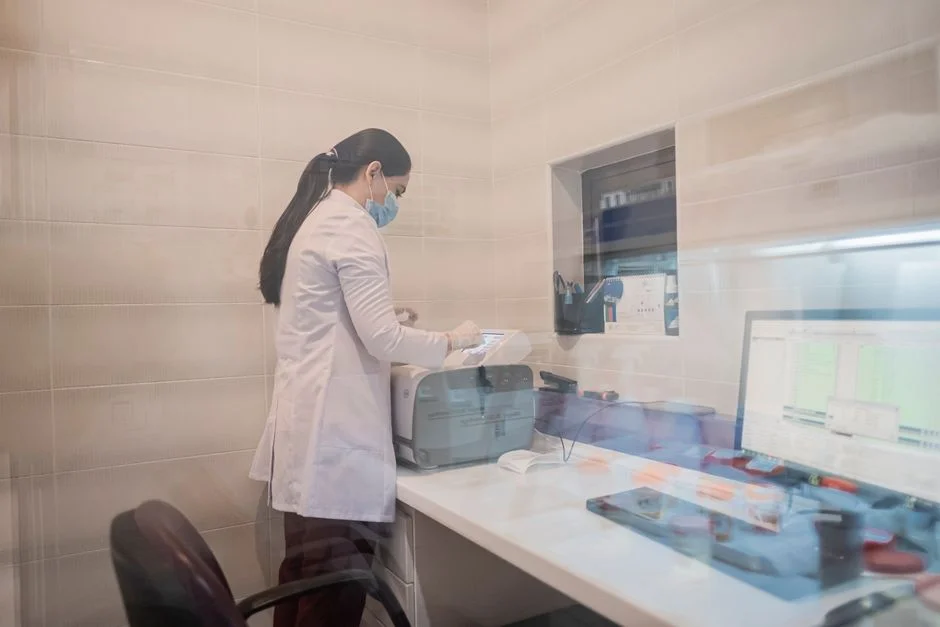
The CTBD reuse train should follow a controlled sequence: segregated collection and equalization; side-stream or media filtration; chemical conditioning where justified; UF; brackish-water RO; optional polishing; disinfection where required; and controlled return to cooling-tower make-up. The sequence is a process definition, not a universal equipment list: each stage must follow the measured water analysis and the selected discharge or reuse route.
For solids control, HydropureWater reports that 10–25-micron self-cleaning side-stream filtration can hold blowdown suspended solids below 15 mg/L before UF (HydropureWater, 2026). A multi-media pretreatment filter for wastewater reuse can also protect the membrane stage where the water profile supports it.
UF removes suspended material and protects the high-pressure membrane; it does not remove dissolved salt. An industrial reverse osmosis system for CTBD reuse performs the salt reduction. The Metro Manila guide reports 50–85% recovery and 10–50 mg/L TDS permeate for UF plus BWRO (HydropureWater, 2026). IDE notes that conventional BWRO commonly reaches only 75–80% recovery before scaling becomes unmanageable (IDE, 2026).
If hardness, rather than total TDS, is the binding reuse constraint, nanofiltration can serve as an optional polishing step; the Metro Manila guide reports NF recovery of 70–85% (HydropureWater, 2026). If liquid discharge must be eliminated or tightly constrained, UF plus RO with an MVC brine concentrator is the ZLD path. The same guide gives 95–98% recovery, distillate below 10 mg/L TDS and 15–25 kWh per 1,000 gallons for that configuration (HydropureWater, 2026).
| Train | Primary objective | Reported performance | Main unresolved issue |
|---|---|---|---|
| Side-stream filtration | Control solids and support higher CoC | Blowdown suspended solids below 15 mg/L before UF | Does not remove dissolved salts |
| UF plus BWRO | Recover CTBD as cooling make-up | 50–85% recovery; 10–50 mg/L TDS permeate | Fouling, scaling and concentrate disposal |
| UF plus RO plus NF polishing | Address hardness as the binding constraint | NF recovery of 70–85% | Additional equipment, controls and blending |
| UF plus RO plus MVC | High recovery and ZLD | 95–98% recovery; distillate below 10 mg/L TDS; 15–25 kWh per 1,000 gallons | High energy demand and solids handling |
Neither UF nor RO removes the need for chemistry control, concentrate management, monitoring or operator competency. Sanitary sewage also needs an appropriately selected biological treatment route; combining it with CTBD requires hydraulic, biochemical and regulatory review rather than automatic use of the same membrane design. Compare this Pasig treatment approach with data center wastewater treatment in Johor Bahru, while keeping all design values site-specific.
Control Biology and Residuals Without Damaging the Reuse Train
Biocide, antiscalant and corrosion-inhibitor residuals accumulate as cycles of concentration rise, so the cooling-loop chemical program must be coordinated with membrane selection. A chemical that controls the cooling system can foul UF, bind antiscalant, alter RO scaling calculations or complicate reuse quality. Neither the cooling vendor nor the treatment supplier should approve its system without reviewing the other party’s complete chemical program.
The Metro Manila guide identifies 28–32°C as the operating range for the referenced loop water and states that warm, biologically active feed makes membrane fouling a dominant failure mode (HydropureWater, 2026). That value is a Metro Manila operating reference, not a Pasig temperature assumption. Bio-organic flocculant and antiscalant dosing can address documented colloidal, silica and calcium-sulfate risks, but the selected chemicals must be verified through jar testing and membrane-compatibility trials.
Automatic chemical dosing for pretreatment control should be specified by function rather than by a generic skid description: pH adjustment, coagulant, flocculant, antiscalant or biocide duty; required range; control signal; storage and containment; duty and standby arrangement; and interlock with the treatment train.
UV is a chemical-free final microbial-control option where appropriate. A UV disinfection for treated cooling water does not replace solids removal, scale control, source-water characterization or chemical-compatibility testing. Position it after required filtration and polishing, with transmittance, dose and fouling conditions defined by the equipment supplier.
The procurement sequence is therefore: reconcile the cooling chemical program with reuse targets; test candidate chemicals against the actual water; define automatic dosing duties; establish UV performance requirements; then obtain written compatibility confirmation from the treatment supplier. This prevents a cooling-system change from invalidating the reuse design.
Confirm Pasig Permits, Drainage Routes, and Environmental Review
The discharge route must be confirmed with the relevant Pasig sewer or drainage authority before the treatment train is finalized. Obtain the applicable industrial discharge or pretreatment limits in writing, including parameters, averaging periods, monitoring duties, sampling points, permit conditions and discharge-capacity requirements. A sewer connection does not establish unlimited capacity, and reuse permission does not authorize the residual discharge.
DENR Administrative Order 2021-19 is the cited Philippine industrial-effluent framework in the Metro Manila guide. The buyer must still confirm the exact waste classification, receiving-water classification, local conditions and current permit text with the environmental authority; the guide’s figures are not verified Pasig legal limits (HydropureWater, 2026).
Direct environmental discharge and discharge to a sewer are different regulatory questions. A sewer discharge may require pretreatment and acceptance by the sewer authority; a direct discharge route may require environmental clearance and discharge-specific controls. Where no sewer connection is available, the receiving-body route must be assessed separately rather than inferred from the sewer case.
Check whether the project is near or hydraulically connected to the Laguna Lake watershed. The supplied Manila source identifies LLDA clearance as relevant to Laguna, Cavite and portions of Rizal, not automatically to every Pasig site (HydropureWater, 2026). Assess PEOS or EIS applicability with the environmental authority and project proponent rather than assuming it from facility scale alone.
RSP Engineers warns that a mismatch between the cooling chemical package and local environmental requirements can create a difficult-to-permit design (RSP Engineers, undated). Include the permit and monitoring work in the design schedule, not after installation.
| Permit or authority question | Evidence the buyer should obtain | Design dependency |
|---|---|---|
| Sewer or drainage authority | Written route acceptance, applicable limits and capacity confirmation | Treatment objectives, equalization and monitoring |
| Environmental authority | Current industrial-effluent category and permit interpretation | TDS, chloride, sulfate and discharge controls |
| LLDA pathway | Written watershed-connectivity determination | Discharge route and concentrate management |
| PEOS or EIS pathway | Authority’s applicability determination | Environmental studies, schedule and documentation |
| Receiving capacity | Peak-flow, hydraulic and biological capacity review | Discharge flow and pretreatment design |
If an in-tank disinfection system is proposed, require the supplier to define its chemistry, materials compatibility and control logic within the permit; the ozone generator for water-tank sterilization should not be treated as a substitute for source control or permit review.
Build the Business Case and Equipment RFQ
The financial comparison must separate reuse value from discharge compliance. Use the Metro Manila figures only as preliminary screening: an RO train at 50,000 gallons per day was cited at US$250,000–500,000, RO operating cost at US$1.50–3.00 per 1,000 gallons, a ZLD overlay at US$3–8 million, and ZLD operating cost at US$5–15 per 1,000 gallons (HydropureWater, 2026). These are not Pasig quotations.
The capital figure covers the stated 50,000-gallon-per-day Metro Manila RO train. Request current Philippine quotations with site-specific foundations, freight, taxes, utilities, building works and installation clearly identified. Calculate value from avoided freshwater, avoided discharge charges and recovered-water utility, then deduct pretreatment chemicals, membrane cleaning or replacement, energy, operator labor, monitoring, sludge or brine disposal and permit obligations.
| RFQ item | Supplier response required | Buyer evaluation point |
|---|---|---|
| Design basis | Measured average and peak flows; submitted water analysis | Capacity is tied to the Pasig site |
| Process performance | Recovery; permeate and concentrate quality | Recovery is demonstrated on representative feed |
| Mechanical scope | Footprint, materials, utilities, controls, alarms and redundancy | Fit with cooling and electrical systems |
| Operating inputs | Chemical consumption and cleaning requirements | Costs match the total-cost model |
| Commercial assurance | Guarantees, commissioning tests and warranty scope | Responsibility for failures is defined |
| Validation | Pilot or side-stream test plan | Recovery, scaling, fouling and concentrate are verified |
Require each bidder to guarantee treatment of the submitted Pasig water analysis, not merely generic flow or permeate specifications. Ask whether the RO and UF membrane elements, treatment parts, valves and media, controls and chemical consumables are compatible with the actual feed and cooling-loop chemistry.
Before committing to a high-recovery train, require a pilot or side-stream test to establish recovery, scaling tendency, fouling behavior, chemical demand and actual concentrate disposition. The data center blowdown treatment requirements provide another useful comparison, but the final business case must use Pasig measurements and written route acceptance.
Frequently Asked Questions
What wastewater treatment does a data center in Pasig City need?
It needs a segregated treatment plan for cooling-tower blowdown, RO reject, drain-down water, generator coolant, floor wash, stormwater and sanitary sewage. CTBD is the main reuse candidate, but oily or chemically contaminated streams need separate pretreatment, and sanitary sewage needs a biological treatment assessment. Confirm the final train against measured flows, current chemistry, the discharge route and written permit conditions.
How should a Pasig data center size cooling-tower blowdown treatment?
Size from measured make-up and blowdown flows, average and peak conditions, and complete source-water and blowdown chemistry. Do not size from site area, server count or regional screening values alone. Include chemical residuals, temperature, silica, hardness and scaling tendency, then validate the selected recovery through pilot or side-stream testing.
Should the facility choose UF, RO or zero liquid discharge for CTBD reuse?
UF protects the membranes and controls solids; RO reduces dissolved salts needed for cooling-tower make-up. Optional NF polishing applies where hardness is the binding constraint, while an MVC-based ZLD train addresses projects requiring very high recovery or eliminating liquid discharge. Select the train from the required reuse quality, concentrate route, energy availability, operator capability and permit obligations—not from technology preference alone.
What should a buyer request for CTBD treatment cost and supplier selection?
Use the supplied Metro Manila benchmarks only to screen bidders: US$250,000–500,000 for the cited 50,000-gallon-per-day RO train, US$1.50–3.00 per 1,000 gallons for RO operation, US$3–8 million for a ZLD overlay and US$5–15 per 1,000 gallons for ZLD operation (HydropureWater, 2026). Request a current Pasig quotation and require site-specific performance guarantees, total operating costs, pilot evidence, commissioning tests, controls, redundancy and warranty responsibility. Treat the benchmarks as preliminary references, not quotations.
Does wastewater reuse authorize a data center to discharge in Pasig?
No. Reuse quality and discharge permission are separate decisions. Obtain written confirmation from the relevant sewer or drainage authority and environmental authority regarding the route, applicable limits, sampling, reporting, capacity and permit conditions. Include LLDA and PEOS or EIS applicability in that review where the site circumstances warrant it, and schedule approvals before equipment procurement.
Related Equipment
- industrial reverse osmosis system for CTBD reuse — specifications, capacity range, and technical data