What treatment does a Rohini data center actually need?
A data center in Rohini needs source-specific treatment, not one combined wastewater plant. Segregate cooling-tower blowdown, domestic sewage, washdown, laboratory drains, process discharges and RO concentrate, then size equipment from measured average and peak flows, temperature and chemistry. The practical base case is filtration and polishing of cooling blowdown for make-up-water reuse, with UF or RO selected after representative testing. Conventional brackish RO is commonly limited to 75–80% recovery because of silica and calcium scaling, so any higher-recovery proposal requires chemistry-aware pilot evidence and a confirmed solids or concentrate route. Domestic sewage needs separate biological treatment and disinfection. Final compliance and disposal requirements must be confirmed for the actual Rohini receiving route rather than inferred from foreign standards.
Cooling tower blowdown should normally receive first design attention because it is continuous, has a possible internal reuse destination and can affect cooling-system reliability. The practical hierarchy is to optimise the existing cooling system, control blowdown through measured cycles of concentration, then filter and polish the water to the quality required for cooling make-up. The broader data center wastewater and cooling blowdown treatment framework explains why stream segregation must precede equipment selection.
The scale is material: IDE's 2026 reference states that a 100-megawatt facility may use up to 2 million litres of water per day. That is an illustrative benchmark, not a Rohini design flow. It nevertheless demonstrates why cooling-water management should be reconciled before equipment is ordered. IDE's 2026 article also states that recycling treated blowdown can reduce freshwater intake and blowdown volume, but neither claim establishes the achievable recovery or operating cost for an unidentified Rohini feed.
Do not combine streams merely because they share a site drain. Domestic sewage and high-organic washdown require biological capacity and disinfection; RO concentrate needs a defined residual route; and batch laboratory or process discharges may contain contaminants that cannot be handled by a continuous cooling-water train.
Build the Rohini water balance from measured data
Equipment should be sized from a reconciled water balance, not a utility bill or catalogue capacity. Install or verify meters on make-up water, cooling blowdown, evaporation, domestic sewage, washdown and every process-discharge route. Record average flow, peak flow, temperature, operating hours and the timing of batch events. These data establish both the treatment load and the quantity of water that can genuinely be returned to the cooling loop.
- Measure each source continuously through a representative operating period.
- Develop a normal cooling-operation scenario, a simultaneous washdown or recovery-event scenario, and a high-blowdown scenario.
- Reconcile make-up input against evaporation, blowdown, measured consumption and unaccounted losses.
- Sample representative water for the constituents that control scaling, fouling, biological treatment and discharge.
Cycles of concentration are an operating lever, not a fixed equipment input. The 2026 Mysuru reference reports theoretical blowdown of 25% of make-up water at four cycles and 20% at six cycles, a 20% reduction between those operating points. The same reference reports that actual blowdown can exceed theoretical calculations by 15–30% because of unmeasured losses and emergency dumps. That is a reconciliation warning, not permission to add the percentage automatically to the design flow.
Keep consumptive loss separate from recoverable discharge. Greater freshwater withdrawal does not create an equivalent volume of usable cooling blowdown, and sewage generation is not a cooling-water recovery opportunity. The associated data center wastewater treatment and reuse guide provides a useful process reference, but its flow assumptions must not replace Rohini measurements.
| Water-balance input | Measurement or record | Design use |
|---|---|---|
| Cooling make-up and blowdown | Average flow, peak flow, temperature, operating hours and selected cycles of concentration | Defines recovery capacity, equalization and the high-blowdown case |
| Evaporation | Measured or reconciled loss | Separates consumptive use from discharge |
| Domestic sewage | Average and peak flow, operating profile and organics | Sets biological and disinfection requirements |
| Washdown and process streams | Batch volume, timing, temperature and constituent analysis | Defines dedicated collection and shock loading |
| RO concentrate | Flow, composition and proposed destination | Links membrane recovery to the residual-disposal route |
Match treatment to each wastewater stream
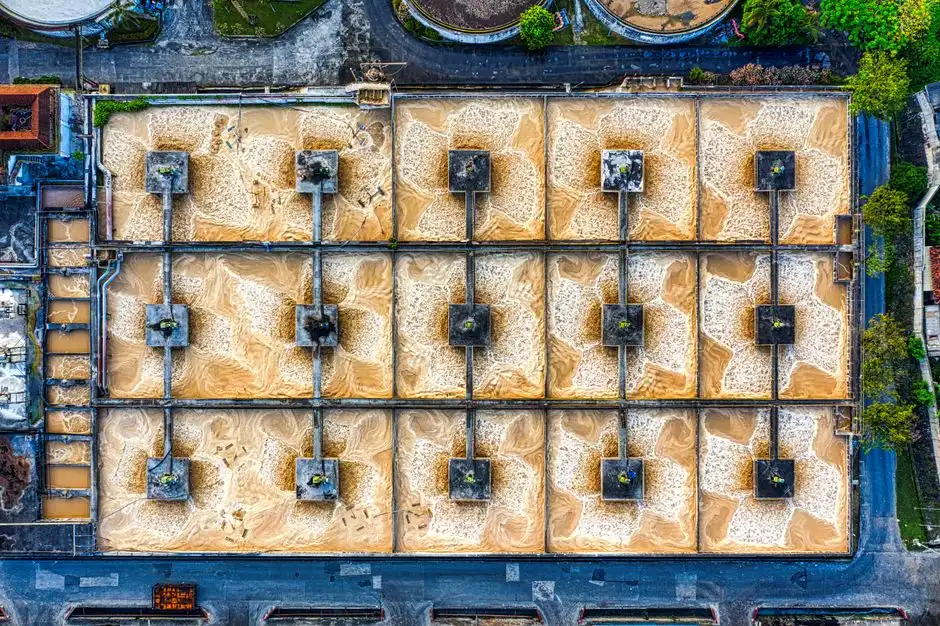
Filtration, biological treatment and desalination solve different problems and should be matched to the destination and quality required from each stream. For cooling blowdown, filtration is the first control step because suspended solids and biological material can affect downstream membranes and cooling surfaces. Use multi-media filtration for cooling blowdown where measured solids loading justifies it, and assess hollow-fiber ultrafiltration pretreatment where a defined particulate and microbial barrier is required.
UF is pretreatment, not dissolved-salt removal. The 2026 Mysuru reference reports commercial reference ranges of 90–95% UF recovery, 70–85% nanofiltration recovery and 95–99% dissolved-salt removal by RO, with RO permeate commonly at 10–50 mg/L TDS. These are reference values, not Rohini guarantees. The required cooling make-up quality, incoming water chemistry and concentrate destination must determine whether UF alone, nanofiltration or industrial RO treatment for blowdown reuse is justified.
Domestic sewage and high-organic washdown need segregated biological treatment and disinfection. Surfactants, organics and pathogens can alter membrane loading and contaminate recovered cooling water. Batch laboratory, process and washdown streams require dedicated collection and equalization because contaminant identity, discharge timing and shock loading may differ materially from continuous flow.
RO concentrate must remain separate from the cooling feed. Compare a lawful partial-discharge route, managed brine disposal, evaporative concentration and crystallization. Zero liquid discharge should remain a contingency until energy use, cost, solids handling and receiving-route feasibility are established.
| Stream | Screening treatment | Decision inputs |
|---|---|---|
| Cooling blowdown | Filtration or UF, followed by NF or RO where dissolved-salt control is required | Solids, scaling constituents, chemical residuals, required make-up quality and concentrate route |
| Domestic sewage and high-organic washdown | Segregated biological treatment and disinfection | Organic load, nutrients, pathogens, hydraulic profile and reuse restrictions |
| RO concentrate | Partial discharge, managed brine disposal, evaporative concentration or crystallization | Flow, composition, receiving route, solids destination and contingency |
| Batch laboratory, process or washdown | Dedicated collection, equalization and source-specific treatment | Contaminant identity, batch volume, discharge timing and shock loading |
Decide whether blowdown reuse is technically and economically justified
The indicative process flow is segregated blowdown collection, equalization, filtration or UF, optional NF, RO where required, treated-water storage, make-up-water pumping, controlled return to the cooling loop and separate concentrate management. Each step must answer a defined water-quality question; a longer treatment train is not automatically the better solution.
IDE's 2026 article states that conventional brackish RO generally plateaus at 75–80% recovery because silica, calcium carbonate and calcium sulfate approach scaling limits. Its MAXH₂O approach instead operates RO at a conservative local recovery, deactivates inhibitors in a fluidised-bed reactor and precipitates sparingly soluble salts as dense solids before processing the remaining brine. IDE reported a separate industrial MAXH₂O case operating at around 95% recovery with permeate silica of about 1 mg/L. A Rohini supplier must demonstrate comparable performance on representative Rohini feed chemistry and provide a confirmed route for the precipitated solids.
Recovery must also be assessed through a wastewater reuse life-cycle assessment. Open Engineering's 2026 study found that its wastewater scenario had about twice the freshwater case's global-warming potential, with treatment energy accounting for roughly 80% of the difference. In the UF-plus-RO case, treatment energy exceeded five times the freshwater scenario. The same study found that grid decarbonisation could reduce the carbon penalty; its estimated indirect water penalty was approximately 0.93 L/m³, less than 0.1% of the direct water-displacement benefit.
These results support comparison, not automatic rejection of reuse. The evaluation should include local grid emissions, freshwater value, concentrate handling, chemical consumption, membrane replacement and cooling reliability. An automatic chemical-dosing system must also be coordinated with the complete cooling-water programme rather than treated as an independent accessory.
| Option | Technical case | Evidence required before selection |
|---|---|---|
| Filtration-based reuse | Preferred starting point where measured solids and make-up quality can be met without dissolved-salt removal | Representative solids loading, filtrate quality, fouling trend and disposal route |
| Conventional UF/RO | Applicable where stronger dissolved-salt control is required | Feed chemistry, temperature, recovery, normalised flux, cleaning frequency, permeate guarantee and concentrate composition |
| Chemistry-aware high recovery | Potential route for scale-prone blowdown where conventional RO reaches scaling limits | Representative pilot, energy demand, precipitation performance, solids route and whole-life comparison |
Protect cooling continuity during treatment upsets
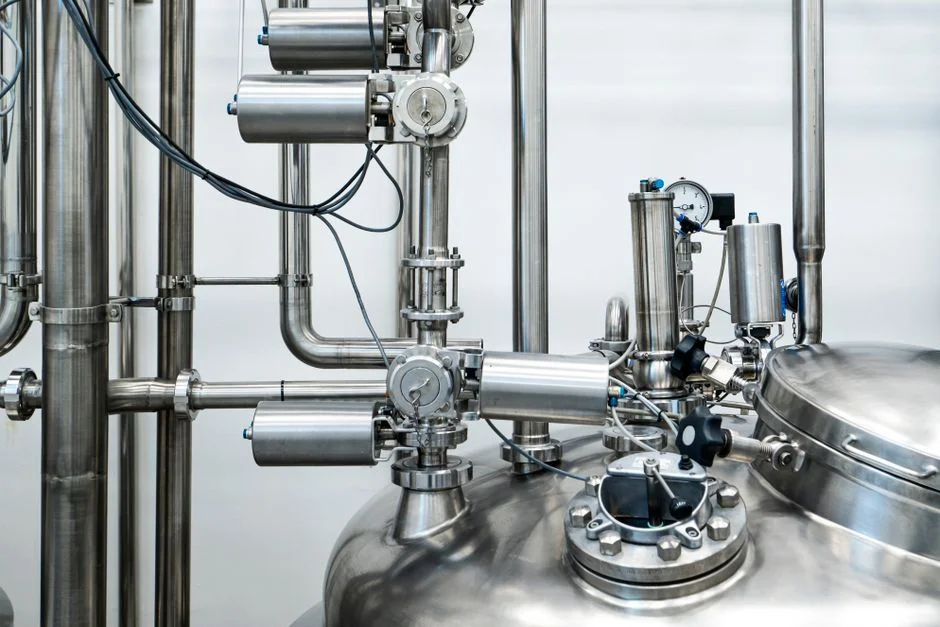
Cooling continuity must be a contractual design requirement. Require treated-water storage, duty and standby pumping, controls and interlocks tied to cooling demand. Membrane cleaning, high-blowdown operation, storage depletion or maintenance shutdown must not compromise cooling performance.
The controls narrative should state exactly when return to the cooling loop stops, how high-blowdown mode is initiated, which treatment duties remain available and how recovered-water storage is prioritised. Bidders should provide an availability assumption and identify who owns responsibility for the cooling-treatment interface. A treatment train that works only under steady conditions is not adequate for continuous cooling operations.
The complete cooling chemical package must be included as a compatibility test condition. Residuals of corrosion inhibitors, scale inhibitors, dispersants and biocides can foul membranes, affect recovered-water quality and alter subsequent blowdown chemistry. The pilot should test the chemicals in their intended combination rather than evaluating each product independently.
Where microbial control is required, validate the oxidant, dose, contact time, residual, by-products and compatibility with cooling chemistry. An incoming residual cannot be assumed to persist through recovery. The chlorine dioxide treatment option should therefore be assessed through a process and safety review, while RO and UF membrane selection should follow representative compatibility and fouling results.
Set the Rohini approval and procurement gates
The supplied research does not establish Rohini- or Delhi-specific abstraction, effluent, reuse or concentrate-disposal limits. The buyer must obtain current requirements from the relevant authorities and receiving-route owner. Foreign benchmarks cannot be imported into a consent application. The India wastewater consent and due-diligence requirements provide a review structure, but they do not replace jurisdiction-specific confirmation.
Set a hard design gate: do not freeze the process until every residual stream—partially treated blowdown, RO concentrate, sludge and advanced-treatment solids—has a documented destination, operating owner and contingency. A technically suitable train has little value if its residual route cannot remain available.
Issue the RFQ from measured peak and average flows, source analyses, operating hours, recovery basis, reuse destination, concentrate route, available energy and redundancy requirements. Require bidders to separate measured design data from borrowed benchmarks and to submit:
- Feed characterisation, representative pilot evidence and a reconciled water balance.
- Permeate and recovery guarantees tied to feed chemistry, temperature and cycles of concentration.
- Membrane data, cleaning expectations, redundancy details, controls and interlocks.
- Chemical-compatibility evidence, commissioning scope and local O&M support.
- Separate pricing for pretreatment, membranes, storage, controls, power backup, commissioning and replacement consumables.
Compare lifecycle energy, membrane replacement, chemicals, sludge or brine handling, labour, disposal and availability—not purchase price alone. Make recovery enforceable by defining its basis and the operating conditions under which it applies. A nominal recovery without a defined feed is not a site guarantee.
| Procurement gate | Bidder deliverable | Acceptance test |
|---|---|---|
| Measured basis | Water balance, flow records and source analyses | Values reconcile across average, peak and batch scenarios |
| Technical proof | Representative pilot protocol and results | Recovery, permeate quality, flux, cleaning and concentrate findings are reproducible |
| Residual route | Destination, operator and contingency for every residual | Regulatory and receiving-route interfaces are documented |
| Cooling continuity | Storage, pumping, redundancy, controls and upset response | Interlocks and fail-safe operation match cooling demand |
| Commercial comparability | Itemised lifecycle cost and guarantee conditions | All bids use the same feed, recovery basis and operating assumptions |
Frequently Asked Questions
How much should a data center in Rohini budget for wastewater and cooling blowdown treatment?
An equipment price cannot be quoted responsibly without measured peak flows, feed chemistry, required permeate quality, reuse destination, residual-disposal route, energy cost and redundancy. Request an itemised lifecycle-cost offer covering pretreatment, membranes, storage, controls, commissioning, power backup, chemicals, replacement consumables, labour, energy and residual handling. The supplied research contains no Rohini equipment quotation, so any fixed budget would be false precision.
Which treatment system should a supplier propose for Rohini cooling-tower blowdown?
Require a stream-specific proposal that tests the actual cooling chemical programme, separates concentrate, guarantees permeate and recovery under stated conditions and provides pilot evidence. Catalogue capacity or recovery claims without representative feed testing are not enough. The proposal should also state how the recovered water will perform in the cooling loop.
How should a data center size cooling blowdown recovery equipment?
Use measured peak and average blowdown, normal and high-blowdown scenarios, feed chemistry and the selected cooling cycles of concentration. Do not size from a daily average or a generic facility-capacity benchmark. Equalization and membrane capacity should follow the reconciled peak and upset cases.
Is zero liquid discharge mandatory for a Rohini data center?
The supplied research does not establish a Rohini-specific zero-liquid-discharge requirement. Confirm the obligation from current consent conditions and the receiving route, then evaluate ZLD as a contingency alongside lawful partial discharge, managed brine disposal, evaporative concentration or crystallization.
How can a buyer compare treatment suppliers fairly?
Require every bid to use the same feed data, pilot protocol, permeate guarantee, concentrate route, availability assumption, cleaning plan, replacement schedule and lifecycle-cost structure. Include cooling continuity interlocks and enforceable recovery conditions. For approval-route due diligence, compare the structure in the data center wastewater compliance and acquisition checklist, while obtaining current Rohini requirements directly from the relevant authorities and receiving-route owner.