Identify the Controlling Copperton Sewer Requirements
A sewer discharge from a mining or metals plant near Copperton is an indirect industrial discharge governed through Clean Water Act §307(b) and 40 CFR Part 403, with permitting and enforcement administered by the receiving publicly owned treatment works (POTW). The equipment design basis must combine applicable categorical standards with the POTW’s sewer-use ordinance, industrial discharge permit, local limits, monitoring rules, and written approval conditions. For the broader permit pathway, see the 2026 mining and metals pretreatment compliance guide.
A POTW is the treatment works, associated sewers, and municipality with jurisdiction over industrial and domestic discharges into that system, as defined by 40 CFR 403.3(q) and summarized by the US EPA in its National Pretreatment Program material (US EPA, 2026). It is distinct from an NPDES permit, which applies to direct point-source discharges to surface water. The US EPA states that point-source discharges from mining operations, including associated impoundment discharges, require NPDES authorization (US EPA, 2026). A facility can therefore need NPDES coverage for surface-water outfalls while also needing POTW pretreatment approval for its sewer discharge.
Before equipment specification, identify the actual receiving system. Request its current sewer-use ordinance, industrial discharge permit, local-limit worksheets, monitoring and sampling rules, discharge-point drawings, and written approval requirements. Confirm whether ore mining and dressing falls under 40 CFR Part 437 and whether plating, pickling, anodizing, or another finishing operation triggers 40 CFR Part 433 review. The receiving POTW’s current rules—not a representative limit copied from another municipality—control the project.
| Approval or requirement | What it controls | Required diligence before design |
|---|---|---|
| POTW sewer-use ordinance and industrial discharge permit | Authorization, local limits, monitoring, and discharge conditions | Obtain the current signed requirements and identify every regulated parameter and averaging period. |
| 40 CFR Part 437 | Categorical requirements for ore mining and dressing, where applicable | Confirm the applicable subcategory and production basis in current federal rule text. |
| 40 CFR Part 433 | Categorical requirements for metal finishing, where applicable | Document whether plating, pickling, anodizing, or other covered operations are present. |
| Discharge-point drawings | Physical connection, monitoring location, and sampling point | Obtain a POTW-approved drawing and confirm access and metering requirements. |
| Separate NPDES authorization | Direct discharges to surface water | Map outfalls separately from the sanitary sewer connection. |
Compare Federal Categorical Standards with Local Limits
Federal categorical standards establish a regulatory floor, while the receiving POTW’s applicable local limits can impose the tighter numerical target that governs equipment sizing. The US EPA’s December 2024 Attachment 3-1 provides a starting point for identifying categorical standards, but it does not replace review of the current rule text or the receiving POTW’s 2026 requirements.
A commercial mining and metals pretreatment article gives two useful examples of limits that must not be treated as universal: a representative 40 CFR Part 437 zinc limit of 1.0 mg/L daily maximum and 0.5 mg/L monthly average, and 40 CFR Part 433 limits for copper of 3.38 mg/L daily maximum and 2.07 mg/L monthly average and total chromium of 2.77 mg/L daily maximum and 1.71 mg/L monthly average (HydropureWater commercial source, 2026). The exact Part 437 subcategory and its applicability must be confirmed in the current regulation.
The same commercial source reports representative 2026 POTW limits of zinc at 0.3–1.0 mg/L monthly average and copper at 0.3–0.5 mg/L monthly average. These values demonstrate why a categorical-limit-only design can fail, but the receiving POTW ordinance controls. See how local-limit compliance is distinguished from categorical requirements.
| Requirement source | Representative value and scope | Design treatment |
|---|---|---|
| Representative 40 CFR Part 437 zinc limit | 1.0 mg/L daily maximum; 0.5 mg/L monthly average (HydropureWater commercial source, 2026) | Example only; confirm subcategory and applicability. |
| 40 CFR Part 433 copper | 3.38 mg/L daily maximum; 2.07 mg/L monthly average (HydropureWater commercial source, 2026) | Apply where metal-finishing operations are covered. |
| 40 CFR Part 433 total chromium | 2.77 mg/L daily maximum; 1.71 mg/L monthly average (HydropureWater commercial source, 2026) | Apply where metal-finishing operations are covered. |
| Representative 2026 POTW limits | Zinc: 0.3–1.0 mg/L monthly average; copper: 0.3–0.5 mg/L monthly average (HydropureWater commercial source, 2026) | Use the actual receiving POTW ordinance, not these examples, as the design basis. |
The compliance basis is the combination of every applicable concentration, mass, and instantaneous limit, including its averaging period, monitoring frequency, sampling method, and discharge location. Design to the controlling condition and verify it under the POTW’s sampling protocol.
Characterize the Wastewater Before Choosing Equipment
Equipment should be selected only after the discharge has been characterized under the POTW permit and a site-specific monitoring plan. The sampling program must capture normal production, dump-leach cycles, mill clean-outs, shift changes, upset conditions, and representative discharge batches. Those events determine both the water-quality envelope and the flow basis; a short production-period sample can hide batch peaks that destabilize equalization, precipitation, or clarification.
The wastewater analysis should cover pH, TSS, oil and grease, dissolved metals including Pb, Cu, Zn, Cd, Ni, and As, sulfate, TDS, flow variability, and constituents associated with plating or pickling that may trigger 40 CFR Part 433 review. A commercial source describes raw acid mine drainage and spent process solutions at pH 2–4, TSS in the hundreds to several thousand mg/L, and elevated sulfate and TDS (HydropureWater commercial source, 2026). These are sector characteristics, not guaranteed values for a Copperton site.
Quantify average flow, peak flow, and peak 2-hour flow. The same commercial source recommends treatment for peak 2-hour flow with 20–30% turndown capacity. Jar testing should establish the precipitation pH window and coagulant dose; copying a universal pH setpoint without site chemistry risks poor metals removal. A useful DAF versus lamella clarifier for mining wastewater begins with characterization, not a selected equipment type.
| Input to establish | Why it changes the design | Acceptable evidence |
|---|---|---|
| Flow chronology | Sets equalization, treatment, and turndown capacity | POTW-required monitoring records plus site production and batch-discharge log |
| pH and alkalinity | Controls neutralization demand and precipitation chemistry | Representative sampling and jar tests |
| Dissolved and total metals | Sets the required removal and residual target | Laboratory analysis for every regulated and design-relevant metal |
| TSS, oil and grease, and colloids | Determines clarification method, filtration need, and sludge loading | Representative samples across normal and upset operations |
| Sulfate, TDS, and process constituents | Identifies precipitation, solids, and disposal interactions | Site-specific analytical dataset |
Build a Treatment Train from Batch Control to Final Compliance
Equalization should be the first process step because batch discharges must be damped before they reach chemical feed or clarification equipment. The commercial source recommends an equalization basin sized to 8–24 hours of average daily flow and warns that a 4-hour basin can pass upstream spikes into the clarifier (HydropureWater commercial source, 2026). Confirm detention time and operating level against the actual batch chronology rather than adopting the range by itself.
Next comes staged pH adjustment with lime, caustic soda, or sodium hydroxide. The cited operating target is pH 6.5–9.0, where virtually every POTW instantaneous range is satisfied, with two-stage reactors when influent swings exceed 2 pH units (HydropureWater commercial source, 2026). A PLC-controlled chemical dosing skid can integrate pH and coagulant control, but jar tests must define the dose-response before controls are programmed.
Hydroxide precipitation is the default for copper, zinc, cadmium, and nickel removal. The commercial source reports 85–95% total metals removal for properly controlled systems and recommends a polymer coagulant aid at 0.5–3 mg/L when testing confirms improved floc formation (HydropureWater commercial source, 2026). These values describe the cited process performance; the residual after precipitation must still be checked against the controlling target.
Sulfide polishing is an option when hydroxide residuals cannot meet a local limit. The source cites sulfide residuals of 0.01–0.05 mg/L for Cu, Zn, Cd, and Ni, compared with 0.5–2.0 mg/L for hydroxide, but also states that reagent cost is 2–4 times higher and that sealed reactors with H₂S scrubbing are required (HydropureWater commercial source, 2026). A DAF system for mining wastewater may be needed where oil or colloidal particles interfere with clarification.
Multi-media filtration provides a final TSS barrier. The source cites a filtration rate of 1–2 m/h and residual TSS below 10 mg/L (HydropureWater commercial source, 2026). Add chlorine dioxide disinfection only where the POTW requires it or collection-system conditions justify it; the cited chlorine dioxide dose is 1–5 mg/L (HydropureWater commercial source, 2026). Further process comparisons are available in the industrial DAF and clarification selection guide.
| Process step | Function | Procurement basis |
|---|---|---|
| Equalization | Damp batch flow and concentration spikes | Documented batch chronology, average flow, peak flow, and peak 2-hour flow. |
| pH adjustment | Create the required precipitation condition | Influent pH, alkalinity, dosing response, and POTW instantaneous limit. |
| Hydroxide precipitation and optional sulfide polishing | Remove dissolved metals | Jar-test residuals, reagent consumption, sludge generation, and H₂S controls. |
| DAF or lamella clarification | Separate metal-hydroxide solids | Oil, colloid content, hydraulic loading, footprint, and sludge properties. |
| Filtration and conditional disinfection | Polish residual TSS and meet any disinfection condition | POTW limits, collection-system requirements, and backwash or residual-monitoring provisions. |
Choose DAF or Lamella Clarification for the Solids Load
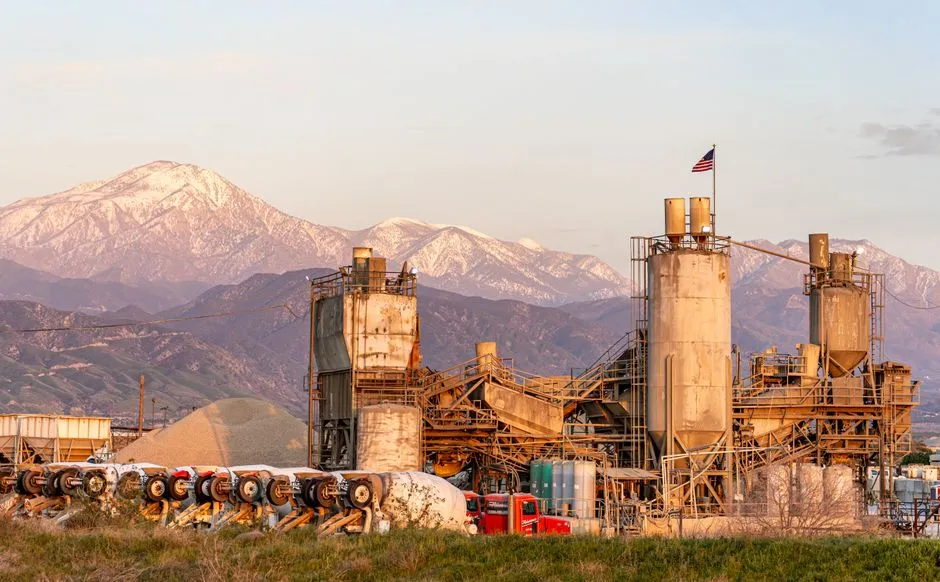
DAF is the stronger candidate when oil, grease, or fine colloidal metals interfere with settling; lamella clarification is more suitable for metal-hydroxide sludge at higher flow where footprint is constrained. The cited DAF hydraulic loading is 5–25 m/h, with 90–98% TSS removal for mining and metal-finishing service (HydropureWater commercial source, 2026). The cited lamella surface loading is 20–40 m/h, and its inclined plates reduce the required footprint to approximately one-third that of a conventional clarifier (HydropureWater commercial source, 2026).
Lamella clarification does not remove free oil or colloidal fines as effectively as DAF. Where those fractions are significant, upstream DAF removal is the appropriate sequence rather than forcing clarification to solve an unsuitable feed. A compact lamella clarifier for metal sludge is therefore a flow-and-footprint decision, not a default solids-removal choice.
Commercial capacity ranges are suitable only for preliminary screening. Standard DAF systems are described as covering 4–300 m³/h across 13 models; below 10 m³/h, packaged skids are common, while above 100 m³/h, parallel DAF trains or lamella clarification typically becomes more economical (HydropureWater commercial source, 2026). The final comparison must include installed cost, chemical consumption, sludge volume, dewatering demand, turndown, maintenance access, and peak 2-hour flow performance. See the broader industrial DAF and clarifier selection criteria.
| Decision factor | DAF | Lamella clarification |
|---|---|---|
| Best-fit feed | Oil, grease, and fine colloidal metals | Primarily metal-hydroxide sludge |
| Cited loading | 5–25 m/h hydraulic loading | 20–40 m/h surface loading |
| Footprint | Requires flotation basin area | Approximately one-third the footprint of a conventional clarifier, per the commercial source |
| Principal trade-off | More equipment and sludge-handling considerations | Less effective removal of free oil and colloidal fines |
| Final selection inputs | Peak 2-hour flow, turndown, chemical use, sludge dewatering, access, and total installed cost | |
Manage Sludge and Confirm the Discharge Is Ready
Clarifier or DAF sludge must be characterized before its disposal route is selected because the liquid-side design and the waste-management decision are linked. A commercial source describes a plate-and-frame filter press producing 25–35% dry-solids cake (HydropureWater commercial source, 2026). A plate-and-frame sludge filter press can reduce sludge volume, but the cake still requires characterization and an authorized destination.
Evaluate landfill, smelter recovery, or another permitted route against waste-code requirements and the generator’s determination. Do not assume that recoverable metals remove all waste-management obligations. Filter-press filtrate may return to the head of the plant only after confirming that it will not exceed equalization capacity, disrupt pH control, or add an unacceptable solids load.
The treatment train should be sized for peak 2-hour flow with 20–30% turndown capacity, as recommended by the commercial source. That hydraulic basis must be consistent with the equalization, chemical-feed, clarification, filtration, and sludge-dewatering equipment.
Before discharge, assemble a permit-to-evidence file containing POTW approval, the final design basis, influent data, equipment calibration records, chemical-use records, monitoring results, exceedance-response procedures, and sludge records. The industrial wastewater troubleshooting field guide provides a related model for connecting operating evidence to corrective action.
Turn the Permit Review into a Procurement Decision
Begin with a permit and local-limit workshop involving the plant operator, environmental engineer, POTW representative, and treatment supplier. The meeting should close the gaps between regulatory language and equipment scope before vendors are asked for a defensible price. The metal-wastewater procurement framework provides an adjacent decision model.
Do not request a final equipment price until the wastewater characterization, peak-flow basis, required outlet parameters, averaging periods, monitoring method, and sludge route are documented. Each supplier should state its design influent, guaranteed outlet parameters, sampling protocol, turndown basis, chemical consumption, startup sequence, controls scope, and performance-test method. Local-limit compliance, controls, monitoring, and commissioning evidence should be explicit scope items rather than assumptions left for the owner.
| Unresolved input | Decision affected | Responsible source |
|---|---|---|
| Receiving POTW identity, ordinance, permit, and local-limit worksheet | Applicability, targets, monitoring, enforcement, and controls | Plant environmental manager with POTW representative |
| Federal categorical classification and current rule text | Which federal standards apply and how they compare with local limits | Environmental engineer or regulatory consultant |
| Representative wastewater analysis and flow chronology | Equalization, precipitation, clarification, filtration, and turndown | Plant operator and treatment engineer |
| Jar tests and pilot evidence where needed | pH window, coagulant dose, residual performance, and reagent consumption | Treatment supplier or qualified process engineer |
| Sludge characterization and authorized route | Dewatering specification, waste classification, handling, and cost | Generator and qualified waste-management consultant |
| Performance-test and sampling protocol | Acceptance criteria and compliance evidence | POTW, owner, and supplier |
Use EPA’s December 2024 Attachment 3-1 categorical-standards summary as a starting index, then verify the current regulation and the receiving POTW’s 2026 requirements before award. This sequence prevents a technically capable system from being purchased against the wrong regulatory or influent basis.
Frequently Asked Questions
Is a federal categorical standard enough for a sewer discharge near Copperton?
No. The POTW’s local limits and industrial discharge permit conditions also apply. Use EPA’s December 2024 Attachment 3-1 to identify potential categorical standards, but verify the current rule text, applicable subcategory, local-limit worksheet, averaging period, monitoring frequency, and sampling point before setting equipment targets.
How should a plant choose hydroxide precipitation versus sulfide polishing?
Compare the required residual with test results, not with a generic removal percentage. The commercial source cites sulfide residuals of 0.01–0.05 mg/L for Cu, Zn, Cd, and Ni versus 0.5–2.0 mg/L for hydroxide, but also states that sulfide reagent cost is 2–4 times higher and requires sealed reactors with H₂S scrubbing. If hydroxide cannot meet the controlling limit, test sulfide on the actual stream and include the safety system in the capital scope.
Is DAF or lamella clarification better for mining wastewater near Copperton?
Choose DAF when oil, grease, or fine colloidal metals are present; choose lamella clarification when the stream is primarily metal-hydroxide sludge, higher flow and footprint constrain the layout, and upstream removal of free oil or colloids is unnecessary. Final selection requires site data for peak 2-hour flow, sludge properties, turndown, maintenance access, and dewatering demand.
What information should a wastewater-equipment supplier receive before quotation?
Provide the wastewater analysis, average and peak flow, peak 2-hour flow, applicable POTW limits, averaging periods, monitoring method, process origins, and proposed sludge route. Ask the supplier to identify design assumptions, guaranteed outlet parameters, chemical consumption, controls scope, turndown, startup requirements, and performance-test method. A comparable selection sequence is summarized in the mining wastewater DAF and clarifier guide.
How often must treatment performance be demonstrated?
Use the monitoring and sampling schedule in the POTW permit and industrial discharge permit. The federal categorical limit does not establish the plant’s sampling frequency. The permit-to-evidence file should show that each required sample was collected at the approved point, analyzed by the required method, and evaluated against the applicable averaging basis and exceedance procedure.