Which Process Fits the Dayhoit Wastewater?
For mining and metals wastewater in Dayhoit, choose a clarifier when the primary load is heavy, readily settleable mineral solids, and choose dissolved air flotation (DAF) when the target material is oily, buoyant, colloidal, or flocculable. A DAF is not a gravity clarifier: it uses 30–50 micron microbubbles to lift conditioned solids for skimming, while a lamella clarifier improves gravity settling through inclined plates. Mixed streams may justify a clarifier followed by a DAF polisher. The final choice should be based on representative testing, peak flow and mass loading, pH and metals chemistry, required effluent quality, chemical conditioning, and the available sludge-dewatering route—not average flow or product name alone.
For a Dayhoit plant, the correct first decision is contaminant behavior. A conventional or lamella clarifier is the more defensible starting point for dense mineral fines, grit, tailings-derived solids, and metallurgical sludge that settle under gravity. A dissolved air flotation system is more defensible for oils and greases, floatable reagents, biological flocs, conditioned colloids, and low-specific-gravity metal-bearing precipitates.
Metals must be separated into two analytical fractions. Metals attached to settleable or floatable particles may be removed with those solids; dissolved metals cannot be removed by flotation or settling alone. Chemical precipitation, pH control, filtration, or another dissolved-contaminant treatment step may therefore be necessary.
Mixed streams require a process sequence rather than a single-unit answer. The mining and metals wastewater selection guide supports separating heavy solids from floatable or flocculable material and then testing whether clarification followed by DAF polishing is justified. For example, a stream with both substantial sand and significant FOG may need pretreatment rather than being forced into one separator.
DAF and Clarifier Work in Different Ways
DAF separates particles by flotation, while a clarifier separates them by gravity; the equipment term alone does not establish treatment performance. Clearwater Industries specifies 30–50 micron microbubbles in its April 27, 2026 DAF publication, with the bubbles attaching to conditioned particles before a surface skimmer removes the float.
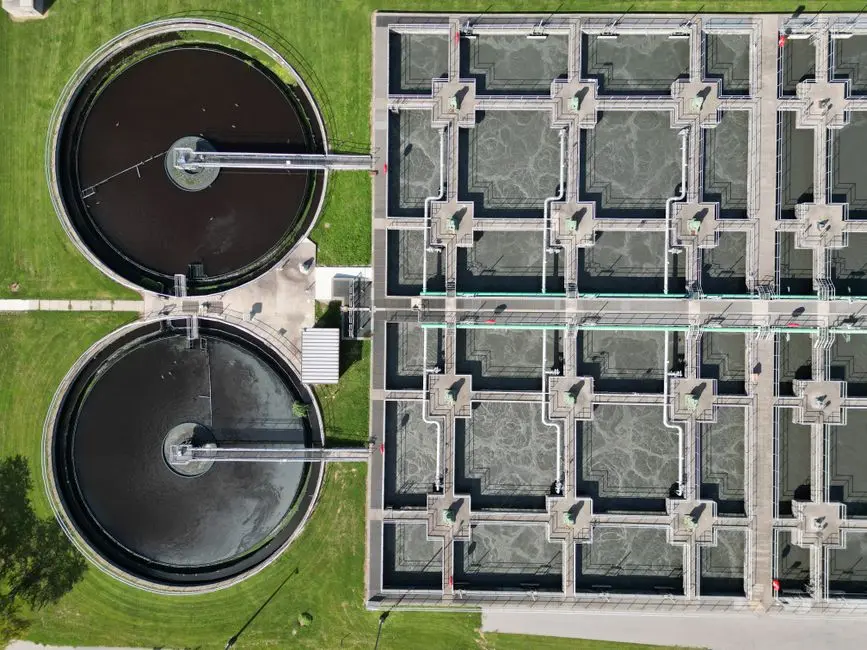
Conventional clarification collects settleable solids in a bottom zone. A lamella clarifier adds inclined plates, increasing effective settling area within a more compact tank. The supplied mining guide notes that DAF is poorly suited to heavy silt and clay that will not float, while lamella plates do not make colloidal, oily, or dissolved fractions settleable.
| Selection factor | Dissolved air flotation | Conventional or lamella clarification |
|---|---|---|
| Primary mechanism | Microbubbles attach to conditioned particles, which rise and are skimmed | Settling under gravity; lamella plates increase effective settling area |
| Target fractions | Oils, FOG, flotation reagents, biological flocs, conditioned colloids, and floatable metal-bearing solids | Dense mineral fines, grit, tailings solids, and metallurgical sludge |
| Key operating dependency | Coagulation and flocculation that promote particle size and bubble attachment | Settling area, hydraulic distribution, surface overflow rate, and sludge withdrawal |
| Sludge route | Float is skimmed and normally routed to dewatering | Underflow is withdrawn; the supplied guide describes lamella clarification as using sludge recirculation |
| Important limitation | Heavy, non-floating silt and clay are not the appropriate target | Colloidal, oily, and dissolved fractions require another treatment step |
Catalog references define application boundaries, not Dayhoit guarantees. HydropureWater describes its DAF for suspended solids, FOG, oil-and-grease, and colloidal-matter applications, and lists a lamella surface-loading rate of 20–40 m/h. Those references must be mapped to representative wastewater behavior, peak loads, and pilot results before a model is accepted.
Match Each Wastewater Stream to a Treatment Step
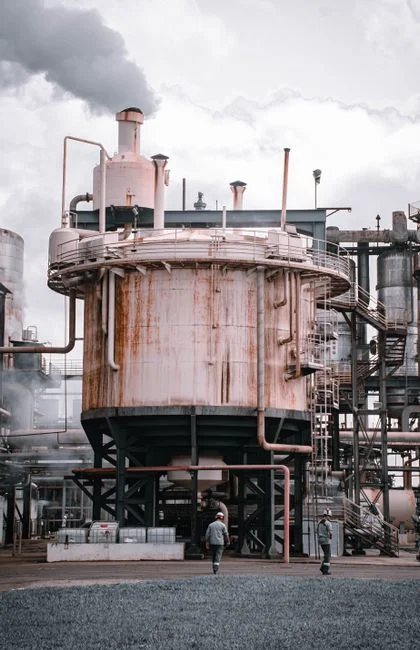
A defensible treatment train follows the contaminant and sludge route from collection to final use. Source characterization and equalization come first, followed by gross-solids removal, chemistry control, conditioning, primary separation, optional polishing, and sludge dewatering.
- Characterize each source and equalize flow and chemistry.
- Remove grit, sand, or other gross solids where necessary.
- Adjust pH and precipitate metals where the reuse or discharge target requires it.
- Apply coagulation and flocculation where the target fraction depends on particle conditioning.
- Select primary separation by particle behavior.
- Add polishing only against a defined effluent or process-water reuse target.
- Route float or underflow through a compatible sludge dewatering and disposal train.
A continuous-duty mechanical bar screen can be screened where gross solids could damage downstream equipment, while an automatic chemical dosing system should be integrated with pH, flow, level, and equipment controls. Neither device should be added without a defined stream risk or chemical-demand basis.
| Wastewater fraction or condition | Primary treatment step | Selection reason | Key evidence to obtain |
|---|---|---|---|
| Dense mineral fines, grit, metallurgical sludge | Conventional or lamella gravity clarification | The particles are expected to settle and can be withdrawn as underflow | Particle-size distribution, settleability, solids density, peak solids loading, and sludge rheology |
| Oil, grease, flotation reagents, buoyant material | DAF after suitable conditioning | Conditioned particles can attach to bubbles and be skimmed | Free oil and emulsion observations, FOG, temperature, conditioning tests, and float characteristics |
| Colloidal or low-specific-gravity metal-bearing precipitates | DAF or DAF polishing | These particles are not effectively removed by gravity clarification alone | Total and dissolved metals, pH, alkalinity, PSD, and bubble-attachment evidence |
| Heavy mineral load plus floatable or colloidal load | Clarification followed by DAF | Each stage addresses a distinct fraction, subject to application-specific testing | Clarifier overflow quality, DAF pilot response, footprint, controls, and two sludge routes |
| Dissolved metals | Precipitation or another chemistry-based step, followed by solids separation | Neither flotation nor gravity separation removes a truly dissolved ion | Solubility behavior across the pH range, residual dissolved-metal target, and disposal route |
Connect the final polisher only after defining the required effluent quality and mining process-water reuse target. The supplied mining guide states that filtration or membranes may still be required, so a DAF or lamella unit should not be presented as a complete reuse train unless its demonstrated effluent satisfies the specified use.
Build the Design Basis Before Comparing Equipment
Equipment selection requires a source-specific design basis because average flow and an averaged sample do not expose batch discharges or contaminant variability. The RFQ should require representative sampling by stream and operating condition, with one analyzed sample used as proof of a supplier’s design assumptions rather than as a substitute for the full data package.
The characterization program should cover TSS, particle-size distribution, settleability, solids density where available, oils and greases, pH, temperature, total and dissolved metals, and alkalinity. The flow record should identify each source, peak flow, batch-discharge profile, stormwater contribution, equalization performance, and each stream’s proportion. Selection must reflect both peak hydraulic loading and peak solids loading.
Jar testing is needed to define pH adjustment and coagulant and flocculant doses. Pilot evidence should address bubble attachment, settling performance, chemical variation, peak loading, and resulting sludge characteristics. For a DAF, this establishes whether the target material will float after conditioning. For a clarifier, it establishes whether the particles settle at the proposed hydraulic condition and whether flocculation is required.
| Design-basis item | Information the buyer must obtain | Proposal disclosure required |
|---|---|---|
| Flow and batching | Source flow, peak flow, batch profile, stormwater, and equalization performance | Design flow, peak-flow treatment logic, equalization assumptions, and off-design operation |
| Mass loading | TSS, particle-size distribution, settleability, density, and peak loading | Solids-loading basis, separation area, hydraulic loading, recycle arrangement, and collection method |
| Chemistry | pH range, alkalinity, temperature, total and dissolved metals | Conditioning chemicals, dose-control method, materials rationale, and chemistry limits |
| Sludge | Expected volume, moisture content, storage time, and disposal route | Float or underflow characteristics, withdrawal system, storage assumptions, and dewatering interface |
| Controls and maintenance | Required operating modes, utilities, staffing, and access | Controls, alarms, utilities, maintenance scope, spares, training, and service support |
HydropureWater lists 13 DAF models from 4–300 m³/h and a lamella surface-loading specification of 20–40 m/h. These are catalog bounds, not a Dayhoit duty calculation. Each bidder should show how its selected model maps to the measured flow, mass loading, chemistry, and sludge route.
Material selection must follow actual corrosion, abrasion, temperature, and chemical exposure. Clearwater’s April 27, 2026 publication lists 304SS as its standard DAF material, with 316SS, polypropylene, and other materials available on request. That catalog statement is not a site recommendation; bidders should justify their proposed materials against the Dayhoit wastewater characterization.
Compare Capital Cost, Operating Risk, and Sludge Handling
The supplied commercial mining guide gives a preliminary DAF capital range of $150,000 to over $1.5 million, depending on flow and materials of construction. It is not a Dayhoit quotation, a guaranteed 2026 market rate, or evidence of cost for either alternative. Capital screening should therefore compare complete installed systems using the same design basis.
A modular DAF can reduce the civil footprint, while a conventional clarifier may require a larger basin. A lamella clarifier offers a compact high-rate alternative, subject to the site constraints and loading data. These are configuration considerations, not site-specific cost conclusions.
DAF operation adds air saturation, recycle pumping, skid work, and chemical conditioning. Clarifier operation depends on effective settling area, hydraulic distribution, sludge withdrawal, and potentially less chemical feed. No Dayhoit energy or reagent consumption should be assumed before a vendor calculates it from the wastewater and operating strategy.
| Cost or risk item | Information to request from each bidder | Buyer check |
|---|---|---|
| Equipment and civil works | Separator, foundation, piping, installation, utilities, and site readiness | Same flow, mass loading, materials, and performance obligations |
| Conditioning and controls | Pumps, tanks, instrumentation, pH control, PLC, alarms, and data logging | All included in the total installed scope |
| Sludge removal | Float or underflow collection, storage, transfer, and dewatering interface | No undefined disposal or dewatering allowance |
| Operations | Chemical use, power demand, labor, maintenance, consumables, and spares | Calculation assumptions are visible |
| Commercial risk | Price validity, lead time, commissioning, training, warranty, and support | Exclusions and dependencies are explicit |
Price pretreatment, pH control, chemical dosing, controls, separator, sludge removal, dewatering, installation, utilities, maintenance, spares, and commissioning separately. A plate-and-frame filter press is a possible downstream route, not an automatic solution: its compatibility depends on the separator’s sludge volume, structure, moisture content, and feed behavior. This is part of the chemical dosing and sludge-handling scope that belongs in the installed-cost comparison.
Use a Like-for-Like 2026 RFQ and Acceptance Plan
A like-for-like RFQ gives DAF and clarifier bidders the same wastewater characterization, peak-flow profile, chemical assumptions, effluent targets, sampling methods, and acceptance criteria. It prevents a high-flotation claim from being compared with a gravity-settling claim made under different wastewater or operating conditions.
- Issue a common design-basis package with source-specific data and defined data gaps.
- Require each offer to state its separation mechanism, configuration, design duty, material rationale, controls, utilities, sludge route, installation requirements, and service scope.
- Require the alternative technology to be screened against the same wastewater, hydraulic profile, conditioning assumptions, and performance criteria.
- Reject generic statements that equipment “meets all limits.” Tie every performance commitment to the wastewater, chemical doses, flow, temperature, test method, sampling point, and acceptance criterion.
- Make pilot testing, site visits, comparable metal-bearing references, installation planning, commissioning, training, and post-startup support explicit priced items.
Supplier evidence should come from comparable metal-bearing streams rather than unrelated municipal installations. The regional DAF-versus-clarifier mining guide provides a useful screening framework, but its geographic assumptions cannot be transferred to Dayhoit. A separate mining wastewater limit and treatment guide can help structure permit questions; the applicable Dayhoit requirements must still be confirmed from current site documents and regulators.
The acceptance plan should define how and where the influent is sampled, how chemical dosing is controlled, how steady-state performance is established, and which analytical method determines compliance. Any guarantee must remain conditional on the stated wastewater and operating envelope. Installation and commissioning should verify recycle flow, air saturation, skimming, sludge withdrawal, chemical interlocks, alarms, and the downstream sludge route before full acceptance.
Frequently Asked Questions
How much will a DAF or clarifier cost for a Dayhoit mining or metals factory?
A defensible 2026 comparison requires site-specific quotations because the separator price excludes much of the installed treatment system. The $150,000 to over $1.5 million DAF figure comes from a commercial mining guide and is only a preliminary budgeting reference tied to flow and materials—not a universal market rate or Dayhoit quote. Request itemized pricing for pretreatment, pH control, chemical dosing, controls, separator, sludge removal, dewatering, installation, utilities, commissioning, and service, and ask each bidder to state its exclusions and price-validity period.
Should the equipment be sized by flow, mass loading, or both?
Size the system against both peak hydraulic loading and peak mass loading. HydropureWater’s 4–300 m³/h DAF range and 20–40 m/h lamella surface-loading figure are catalog bounds, not final duties. The final selection must use representative source flows, batch releases, TSS, particle behavior, chemistry, pilot results, and the required effluent or reuse target. If those inputs are missing, the bidder should state the assumptions and identify which data or tests must be completed before final model selection.
How should a buyer qualify a DAF or clarifier supplier?
Require evidence from comparable metal-bearing wastewater, a stated design basis, proposed controls, materials rationale, sludge-handling details, and testable acceptance criteria. Model names and generic removal claims are not qualification evidence. Also verify installation planning, commissioning, training, warranty, service response, and post-startup support as scoped commercial commitments.
When is a clarifier followed by a DAF commercially justified?
A clarifier-to-DAF train can be justified when testing identifies distinct heavy-settleable and floatable or colloidal fractions that require different mechanisms. It adds footprint, controls, energy, chemical and maintenance demands, plus separate float and underflow routes. Include those additions in the installed-cost and site-layout comparison, and require pilot or equivalent site evidence showing that each stage provides a necessary removal step.