What wastewater streams does a Bishkek data center need to treat?
A Bishkek data center needs a source-reduction and treatment plan that separates cooling-tower blowdown from sanitary and process wastewater. Blowdown normally requires equalization, pH control, solids removal, chemical treatment, disinfection and monitoring before discharge or reuse; higher-quality reuse may require UF followed by NF or RO. The supplied research reports blowdown TDS of 1,200–6,000 mg/L, suspended solids of 10–50 mg/L, and typical RO recovery of 50–85%. A final Bishkek design still requires measured source-water chemistry, cooling-system data, actual blowdown flow and written confirmation of the permitted discharge or reuse route.
Cooling-tower blowdown, sanitary wastewater and process wastewater should not be combined by default. Their contaminants, destination requirements and reuse criteria differ. The data center wastewater and cooling blowdown planning guide describes how each stream must be connected to an explicit reuse, discharge or controlled-disposal route.
Evaporative cooling removes water as vapour while minerals, salts, treatment chemicals and corrosion products remain in the recirculating loop until blowdown removes them. The principal blowdown concerns are TDS, hardness and scaling minerals, suspended solids, residual treatment chemicals, microbial content, pH and temperature. The regional data center blowdown treatment guide emphasizes that warm blowdown needs separate consideration where a receiving-water or biological destination is proposed.
No Bishkek-specific contaminant limits or receiving-water standards are supplied in the research. Obtain current permit and sewer-acceptance requirements before final sizing. Request the current P&ID, cooling schematics, chemical inventory and safety data sheets, utility bills, meter histories, operating-temperature records, stormwater and spill-control drawings, and representative sampling data.
How much cooling blowdown must a Bishkek site handle?
At four cycles of concentration, a cooling tower can lose roughly 25–30% of makeup water as blowdown, so preliminary design must begin with the site’s measured water balance rather than a generic package size. Genesis Water Tech reports this relationship in its commercial article Advanced Blowdown Treatment Technologies for Data Center Water Recovery, published in 2026.
HydropureWater’s Kabul guide reports that a 10 MW evaporative-cooling facility operating at four cycles can intake on the order of 15 million gallons monthly, with about one quarter leaving as recoverable blowdown. That is a regional benchmark, not a Bishkek design flow. The same guide identifies a modular 100–300 GPM blowdown-treatment envelope for enterprise and colocation builds, but it should not be used as the Bishkek sizing basis.
The blowdown relationship is:
Blowdown fraction of makeup = 1 ÷ (cycles of concentration − 1)
Moving from four to six cycles therefore changes the theoretical fraction from roughly 25% to 20%, a reduction of about five percentage points—not a halving of blowdown. HydropureWater’s Kabul guide also reports that actual blowdown can run 15–30% above theoretical because of unmeasured losses and emergency dumps.
| Design input | Evidence and engineering use |
|---|---|
| Makeup-water flow | Establish from utility invoices, source meters and operating records. |
| Cycles of concentration | Confirm the operating range from cooling-system data rather than assume a design value. |
| Theoretical blowdown | Use 1 ÷ (CoC − 1); Genesis Water Tech identifies approximately 25% at four cycles and 20% at six cycles. |
| Operating uncertainty | HydropureWater’s Kabul guide reports actual blowdown 15–30% above theoretical. |
| Verification | Compare calculated blowdown with continuous meter data, emergency-dump records and operating schedules. |
Use the following sequence: establish makeup flow, determine the operating CoC range, calculate theoretical blowdown, apply a site-approved uncertainty allowance, and verify the result against meter history. Only then select equalization and treatment capacity.
What contaminants should the pretreatment train remove?
Blowdown pretreatment should remove or control the constituents most likely to impair downstream equipment or prevent reuse. Genesis Water Tech reports blowdown TDS at four to eight times makeup-water concentration, ranging from 1,200 to 6,000 mg/L, and suspended solids of 10–50 mg/L from corrosion products, biofilm fragments and airborne particulates.
The treatment objective depends on the destination. Suspended solids require clarification or filtration; calcium, magnesium, silica and alkalinity require precipitation or scaling control; dissolved salts require membrane concentration or another desalination step; residual biocides and corrosion inhibitors determine compatibility with membranes, reuse and discharge. pH correction alone removes none of the salts, metals or suspended solids.
Warm or variable flows should be equalized and cooled before treatment where they could disrupt downstream chemistry or biological equipment. The PLC-controlled chemical dosing skid can apply acid or caustic where the confirmed discharge or reuse specification requires neutralization. HydropureWater’s Kabul guide notes that pH commonly falls outside a 6.0–9.0 sewer envelope without neutralization; that reference is not a Bishkek permit limit.
| Contaminant or condition | Required control | Relevant equipment |
|---|---|---|
| Warm, variable blowdown | Flow smoothing and cooling before downstream biology or sensitive equipment | Equalization and cooling tank |
| pH outside the confirmed acceptance condition | Documented acid or caustic dosing with mixing and verification | Automatic chemical dosing |
| Calcium, magnesium, silica and alkalinity | Precipitation control and antiscalant dosing | Chemical feed plus clarification |
| Corrosion products, biofilm fragments and airborne particulates | Clarification followed by depth filtration | High-efficiency sedimentation and multi-media filtration |
| Residual biocides, corrosion inhibitors, scale inhibitors and dispersants | Document composition and compatibility; apply dechlorination or chemical management only where required | Chemical inventory review and purpose-designed treatment |
Base every chemical decision on the documented cooling-water package, including product name, active ingredients, dosing rate and safety data. The membrane feed-water requirement described by Genesis Water Tech is less than 10–15 microns, with chemical conditioning and scale control before NF or RO.
Which treatment sequence fits each discharge or reuse route?
The destination must determine the treatment sequence because reuse, controlled discharge, partial recovery and zero liquid discharge solve different problems. A cooling-tower makeup route should first protect the loop through side-stream filtration, then apply only the blowdown recovery steps needed to meet the specified makeup quality. A discharge route must follow written pH, temperature, solids, metals and chemical-residual requirements; the research provides no Bishkek numeric discharge envelope.
For cooling-water reuse, UF removes suspended solids and biological contaminants but not dissolved salts. Genesis Water Tech reports UF operation at 10–30 psi, typical recovery of 90–95%, and chemical cleaning every one to three months depending on feed quality. NF operates at 75–150 psi, typically recovers 70–85%, and produces permeate at around 30–50% of feed TDS; it is relevant where hardness is the dominant constraint. RO operates at 150–400 psi, typically recovers 50–85%, and produces 10–50 mg/L TDS permeate suitable for cooling reuse or blending.
Both NF and RO require feed filtered below 10–15 microns, scale-control dosing and membrane-compatible influent chemistry. The hollow-fiber ultrafiltration system for blowdown pretreatment addresses the solids and biological barrier, while the industrial RO system for cooling-water reuse addresses dissolved solids. Disinfection remains application-dependent; the chlorine-dioxide generator for cooling-loop microbial control must be evaluated against the complete chemical program rather than added automatically.
| Route | Indicative treatment sequence | Key limitation or acceptance condition |
|---|---|---|
| Cooling-tower makeup reuse | Equalization and cooling; side-stream filtration; blowdown pretreatment; UF, NF or RO as justified; blending and controlled chemical dosing | Final quality must be compatible with the cooling loop and confirmed reuse specification. |
| Controlled discharge | Equalization; pH correction; solids removal; filtration; chemical-neutralization or disinfection where required | Written local discharge or sewer-acceptance criteria are missing from the research. |
| Partial recovery | RO or NF concentration followed by MVC treatment of part of the concentrate | Remaining brine requires an authorized disposal route. |
| Zero liquid discharge | Membrane concentration; thermal evaporation; crystallization | Genesis Water Tech reports 95–99% overall recovery and solids below 1% of original blowdown volume; the salt-waste endpoint must be legal and available. |
| Sanitary wastewater | Separate biological treatment and disinfection train | Cooling-blowdown equipment does not establish sanitary reuse or discharge compliance. |
For partial recovery, Genesis Water Tech reports that MVC can recover 95–98% of concentrate and produce distillate below 10 mg/L TDS, with energy demand of 15–25 kWh per 1,000 US gallons of distillate. For ZLD, its membrane-concentration, evaporation and crystallization sequence requires an energy-intensive thermal stage and a confirmed solid-waste route. Sanitary wastewater should be evaluated separately; the integrated MBR treatment option is relevant only after the sanitary design basis and reuse criteria are established.
How should Bishkek discharge, reuse and water-scarcity risks be resolved?
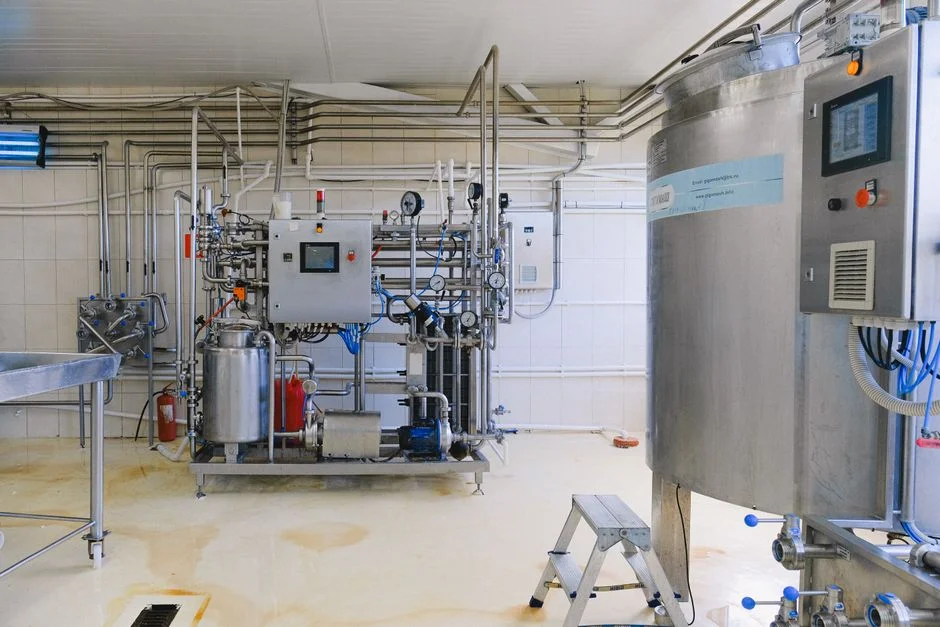
Legal acceptance of each destination must be established in writing before equipment sizing, because treatment performance cannot substitute for permission to discharge or reuse. HydropureWater’s Bekasi data center blowdown guide follows the same endpoint-first method used for other regional data centers.
For each stream, obtain written confirmation of the permitted discharge route, sewer-acceptance terms, controlled reuse conditions, tanker haul-off requirements or another locally authorized endpoint. Do not assume that a US or European treatment train can be copied without adapting the Kyrgyz permit pathway and receiving requirements.
Partial reuse for dust suppression, equipment washdown, irrigation or toilet flushing should be assessed only against local receiving requirements and public-health constraints. The research does not supply Bishkek criteria for these applications, so the project team must obtain them rather than infer acceptance from the cooling-water route.
For ZLD, confirm the brine endpoint first. Crystallized salt, licensed haul-off, deep-well injection or another authorized disposal route must be technically and legally available. HydropureWater’s Kabul guide reports membrane preconcentration at approximately 50% lower energy and 30% lower operating cost than thermal-only ZLD in hyperscale deployments; this is a comparative benchmark requiring project-specific validation, not a Bishkek performance guarantee.
Include sampling ports, flow measurement, conductivity, pH and temperature monitoring in the concept design. These instruments establish the water balance, support commissioning and provide evidence that the selected route continues to meet its written acceptance criteria.
What should a Bishkek supplier proposal and equipment budget include?
A comparable proposal must size the treatment train from measured blowdown flow and the project’s actual cycles of concentration, not from a generic package flow. Genesis Water Tech reports a 50,000 GPD blowdown-RO benchmark of $250,000–500,000 installed and $1.50–3.00 per thousand gallons treated in its 2026 article. This is a non-Bishkek reference for one membrane application; it is not a complete site train, a local quotation or a Bishkek price.
The same source reports a ZLD benchmark of $3–8 million capital cost and $5–15 per thousand gallons treated. Scope, feed chemistry, capacity, energy source and disposal arrangements are project-specific, so this figure supports comparison of high-complexity options only. Local quotations must state exclusions, taxes, freight, civil works, installation, commissioning and concentrate handling.
| Proposal item | Evidence a buyer should require |
|---|---|
| Design basis | Measured blowdown flow, operating CoC, makeup-water analysis, water balance, assumptions and recovery target. |
| Process scope | Equalization, pH or chemical control, solids removal, filtration, disinfection where applicable, justified membrane treatment, controls and a defined concentrate route. |
| Operations | Turndown, automatic backwash or cleaning, redundant critical pumps, PLC control, remote diagnostics and commissioning support. |
| Commercial | Written delivery dates for long-lead dosing, filtration and RO equipment, plus installation and local-service responsibilities. |
| Total cost | Energy, chemicals, membrane replacement, cleaning, sludge or concentrate disposal, operator labor, freshwater savings and lifecycle assumptions. |
Use the 2026 RO operating-cost breakdown to identify cost categories that belong in supplier offers, but do not transfer its assumptions to Bishkek without local inputs. Require the chemical dosing design criteria to be applied against the confirmed cooling-water chemistry and destination specification.
What is the recommended implementation sequence for a Bishkek data center?
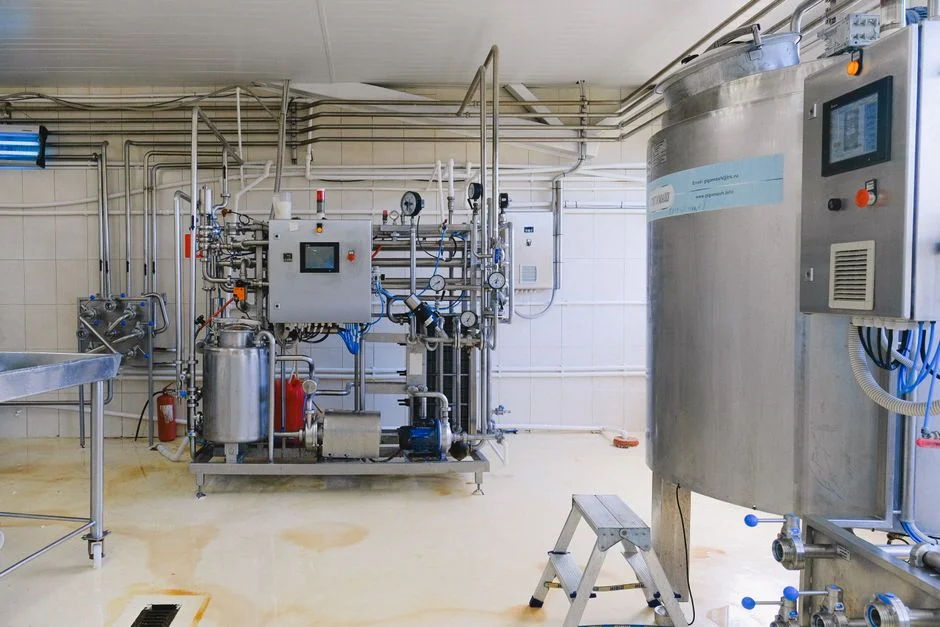
The recommended sequence is characterize, define destinations, model the water balance, compare routes, then procure. A four-to-eight-week sampling estimate appears in the planning instructions, but it is not established by the supplied research; replace it with a project-specific sampling plan before budget approval.
- Measure TDS, conductivity, hardness, alkalinity, calcium, magnesium, silica, suspended solids, pH, temperature, residual disinfectant, metals of concern and every relevant cooling chemical.
- Establish the cooling-system water balance, operating CoC range, makeup source, seasonal variation, blowdown-meter trends, emergency-dump practices and planned facility load.
- Secure written acceptance criteria for every discharge and reuse destination.
- Compare reuse, controlled discharge, partial recovery and ZLD at measured flow and water quality.
- Build the first phase around source reduction, equalization, reliable pretreatment and monitoring.
- Reserve membrane or thermal capacity for expansion only where measured water quality and demand justify it.
- Commission with side-by-side flow, conductivity, pH, temperature and water-balance measurements, then optimize CoC and chemical dosing before evaluating higher recovery.
This staged approach preserves the option to increase recovery without committing to ZLD before the Bishkek water chemistry, energy conditions and brine endpoint are established. The Thiès data center blowdown implementation guide provides a comparable regional sequence for a site-specific design basis.
Frequently Asked Questions
What does a data center in Bishkek need for cooling blowdown treatment?
It needs a source-specific train that normally includes equalization, cooling where required, pH and chemical control, solids removal, filtration, monitoring and disinfection where applicable. UF, NF or RO should be added only after measured chemistry and the reuse specification justify them. The destination—cooling reuse, controlled discharge, partial recovery or ZLD—must be confirmed before final sizing.
How long should source-water and wastewater characterization take?
The four-to-eight-week period is only a planning placeholder and has no evidentiary basis in the supplied research. The actual duration should reflect the number of streams, seasonal operating changes, laboratory turnaround and repeat sampling needed to characterize variability. Procurement should issue a sampling plan with parameters, locations, frequencies, flow conditions and responsible laboratory before treating any duration as committed.
What will treatment cost in Bishkek?
No Bishkek quotation is available. Genesis Water Tech’s 2026 reference of $250,000–500,000 installed for 50,000 GPD blowdown RO and $1.50–3.00 per thousand gallons treated is a non-Bishkek benchmark with limited scope. Its ZLD reference of $3–8 million capital cost and $5–15 per thousand gallons treated is also non-local. Buyers should request itemized quotations for the measured flow, complete train, utilities, civil works, concentrate disposal, commissioning and lifecycle costs.
How should a supplier be selected for a Bishkek industrial water treatment skid?
Require demonstrated sizing from measured flow, CoC, source chemistry, recovery target and the written destination specification. The selected supplier should provide commissioning support, local spare-parts arrangements and remote diagnostics compatible with site connectivity. Confirm delivery dates in writing for long-lead equipment, identify reference projects treating cooling blowdown rather than sanitary wastewater, and assess total cost of ownership rather than equipment price alone.