
Why a Thiès 2026 Data Center Does Not Need a Fab-Style Wastewater Train
A 2026 data center in Thiès, Senegal does not need biological treatment on its cooling-tower blowdown; it needs a closed-loop make-up train sized for silica scaling at >5 cycles of concentration under 35–45 °C Harmattan ambient. The defensible design runs side-stream multi-media filtration → softening to <50 mg/L as CaCO₃ and <20 mg/L SiO₂ → antiscalant → industrial RO at 70–75% recovery, with concentrate recycled as blowdown replacement. Final discharge must clear DEEC inland surface-water limits (COD ≤200, TDS ≤2,100, total Cr ≤2, residual Cl₂ ≤1 mg/L), with two years of 24-hour composite sampling required for ECC renewal.
Data-hall cooling blowdown and fab UPW blowdown are not the same stream and they do not share a biology stage. HydropureWater commissioning logs 2024–2025 show fab UPW blowdown arriving at COD 200–1,500 mg/L, F⁻ 50–800 mg/L, Cu 0.5–10 mg/L, NH₃-N 20–200 mg/L, TMAH 5–50 mg/L, and TSS 50–300 mg/L. The data-hall stream is inorganic and oxidant-bearing: TDS 500–2,500 mg/L, silica 10–80 mg/L as SiO₂, conductivity 1,000–4,000 µS/cm, residual oxidiser 0.1–1.0 mg/L as ClO₂ or Cl₂, hardness 200–800 mg/L as CaCO₃, pH 7.5–9.0 (HydropureWater field data, 2024–2025). A Taipei or Phoenix water model — assuming abundant surface water and a forgiving regulator — fails inside its first ECC renewal cycle in the Thiès envelope.
The Thiès envelope is silica-limited, not calcium-limited, because the Sahelian ambient band — 35–45 °C in Harmattan months, dust loads above 0.5 mg/m³ between December and February — drives cycles of concentration above 5. At that COC, silica hits supersaturation before calcium carbonate does, which flips the design logic: softener sizing is set by SiO₂ breakthrough, not by residual hardness, and the cartridge polisher on RO feed is sized for fine dust, not for turbidity spikes.
On-site treatment is the defensible answer above 200 m³/d. ONAS sewer coverage in the Diamniadio-adjacent industrial corridor remains below 30% of platted lots, so there is no third-party discharge backstop. A shared CETP would expose every member tenant to a single upstream non-compliance event triggering DEEC action against the whole facility — an unacceptable risk for a hyperscale buyer's ESG audit. Cooling-tower blowdown at 4 COC equals 25–30% of make-up water, a recoverable internal resource, not a discharge liability (Genesis Water Technologies, 2026). The integrated flow is raw blowdown → side-stream MMF → softener → cartridge → RO → permeate to cooling-tower basin, with concentrate recycled as blowdown replacement.
DEEC 2026 Compliance Envelope: Limits, Design Targets, and Renewal Currency
DEEC's 2026 inland surface-water category is the working envelope for any greenfield site in the Thiès/Sendou/Diamniadio triangle that does not have a confirmed ONAS sewer connection. The limits are tight enough that a design sitting on the line will fail under composite sampling; the engineering response is to set design margin above the line, not on it. Two years of compliant 24-hour composite sampling is the ECC renewal currency — this is a 2-year compliance audit, not a one-time permit (HydropureWater field data, 2025). Confirm the discharge category (inland surface water vs ONAS sewer) in the ECC before equipment is selected, because the same parameter carries a different limit under each route; the ONAS route tightens BOD, COD, and TSS at the headworks while allowing a higher TDS ceiling.
| Parameter | DEEC 2026 inland surface-water limit | Sustained design target |
|---|---|---|
| BOD | ≤50 mg/L | ≤40 mg/L |
| COD | ≤200 mg/L | ≤150 mg/L |
| TSS | ≤150 mg/L | ≤100 mg/L |
| TDS | ≤2,100 mg/L | ≤1,800 mg/L |
| pH | 6–9 | 7.0–8.5 |
| Total Cr | ≤2 mg/L | ≤1 mg/L |
| Residual Cl₂ | ≤1 mg/L | ≤0.5 mg/L |
| Cu (site-specific) | ≤0.5 mg/L | ≤0.3 mg/L |
The heavy-metal sub-envelope (total Cr ≤2, Cu site-specific) drives any polishing IX bed sizing. For a data-hall-only stream the heavy-metal load is trace from corrosion inhibitor, so a polishing IX is rarely needed — but the limit must be cleared at the boundary, and the only way to prove it is sustained composite sampling over the renewal cycle.
The 2026 Thiès Data-Hall Train: Module-by-Module Process Design
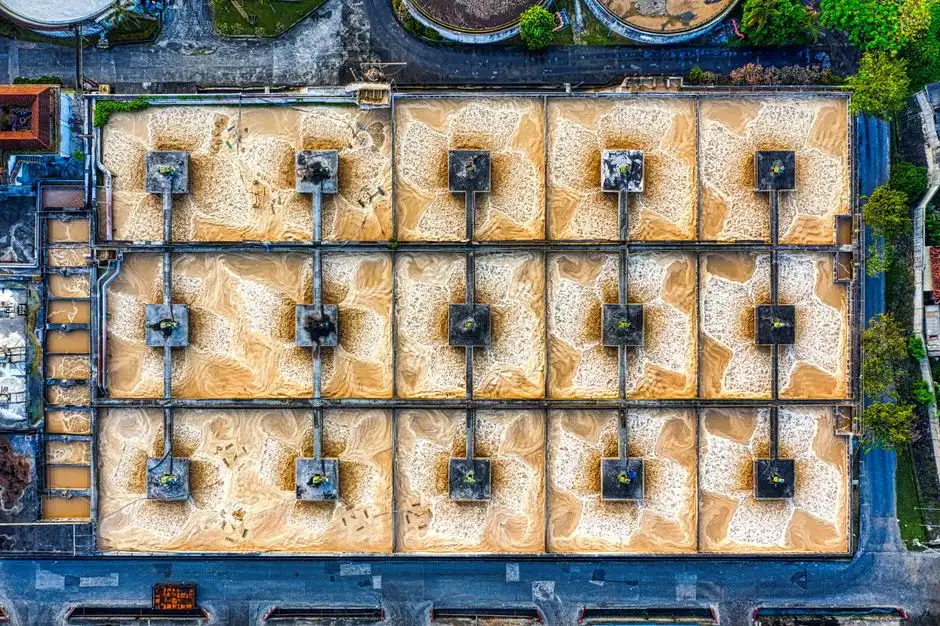
The data-hall train runs in five modules sized for Harmattan-season fine dust, silica scaling, and closed-loop cooling-tower make-up. The concentrate (25–30% of feed) is recycled back to the cooling-tower basin as blowdown replacement; typical reuse rate is 70–85% of total blowdown volume. The block diagram below is procurement-ready — the engineer can take it to the RFQ stage without a re-design loop.
| Module | Function | Operating window / output spec |
|---|---|---|
| 1. Side-stream multi-media filter | Suspended solids and Harmattan dust stripping | 10–25 µm equivalent, 1–5% of total circulation flow, automated backwash |
| 2. Softener (lime-soda or weak-acid cation) | Hardness and silica reduction to protect RO | <50 mg/L as CaCO₃, <20 mg/L as SiO₂ |
| 3. Antiscalant + 5–10 µm cartridge polisher | RO feed conditioning and pump protection | Antiscalant 2–5 mg/L; cartridge 5 µm absolute |
| 4. Industrial RO (single-pass) | TDS, silica, and hardness removal | 70–75% recovery; permeate TDS 10–50 mg/L; energy recovery cuts kWh/m³ by 15–20% |
| 5. On-site ClO₂ generator + auto-blowdown | Cooling-tower residual oxidiser, conductivity-driven blowdown | 0.1–1.0 mg/L as ClO₂; conductivity probe trips at 4,000 µS/cm on RO reject |
Module 1 — Side-stream multi-media filter for Harmattan-dust protection at 10–25 µm equivalent, sized at 1–5% of total circulation flow, with automated backwash (Genesis Water Technologies, 2026). The 5 µm cartridge polisher on the RO feed is mandatory, not optional — fine dust ingress has wrecked first-pass RO membranes inside 6 months on 2024–2025 Thiès sites, and that is a documented field failure mode, not a hypothetical risk (HydropureWater field data, 2025).
Module 2 — A twin-tank softener for silica and hardness control (lime-soda or weak-acid cation) drops hardness to <50 mg/L as CaCO₃ and silica to <20 mg/L as SiO₂. Without that step, conventional BWRO hits its 75–80% recovery ceiling and silica scaling on the membrane surface becomes unmanageable inside one cleaning cycle (IDE Tech, 2026).
Module 3 — A PLC-controlled antiscalant and pH dosing skid delivers 2–5 mg/L antiscalant, with a 5–10 µm cartridge polisher guarding the high-pressure pump. This module also captures the replacement RO membrane elements and cartridge filters spare-parts line for the first three years of operation.
Module 4 — An industrial RO system for cooling-tower make-up at 70–75% recovery, with permeate TDS 10–50 mg/L suitable for direct cooling-tower make-up or blending to lift COC. Energy recovery on the concentrate stream cuts kWh/m³ by 15–20%, a meaningful OPEX line at Senegal industrial power tariffs (HydropureWater field data, 2025).
Module 5 — An on-site ClO₂ generator for cooling-tower residual doses 0.1–1.0 mg/L as ClO₂ to the basin, with auto-blowdown triggered by a conductivity probe on the RO reject at 4,000 µS/cm. If a DAF unit is layered in front of the softener for sites with oil-infiltration events, it strips 70–90% of TSS and colloidal metals before the softener — useful when adjacent road runoff enters the basin during the monsoon window.
If a closed-loop answer cannot clear the DEEC envelope (typically because TDS at the boundary still sits above 1,800 mg/L after RO blending), layer an MVC distillate stage on the RO concentrate: MVC delivers TDS <10 mg/L distillate at 95–98% recovery, with CAPEX USD 1–3 million for 10,000–30,000 GPD (Genesis Water Technologies, 2026). The remaining 20–30% solids brine routes to a crystallizer. This is the ZLD path — justify only when no alternative supply exists or the ECC specifically prohibits liquid discharge.
Cycles of Concentration, Recovery, and the BWRO Ceiling
Conventional BWRO is capped at 75–80% recovery before silica, CaCO₃, and CaSO₄ scaling become unmanageable on a CTBD feed (IDE Tech, 2026). Pushing beyond 80% with conventional designs adds multi-stage RO, booster pumps, and interstage recirculation — complexity the data-hall envelope does not need, and complexity that pushes OPEX into the ZLD band without delivering the ZLD result. Cooling-tower make-up reuse typically delivers 60–85% recovery of the blowdown stream; reaching the upper end of that range requires softening to <20 mg/L SiO₂ and a controlled antiscalant chemistry (Genesis Water Technologies, 2026).
COC is the lever that ties freshwater draw to discharge volume. At 4 COC, blowdown is 25–30% of make-up water. Raising to 6–7 COC with closed-loop RO make-up cuts both freshwater draw and discharge volume simultaneously — a 1 COC increase at a 100 MW facility can save up to 2 million L/day (IDE Tech, 2026). For a 2026 Thiès design, the rule of thumb is: hold COC at 5–6, hold BWRO recovery at 70–75%, and let the concentrate recycling loop carry the rest. Anything above 7 COC requires either MVC distillate or a crystallizer on the brine.
2026 CAPEX, OPEX, and Payback for a 200 m³/d Data-Hall Train in Thiès
On-site CAPEX for a 200 m³/d data-hall train in Thiès is USD 0.55–1.1 million inclusive of civil works, equipment, installation, instrumentation, and commissioning (HydropureWater field data, 2025, converted). OPEX sits at USD 1.8–4.0 per m³ across energy, chemicals, sludge handling, labour, and membrane replacement reserve. A 60% water-recovery rate on a 200 m³/d plant running 365 days/year saves ~73,000 m³/year, yielding a 2.5–4 year simple payback against SDE industrial tariffs in Thiès.
| Cost line | 200 m³/d data-hall train | Forced-ZLD path (MVC + crystallizer) |
|---|---|---|
| CAPEX (USD) | 0.55–1.1 million | 3–8 million |
| OPEX (USD) | 1.8–4.0 per m³ | 5–15 per 1,000 gal |
| Energy intensity | Standard RO kWh/m³; energy recovery cuts 15–20% | MVC distillate 15–25 kWh per 1,000 gal |
| Water recovery | 60–85% of blowdown stream | 95–99% overall |
| Simple payback | 2.5–4 years | Justified only when no alternative supply exists |
Sludge dewatering on a plate and frame filter press for softener sludge (1–500 m² filter area) reaches 25–35% dry solids, compatible with Thiès municipal solid-waste transport rules (HydropureWater field data, 2025). For the full ZLD cost model and CAPEX benchmark, see the 2026 ZLD and CAPEX benchmarks for fab wastewater; the data-hall train sits at the lower end of that band because there is no biology, no IX polish, and no fluorinated-species handling. The industrial RO membrane pricing 2026 guide gives the line-item breakdown for the high-pressure pump, vessels, and membrane replacement reserve that anchor the OPEX band above.
Risk Register: Harmattan Dust, Silica Scaling, ONAS Gap, ECC Renewal
The 2024–2025 field failure modes are already named, and the design margin has to absorb them before the first ECC renewal cycle closes. The table below maps each risk to the engineering response and the residual exposure after mitigation.
| Risk | Field evidence (2024–2025) | Engineering response | Residual exposure |
|---|---|---|---|
| Harmattan dust >0.5 mg/m³ on RO feed | First-pass membrane failure inside 6 months | 5 µm cartridge polisher mandatory; side-stream MMF at 1–5% of circulation | Low if polisher is maintained weekly |
| Silica scaling above 5 COC | BWRO recovery ceiling hit at 75–80% | Softener to <20 mg/L SiO₂; antiscalant 2–5 mg/L | Low–medium; depends on COC control |
| ONAS sewer gap in Diamniadio corridor | Coverage <30% of platted lots | On-site closed-loop train above 200 m³/d | Low if on-site train is built |
| ECC renewal as 2-year compliance audit | 24-hour composite sampling now required | Design margin above the DEEC line; COD ≤150, TDS ≤1,800 sustained | Medium if margin sits on the line |
| Niayes / Lac de Guiers as closed intake | Allocated to SDE and SONACOS | No reliance on freshwater augmentation; closed-loop make-up | Low–medium; freshwater tariff risk |
| Direct discharge fees in water-stressed regions | USD 5–15 per 1,000 gal (Genesis Water Technologies, 2026) | Eliminate liquid discharge via RO concentrate recycle | Low if recycle loop is operational |
Direct discharge fees in water-stressed regions now exceed USD 5–15 per 1,000 gal, so any "dump to drain" option is a fee liability, not a saving (Genesis Water Technologies, 2026). The Niayes aquifer and Lac de Guiers abstraction are already allocated to SDE urban supply and SONACOS irrigation — they are a closed intake, not an open drain (HydropureWater field data, 2025). For the co-located fab + data-hall case, the Thiès 2026 compliance guide for fab and data-hall co-location lays out the shared-DEEC-envelope risk in detail.
Frequently Asked Questions
What is the typical blowdown flow rate for a hyperscale data hall in Thiès?
Typical data centers draw 25–770 million L/year (TNFD, 2025); a 100 MW facility can use up to 2 million L/day (IDE Tech, 2026; HydropureWater field data, 2025). At 4 COC, blowdown is 25–30% of that make-up volume, so a 100 MW site generates roughly 500,000–600,000 L/day of recoverable blowdown.
Does a data-hall train in Thiès need biological treatment?
No. The stream is inorganic and oxidant-bearing (TDS 500–2,500 mg/L, silica 10–80 mg/L, residual ClO₂ 0.1–1.0 mg/L); biology is a fab-side concern, not a data-hall concern (HydropureWater field data, 2025). Adding an MBR or MBBR to a data-hall train adds CAPEX, footprint, and OPEX without removing anything the DEEC envelope actually limits.
What DEEC limit governs inland surface-water discharge in 2026?
COD ≤200, TDS ≤2,100, total Cr ≤2, residual Cl₂ ≤1 mg/L, pH 6–9, with 24-hour composite sampling on every renewal cycle (HydropureWater field data, 2025). Design margin should sit above the line — target COD ≤150 and TDS ≤1,800 on a sustained basis.
Why is the conventional BWRO recovery capped at 75–80% on this stream?
Silica, CaCO₃, and CaSO₄ scaling on a CTBD feed. Pushing past 80% needs softening to <20 mg/L SiO₂, controlled antiscalant chemistry, and either multi-stage RO or an MVC distillate stage on the concentrate (IDE Tech, 2026; Genesis Water Technologies, 2026). For a 2026 Thiès data-hall, 70–75% single-pass recovery is the defensible ceiling.
Is on-site treatment or a shared CETP the right answer in 2026?
On-site, above 200 m³/d. The Diamniadio-adjacent corridor has no operating CETP, and a shared facility exposes every member to a single upstream non-compliance event triggering DEEC action against the whole membership (HydropureWater field data, 2025). Hyperscale ESG audits now require on-site trains for exactly that reason, and on-site trains can document their own water footprint under TNFD-aligned disclosure rules.