Why a Kabul data center faces a different blowdown problem
A data center in Kabul, Afghanistan needs a treatment train built around cooling-tower blowdown — the concentrated wastewater left when evaporative cooling rejects pure water and leaves salts, heavy metals, biocides, corrosion inhibitors, and altered pH behind. Because Kabul sits in a water-stressed basin with intermittent municipal sewerage and no equivalent of the US National Pollutant Discharge Elimination System (NPDES) framework, the train must combine pH neutralization, suspended-solids and metals removal, and disinfection before either on-site reuse or controlled disposal.
The standard US/EU blowdown playbook assumes a functioning municipal sewer with an industrial pretreatment program and a permitting authority that can write enforceable numeric limits. Kabul does not match that template. Source water chemistry pushes the cooling loop harder, the receiving end-point for any discharge is rarely a treatment plant, and grid reliability shifts the energy balance of every unit operation. Three local conditions drive the design envelope more than any single piece of equipment selection.
First, the make-versus-buy decision for cooling water is strategic, not just operational. The question is not only how much water the facility draws, but where the blowdown goes and what is in it when it leaves (waterutilityreport.com, 2026-04-14). Second, sewerage is intermittent across much of greater Kabul, and the project team must assume tanker haul-off or on-site percolation under local permits as the realistic end-points — both change pretreatment targets and storage sizing versus a sewer-tap project (rspengineers.com). Third, source water in the Kabul basin trends toward high total hardness and elevated total dissolved solids (TDS), which raises the cycles-of-concentration pressure on the cooling loop and loads the blowdown with metals beyond a typical US baseline (waterutilityreport.com, 2026-04-14). Dry, dust-laden ambient air adds suspended solids to makeup and drift, pushing pretreatment toward media filtration upstream of any reverse osmosis (RO) step, and weak grid reliability favors modular, low-energy physical-chemical skids over thermal zero liquid discharge (ZLD) as the default — ZLD becomes a site-specific decision rather than a starting assumption.
What is actually in Kabul data center cooling-tower blowdown
Blowdown is the concentrated residue of evaporative cooling: pure water leaves as vapor while dissolved solids, treatment chemicals, and corrosion by-products accumulate in the loop and must be periodically discharged (waterutilityreport.com, 2026-04-14). A February 2026 TNFD-aligned case study cited in industry reporting flags data-center blowdown as a water-quality risk when mismanaged, noting elevated salts, heavy metals, and other pollutants in the discharge stream (waterutilityreport.com, 2026-04-14).
Typical constituents of concern are high TDS, chlorides, sulfates, phosphates, residual chlorine or alternative biocides, copper and zinc leached from metallurgy, and elevated temperature; pH commonly runs outside the 6.0–9.0 sewer envelope without neutralization (rspengineers.com). The full chemical treatment package — biocides, corrosion inhibitors, anti-scalants — must be documented before any permit application, because it directly sets pretreatment targets and reuse limits (rspengineers.com). Reclaimed or recycled source water changes rather than eliminates the chemistry challenge, which matters in Kabul if any reuse scheme draws on treated municipal wastewater as makeup (waterutilityreport.com, 2026-04-14).
| Constituent | Source / cause | Typical concern | On-site treatment |
|---|---|---|---|
| pH (acidity / alkalinity) | Treatment chemicals shift the loop off neutral | Corrodes sewer infrastructure; outside 6.0–9.0 envelope | PLC-controlled chemical dosing skid for acid or caustic feed |
| Total Dissolved Solids (TDS) | Concentration of naturally occurring minerals | Numeric limit or indicator parameter; difficult to remove | Reverse osmosis at sites targeting reuse or ZLD |
| Temperature | Heated loop water leaving the tower | Discharges above ~150°F impair downstream biology | Equalization / cooling tank ahead of the train |
| Residual chlorine / biocides | Added to control biological growth | Toxic to aquatic life; disrupts treatment plants | Dechlorination or switch to non-persistent biocides upstream |
| Heavy metals (Cu, Zn) | Leached from metallurgy by corrosion | Strict parts-per-million or parts-per-billion limits | Chemical precipitation, ion exchange, or specialized filtration |
| Suspended solids | Drift, dust-laden makeup, scale particles | Carryover into downstream reuse; fouling of membranes | Lamella clarifier followed by multi-media filter |
Sizing blowdown: cycles of concentration and Kabul-specific volumes

Cycles of concentration (CoC) set the blowdown ratio. The blowdown fraction of makeup equals 1/(CoC − 1), so 4 CoC produces roughly 25% blowdown and 6 CoC produces roughly 20% (genesiswatertech.com). The common assumption that moving from 4 to 6 CoC halves blowdown is wrong — the actual volume reduction is about 5 percentage points, while scaling and biological risk grow exponentially above 5–6 CoC without advanced treatment (genesiswatertech.com).
Hyperscale-style RO/ion-exchange water reuse typically does not pay back at small or mid-scale Kabul deployments because per-gallon capital cost runs 3–4× higher than at hyperscale sites and operational complexity exceeds local staffing capacity (genesiswatertech.com). A modular 100–300 gallons-per-minute (GPM) blowdown treatment system is the right scale envelope for most enterprise and colocation builds, with footprint ranging from a few hundred square feet for simple pH neutralization to several thousand for full pretreatment trains (genesiswatertech.com; rspengineers.com). For Kabul, plan for makeup water interruptions: storage equalization ahead of the treatment train is part of the design, not an option, and a typical 10 MW facility using evaporative cooling at 4 CoC can intake on the order of 15 million gallons monthly with about a quarter leaving as recoverable blowdown (genesiswatertech.com).
| Parameter | Value / range | Source / note |
|---|---|---|
| Blowdown ratio formula | 1 / (CoC − 1) | genesiswatertech.com |
| Blowdown at 4 CoC | ~25% of makeup | genesiswatertech.com |
| Blowdown at 6 CoC | ~20% of makeup | genesiswatertech.com |
| Sustainable CoC without advanced treatment | 5–6 CoC; risks rise exponentially above | genesiswatertech.com |
| Modular system scale envelope | 100–300 GPM | genesiswatertech.com |
| Hyperscale reuse capex per gallon at smaller sites | 3–4× higher than at hyperscale sites | genesiswatertech.com |
| Indicative intake for 10 MW facility at 4 CoC | ~15 million gallons monthly | genesiswatertech.com |
A treatment train engineered for Kabul conditions
The treatment train is a sequence of unit operations, each chosen to remove or stabilize a specific constituent flagged by the chemistry review. Operators should expect to tune chemical dosages and to swap unit operations as source water and ambient conditions shift seasonally.
- Stage 1 — equalization and cooling. Hold and cool blowdown to bring pH and temperature into the 6.0–9.0 and ≤150°F envelopes required by most downstream discharge or reuse targets (rspengineers.com).
- Stage 2 — pH neutralization. Acid or caustic dosing on a PLC-controlled chemical dosing skid lands the stream inside the permitted pH window before metals precipitation (rspengineers.com).
- Stage 3 — chemical precipitation and lamella clarification. Raise pH selectively to drop dissolved heavy metals (copper, zinc) as hydroxides, then settle with a high-rate lamella clarifier to cut TSS load and chemical consumption (rspengineers.com).
- Stage 4 — media filtration and dechlorination. A multi-media filter polishes residual suspended solids; dechlorination — or a switch to non-persistent biocides upstream — protects downstream RO membranes and meets residual-chlorine limits (rspengineers.com).
- Stage 5 — disinfection. A UV disinfection unit or chlorine dioxide provides chemical-free or broad-spectrum microbial control before either reuse (toilet flushing, landscape irrigation, cooling-tower makeup blending) or discharge; UV is effective against chlorine-resistant organisms without forming DBPs (waterutilityreport.com, 2026-04-14).
- Stage 6 — optional RO preconcentration for ZLD sites. In the most water-stressed Kabul deployments, an industrial RO system acts as a preconcentrator that, in hyperscale data-center deployments in China, cut energy demand by ~50% and operating cost by ~30% versus a thermal-only ZLD train, with brine sent to a crystallization or solar evaporation end-point (azuraconsultancy.com).
| Stage | Unit operation | Target parameter | Reasoning |
|---|---|---|---|
| 1 | Equalization / cooling tank | Temperature ≤ 150°F; flow smoothing | Protects downstream biology and chemistry |
| 2 | PLC chemical dosing skid | pH 6.0–9.0 | Permit envelope; conditions metals precipitation |
| 3 | Lamella clarifier + precipitation | TSS cut; Cu/Zn removal | High-rate settling reduces tankage footprint |
| 4 | Multi-media filter + dechlorination | Residual Cl₂ limits; TSS polish | Protects RO and downstream reuse |
| 5 | UV / chlorine dioxide | Microbial control; no DBPs with UV | Enables reuse and meets discharge targets |
| 6 | RO preconcentration (ZLD sites only) | Brine volume reduction | ~50% energy / ~30% OPEX vs. thermal-only ZLD |
Zero liquid discharge: when it makes sense in Kabul
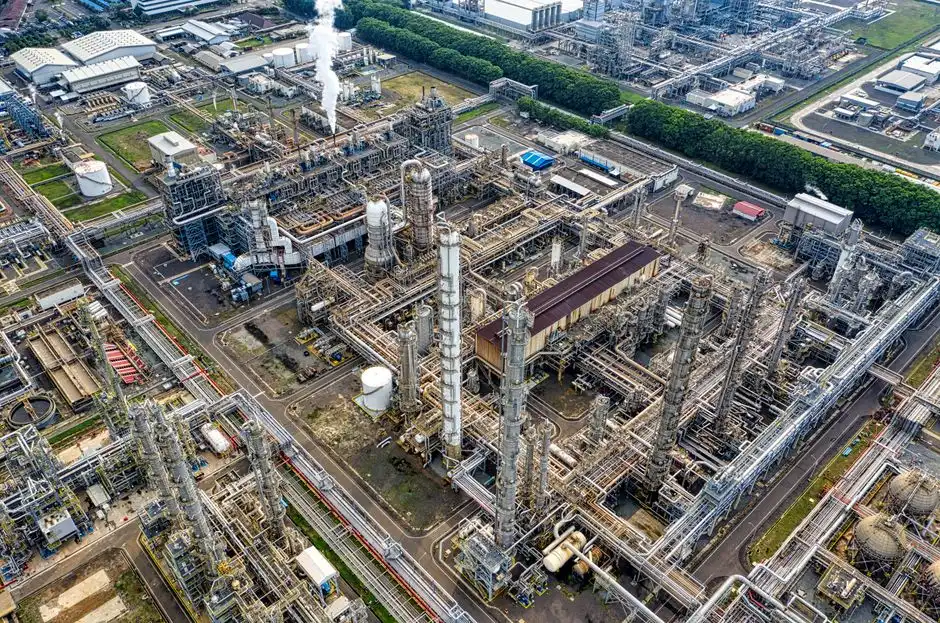
ZLD integrates membrane preconcentration (typically RO) and thermal or crystallization steps to recover nearly all blowdown water. In hyperscale data-center deployments in China, this approach cut energy demand by ~50% and OPEX by ~30% versus thermal-only trains (azuraconsultancy.com). The same paper notes that partial reuse of treated blowdown for non-critical on-site applications such as landscaping or toilet flushing can still yield meaningful water savings (azuraconsultancy.com).
For Kabul, ZLD is justified only when (a) the site has no viable discharge end-point, (b) makeup water scarcity is acute enough to dominate the operating cost, and (c) grid power or on-site solar can support the thermal load — otherwise the capital and energy penalty is hard to recover (genesiswatertech.com; azuraconsultancy.com). Partial reuse of treated blowdown for non-critical on-site uses — toilet flushing, landscape irrigation, dust suppression — is the most common Kabul-relevant compromise and yields meaningful water savings without a full ZLD commitment. Brine end-point design is the overlooked constraint: crystallization waste, solar evaporation pond area, or licensed haul-off must be confirmed before a ZLD train is locked in, and evaporation ponds may not be available given land constraints in many Kabul districts (azuraconsultancy.com).
A staged roadmap from day-one operation to optimal reuse
The roadmap that works in a water-rich, sewer-tap market does not transfer to Kabul. Operators should plan to improve the train over time rather than overbuild on day one, because the actual blowdown stream routinely runs 15–30% above theoretical due to unmeasured losses and emergency dumps (genesiswatertech.com).
- Stage 1 — measurement and baseline. Install metering on makeup, blowdown, evaporation, conductivity, pH, and TSS; many sites discover actual blowdown runs 15–30% above theoretical due to unmeasured losses and emergency dumps (genesiswatertech.com).
- Stage 2 — optimize existing systems. Repair leaks, eliminate once-through cooling, retune control sequences, and add self-cleaning filtration to reduce suspended-solids-driven blowdown (genesiswatertech.com).
- Stage 3 — upgrade chemical treatment. Shift to non-oxidizing microbiological control that does not accumulate persistent organics or heavy metals, enabling higher sustainable CoC with cleaner blowdown, using a PLC-controlled chemical dosing skid to keep the program consistent (genesiswatertech.com).
- Stage 4 — implement blowdown treatment and reuse. Deploy a modular two-stage train (physical separation followed by targeted polishing, with a multi-media filter as the polishing step) sized to facility scale, recovering 15–25% of makeup demand (genesiswatertech.com).
- Stage 5 — advanced integration. At sufficient scale and operational maturity, add blowdown-to-makeup reuse, with only evaporative losses requiring fresh makeup; combined with rainwater capture, this is the endpoint of the sustainability roadmap (genesiswatertech.com).
Permitting, monitoring, and compliance posture in Afghanistan
Discharge permitting is governed by local and national authorities — the National Environmental Protection Agency (NEPA) and the Afghanistan National Disaster Management Authority (ANDMA), together with the Kabul municipality — and the project team must confirm applicable standards with the agencies that hold review authority over the specific site, because the framework is not a copy of US NPDES (rspengineers.com). Industrial discharge permits require ongoing sampling, certified-laboratory analysis, and submission of results; many permits also require continuous pH and flow monitoring, so sampling ports and analyzers must be designed in from day one (rspengineers.com).
Discharging process wastewater to a stormwater system is prohibited under most jurisdictions because stormwater systems typically drain untreated; in Kabul this means tanker haul-off or controlled on-site disposal must be part of the plan, not an afterthought (rspengineers.com). A complete blowdown chemical-package review is a prerequisite for any permit application, because it sets the pretreatment targets and reuse limits that the engineering design must hit (rspengineers.com). Unlike the data center blowdown treatment regime under a mature industrial pretreatment program familiar to US engineers, the Kabul path is permit-by-negotiation and demands more thorough baseline sampling on the front end.
Frequently Asked Questions
What capex should a Kabul project engineer budget for a modular blowdown treatment train?
Capex depends on flow rate and the level of treatment needed, and the research does not publish a Kabul-specific price. A simple pH neutralization system may require a few hundred square feet, while a more complex system with filtration and chemical precipitation could require several thousand square feet for equipment, tanks, and chemical storage (rspengineers.com). The supplier should be asked for a sized proposal at the project's actual CoC and blowdown flow rather than a generic per-gallon number.
How does a Kabul project team select a treatment skid supplier with credible local delivery?
Ask the supplier for documented experience with high-TDS source water, with blowdown rather than sanitary wastewater, and with grid-tolerant modular skids. Confirm that the proposal includes commissioning support, a spare-parts path, and remote diagnostics compatible with intermittent connectivity. For projects in colder-climate, sewer-tap markets such as Moscow, a different reference set applies, as described in the guide to data center blowdown treatment in cold-climate, sewer-tap markets.
How should blowdown sizing and lead time be planned around Kabul's water and grid interruptions?
Size the equalization tank to ride out realistic makeup interruptions, not just nominal diurnal swings, because storage ahead of the treatment train is part of the design envelope, not an option (genesiswatertech.com). Confirm the supplier's lead time for the largest long-lead items — typically the chemical dosing skid, multi-media filter, and any RO unit — and require written delivery dates with penalty clauses before signing.
What compliance risks are specific to a Kabul data center blowdown discharge?
The principal risk is end-point ambiguity: with no NPDES-equivalent industrial pretreatment program, the project must confirm in writing with NEPA, ANDMA, and the Kabul municipality what end-point — sewer, tanker haul-off, or on-site percolation — is acceptable, and under what limits (rspengineers.com). Discharging to a stormwater system is not a legal fallback, and unpermitted discharge can trigger enforcement regardless of treatment quality. For broader context on plant-wide efficiency measures that pair with discharge compliance, the guide to broader industrial water-use efficiency tactics covers the optimization steps that reduce blowdown volume in the first place.