Why Manufacturing Water Reduction Is a 2026 Engineering Priority
Manufacturing currently draws about 22% of global freshwater withdrawal and, in most developed economies, already exceeds agricultural consumption (Sustainability, doi:10.3390/su8121222, 2016). Global manufacturing water consumption is projected to grow from 245 billion m³ in 2000 to 1,552 billion m³ by 2050—a factor of more than five—while demand for freshwater by 2030 is estimated to sit 40% above current supplies. "Finding more water" is not a substitute for using less: the energy cost of distilling saline source water alone runs 2–4 kWh per cubic meter, which sets a hard floor on the cost of alternative supplies.
For a 2026 plant engineer, this translates into rising intake prices, tighter discharge consents, and shareholder pressure to report a credible water-reduction plan. Treating water as a metered input—not a free utility—is the only defensible starting point. The engineering roadmap for that shift is laid out in the phases of building a water treatment plant in 2026.
A 5-Step Engineering Method to Cut Manufacturing Water Use
A repeatable method provides a defensible water budget by ensuring each step produces the data required for the next.
- Audit and meter. Install sub-meters on every process line, cooling loop, and rinse station, then build a water-balance diagram (inputs vs. outputs) for each unit operation. The Water Consumption Monitoring Tool described in the Sustainability study (S4) uses this approach with up to five meters and a water-balance diagram to visualize usage patterns and detect leaks.
- Set a metric. Adopt a Water Efficiency Ratio (WER) framework—Process Water / Service Water / Wastewater per unit of product (S4)—so hotspots can be ranked the way energy intensity is ranked, and capital can be defended with data.
- Reduce at the process level. Dry-clean where feasible, install nozzle controls on rinse lines, and operate only at full load. The highest-ROI changes are usually operational rather than capital-intensive; operating rinse or washing systems at full capacity while collecting cooling or rinse water for reuse is a low-cost win (prochemwater.com).
- Reuse and close the loop. Treat and recycle process water for cooling, cleaning, irrigation, or aquifer recharge (watearth.com). Choose the reuse target first, then size the treatment train to match the water quality the target requires.
- Verify and sustain. Pair meters with PLC control so flow and timing adjust to demand, then feed the data back into the WER (S4; prochemwater.com). Without this loop, the metric remains an estimate.
For the chemistry side of step 4, an auto-dosing engineering guide covers the reagent-control layer that keeps reuse trains stable.
Matching Reuse and Recycling Technologies to Your Wastewater
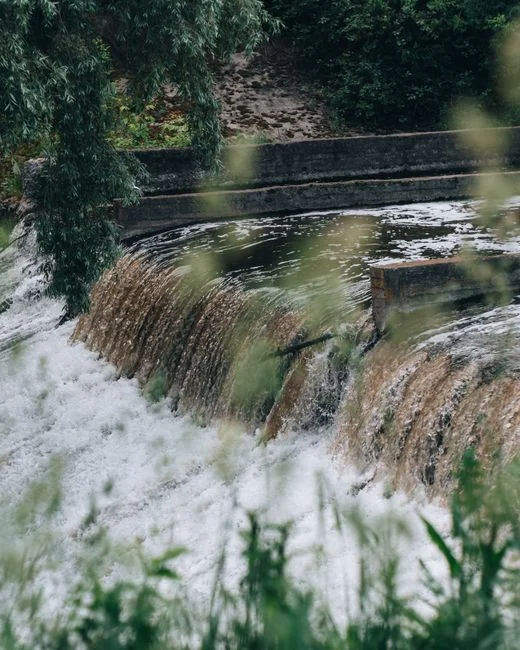
Selecting the correct reuse technology depends on matching the influent quality to the specific reuse requirements of your facility.
| Technology | Typical influent | Key spec / role | Best-fit reuse target |
|---|---|---|---|
| Dissolved Air Flotation (DAF) | High suspended solids, FOG, colloids (food, paper, textile, metalworking) | Removes floatables and unsettleable solids before any downstream reuse system (HydropureWater DAF; watearth.com) | Pre-treatment for cooling make-up or rinse reuse |
| Multi-media filtration | Low-to-moderate TSS, polishing of clarifier/DAF effluent | Lowers SDI to protect downstream RO membranes; standard first polishing step in closed loops (HydropureWater multi-media filter spec) | RO feed for boiler or process loops |
| Ultrafiltration (UF), 0.03 μm PVDF | Up to 300 ppm turbidity, no chemical coagulant needed | Stand-alone reuse for rinse water, or RO pretreatment (HydropureWater UF spec) | Rinse-water reuse, RO pretreatment |
| Membrane Bioreactor (MBR) | Biodegradable BOD/COD from process streams | Near-reuse-quality effluent at <1 μm filtration with roughly 60% smaller footprint than conventional activated sludge (HydropureWater MBR spec) | Direct non-potable reuse (cooling make-up, cleaning) |
| Industrial Reverse Osmosis (RO) | UF/MBR permeate, low SDI | Recovery rates up to 95%; the closing step for high-purity loops (HydropureWater RO spec) | Boiler feed, high-purity process water |
Watearth.com ranks the highest-value reuse targets in priority order as cooling-system make-up, cleaning/rinsing, irrigation, and groundwater recharge through percolation ponds or injection wells. Match the train to the lowest-quality target you can accept to avoid over-engineering the plant. A worked example of an MBR-led reuse train is in the MBR membrane bioreactor for pharmaceutical wastewater guide. The product options referenced above are the HydropureWater MBR membrane bioreactor, the industrial RO system with up to 95% recovery, the HydropureWater DAF system, and the HydropureWater ultrafiltration system.
Closing the Loop: Designing a Water-Reuse System That Actually Pays Back
The financial case for reuse is built on avoided cost, not just saved volume. An industrial RO system with up to 95% recovery reduces both intake and discharge, impacting both the water bill and the consent bill. Energy efficiency is also critical; distillation-grade alternatives run 2–4 kWh/m³ (S4), so a UF + RO reuse train typically outperforms thermal reuse for most factory loads. Plan the reuse target first, then the treatment train—cooling-tower make-up tolerates higher TDS than boiler feed, allowing for right-sized rather than over-engineered systems. Prochemwater.com notes that treated wastewater can be reused for cooling, cleaning, irrigation, and toilet flushing, each with a different quality requirement; matching that requirement protects the project's payback. The construction sequencing that holds this together is covered in the phases of building a water treatment plant in 2026.
Monitoring, Smart Controls, and the 2026 Compliance Layer
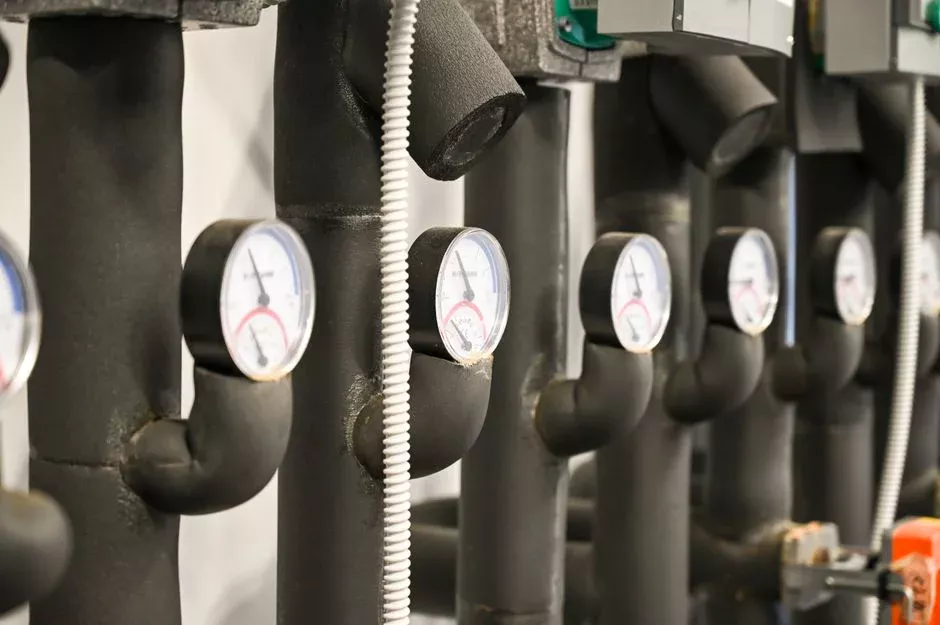
Accurate metering is required to effectively manage water usage and prove compliance. Smart meters and PLC-controlled valves turn data into action—flow can be throttled by demand, leaks detected against a baseline, and reports generated automatically (S4; prochemwater.com). Sub-metering by unit operation is necessary to make the Water Efficiency Ratio actionable. In a 2026 plant, that data layer feeds automated compliance reporting for wastewater, which turns a water-reduction program into auditable evidence for discharge consents. Continuous monitoring also serves as an early-warning system for membrane fouling, biological upset, and chemical overuse, all of which inflate water and energy consumption.
Frequently Asked Questions
What is a realistic budget range for a manufacturing water-reuse project in 2026?
Budgeting requires a site-specific feed analysis rather than a standardized industry price. Request a line-item quote that breaks out the unit (DAF, MBR, UF, RO), the design recovery rate, the effluent quality guarantee, and the energy figure in kWh/m³—the 2–4 kWh/m³ distillation benchmark (S4) provides a comparison point to judge whether the proposed train is cost-effective.
How do I choose between an MBR, UF, and RO system for my facility?
Choose the technology based on the influent and the intended reuse target. Select DAF or MBR if the load is biological or high in suspended solids and FOG (HydropureWater DAF and MBR specs; watearth.com), UF to reduce turbidity below 300 ppm without chemicals, and RO only after SDI-lowering pretreatment if the target is boiler feed or high-purity process water (HydropureWater UF and RO specs). Require suppliers to specify influent limits, recovery rates, and target water quality in a single document for an accurate comparison.
Which reuse target gives the fastest payback in most plants?
Cooling-tower make-up is a high-value reuse target because it accepts higher TDS than boiler feed and is already integrated into existing plant infrastructure (watearth.com). This lower quality requirement allows for a smaller, lower-energy train—typically UF or MBR permeate rather than full RO—where the capital-to-savings ratio is most favorable.
How long does it take to retrofit a reuse system into an operating plant?
Project timelines vary by facility, requiring a detailed evaluation of each bidder’s proposal. Request an engineering schedule that includes the water audit, pilot trial duration, equipment delivery window, installation tie-in plan, and commissioning milestones to compare lead times accurately.