Why Tabriz Data Centers Cannot Afford to Waste Blowdown
Northwest Iran's hydrology is unforgiving. A 100 MW data center can use up to 2 million liters of water per day, per IDE Technology (ide-tech.com, 2026), and many of the regions attracting hyperscale development are already under water stress. The question for a Tabriz facility is not whether to reuse cooling-tower blowdown, but how to reuse it before discharge rules or freshwater cost force the issue.
At 4 cycles of concentration a typical cooling tower loses 25–30% of makeup water to blowdown, and a facility on 10 MGD of makeup therefore discharges 2.5–3 MGD to drain (genesiswatertech.com, 2026). Municipalities in water-stressed regions increasingly cap industrial discharge TDS below 1,500 mg/L and charge US$5–15 per 1,000 gallons for disposal (genesiswatertech.com, 2026), turning blowdown from a free waste stream into a recurring line item. Because blowdown in Tabriz will be drawn from treated municipal or well water, the Lake Urmia basin context must be confirmed with the operator's own water-balance study before final design — the generic envelope below is not a substitute for measured site data.
Cooling-tower blowdown is also the largest, most continuous recoverable stream on site. Every other non-potable source (RO reject, humidification condensate, fire-system test water) is episodic or smaller, so a Tabriz engineer who gets the blowdown train right resolves the majority of the facility's water footprint in a single project.
Blowdown Chemistry a Tabriz Plant Must Design Around
The first design step is to pin down the contaminant envelope. Without that, the membrane selection, the antiscalant program, and the discharge-permit argument all collapse. Blowdown from an evaporative cooling loop is a brackish stream with three overlapping problems: high total dissolved solids, scaling species, and accumulated treatment chemistry.
Total dissolved solids in blowdown run 1,200–6,000 mg/L, roughly 4–8× the makeup water (genesiswatertech.com, 2026). Tabriz municipal and groundwater TDS should be measured during the site survey and multiplied by the design cycles of concentration to project steady-state blowdown TDS — the generic range only brackets the answer. Scaling species — calcium, magnesium, silica, and alkalinity — concentrate alongside TDS and drive downstream scaling risk; for any silica- or sulfate-limited site the BWRO recovery ceiling drops quickly. Treatment chemicals (biocides, corrosion and scale inhibitors, dispersants) accumulate in the blowdown, and legacy chromate or high-phosphate chemistry is a red flag for any reuse train (genesiswatertech.com, 2026) — request the site's chemical register during design. Suspended solids sit at 10–50 mg/L from corrosion products, biofilm fragments, and airborne dust, and biological content (planktonic bacteria, biofilm) must be neutralized before any membrane step (genesiswatertech.com, 2026).
| Parameter | Typical blowdown range (S1, 2026) | Design implication for Tabriz |
|---|---|---|
| TDS | 1,200–6,000 mg/L (4–8× makeup) | Multiply measured Tabriz makeup TDS by COC; sets BWRO feed osmotic load |
| Hardness / scaling ions | Ca, Mg, silica, alkalinity concentrated proportionally | Drives antiscalant selection and recovery ceiling |
| Suspended solids | 10–50 mg/L | Side-stream filtration to 10–25 μm required before UF |
| Treatment chemistry | Biocides, scale/corrosion inhibitors, dispersants; legacy chromates/phosphates flag | Request site chemical register; switch to membrane-compatible tablet program |
| Biological content | Planktonic bacteria, algae, biofilm | Oxidation or biocide neutralization before UF/RO |
Pretreatment: Side-Stream Filtration and UF
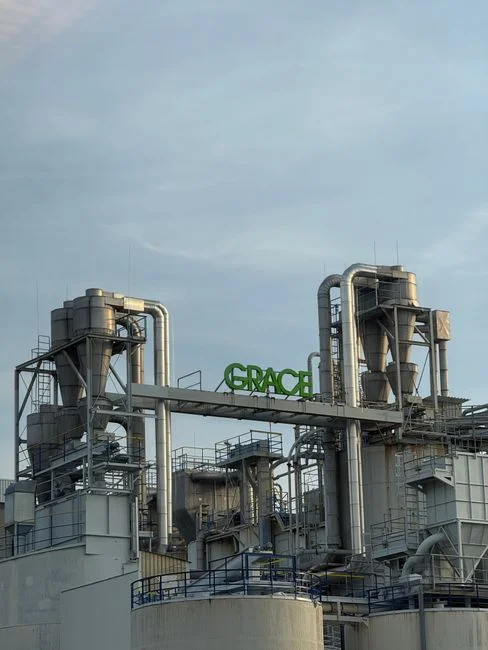
Skipping pretreatment is the single fastest way to destroy an RO membrane in blowdown service. The job of the front end is to drop suspended solids and colloids to a level the membranes can tolerate, condition pH, and inject antiscalant to keep silica and calcium sulfate in solution. Done correctly, pretreatment sets the recovery ceiling the rest of the train can hit.
Self-cleaning spiral side-stream filters at 1–5% of circulation flow achieve a 10–25 μm cut and drop blowdown suspended solids to membrane-friendly levels (genesiswatertech.com, 2026). A multi-media filter for SDI reduction can be added in parallel for sites with high colloidal loading or variable makeup. Ultrafiltration at 0.01–0.1 μm pore size then removes remaining colloids, bacteria, and high-MW organics; UF runs at 10–30 psi with 90–95% recovery and is the standard RO guard (genesiswatertech.com, 2026). For Tabriz projects where blowdown carries oil or grease from adjacent equipment rooms, a dissolved-air flotation unit ahead of UF prevents irreversible membrane fouling that no amount of chemical cleaning will fix.
Feed to RO/NF should be filtered below 10–15 μm, pH-adjusted, and dosed with antiscalant (genesiswatertech.com, 2026). This is the single biggest determinant of membrane life in blowdown service. The UF pretreatment ahead of RO must be specified for the actual blowdown SDI, not the cleanest design case — assume the worst feed and oversize the backwash cycle.
Membrane Selection: NF vs BWRO for Blowdown Reuse
Membrane choice follows from the reuse target and the feed envelope, not from a generic default. The two real options for a Tabriz data center are nanofiltration (partial softening) and brackish-water reverse osmosis (high-purity makeup). UF alone is only valid when blowdown TDS is low and the problem is biological or particulate.
Nanofiltration operates at 75–150 psi, achieves 70–85% recovery, and yields permeate at ~30–50% of feed TDS (genesiswatertech.com, 2026); it is the right pick when hardness — not total TDS — is the reuse bottleneck. Brackish-water reverse osmosis at 150–400 psi removes 95–99% of dissolved solids, producing permeate at 10–50 mg/L TDS (genesiswatertech.com, 2026); this is the standard target for closed-loop cooling-tower makeup reuse. Conventional BWRO is hard-capped at ~75–80% recovery on cooling-tower blowdown because silica, calcium carbonate, and calcium sulfate reach scaling thresholds (ide-tech.com, 2026); pushing past 80% requires staged designs, booster pumps, or chemistry management (ide-tech.com, 2026). The decision rule of thumb (genesiswatertech.com, 2026): high-silica or variable feed → RO; calcium/magnesium-limited with no silica issue → NF; very low-TDS blowdown with biological or particulate issues only → UF alone.
| Technology | Operating pressure | Recovery on blowdown | Permeate TDS | Best-fit Tabriz case |
|---|---|---|---|---|
| UF alone | 10–30 psi | 90–95% | Same as feed (no salt removal) | Low-TDS blowdown, biology/particulates only |
| NF | 75–150 psi | 70–85% | 30–50% of feed | Hardness-limited site, no silica issue |
| BWRO | 150–400 psi | 50–80% (75–80% practical ceiling, S2) | 10–50 mg/L | High-silica or variable feed; closed-loop makeup |
For a Tabriz plant, the typical fit is BWRO because municipal and groundwater in the region carry moderate-to-high mineral content and silica is rarely negligible. An industrial RO system for blowdown reuse sized for 50–75% overall recovery, fed by UF and protected by spare RO and UF membrane elements held on site, is the defensible baseline. Valves, instruments, and media should be specified to the same duty cycle so a single failure does not collapse the train.
Pushing Past BWRO Limits: Evaporation, MVC, and ZLD
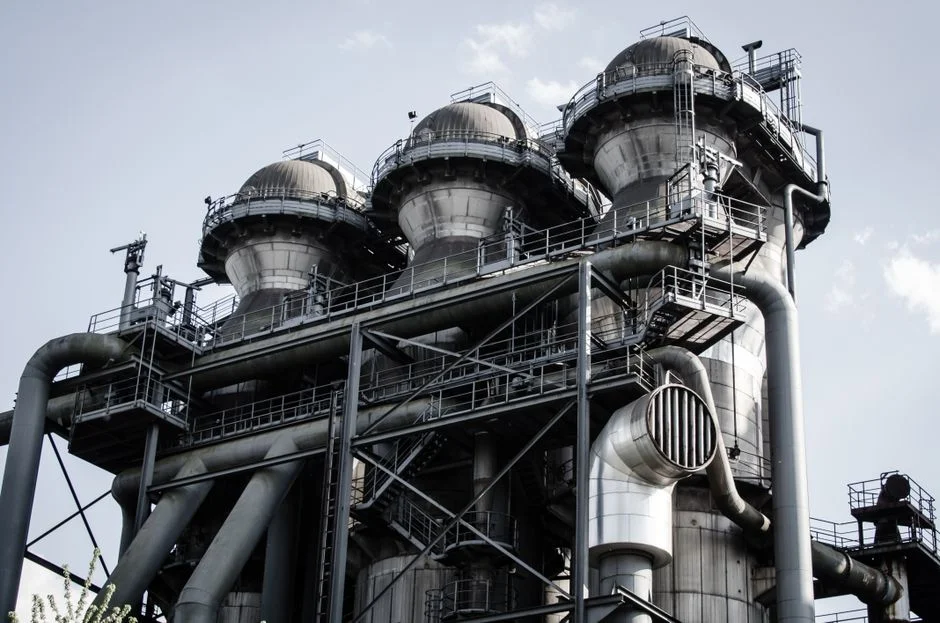
When the BWRO ceiling at 75–80% recovery is not enough — because discharge is restricted, freshwater cost is high, or the operator has a water-positive mandate — the next escalation is thermal concentration. This is where CAPEX jumps an order of magnitude and the procurement conversation shifts from "membrane area" to "energy and brine disposal".
Mechanical vapor compression recovers 95–98% of water from RO concentrate, producing distillate below 10 mg/L TDS at 15–25 kWh per 1,000 US gallons (genesiswatertech.com, 2026). A combined RO (50–75% recovery) plus MVC (95% recovery of the RO concentrate) train reaches 85–95% overall recovery with only a small brine bleed (genesiswatertech.com, 2026). Full zero-liquid discharge adds a crystallizer that converts the final 20–30% brine to solid salt cake; overall water recovery reaches 95–99% and liquid waste falls below 1% of original blowdown (genesiswatertech.com, 2026). Full ZLD CAPEX for a data-center-class system is US$3–8M with OPEX US$5–15 per 1,000 gallons (genesiswatertech.com, 2026); partial ZLD (80–90% volume reduction) is the realistic compromise when economics are tight. Note that alternative high-recovery architectures exist — IDE's MAXH₂O design (ide-tech.com, 2026) uses a fluidized-bed salt precipitation step plus dynamic RO operation to push recovery well beyond the 75–80% BWRO ceiling without a full thermal ZLD train.
The decision to escalate to MVC or ZLD is driven by three numbers: the local discharge TDS limit, the unit cost of freshwater, and the operator's water-stewardship mandate. If any one of these is binding, the economics of thermal concentration start to close.
Tabriz-Specific Configuration and Cost Envelope
The recommended 2026 baseline for a Tabriz data center is a side-stream filter → UF → BWRO train with antiscalant and biocide dosing, permeate blended back as cooling-tower makeup at 50–75% overall recovery (genesiswatertech.com, 2026). A 50,000 GPD blowdown RO skid installs for US$250,000–500,000 and runs at US$1.50–3.00 per 1,000 gallons treated (genesiswatertech.com, 2026) — request a site-specific quote because Tabriz power tariffs, chemical logistics, and discharge fees shift OPEX materially.
Escalate to RO + MVC only if Tabriz municipal discharge TDS limits fall below 1,500 mg/L for this site class, freshwater cost exceeds roughly US$3–5/kgal equivalent, or the operator has a corporate water-positive mandate (genesiswatertech.com, 2026; ide-tech.com, 2026). Integrate a PLC-controlled antiscalant and biocide dosing system so the recovered RO permeate is compatible with the cooling loop and discharge permit; pair this with an industrial water softener ahead of the cooling loop if the makeup water is hardness-limited. This combination avoids the legacy phosphate/chromate fouling trap that kills RO membranes within the first year of service.
| Configuration | Overall recovery | CAPEX range (S1, 2026) | OPEX range (S1, 2026) | Tabriz trigger |
|---|---|---|---|---|
| Side-stream + UF + BWRO (baseline) | 50–75% | US$250,000–500,000 (50,000 GPD skid) | US$1.50–3.00 / 1,000 gal | Default for new builds; permit allows blended discharge |
| RO + MVC (partial ZLD) | 85–95% | US$1–3M (MVC alone, 10,000–30,000 GPD) | Energy-driven; 15–25 kWh/1,000 gal distillate | Freshwater cost > US$3–5/kgal equivalent, or discharge TDS cap binding |
| Full ZLD (RO + MVC + crystallizer) | 95–99% | US$3–8M | US$5–15 / 1,000 gal | Discharge prohibited, water-positive mandate, or brine-hauling cost dominant |
For a Tabriz project, the practical recommendation is to bid the baseline BWRO train now, retain space and power for a future MVC skid, and re-evaluate against actual operating data after 12 months. That sequencing protects the CAPEX budget while leaving the higher-recovery path open if discharge rules tighten.
Frequently Asked Questions
What CAPEX should we budget for a 50,000 GPD blowdown RO system in Tabriz?
US$250,000–500,000 installed for a 50,000 GPD BWRO skid treating cooling-tower blowdown, per Genesis Water Tech (genesiswatertech.com, 2026). Request a site-specific quote that includes freight, duty, installation, and the antiscalant dosing skid, because landed cost in Iran typically runs above the published US range.
When does it make sense to escalate to full ZLD instead of BWRO?
Full ZLD is justified when local discharge TDS limits fall below 1,500 mg/L for this site class, freshwater cost exceeds roughly US$3–5 per 1,000 gallons, or the operator has a binding water-positive mandate (genesiswatertech.com, 2026; ide-tech.com, 2026). A CAPEX of US$3–8M and OPEX of US$5–15 per 1,000 gallons is the data-center envelope (genesiswatertech.com, 2026); otherwise, a baseline BWRO train at 50–75% recovery is the lower-risk default.
Why is conventional BWRO capped at 75–80% recovery on cooling-tower blowdown?
Silica, calcium carbonate, and calcium sulfate reach scaling thresholds in the concentrate above 75–80% recovery, after which chemical consumption, fouling rate, and operational instability climb sharply (ide-tech.com, 2026). Pushing past that ceiling with conventional designs requires staged RO, booster pumps, or chemistry management; alternative architectures use controlled salt precipitation plus dynamic RO operation to break through the same ceiling without a full thermal ZLD train (ide-tech.com, 2026).
How long does a Tabriz blowdown treatment project take to deliver and install?
Lead time is dominated by skid fabrication, membrane delivery, and site integration, not by technology choice. A standard 50,000 GPD BWRO skid with UF pretreatment typically requires 12–20 weeks from PO to factory acceptance test, plus 4–8 weeks for shipping, installation, and commissioning — but confirm the current delivery window with the selected supplier, because membrane and valve lead times in 2026 vary with global demand.