Who Actually Regulates a Semiconductor Fab's Sewer Discharge Near Nashua
The City of Nashua's wastewater treatment facility (WWTF) at Sawmill Road, Nashua, NH 03060 operates under EPA-issued NPDES Permit No. NH0100170, which authorizes discharge from Outfall 001 to the Merrimack River and from nine combined sewer overflow outfalls to the Merrimack and Nashua Rivers (EPA Draft Permit NH0100170, 2024). The permit contains three key provisions an environmental engineer must understand.
First, it grants the City delegated primary enforcement responsibility for industrial users under Section 307(b) and (c) of the Clean Water Act and 40 CFR 403.5. This means the POTW—not EPA Region 1 directly—issues violation notices, compliance schedules, and enforcement actions against semiconductor fabs discharging to the sewer. Second, it requires the City to maintain technically based local limits implementing the general and specific prohibitions in 40 CFR § 403.5(c)(1), which prohibit discharges that cause pass-through or interference at the WWTF. Third, it establishes a chain of oversight: EPA sets the federal framework, the POTW enforces it day-to-day, and NHDES provides state-level review through the permitting and antidegradation process.
The practical consequence for a fab is clear. If the plant violates a local limit for fluoride, copper, or total toxic organics, the City of Nashua WWTF will issue the compliance order. The engineer should build a relationship with the POTW's pretreatment coordinator, attend any Significant Industrial User (SIU) meetings, and treat the City's annual inspection as the primary audit event. The permit explicitly authorizes POTW representatives to enter any premises where a discharge source or treatment system is located, or where records required under 40 CFR § 403.12(o) are kept, to verify compliance with Pretreatment Standards (EPA Draft Permit NH0100170, 2024). A fab that designs for that inspection reality will pass it.
The 40 CFR Part 403 Rule Stack a Fab Must Navigate
Federal pretreatment authority comprises three layers that a semiconductor fab must satisfy. The top layer is 40 CFR Part 403, the General Pretreatment Regulations, which establish categorical standards, prohibitions, and reporting requirements. Categorical Pretreatment Standards are found in 40 CFR Parts 413 through 471; the semiconductor category references the Electronic and Other Electrical Equipment and Components, and Semiconductors category. These standards set numerical effluent limits for specific industrial subcategories. The middle layer consists of the general and specific prohibitions in 40 CFR § 403.5(c)(1), which block any pollutant introduction that causes pass-through or interference. The bottom layer is the POTW's own technically based local limits, which act as a backstop to protect the receiving WWTF and its NPDES-permitted discharge.
Permit NH0100170 makes this layering operational. The City must sample and inspect all significant industrial users at a frequency established in its approved Industrial Pretreatment Program, but no less than once per year (EPA Draft Permit NH0100170, 2024). The WWTF must also submit an annual pretreatment report to EPA in accordance with 40 CFR § 403.12(i). Critically, the permit requires the Permittee to prepare and submit a written technical evaluation to EPA within 90 days of the effective permit date, analyzing the need to revise local limits; if the evaluation reveals the need for revision, the Permittee must complete revisions within 120 days of notification by EPA (EPA Draft Permit NH0100170, 2024). A fab that locks in its design before that 90-day window risks designing to a local limit that shifts mid-cycle.
| Rule Layer | Reference | What It Controls |
|---|---|---|
| Categorical Pretreatment Standards | 40 CFR Parts 413–471 (semiconductor subcategory) | Numerical effluent limits for specific semiconductor process wastewaters |
| General and Specific Prohibitions | 40 CFR § 403.5(c)(1) | Pass-through, interference, fire/explosion, and corrosive gas prohibitions |
| Technically Based Local Limits | Permit NH0100170, Attachment C | Site-specific pollutant caps protecting the WWTF and Merrimack River discharge |
| Local Limits Reassessment Cycle | Permit NH0100170, Part I.C | 90-day evaluation; 120-day revision window after EPA notification |
| SIU Sampling and Inspection | 40 CFR § 403.12 | Minimum annual sampling, inspection, and recordkeeping by the POTW |
| Annual Pretreatment Report | 40 CFR § 403.12(i) | WWTF reports program activities to EPA annually |
What a 2026 Permit Cycle Adds: PFAS, Toxicity, and the Q3 Pollutant Scan
Conventional parameters like pH, total suspended solids, and copper are not the only compliance hooks in the current cycle. Three permit conditions reach beyond legacy monitoring and into areas that directly affect semiconductor pretreatment design. First, Attachment E (PFAS Analyte List) embeds a PFAS monitoring scope into the active permit package, even though EPA has not yet promulgated categorical PFAS standards for the semiconductor category (EPA Draft Permit NH0100170, 2024). Second, Attachment B establishes the Freshwater Acute Toxicity Test Procedure and Protocol (February 2011), making Whole Effluent Toxicity (WET) testing a permit condition. Third, Attachment F lists the pollutants for a Q3 (July through September) concurrent upstream receiving-water and effluent pollutant scan; if results indicate a violation of any toxicity limit, the Permittee must follow the procedures in Part I.G.4 (EPA Draft Permit NH0100170, 2024). The benthic survey requirement, conducted once per permit term, is a long-tail risk a fab's design must not aggravate.
These requirements connect directly to the fab. PFAS in fab wastewater typically originates from photoresist formulations, etch chemistries, and legacy aqueous film-forming foam (AFFF) sources on-site; a pretreatment design that ignores the Attachment E analyte list will not support a defensible PFAS monitoring program. WET testing means a combined sewer discharge that passes individual parameter limits can still fail the permit if the mixture is toxic to test organisms—pushing the design toward source segregation rather than reliance on a single end-of-pipe treatment. Engineers should treat these three hooks as load-bearing elements of the 2026 compliance case.
Mapping a Fab's Wastewater to the Nashua Rule Set
A semiconductor fab generates a portfolio of waste streams, each with its own regulatory exposure. The dominant streams include process cooling water blowdown; chemical-mechanical planarization (CMP) slurry waste; acid and alkaline rinse waters; fluoride-bearing etchants such as buffered oxide etch (BOE) and hydrofluoric acid (HF); solvent-bearing photoresist developer waste; and tool scrubber exhaust condensate.
Each stream maps to a different rule. Fluoride and pH extremes are typically caught by local limits and the pass-through and interference prohibitions in 40 CFR § 403.5(c)(1). Metals—copper from CMP, tungsten and cobalt from interconnect, aluminum from etch—are governed by both categorical standards and local limits, with copper frequently the binding constraint. Solvents and high organic loads trigger pass-through, fire/explosion, and interference rules even where no federal numerical limit applies. PFAS compounds are caught by Attachment E's analyte list, requiring monitoring capacity even if no effluent limit is yet numerical. A fab must deploy a treatment train targeting each stream family before combined sewer discharge, with monitoring instrumentation on each branch.
| Fab Waste Stream | Key Pollutants | Governing Rule | Design Implication |
|---|---|---|---|
| Process cooling water blowdown | Heat, low-level metals | Local limits; 40 CFR § 403.5(c)(1) | Cooling tower blowdown treatment; flow metering |
| CMP slurry waste | Suspended solids, silica/ceria, trace metals | Categorical standards; local limits for metals | Solids separation; metals precipitation |
| Acid/alkaline rinse | pH extremes, fluoride | Local limits; pass-through/interference prohibitions | Neutralization; fluoride precipitation |
| Fluoride etchants (BOE, HF) | High fluoride, low pH | Local limits; categorical fluoride limits where applicable | Calcium-based precipitation; pH adjustment |
| Photoresist developer waste | Organic solvents (e.g., NMP) | Pass-through, fire/explosion, interference rules | Source segregation; oil/water separation; carbon adsorption |
| Tool scrubber exhaust condensate | Mixed acids, particles, possible PFAS | Attachment E PFAS list; local limits | Condensate treatment; PFAS monitoring capacity |
The On-Site Treatment Train Fabs Actually Use to Clear Pretreatment
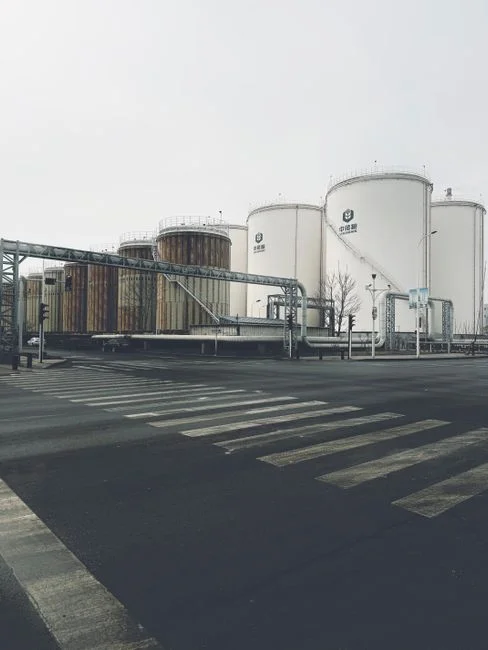
The standard industry approach is a segregated treatment train rather than a single end-of-pipe unit. Source segregation comes first: keep fluoride streams, solvent streams, and CMP slurries separate so each is treated by a unit optimized for its pollutant family. For fluoride and pH extremes, the foundational step is chemical neutralization using lime or caustic plus acid for pH control, followed by precipitation of fluoride-bearing solids with calcium salts; an automatic chemical dosing system is the standard hardware for this duty, as consistent stoichiometry is required to maintain compliance with local limits. For suspended solids and CMP fines, a dissolved air flotation (DAF) system or sedimentation clarifier performs bulk removal; downstream, a plate and frame filter press handles the sludge.
For colloidal and trace metals, a multi-media filtration step followed by ion exchange or membrane polishing is typical. For solvent-bearing waste, oil/water separation and carbon adsorption protect the biological treatment at the WWTF from organic shocks. For monitoring, instrumentation on each stream—flow, pH, conductivity, and fluoride—provides the data backbone required for the POTW's annual Significant Industrial User inspection under 40 CFR § 403.12 and for the 40 CFR § 403.12(i) annual report. Engineers designing a new fab near Nashua should request the latest Attachment C local limits from the POTW before sizing any unit operations, since the 90-day evaluation and 120-day revision windows can shift target concentrations mid-design. For a deeper look at the water-quality side of fab design, our ultrapure water production engineering guide covers the upstream process, and the fabricated metals pretreatment compliance guide and chemicals plant pretreatment compliance guide provide parallel translations for other industrial categories.
A 2026 Compliance Checklist Before You Sign a Design Contract
Before committing to a capital design, engineers should confirm the currency of key documents from the City of Nashua WWTF. First, request the latest local limits and the date of the most recent Reassessment of Technically Based Industrial Discharge Limits (Attachment C of Permit NH0100170). Second, ask the POTW for its current Significant Industrial User definition, sampling and inspection frequency, and any IU-specific discharge permit. Third, request the current Attachment E PFAS Analyte List and the Attachment F Pollutant Scan list, plus a copy of the most recent 40 CFR § 403.12(i) annual pretreatment report, to determine the WWTF's current enforcement focus. Fourth, plan for a Q3 (July–September) WET test and pollutant scan window, ensuring sufficient sampling access on the combined discharge line. Fifth, build the on-site train with monitoring instrumentation that satisfies 40 CFR § 403.12(o) recordkeeping; as the permit authorizes POTW representatives to enter the premises to verify compliance, all data must be archived in a defensible form.
Frequently Asked Questions
What drives pretreatment capital cost for a semiconductor fab discharging to the Nashua sewer?
The largest cost drivers are source-segregation piping, chemical dosing systems sized for peak fluoride loading, and solids-handling capacity, including a
Frequently Asked Questions
Who regulates industrial wastewater discharge to the sewer in Nashua, NH?
Industrial wastewater discharge in Nashua is regulated by the City of Nashua Division of Public Works, specifically the Wastewater Treatment Facility (WWTF) management. The city operates under the authority of its Sewer Use Ordinance and the National Pollutant Discharge Elimination System (NPDES) permit issued by the EPA and the New Hampshire Department of Environmental Services (NHDES).
What pollutants from a semiconductor fab are most likely to trigger a 40 CFR Part 403 violation?
Semiconductor facilities are most likely to trigger violations related to heavy metals, such as copper, nickel, and lead, as well as fluoride and pH excursions. Under 40 CFR Part 403, specifically the General Pretreatment Regulations, facilities must ensure these parameters remain below local limits to prevent interference with the WWTF’s biological treatment processes and to avoid pass-through of toxic pollutants into the Merrimack River.
How often does the City of Nashua WWTF inspect a Significant Industrial User?
As a Significant Industrial User (SIU), a semiconductor fab is subject to at least one comprehensive annual inspection by the Nashua WWTF. Additionally, the city requires the submission of periodic compliance reports, typically on a semi-annual basis, to document that discharge concentrations for regulated parameters remain within the established local limits.
What does a semiconductor pretreatment train cost in 2026, and what are the biggest cost drivers?
In 2026, a comprehensive pretreatment system for a semiconductor fab typically ranges from $1.5 million to $5 million, depending on flow volume and specific contamination profiles. The primary cost drivers include advanced ion exchange resins, membrane filtration modules for polishing, chemical dosing control systems for pH neutralization, and the ongoing expense of hazardous waste disposal for the sludge generated during the treatment process.
How do I pick a pretreatment equipment supplier for a fab in the Nashua service area, and what lead time should I plan for?
When selecting a supplier, prioritize firms with demonstrated experience in meeting NHDES-approved local limits and those offering integrated PLC-based monitoring for real-time compliance reporting. Given current supply chain constraints for specialized sensors and high-purity piping, you should plan for a lead time of 28 to 40 weeks from the finalization of engineering designs to equipment commissioning.