Why New Prague Fabricated Metals Plants Need a Pretreatment Program in 2026
Fabricated metals and metal-finishing operations in the United States that discharge process wastewater to a publicly owned treatment works (POTW) are covered by the federal categorical pretreatment standard at 40 CFR Part 433, which sets numerical concentration limits on regulated streams before they enter the sanitary sewer. In 2026, the binding framework for a fabricated metals plant near New Prague, Minnesota is the federal Metal Finishing categorical standard at 40 CFR Part 433, enforced locally through the receiving POTW's sewer use ordinance and any Minnesota Pollution Control Agency (MPCA) conditions that the POTW passes through to the discharger. State and POTW authorities may impose limits that are more stringent than the federal floor, so operators must verify the controlling limits before they specify equipment, not after.
Noncompliance exposure in 2026 is concrete. A control authority can issue a notice of violation, an administrative order requiring corrective action with a compliance schedule, civil penalties assessed per violation per day, and ultimately suspension or revocation of discharge authorization — an outcome that halts any process line that cannot legally send water to the sewer. The Sharm et al. 2025 review notes that the U.S. iron and steel sector — the upstream neighbor of every fabricated metals plant — has large water withdrawals of 17.4–28.6 m³ per tonne of steel and a 40% share of primary-metals sales, with the U.S. producing 80.7 million tonnes of crude steel in 2023, so any interruption at the discharge point ripples quickly across the operation.
The categorical standard is the floor that local sewer-use ordinances build on, which means the New Prague POTW and MPCA can layer mass-based limits, site-specific sampling points, and additional conventional pollutants on top of 40 CFR Part 433. The practical first move for any 2026 capex decision is to confirm the Significant Industrial User (SIU) status the POTW assigns, then reconcile the categorical numbers with the local permit conditions before any tankage is sized.
What 40 CFR Part 433 Actually Limits on Your Discharge
40 CFR Part 433 regulates daily maximum and monthly average concentrations for total metals (cadmium, total chromium, copper, lead, nickel, and zinc), total cyanide, and oil and grease on regulated process wastewater streams, and it also covers pH and total suspended solids as conventional pollutants. The rule applies to discharges from any operation that fall under the Metal Finishing point source category, which captures most plating, anodizing, and surface-finishing lines found in fabricated metals plants. The categorical standard is enforced through the POTW's sewer use ordinance, which the operator must read alongside the federal text because local limits and monitoring frequency are written into the local permit.
Reporting is built around the Baseline Monitoring Report (BMR) filed when a new SIU is identified, and the periodic Self-Monitoring Reports (SMRs) submitted after a compliance date is set. Sampling frequency, sampling locations, and analytical methods are defined by the control authority's sewer use ordinance and any site-specific permit, and the SMR is the document the regulator uses to evaluate compliance on a monthly or quarterly basis. Facilities whose process mix crosses categories — for example a job shop that also runs a small plating line — must confirm which subcategory applies to each process line before the SMR is built, because 40 CFR Part 433 covers Metal Finishing while 40 CFR Part 435 covers Oil and Gas Extraction, and the two have very different parameter lists.
The table below maps the typical regulated parameters to the units and the kind of limit structure a New Prague operator will see in a local permit. Numeric values are not reproduced here; the operator should request the current limit sheet from the POTW because local mass-based limits can be tighter than the federal ceiling.
| Parameter | Typical units | Limit structure | Source / authority |
|---|---|---|---|
| Cadmium, total | mg/L | Daily maximum, monthly average | 40 CFR Part 433 (federal categorical) |
| Chromium, total | mg/L | Daily maximum, monthly average | 40 CFR Part 433 (federal categorical) |
| Copper, total | mg/L | Daily maximum, monthly average | 40 CFR Part 433 (federal categorical) |
| Lead, total | mg/L | Daily maximum, monthly average | 40 CFR Part 433 (federal categorical) |
| Nickel, total | mg/L | Daily maximum, monthly average | 40 CFR Part 433 (federal categorical) |
| Zinc, total | mg/L | Daily maximum, monthly average | 40 CFR Part 433 (federal categorical) |
| Cyanide, total | mg/L | Daily maximum, monthly average | 40 CFR Part 433 (federal categorical) |
| Oil and grease | mg/L | Daily maximum | 40 CFR Part 433 (federal categorical) |
| pH | standard units | Range | 40 CFR Part 433 / local ordinance |
| Total suspended solids | mg/L | Daily maximum, monthly average | 40 CFR Part 433 / local ordinance |
The cleanest way to read this table is as a checklist for the SMR: if a parameter is regulated, the operator must sample it, report it, and stay under the limit on both a daily-maximum and a monthly-average basis. Limits tighter than the federal floor are common at the local level, so the SMR should be built against the controlling local permit — not the federal ceiling.
Wastewater Profile by Fabricated Metals Process
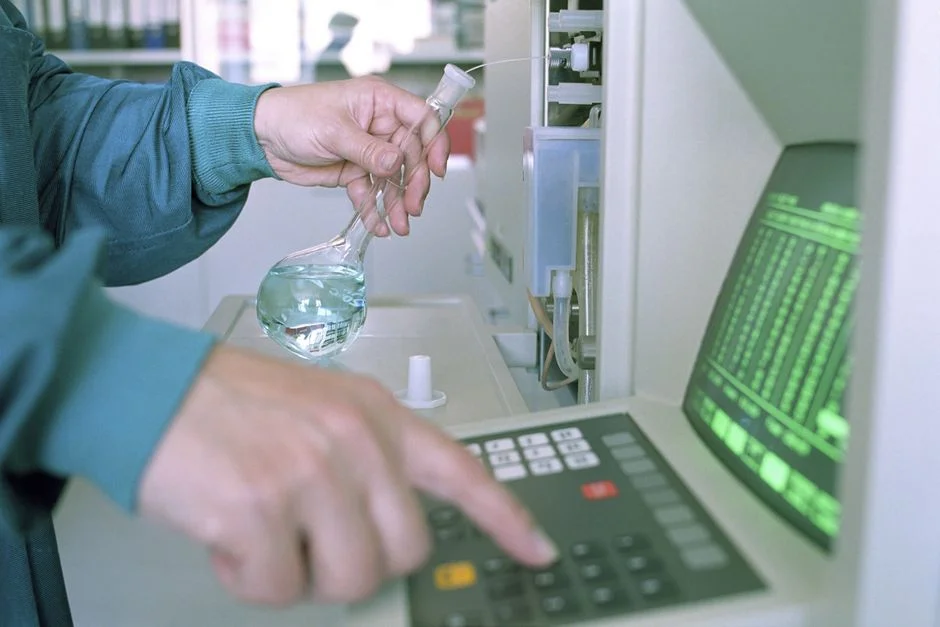
Forming, stamping, drawing, and machining operations typically produce wastewater contaminated with cutting fluids, lubricating oils, tramp oils, and metal-bearing fines. Cooling water from these operations is split between contact water (which has touched the product or tooling and must be treated) and non-contact water (which can often be discharged through a separate cooling-water path or recycled with minimal treatment). The Sharm et al. 2025 study notes that once-through cooling accounts for approximately 82% of total iron and steel plant water use (80% for BF-BOF and 93% for EAF), so the small share of contact water from these lines carries a disproportionate compliance load relative to its volume — the contact stream concentrates the oil, fines, and any dissolved metals that drive the treatment train.
Plating, anodizing, and other surface-finishing lines generate the streams most heavily regulated under 40 CFR Part 433. Concentrations of regulated metals are highest at these lines, and some rinsewaters carry cyanide that must be destroyed before the stream is combined with metal-bearing wastewater. Hexavalent chromium reduction is typically a separate unit operation upstream of metals precipitation, because mixing Cr(VI) with a reducing stream that has not yet been reduced will simply re-oxidize downstream and push the wrong species into the clarifier.
Cleaning, degreasing, and passivation steps contribute pH swings, oils and greases, and dissolved metals. These lines are often batch operations, so the influent to the treatment system is far from steady — equalization is what keeps the downstream chemistry inside its operating window. The table below maps each process area to the dominant wastewater characteristics the operator should expect to see on the SMR and in the daily logs.
| Process area | Dominant wastewater characteristics | Regulated parameters most affected |
|---|---|---|
| Forming / stamping / drawing | Lubricants, tramp oils, metal fines, suspended solids | Oil and grease, TSS, zinc, lead (from coatings) |
| Machining | Cutting fluids, emulsified oils, metal fines, high pH or low pH (depending on fluid) | Oil and grease, TSS, pH, copper, nickel |
| Plating / anodizing | High dissolved metals (Cr, Ni, Cu, Zn), possible cyanide, strong acids or bases | Total metals (all six), cyanide, pH |
| Cleaning / degreasing / passivation | pH swings, surfactants, dissolved metals, residual oils | pH, oil and grease, TSS, total metals |
| Non-contact cooling (separate path) | Heat only, low contamination; often segregated | Temperature, TSS if discharged to storm |
The process-to-stream map matters because the SMR is built from the regulated streams, not from the total plant water balance. Non-contact cooling can be segregated, but anything that touches the part or the tooling is in the categorical net.
Building a 2026-Compliant Treatment Train
Equalization is the first critical unit operation because flow, pH, and contaminant load from forming, plating, and cleaning steps vary during a shift. Without equalization the downstream chemistry is unstable and metals precipitation is incomplete, which is the single most common root cause of an SMR exceedance. Equalization also gives the operator a buffer to capture a slug spill before it reaches the clarifier, which is far cheaper than cleaning up after a slug has pushed metals through the system.
Oil and grease removal uses a DAF system for oil and grease removal ahead of metals precipitation, because free and emulsified oils foul clarifiers, blind membranes, and consume reagents. Removing the oil fraction first reduces chemical and sludge-handling cost in the downstream train, and it keeps the clarifier surface clean so the sludge blanket behaves predictably. A lamella clarifier for metals precipitation is well matched to the equalized, low-oil stream that comes off the DAF, and the high-efficiency plate pack reduces the clarifier footprint — a real constraint in many older New Prague-area plants where the existing building shell is fixed.
For plating-bearing lines, hexavalent chromium reduction and cyanide destruction are required before the stream is combined with other metal-bearing wastewater. Hexavalent chromium reduction is typically done with a reducing agent at controlled pH, and cyanide destruction is typically done by alkaline chlorination at controlled pH and ORP; both reactions need their own reaction tank and their own control loop. Once the stream is Cr(VI)-free and cyanide-free, metals are precipitated as hydroxides or sulfides, clarified, and the sludge is dewatered via a plate and frame filter press for sludge dewatering. PLC-controlled chemical dosing for pretreatment is the part of the train that holds the chemistry inside its operating window day after day — without it the operator is hand-tuning pH and ORP, which is exactly how SMR exceedances start. The table below ties each unit operation to the pollutant it controls and the design constraint that drives the choice.
| Unit operation | Pollutant controlled | Key design constraint |
|---|---|---|
| Flow equalization | Flow and load variability, pH swings | Residence time ≥ 8–24 h; mixed |
| Oil/water separation (DAF or coalescer) | Free and emulsified oil and grease | Ahead of clarifier; air-to-solids ratio |
| Hexavalent chromium reduction | Cr(VI) → Cr(III) | Low pH, reducing agent, separate reactor |
| Cyanide destruction (alkaline chlorination) | Total cyanide | pH ≥ 10, ORP control, separate reactor |
| Metals precipitation (hydroxide or sulfide) | Dissolved metals (Cd, Cr, Cu, Pb, Ni, Zn) | pH control, sludge settling, lamella clarifier for footprint |
| Sludge dewatering | Volume reduction, filter cake for disposal | Plate and frame filter press, cake handling |
Two related reading paths are useful at this point. Operators comparing the metals-removal step itself should look at the copper removal methods comparison for 2026, and engineers choosing between a DAF and a clarifier for a high-oil stream can work through the DAF vs clarifier decision guide to size the upstream separator correctly.
New Prague Permitting Path and Local Coordination
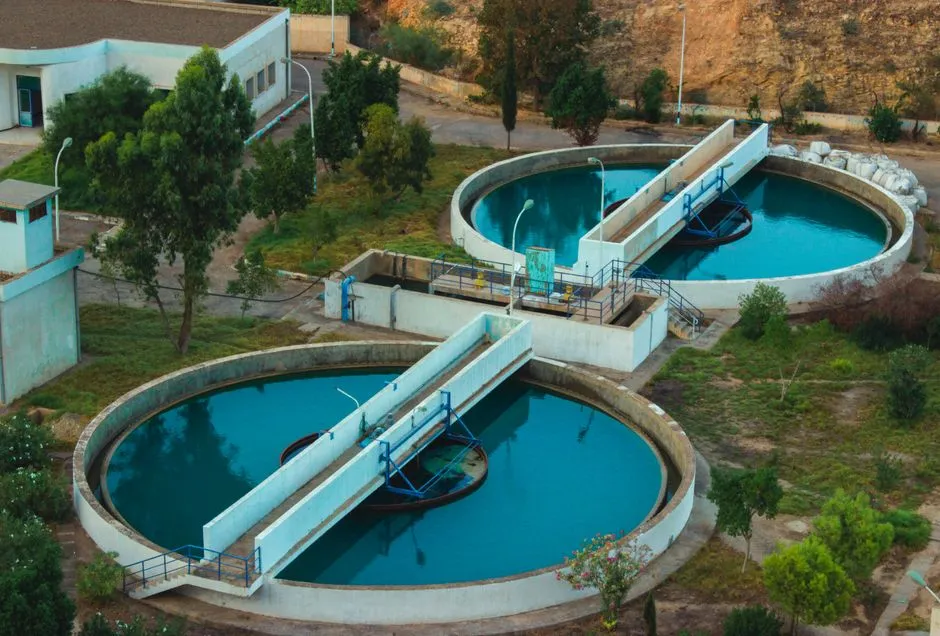
New Prague, Minnesota is served by a local POTW whose sewer use ordinance and pretreatment program implement 40 CFR Part 433. The first step is to confirm the plant's Significant Industrial User (SIU) status with the POTW and request the local limits that may be more stringent than the federal categorical limits, because the local permit is the controlling document for the SMR. Operators should also ask whether the POTW has categorical limits of its own (for example site-specific mass-based limits) and whether the discharge falls inside an industrial pretreatment program boundary that triggers an MPCA review.
Minnesota Pollution Control Agency (MPCA) requirements and any site-specific NPDES conditions imposed through the POTW must be reconciled with the categorical standard. The recommended sequence is a pre-permit meeting with the POTW and the control authority before equipment is sized, because the local control authority will specify the sampling access points, the flow measurement requirement, and the location of the control manhole on the discharge line. Those civil and instrumentation items affect the layout of the building and the electrical design, so they belong on the table before the tank drawings are released. Operators running adjacent sites — for example the fabricated metals pretreatment near Maple Grove — see the same MPCA pass-through structure, and the same logic applies to a chemicals plants near Covington pretreatment guide workflow for non-metals categorical categories.
The control authority may require a control manhole on the discharge line, automatic sampling, and a flow meter at a defined point, all of which become line items in the 2026 capex budget. Confirming these items in writing before the P&ID is frozen is the cheapest way to avoid rework.
Frequently Asked Questions
What should a fabricated metals plant near New Prague ask the POTW before specifying a treatment system in 2026?
Ask for the current local limits in writing, the SMR sampling frequency and the analytical methods the POTW expects, the location of the required control manhole, and whether any site-specific mass-based limits apply on top of 40 CFR Part 433. These answers drive tank sizing, civil layout, and instrument specifications, and they should be in hand before any equipment order is released.
How much does a 2026 metal finishing pretreatment system typically cost to install?
The supplied research does not provide an equipment cost, installation cost, or operating-cost figure for a fabricated-metals pretreatment train, so any specific dollar number would be invented. The right move is to request a budget-range quotation tied to your plant's regulated flow, the categorical parameter list, the local limits, and the sludge-handling assumption, and to compare at least two suppliers against that same scope.
Which supplier selection criteria matter most for a 2026 categorical compliance project?
Look for a system integrator with documented experience on 40 CFR Part 433 streams — specifically hexavalent chromium reduction, cyanide alkaline chlorination, and hydroxide or sulfide metals precipitation — and with a controls package that supports remote SMR-ready data logging. Ask for at least two reference sites of similar flow and parameter list, a written performance guarantee against the local limits, and confirmation of the lead time for the long-delivery items (clarifier internals, filter press, PLC panel).
What is the biggest compliance risk for a fabricated metals plant that treats only the visible process streams?
The biggest risk is an SMR exceedance on a stream the operator thought was non-contact cooling but which actually carries dissolved metals or oil during upset conditions. Segregating contact and non-contact water is only safe when the segregation is physical, monitored, and documented in the local permit; otherwise the categorical net includes the whole flow and an exceedance follows.