Why Chemical Plant Pretreatment Near Farmers Branch Is a 2026 Priority
For a chemical plant in the Farmers Branch / Dallas metroplex, 2026 is the year federal regulatory uncertainty is replaced by local enforcement that already has authority. The EPA's proposed rule that would have imposed PFAS pretreatment limits on manufacturers of organic chemicals, plastics, and synthetic fibers starting in 2024 was withdrawn by the Trump administration in January 2025, so the binding compliance document for most facilities is now the Dallas Water Utilities Industrial Pretreatment Program permit (Earth Island Journal, 2024).
The gap between federal intent and local enforcement is not theoretical. In the Waterkeeper Alliance's 2024 study of 22 U.S. wastewater plants, only one had any PFAS limits in its discharge permit and none had PFAS removal technology, which means the public-owned treatment works downstream of a Farmers Branch facility will pass most of what it receives to the Trinity River watershed and into biosolids (Earth Island Journal, 2024; EWG, January 2025). The implication for a compliance manager in 2026 is direct: the on-site pretreatment system is the only line of defense the plant fully controls, and it must be specified this year.
The Regulatory Stack a Farmers Branch Chemical Plant Faces
Local utility enforcement governs industrial discharges to a POTW, though these requirements are nested within broader federal and state frameworks. The federal layer sets the categorical standards framework, including the organic chemicals, plastics, and synthetic fibers category that Congress named in the July 14, 2022 House bill that would have limited PFAS in industrial wastewater starting in 2024 (C&EN, 2022). That proposal was withdrawn in January 2025, shifting the focus of 2026 enforcement to regional and municipal levels. The Texas Commission on Environmental Quality sets surface-water quality standards and can layer additional parameters on top of the local permit, meaning TCEQ rules serve as the floor for compliance. The local Dallas Water Utilities industrial wastewater discharge permit drives day-to-day sampling, mass-limit calculations, and surcharges. Finally, the federal biosolids rules under the Clean Water Act cover pathogens and metals but do not set numeric PFAS limits, so any PFAS captured from the liquid phase travels with the dewatered cake to landfill or farmland application, which is a separate compliance problem on the solids side (EWG, January 2025). A compliant 2026 pretreatment train must address both the liquid and solids phases of that equation simultaneously.
What Conventional Treatment Misses: The Sumter, SC Case Study
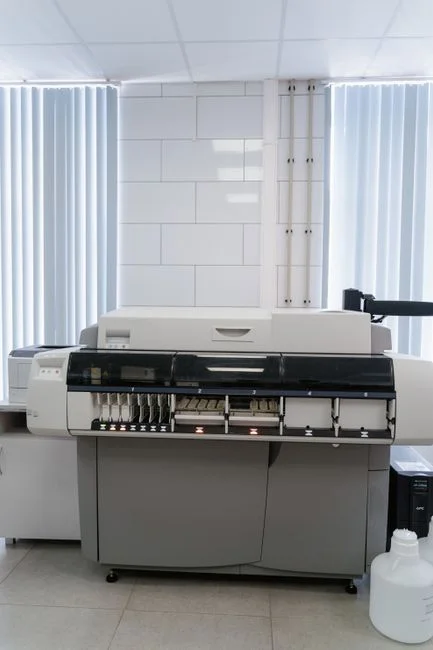
The Sumter, South Carolina case study from 2024 provides evidence that a chemical plant cannot rely on a downstream POTW for PFAS removal. The Sumter wastewater plant serves roughly 51,000 people and receives wastewater from about two dozen industrial users including metal coating, plastics, tire, textile, and chemical plants, a discharge mix that mirrors a Dallas-metro industrial corridor (Earth Island Journal, 2024). Passive sampling measured 118 parts per trillion of PFAS upstream of the plant and 228 parts per trillion downstream, a 107% increase that was the highest contamination recorded in the Waterkeeper Alliance's 22-plant study (Earth Island Journal, 2024). Downstream at Brewington Lake, state testing logged PFAS concentrations as high as 7,600 parts per trillion, while adverse health effects have been documented at doses as low as 2 parts per trillion (Earth Island Journal, 2024). The mechanism is straightforward: municipal treatment separates liquids and solids but does not destroy PFAS, so the compounds partition into both the treated effluent and the sewage sludge, eventually entering fertilizer applied to farmland (EWG, January 2025). A permit to discharge to the POTW is not a guarantee of removal, which is the primary engineering consideration for a Farmers Branch facility.
The 2026 Pretreatment Train for a Chemical Plant Discharge
A defensible chemical plant pretreatment train for 2026 consists of five stages plus a discharge polish, with each stage targeting a contaminant class the prior stage cannot address. Stage 1 — Equalization and pH adjustment: a buffer tank with an automatic chemical dosing skid sized to peak shift flows stabilizes pH and flow so downstream separation units receive a consistent feed; dosing accuracy is set by PLC control tied to inline pH and ORP probes. Stage 2 — Oil, grease, and suspended-solids removal: a dissolved air flotation (DAF) system handles free and emulsified oil, FOG, and colloidal solids that would foul membranes downstream; for facilities with high settleable solids, a high-efficiency sedimentation tank can be paired ahead of the DAF as a guard clarifier. Stage 3 — Advanced oxidation for refractory organics: ozone, Fenton, electrochemical, or photocatalytic oxidation breaks down persistent compounds that survive equalization and flotation; the 2018 Frontiers in Chemistry review documents the reaction pathways and selectivity trade-offs for each option on industrial effluent (Frontiers in Chemistry, 2018). Stage 4 — Membrane polishing: an ultrafiltration (UF) system at roughly 0.03 μm PVDF acts as a guard filter for the downstream RO and itself removes colloids, bacteria, and high-molecular-weight species; the RO stage serves as the advanced-filtration performance benchmark, with PFAS reductions of more than 99% (Earth Island Journal, 2024). Stage 5 — Solids handling: a plate and frame filter press dewaters the DAF float and chemical sludge into a disposable cake, ensuring that upstream removal work keeps PFAS out of the biosolids. The final discharge step uses a UV sterilizer or on-site-generated chlorine dioxide to break chlorine-resistant organisms without adding disinfection by-products that complicate downstream biosolids management.
| Stage | Unit Operation | Primary Contaminant Class | Documented Performance Reference |
|---|---|---|---|
| 1 | Equalization + automatic chemical dosing skid | pH swings, flow surges, oxidant demand | PLC-controlled dosing sized to peak shift flow |
| 2 | DAF (with optional lamella clarifier upstream) | Free and emulsified oil, FOG, TSS | Standard headworks for chemical plants |
| 3 | Advanced oxidation (ozone / Fenton / electrochemical) | Refractory organics, color, AOX | Frontiers in Chemistry review, 2018 |
| 4 | UF + RO membrane polishing | Dissolved PFAS, salts, low-MW organics | >99% PFAS reduction, Earth Island Journal, 2024 |
| 5 | Plate-and-frame filter press | DAF float, chemical sludge | Cake to landfill or licensed disposal |
| 6 | UV or chlorine dioxide | Pathogens | No DBPs carried into biosolids |
Technology Selection: What Removes What in a Chemical Plant Effluent
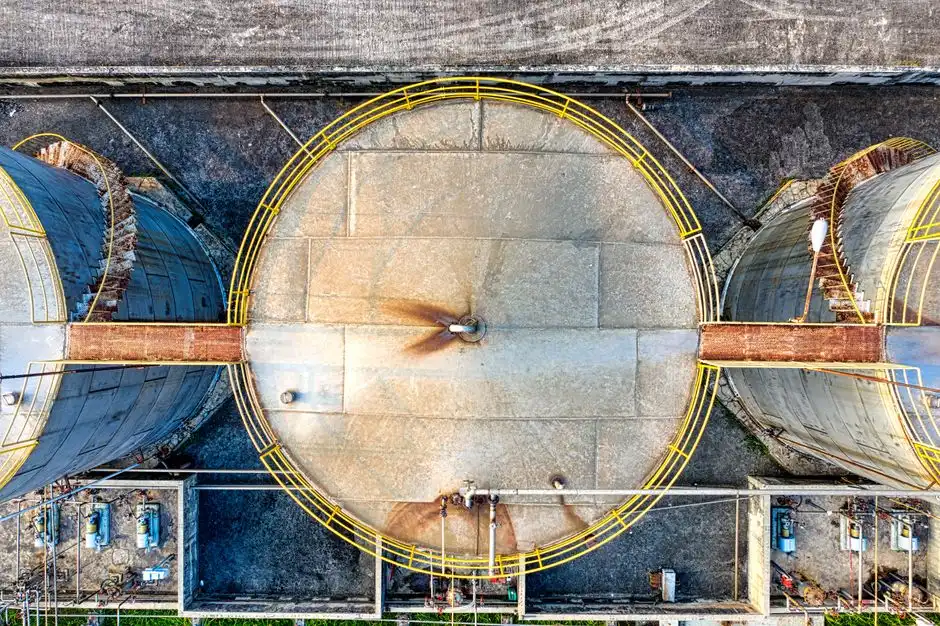
The technology-to-contaminant mapping below provides the engineering basis for permit applications and technical reviews. Free oil, FOG, and TSS are handled by a dissolved air flotation (DAF) system or, for high-solids streams, a high-efficiency sedimentation tank; both are accepted as Best Available Technology for oil-water separation in chemical plant headworks. Heavy metals and hydrolyzable species are precipitated as hydroxides or sulfides and settled in the lamella stage; the precipitation chemistry is fed by the same automatic chemical dosing skid used for pH control, which keeps the reagent logic in one PLC. Refractory organics and color are routed to advanced oxidation, with the 2018 Frontiers in Chemistry review providing the consolidated reference for ozone, Fenton, electrochemical, and photocatalytic reaction pathways (Frontiers in Chemistry, 2018). PFAS and other persistent dissolved species require membrane separation, with UF as the guard filter and an industrial RO system as the rejection stage; reverse osmosis has been shown to reduce PFAS by more than 99% (Earth Island Journal, 2024). Pathogens are handled by a UV sterilizer or a chlorine dioxide generator, both of which avoid the chlorinated disinfection by-products that complicate downstream biosolids handling.
| Contaminant Class | Primary Unit Operation | Supporting / Guard Stage | Basis |
|---|---|---|---|
| Free oil, FOG, TSS | DAF system | Lamella clarifier (optional) | BAT for chemical plant headworks |
| Heavy metals, hydrolyzable species | Hydroxide/sulfide precipitation | Sedimentation tank + dosing skid | Same PLC as pH control |
| Refractory organics, color, AOX | Ozone / Fenton / electrochemical AOP | pH and oxidant dosing skid | Frontiers in Chemistry, 2018 |
| PFAS, persistent dissolved species | RO membrane | UF guard filter | >99% PFAS reduction, Earth Island Journal, 2024 |
| Sludge / DAF float | Plate-and-frame filter press | — | Cake disposal downstream |
| Pathogens | UV sterilizer | Chlorine dioxide generator (alternative) | No DBP carry-over to biosolids |
2026 Compliance Checklist Before You Spec the Equipment
Compliance managers can use this sequence to ensure all equipment specifications align with regulatory requirements. First, pull the current Dallas Water Utilities industrial discharge permit and list every numeric limit, including any PFAS or surrogate parameter added since 2024, as the permit dictates equipment sizing. Second, generate a 12-month wastewater characterization covering pH, TSS, oil and grease, COD/BOD, heavy metals, AOX, and any PFAS analytes the permit flags, because no equipment list is defensible without influent data. Third, map each contaminant to a unit operation using the technology selection table and flag any contaminant that no operation can remove to the required level, as these represent process-source reduction opportunities. Fourth, design the dewatering and disposal step concurrently with the liquid train, as PFAS pulled out of the liquid concentrates in the cake and the disposal route must be permitted in parallel. Fifth, write the monitoring plan into the equipment specification: PLC data logging, flow-paced composite samplers, and a maintenance schedule are permit requirements, so the skid and control panel must support them out of the box. For a related walkthrough of how a comparable chemical corridor handled the same problem, see how chemicals plants near Covington meet pretreatment limits, and for the DAF-versus-clarifier headworks decision, see DAF or clarifier for chemicals wastewater; for the solids side, how to lower sludge dewatering cost in 2026 details the disposal economics required for the cake-side specification.
Frequently Asked Questions
Is there a federal PFAS pretreatment limit in 2026?
No. The EPA rule that would have set categorical PFAS pretreatment limits for organic chemicals, plastics, and synthetic fibers manufacturers was withdrawn in January 2025, so the enforceable line in 2026 is the Dallas Water Utilities industrial discharge permit plus any TCEQ overlay (Earth Island Journal, 2024).
What is the realistic capital range for a chemical plant pretreatment retrofit near Farmers Branch?
The research does not provide universal cost figures, as project costs depend on specific site requirements. The appropriate action is to commission a site-specific engineering proposal after a 12-month wastewater characterization, requesting that the vendor break the quote by unit operation (equalization, DAF, AOP, UF, RO, filter press, UV) to match each line item to a specific permit parameter.
Which unit operation actually removes PFAS?
Reverse osmosis and similar advanced membrane filtration