Why Bekasi data centers need a dedicated water and blowdown treatment train
A water-cooled hyperscale site in Bekasi drawing on PDAM and deep-well groundwater will size its make-up water for evaporation plus blowdown, and its blowdown stream will be 25-30% of make-up at 4 cycles of concentration per Genesis Water Technologies (2025). The Bekasi source mix — PDAM, deep well, and, at coastal industrial estates, saline surface water — dictates the pretreatment train, so the design must start from a dated analysis of the actual source rather than a generic specification.
Cooling towers run 24/7 in tropical Indonesia, which means chemistry and blowdown must be stable, not seasonal, and the program has to be automated on conductivity and make-up volume with continuous monitoring rather than seasonal checks (Beta Pramesti, 2025). Discharge pressure is also a moving target; reference benchmarks from water-stressed regions show discharge fees of $5-15 per 1,000 gal and permit TDS caps below 1,500 mg/L, and a Bekasi buyer should treat those as useful anchors when negotiating local discharge terms even though they are not Indonesian limits (Genesis Water Technologies, 2025). The implication is that blowdown should be engineered as a recoverable internal resource, not a waste stream, from the first scoping meeting.
A useful peer reference is the Milan data center blowdown treatment guide for an EU regulatory comparison, and the Ibadan data center blowdown treatment guide for a tropical off-PDAM scenario covers a different source-mix problem. For the closed-loop side, the closed-loop cooling water treatment guide for the chilled-water and direct-to-chip circuits documents the inhibitor and biocide program those loops need.
The three water streams to engineer around
A Bekasi data center water balance is not a single spec; it is three separate streams, each with its own chemistry and treatment block. Stream 1 is make-up water fed to the cooling tower, and its pretreatment has to be designed from a dated water analysis covering seasonal variation of PDAM, deep well, or coastal source water (Beta Pramesti, 2025). Stream 2 is the in-circuit cooling water: open cooling towers need continuous scale, corrosion, sediment, and microbiological control, while closed chilled-water and direct-to-chip loops are filled once with demineralized or softened water and held with nitrite/molybdate or non-metal closed-loop inhibitor plus a non-oxidizing biocide (Beta Pramesti, 2025). Stream 3 is blowdown, filter backwash, and office/NOC domestic wastewater; blowdown is high in TDS (1,200-6,000 mg/L), carries scaling minerals and treatment chemicals, and runs 10-50 mg/L suspended solids (Genesis Water Technologies, 2025). Domestic and backwash streams should be kept separate from the blowdown RO train and routed to neutralization, settling, or light biological treatment, with a packaged compact STP sized for the office and NOC populations (Beta Pramesti, 2025).
The closed-loop circuit deserves its own engineering line because it is the system most often neglected until corrosion or microbiological fouling appears. The recommended program fills with demineralized or softened water, doses closed-loop inhibitor plus non-oxidizing biocide, then monitors conductivity, inhibitor level, dissolved iron and copper, and bacteria counts on a periodic basis (Beta Pramesti, 2025). Keeping the closed loop isolated from the open cooling loop is a hard design rule; cross-connection defeats the inhibitor program and contaminates the chilled-water side with cooling-tower chemistry.
Setting a Bekasi-appropriate cycles-of-concentration target
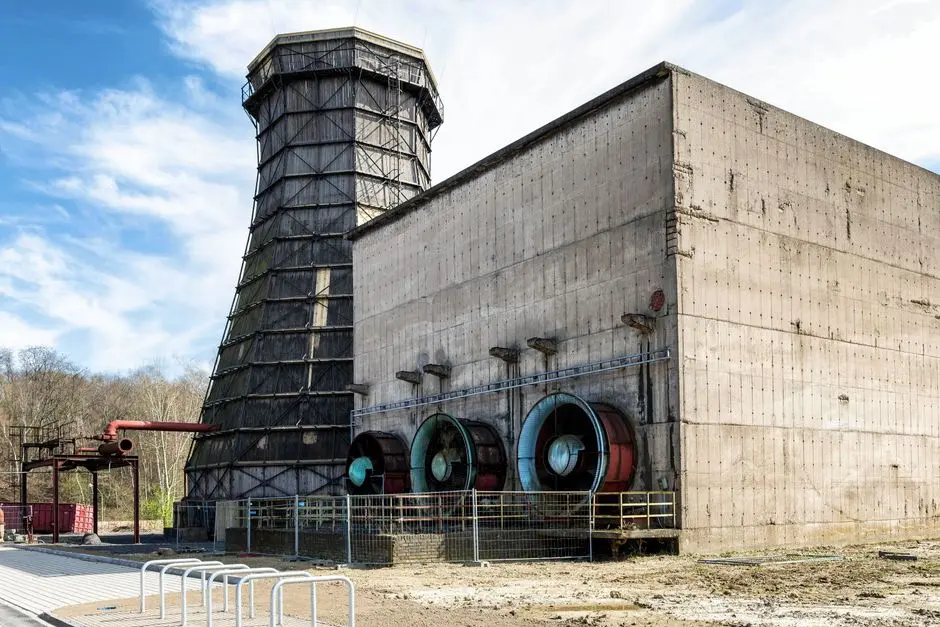
Cycles of concentration (COC) is the ratio of dissolved solids in circulating water to dissolved solids in make-up water, and it is the single decision that drives blowdown volume, makeup demand, and the rest of the treatment train (Genesis Water Technologies, 2025). Higher COC reduces blowdown volume but intensifies scaling, corrosion, and biofouling risk, so pushing the number up is a tradeoff, not a free win. There is no universal COC for every data center; the target must come from make-up and recirculating-water analyses, scale and corrosion potential, materials of construction, the chemical program, and discharge limits (Beta Pramesti, 2025). For a Bekasi site, the practical range is bounded on the low side by discharge fees and on the high side by chemistry: conventional brackish-water RO on cooling-tower blowdown typically plateaus at 75-80% recovery because silica, calcium carbonate, and calcium sulfate reach scaling thresholds (IDE Technologies, 2025).
Dosing should be automated on conductivity and make-up volume, with continuous monitoring of corrosion trends, conductivity, and chemical inventory so that COC decisions are made on trend data rather than lab spot checks (Beta Pramesti, 2025). High-recovery designs such as IDE's MAXH₂O architecture separate salt removal from osmotic pressure limits and use controlled precipitation plus dynamic RO operation to push past the conventional 75-80% BWRO ceiling, but the buyer should still set a base COC and chemistry program before evaluating that kind of upgrade (IDE Technologies, 2025).
Technology menu for make-up and blowdown treatment
The blocks below cover the range a Bekasi buyer is likely to see in vendor proposals. All cost and energy figures are U.S.-sourced reference ranges from Genesis Water Technologies (2025) and were not provided in Bekasi-rupiah terms; request a localized quotation from vendors before budgeting. The table summarizes the parameter ranges; the prose below explains where each block fits in the train.
| Technology | Function | Operating range | Recovery | Reference CAPEX | Reference OPEX |
|---|---|---|---|---|---|
| Ultrafiltration (UF) | Suspended solids, bacteria, viruses, high-MW organics | 0.01-0.1 micron pore size; 10-30 psi | 90-95% | — | Chemical clean every 1-3 months |
| Nanofiltration (NF) | Partial softening, hardness, sulfate removal; passes chlorides | 75-150 psi; permeate TDS 30-50% of feed | 70-85% | — | — |
| Reverse osmosis (RO) | Full dissolved-solids removal, 95-99% rejection | 150-400 psi; permeate 10-50 mg/L TDS; antiscalant-dosed | 50-85% on blowdown | $250,000-500,000 installed for 50,000 GPD | $1.50-3.00 per 1,000 gal treated |
| Mechanical vapor compression (MVC) | Evaporative concentration of RO concentrate | 15-25 kWh per 1,000 gal distillate; distillate TDS <10 mg/L | 95-98% on concentrate | $1-3M for 10,000-30,000 GPD | — |
| ZLD stack (RO + MVC + crystallizer) | Full liquid recovery to solid salt cake | — | 95-99% overall | $3-8M | $5-15 per 1,000 gal treated |
UF is the workhorse for suspended-solids and biological control ahead of RO and is sized as part of a UF pretreatment ahead of RO on the blowdown recovery train. NF occupies a useful middle ground for partial softening to push COC without full demineralization, and its lower pressure (75-150 psi) keeps energy and pumping cost down (Genesis Water Technologies, 2025). RO is the recovery backbone; a 50,000 GPD unit carries a reference CAPEX of $250,000-500,000 installed and OPEX of $1.50-3.00 per 1,000 gal, including energy, chemicals, membrane replacement, and maintenance (Genesis Water Technologies, 2025). An industrial RO unit for blowdown recovery and high-purity make-up is the typical centerpiece. MVC and ZLD stacks are justifiable only in water-scarce or zero-discharge contexts, with ZLD CAPEX of $3-8M and OPEX of $5-15 per 1,000 gal treated (Genesis Water Technologies, 2025). High-recovery CTBD systems such as IDE's MAXH₂O architecture use controlled precipitation plus dynamic RO operation to push past the conventional 75-80% BWRO ceiling, with the permeate blended back into the cooling-tower make-up stream (IDE Technologies, 2025).
Putting the train together for a Bekasi site
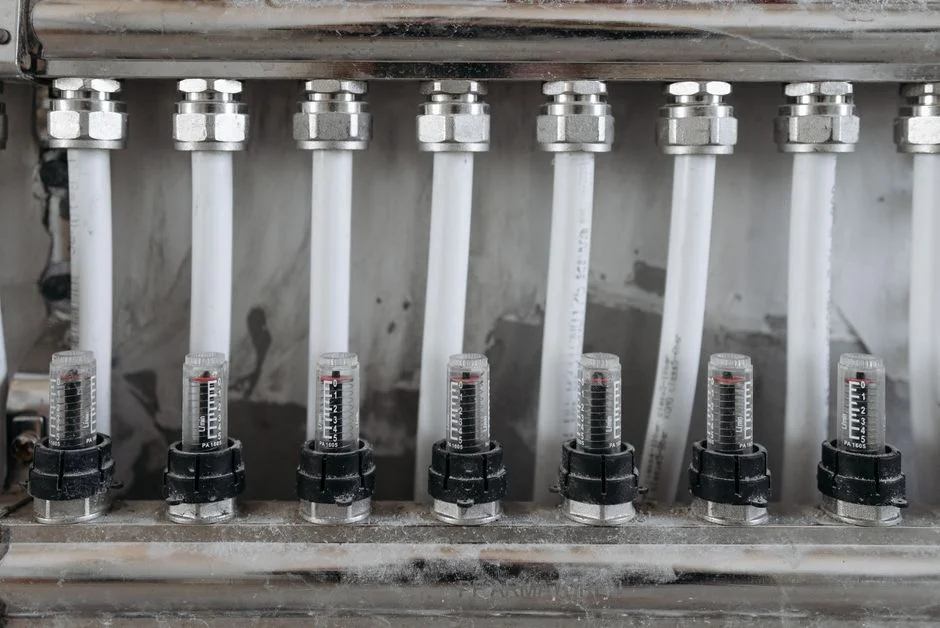
The typical flow for a Bekasi site is: source water → multi-media filter for make-up pretreatment → softener or RO on the make-up line → cooling tower → side-stream filtration → blowdown equalization → UF → RO → permeate returned to cooling-tower make-up, with concentrate routed to disposal, an evaporation pond, MVC, or a crystallizer depending on the discharge permit (Genesis Water Technologies, 2025; Beta Pramesti, 2025; IDE Technologies, 2025). Pretreatment must drop SDI low enough to protect the RO membranes, and multi-media filtration is the standard workhorse for turbid tropical source water (Beta Pramesti, 2025). The closed chilled-water and direct-to-chip loops are filled with demineralized or softened water and held with closed-loop inhibitor plus non-oxidizing biocide, and they should not be cross-connected with the open cooling loop (Beta Pramesti, 2025).
Domestic wastewater from offices and the NOC, plus filter backwash, should be kept separate from the blowdown RO train because their chemistry, organics, and biological load are different from the cooling circuit. A compact STP for office and NOC domestic wastewater sized for the office population is the typical solution, with neutralization, settling, or light biological treatment ahead of discharge (Beta Pramesti, 2025). Side-stream filtration sized at 1-5% of total circulation flow is a small line item that materially improves blowdown quality and protects downstream membranes, with reference CAPEX of $50,000-200,000 for typical data center installations (Genesis Water Technologies, 2025).
Compliance and water-stewardship framing for Indonesia
Blowdown carries concentrated TDS and chemical residues, and filter backwash and domestic wastewater need neutralization, settling, or light biological treatment before discharge (Beta Pramesti, 2025). Blowdown reuse through RO is identified by the U.S. Department of Energy as an option for offsetting freshwater demand, and the same logic applies in Bekasi where discharge permits and source water cost are the real drivers (Beta Pramesti, 2025). Reference benchmarks from water-stressed regions show discharge fees of $5-15 per 1,000 gal and permit TDS caps below 1,500 mg/L; these are useful as benchmarks when negotiating local discharge terms, even though the article does not claim they are Indonesian limits (Genesis Water Technologies, 2025).
Life-cycle analysis of cooling-water reuse shows that treatment energy is the dominant carbon cost, with grid carbon intensity the main lever; pushing COC and reusing blowdown cuts freshwater draw but should be paired with an energy-aware operating plan (Cartagena Vaca et al., 2026, Engrxiv). The same study finds that a wastewater-reuse scenario has about twice the global warming potential of the freshwater case, with treatment energy accounting for roughly 80% of the difference, and that a fully decarbonized grid eliminates most of that penalty while the water savings accrue at full value. For a Bekasi design, the practical takeaway is to size the recovery train against the actual local grid carbon intensity, not a generic benchmark, and to keep chemical production in the operating-cost model because it remains a contributor under any grid scenario.
Pre-RFQ checklist for a Bekasi data center project
Before any vendor meeting, the engineering team should pull together a comparable set of inputs so the RFQs come back technically defensible. The list below draws on the design-review scope in Beta Pramesti (2025) and adds the discharge-permit items that a Bekasi site will need to clear.
| Input category | What to gather before the RFQ |
|---|---|
| Source and make-up water | Dated source and make-up analyses including seasonal variation; current WUE baseline |
| Cooling plant | Cooling-tower, chilled-water, and liquid-cooling diagrams with materials of construction; heat load, evaporation, make-up, and blowdown across operating cases |
| Water balance and COC | Target COC, water balance, storage demand, and any reuse opportunity; testable COC at agreed load and a functioning blowdown route |
| Operations and maintenance | Availability target, duty/standby basis, maintenance access, and chemical inventory; SOPs, startup logs, training, and a closed punch-list |
| Discharge permit | Local discharge permit expectations: TDS limit, biocide and metals limits, and any zero-discharge condition for the site |
Frequently Asked Questions
What does a data center in Bekasi, Indonesia typically budget for cooling blowdown treatment?
The reference cost ranges from Genesis Water Technologies (2025) are in U.S. dollars: $250,000-500,000 installed for a 50,000 GPD RO system with OPEX of $1.50-3.00 per 1,000 gal treated; $1-3M for a 10,000-30,000 GPD MVC; and $3-8M CAPEX with $5-15 per 1,000 gal OPEX for a full ZLD stack. Because these are U.S. reference ranges, the actionable step is to request a localized quotation that includes shipping, installation, duty, and PLN-grid energy costs before committing to a budget.
How do I shortlist blowdown treatment suppliers for a Bekasi data center project?
Shortlist on the documented ability to deliver the specific blocks in your train — UF, NF, RO, MVC, and ZLD where justified — and on installed references in tropical, high-humidity sites. The actionable check is to ask each supplier for a Bekasi- or Indonesia-specific reference list, a localized CAPEX/OPEX quotation in IDR with energy and chemical line items separated, and confirmation that the proposed system meets your pre-RFQ checklist items in the table above.
How do I pick a cycles-of-concentration target for a Bekasi site?
Set the COC from your make-up and recirculating-water analyses together with scale and corrosion potential, materials of construction, the chemical program, and your discharge limits — there is no single number that fits every data center (Beta Pramesti, 2025). The actionable check is to commission a dated source analysis covering wet-season and dry-season variation, run a saturation and scaling index against the proposed chemical program, and verify that the chosen COC keeps the projected blowdown within the discharge-permit envelope.
What Indonesian compliance gates should the design clear before equipment is ordered?
Clear the discharge permit envelope for TDS, biocide residues, and metals before specifying the recovery train, and confirm whether a zero-discharge condition applies to the site. The actionable check is to obtain the local discharge-permit expectations in writing — TDS limit, biocide and metals limits, and any zero-discharge clause — and to size the concentrate strategy (RO reject, evaporation pond, MVC, or crystallizer) against those limits rather than against generic benchmarks (Beta Pramesti, 2025; Genesis Water Technologies, 2025).
Related Equipment
- industrial RO unit for blowdown recovery and high-purity make-up — specifications, capacity range, and technical data