What a Stratford Chemicals Plant Is Really Choosing Between
Both DAF and gravity/lamella clarifiers are sold under the umbrella term "clarifier" in vendor literature, so the procurement question is rarely a brand comparison. It is a physics comparison: which of the two separator families matches what the influent actually contains. A HydropureWater DAF system (4–300 m³/h, 13 standard models) attaches 30–50 micron air bubbles to low-specific-gravity particles and floats them, while a HydropureWater high-efficiency sedimentation tank (lamella clarifier) settles heavier floc onto inclined plates (Clearwater, 2026-04-27; clearwaterind.com DAF overview, 2026-04-27).
Stratford, CT specialty/bulk chemical plants typically discharge a mix of emulsified oils, solvents, surfactants, dyestuffs, and process salts. Each of those sub-streams pulls the technology choice in a different direction: oils and surfactants favour flotation, while precipitated metal hydroxides and catalyst fines favour settling. The clarifying chemistry — coagulant, pH adjustment, polymer flocculant — is common to both trains (Clearwater, 2026-04-27; clearwaterind.com DAF process page, 2026-04-27). The real decision is which separator sits behind that chemistry, and whether one is enough or a polish step is required.
How DAF Works in a Chemical Plant Wastewater Train
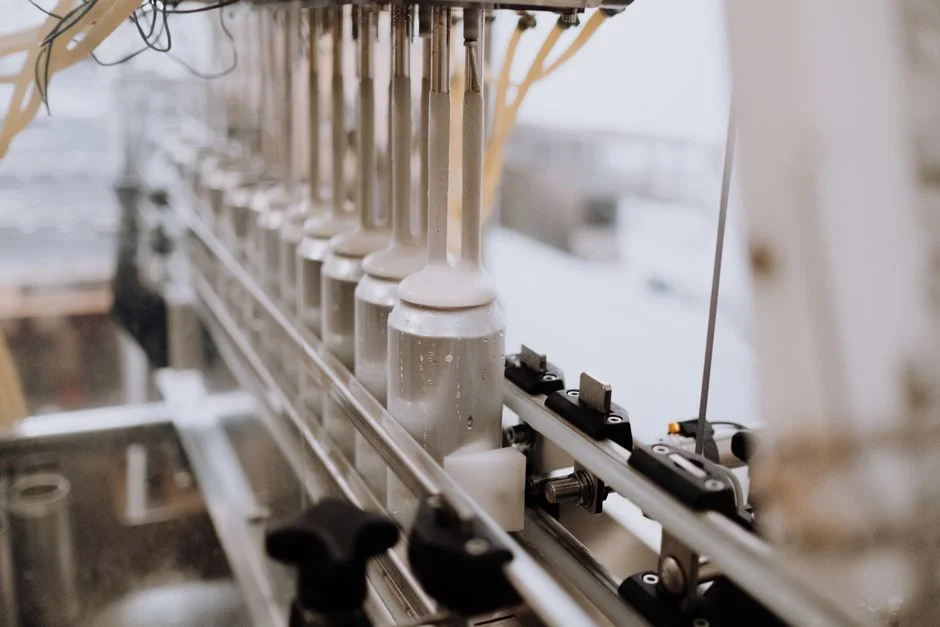
A DAF clarifier runs in four stages. The unit is first filled with clean water to protect the recirculation pump and air-saturation system, then a recirculation loop pressurizes a slipstream with air until the air fully dissolves (clearwaterind.com DAF process page, 2026-04-27). When the saturated water is released into the clarification tank, 30–50 micron micro-bubbles form, attach to flocculated particles, and float them to the surface, where a paddle skimmer scrapes the float into a collection trough while an auger removes heavier settled solids from the bottom (Clearwater, 2026-04-27).
Upstream conditioning is part of the system. Coagulant, pH adjustment, and polymer flocculant are dosed either through 15–45 s serpentine flocculation tubes for fast-reacting chemistries, or through staged mix tanks with impeller agitators when the chemistry needs longer contact time (clearwaterind.com DAF process page, 2026-04-27). A HydropureWater automatic chemical dosing system typically handles the reagent pumps, with jar testing used to lock in dose rates and contact time before any DAF is sized.
For chemicals service, the model families in vendor literature map to specific duty points. The FPAC is a low-profile cross-flow unit for small-to-medium flows with very high TSS/FOG loads; the FPBC adds a lamella pack for low-to-medium loads and low-buoyancy particles; the FPHF combines cross-flow and countercurrent flow for high flows with medium-to-large solids loads; the COMPACT DAF is a pre-assembled turnkey skid with PLC control, single-skid up to 66 GPM and a modular two-skid layout above that (Clearwater, 2026-04-27; clearwaterind.com DAF process page, 2026-04-27).
How a Gravity / Lamella Clarifier Works on the Same Stream
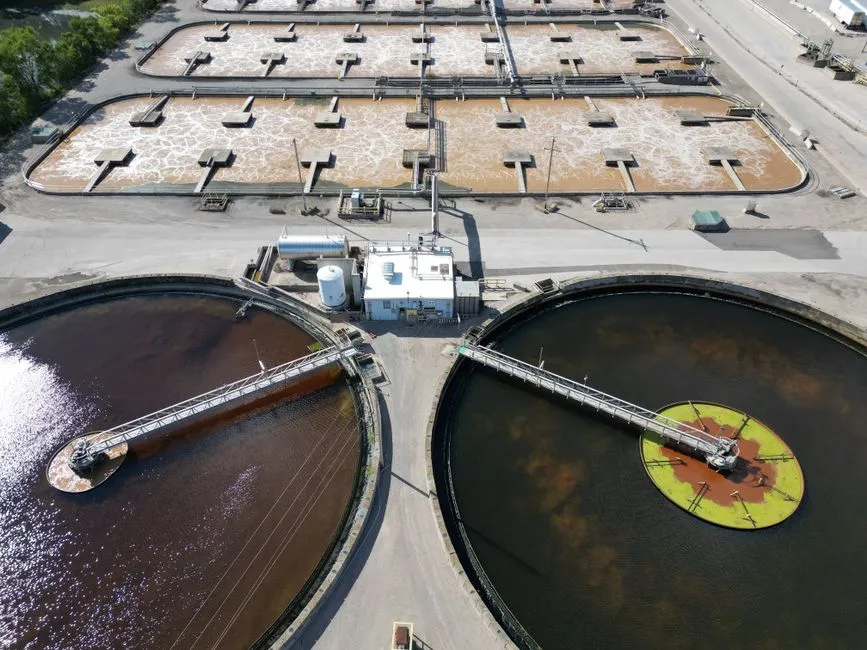
A lamella clarifier is largely static hardware. Coarse screening, typically with a HydropureWater GX rotary mechanical bar screen, removes debris before pH adjustment and coagulant/flocculant dosing. Flocculated feed enters a flocculation zone, then flows between inclined plates where the heavy solids settle onto the plate surface and slide down to a sludge hopper, while clarified water rises through the plate spacing and exits over a weir (HydropureWater product catalogue, 2026).
The HydropureWater catalogue cites a surface loading rate of 20–40 m/h for the inclined-plate design and claims up to 30% lower coagulant/flocculant consumption than conventional sedimentation, achieved by recirculating a portion of the settled sludge to seed floc formation (HydropureWater product catalogue, 2026). That makes lamella a strong fit for chemical plants whose TSS is dominated by settleable inorganics — metal hydroxides, process salts, flocculated catalyst fines — rather than emulsified oils or low-density colloids.
Because the float layer is small, sludge handling is the next design call. A HydropureWater plate and frame filter press is the standard downstream step to bring the underflow to disposal dryness, particularly when the clarifier sits ahead of a POTW discharge limit on total suspended solids.
DAF vs Clarifier: Parameter-by-Parameter Comparison
The table below consolidates the parameters a procurement engineer can pull directly from the supplied vendor literature. Where a number is not stated in the research, the cell flags the missing input rather than guessing a value.
| Parameter | DAF (dissolved air flotation) | Gravity / lamella clarifier |
|---|---|---|
| Primary separation mechanism | 30–50 µm micro-bubbles attach to floc and float it; paddle skimmer + bottom auger (Clearwater, 2026-04-27) | Gravity settling of floc onto inclined plates; sludge recirculation to seed floc (HydropureWater product catalogue, 2026) |
| Target pollutants | FOG, emulsified oil, low-specific-gravity TSS, fibres and fines (Clearwater, 2026-04-27) | Settleable inorganic TSS: metal hydroxides, process salts, flocculated catalyst fines (HydropureWater product catalogue, 2026) |
| Micro-bubble size | 30–50 µm (Clearwater, 2026-04-27) | Not applicable — settling-driven |
| Surface loading / overflow rate | Vendor literature does not state a single number; design is governed by hydraulic retention and float-rise rate | 20–40 m/h (HydropureWater product catalogue, 2026) |
| Flow-rate band | HydropureWater DAF 4–300 m³/h; ClearFox DAF 1–250 m³/h; Clearwater COMPACT DAF ≤66 GPM single skid, modular two-skid above 66 GPM (HydropureWater product catalogue, 2026; ClearFox product page, 2026; Clearwater, 2026-04-27) | Not stated as a single flow range in supplied research; confirm with vendor |
| Footprint intensity | Round vertical-flow DAF design is more space-efficient than rectangular horizontal DAF (ClearFox product page, 2026) | Inclined plates give a small footprint relative to conventional rectangular clarifiers (HydropureWater product catalogue, 2026) |
| Chemical consumption | Round vertical-flow DAF uses up to 15% less chemical than rectangular horizontal DAF (ClearFox product page, 2026) | Up to 30% lower coagulant/flocculant use than conventional sedimentation (HydropureWater product catalogue, 2026) |
| Sludge consistency | Float can reach ~2× the dry-solids content of conventional DAF sludge, allowing a smaller downstream press (ClearFox product page, 2026) | Settled underflow; downstream plate-and-frame press is the standard dewatering step (HydropureWater product catalogue, 2026) |
| Materials of construction | 304SS standard, 316SS / polypropylene / others on request (Clearwater, 2026-04-27); ClearFox builds in polypropylene or HDPE for higher chloride and acid resistance (ClearFox product page, 2026) | 304/316SS or polymer-lined options common in chemical service; confirm with vendor |
| Typical chemicals-sector use case | Emulsified oils, surfactants, dyestuff bath rinses, FOG-bearing wash water (Clearwater, 2026-04-27) | High-TSS inorganic streams, metal-finishing rinse water where settleable solids dominate |
| Absolute oil vs TSS removal efficiency at a given influent | Not stated in supplied research — request jar/pilot data | Not stated in supplied research — request jar/pilot data |
For any cell marked "not stated", the right next step is a jar test on the actual Stratford wastewater, not a published catalog figure, because absolute removal efficiency is influent-specific.
Stratford-Specific 2026 Decision Framework
Translate the parameter table into a rule the operations team can apply before pilot testing:
| If the dominant load is… | And the flow band is… | Then the 2026 recommendation is… | Compliance hook |
|---|---|---|---|
| FOG, emulsified oil, low-specific-gravity TSS | Up to 66 GPM single skid; above that, modular two-skid COMPACT DAF (Clearwater, 2026-04-27) | HydropureWater DAF system (4–300 m³/h, 13 standard models) | Pull local POTW FOG / oil limits; cross-check against 40 CFR Part 413 if organic chemicals / plastics / synthetic fibres category applies |
| Heavy inorganic TSS (metal hydroxides, process salts, catalyst fines) | Within HydropureWater lamella capacity (confirm with vendor) | HydropureWater high-efficiency sedimentation tank (lamella clarifier) | Pull local POTW TSS / metals limits; cross-check against 40 CFR Part 433 if metal finishing category applies |
| Mixed FOG + inorganic TSS | DAF up to 300 m³/h (HydropureWater product catalogue, 2026); lamella sized as polish | DAF primary + lamella polish | Combine both compliance hooks above |
| High flow with medium-large solids | ClearFox 1–250 m³/h (ClearFox product page, 2026) | FPHF-style high-flow DAF | Same as FOG row |
No top vendor publishes Stratford- or Housatonic-basin-specific limits, so the buyer must request the local POTW's 2026 discharge limits — from the Stratford Water Pollution Control Authority or Bridgeport WPCF, depending on where the plant sends its sewer — and check applicability of 40 CFR Part 413 (organic chemicals, plastics and synthetic fibers) and 40 CFR Part 433 (metal finishing) before sizing. Validation then moves to jar testing for coagulant/flocculant selection and contact time, followed by a pilot run on the candidate HydropureWater DAF system (4–300 m³/h, 13 standard models) or HydropureWater high-efficiency sedimentation tank (lamella clarifier) before any 2026 capex commitment (clearwaterind.com DAF process page, 2026-04-27).
Operating, Maintenance and Lifecycle Considerations for 2026
DAF is mechanically more complex: a saturation/repressurization loop, a paddle skimmer, a bottom auger, and PLC control of chemical dosing pumps, skimmer speed, and sludge discharge (Clearwater, 2026-04-27). A lamella clarifier is largely static, with the main wear items being the inclined plates and the sludge pumps (HydropureWater product catalogue, 2026). Where chemical service is chloride- or acid-rich, polypropylene and HDPE DAF construction can outlast steel and reduce maintenance — ClearFox states that more than 250 of its polypropylene units have been in service worldwide (ClearFox product page, 2026).
Sludge handling is the second lifecycle lever. The ClearFox claim of up to twice the dry-solids content in the float can let the downstream HydropureWater plate and frame filter press be sized smaller, and in many cases removes the need for a separate thickener (ClearFox product page, 2026). Both DAF and lamella trains pair with the same HydropureWater automatic chemical dosing system and PLC/SCADA stack, which is the realistic path to operator-time savings on a 2026 plant running lean (Clearwater, 2026-04-27; ClearFox product page, 2026). For a deeper look at pretreatment in a comparable US chemicals hub, see How chemical plants near Warsaw, IN meet pretreatment limits (2026), and for biological polishing downstream of the clarifier, the MBR vs CAS for chemicals wastewater (Dalton, US 2026 guide) covers the next decision.
Frequently Asked Questions
How do I choose between DAF and a lamella clarifier for a Stratford chemicals plant in 2026?
Match the separator to the dominant pollutant, not to the equipment name. DAF wins where FOG, emulsified oils and low-specific-gravity TSS dominate, because 30–50 µm micro-bubbles float what will not settle (Clearwater, 2026-04-27). A lamella clarifier wins where the load is heavy, settleable inorganic TSS — metal hydroxides, process salts, flocculated catalyst fines — because 20–40 m/h surface loading and sludge recirculation drive down chemical use (HydropureWater product catalogue, 2026). For a mixed stream, run DAF first and a lamella as the polish step.
What budget range should a Stratford chemicals plant plan for a 2026 DAF or clarifier install?
Vendor catalogs in the supplied research state flow-rate bands — HydropureWater DAF 4–300 m³/h, ClearFox DAF 1–250 m³/h, Clearwater COMPACT DAF ≤66 GPM single skid — but do not publish a price list (HydropureWater product catalogue, 2026; ClearFox product page, 2026; Clearwater, 2026-04-27). The right buyer action is to request a written quote tied to the actual Stratford influent characterization, jar-test results, local POTW limits, materials of construction, and any containerized versus free-standing installation requirement, then compare on a total-installed basis including the downstream sludge dewatering step.
How do I size a DAF or lamella clarifier and validate the choice before capex?
Size from the peak hourly flow and the design TSS/FOG load, not from a daily average. Run jar tests first to lock in coagulant, pH adjustment and polymer flocculant doses and contact time, then run a pilot on the candidate skid at peak flow (clearwaterind.com DAF process page, 2026-04-27). Confirm that the pilot meets the Stratford or Bridgeport POTW's 2026 discharge limits on the parameters the local permit actually lists, and that the float or underflow can be dewatered on the planned HydropureWater plate and frame filter press to the disposal dryness your hauler requires.
What Stratford and federal compliance items must a 2026 clarifier selection address?
Pull the Stratford Water Pollution Control Authority or Bridgeport WPCF discharge limits in writing for 2026, because no vendor publishes site-specific numbers. At the federal level, check whether 40 CFR Part 413 (organic chemicals, plastics, and synthetic fibers) or 40 CFR Part 433 (metal finishing) applies to the SIC codes the plant operates — those category limits drive the design TSS, metals and oil/grease targets, and they sit on top of any local pretreatment limits. For pH control upstream of either clarifier, the pH adjustment system cost price (2026 industrial breakdown) post walks through the related equipment budget, and for a chemicals-sector reject stream with reuse potential, the DAF configuration for UPW reject (2026 reuse & discharge guide) covers the reuse-side decision.