Why the MBR vs CAS Question Hits Harder in Dalton
Dalton's industrial base is dominated by carpet, dye, polymer, and specialty-chemical manufacturing, and the streams those plants generate are exactly the profile that strains both conventional activated sludge and membrane bioreactors: high-strength, batch-discharged, with variable pH, salinity, color, and refractory organics. A 2022 MDPI review of domestic wastewater treatment regimes notes that conventional secondary treatment across the US is increasingly challenged by emerging contaminants (industrial chemicals, pesticides, pharmaceuticals) and by sludge handling constraints, both of which are already on the floor of every dye house and polymer line in Whitfield County (Koul et al., Water, 2022-11-04).
For a 2026 capital decision, a Dalton engineer cannot rely on municipal MBR case studies as a proxy; the influent is not municipal. The comparison in this article is scoped to secondary biological treatment of chemicals wastewater, using the US EPA MBR fact sheet and the documented Georgia MBR data sets as the engineering baseline, and translating them into the demands that a carpet-, dye-, polymer-, or specialty-chemical plant actually places on the equipment.
How Each System Actually Works (in One Screen)
Conventional activated sludge (CAS) is a suspended-growth biological process: microorganisms oxidize organics in an aeration basin, then the mixed liquor flows to a secondary clarifier where biomass settles out by gravity. Most CAS trains finish with sand filtration to polish TSS. The clarifier is the weak link — when sludge settleability drops, so does the effluent.
A membrane bioreactor (MBR) runs the same suspended-growth biology, but the clarifier and sand filter are replaced by a microfiltration membrane step, with a maximum pore size set at about 1 micron to retain microorganisms (US EPA, Membrane Bioreactors Fact Sheet, EPA 832-F-01-006, published 2019-08). MBRs can hold higher mixed-liquor suspended solids and longer solids residence times, which often means lower sludge yield and more complete degradation of slowly biodegradable organics, but the membranes need controlled flux, air scour, and periodic cleaning with chemicals such as sodium hypochlorite and citric acid. The compact, well-instrumented nature of an integrated MBR wastewater treatment system is what makes the ~60% footprint reduction (per the EPA fact sheet) physically real on a constrained industrial site.
Head-to-Head on the Parameters That Matter for Chemicals Streams
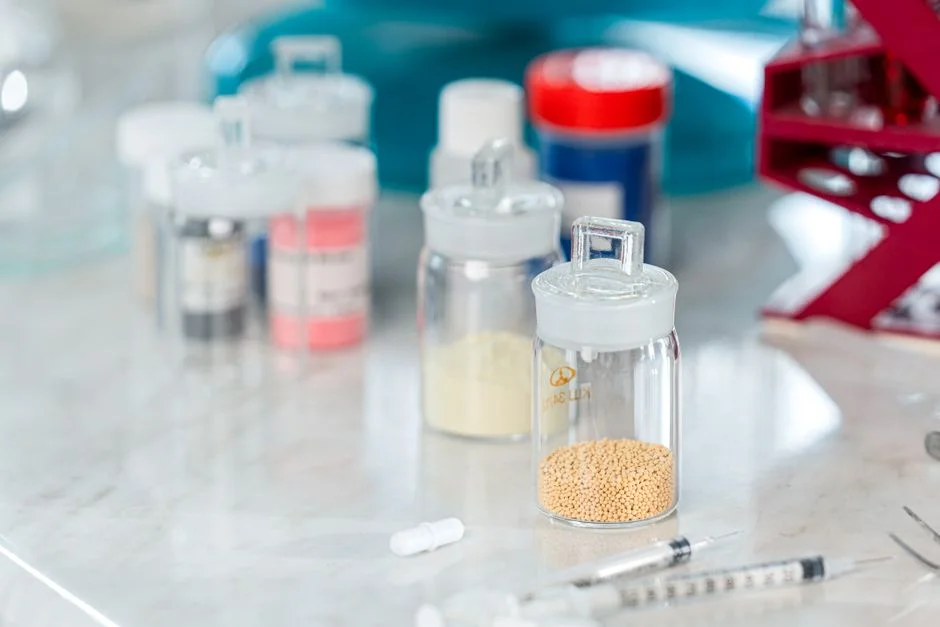
The trade-offs that matter to a Dalton chemicals plant are not the ones a municipal engineer optimizes for. The table below compares MBR and CAS on the parameters a carpet, dye, polymer, or specialty-chemical facility should actually evaluate.
| Parameter | MBR (chemicals stream) | CAS (chemicals stream) |
|---|---|---|
| Effluent BOD & TSS | Near detection limit at the Georgia MBR sites documented in the EPA fact sheet (Calls Creek influent 145 mg/L BOD, 248 mg/L TSS dropped to effluent averages around 1 mg/L) | Order of magnitude higher in TSS; dependent on clarifier performance and sludge settleability |
| Effluent ammonia-N | 0.10–0.72 mg/L at Calls Creek per the EPA MBR fact sheet | Function of SRT and temperature; typically 1–5 mg/L in a well-run CAS plant, much higher on shock |
| Turbidity | 0.01–1.31 NTU at Calls Creek (EPA MBR fact sheet) | Highly variable; 5–30 NTU is common in industrial CAS |
| Footprint vs CAS equivalent | ~60% smaller, per the EPA MBR fact sheet | Larger basin + clarifier + sand filter train |
| Fouling / chemical tolerance | Membranes foul faster on non-biodegradable colloidal and dissolved organics — exactly what dye and polymer wastewaters carry (Kappel, 2014) | Tolerates shock loads and aggressive chemistry better, but pays in settleability upsets and TSS carryover |
| Sludge handling | Often less WAS at long SRTs; waste MBR sludge can show lower settleability and may need conditioning chemicals before thickening (US EPA MBR fact sheet) | Well-characterized; feeds standard dewatering equipment such as a plate and frame filter press for sludge dewatering |
| Energy & OPEX shape | Higher air-scour and permeate-pump draw; membrane replacement every 3–10 years (US EPA MBR fact sheet) | Lower energy per m³, but larger blower and pump sizes, more labor |
These performance metrics demonstrate how the architecture performs under varying conditions. The Calls Creek and Cauley Creek numbers come from a municipal Orbal-oxidation-ditch retrofit and a 5-mgd reclamation plant respectively (US EPA MBR fact sheet) — they demonstrate effluent quality the MBR architecture can deliver, but they are domestic wastewater, not dye-house or polymer-line influent. The fouling penalty Kappel (2014) documents on integrated MBR-NF systems is caused by colloidal and dissolved organics in the MBR supernatant; on a chemicals stream those organics are present at much higher concentrations than in sewage, so the fouling rate will be higher and the cleaning interval shorter than municipal references suggest.
What the EPA MBR Fact Sheet Forces You to Design For
The EPA MBR fact sheet sets design rules that look routine for municipal plants but become non-negotiable on a chemicals site.
Screening cutoff is non-negotiable. Hollow-fiber MBRs require 1–2 mm screening immediately upstream of the membranes, and flat-plate MBRs require 2–3 mm, with frequent cleaning (US EPA MBR fact sheet). Polymer and carpet plants generate fibers and rags that will shred an unprotected module; a GX-series rotary mechanical bar screen at the right cutoff, plus a finer in-line screen at the membrane train, is the minimum. Two stages of screening, with the finer screen located after primary settling, is the EPA-recommended way to reduce loading on those final screens.
Peak flow handling. The fact sheet is explicit: peak design flow should be no more than 1.5 to 2 times the average design flow. If peak flows exceed that, equalization (external basin or internal aeration-tank depth) is required (US EPA MBR fact sheet). Dalton's batch dye houses and polymer campaigns will exceed a 2× ratio without buffering, and equalization is therefore a design line item, not an option.
N+1 redundancy. The EPA recommends including one additional membrane train beyond what the nominal design calls for, to maintain capacity during cleaning or a failed cassette. For an industrial chemicals discharger, where a single NPDES excursion triggers a regulatory response, the N+1 concept moves from best practice to insurance policy.
Cleaning regimen. Regular use of mild cleaners — sodium hypochlorite (bleach) and citric acid, per the EPA fact sheet — combined with continuous air scour. On hollow-fiber systems, back-pulsing is typically done on a timer and accounts for 1 to 5 percent of total operating time. Dosing should be controlled through an automatic chemical dosing system sized for the actual CIP volume, not for a municipal clean-in-place cycle. Permeate from an MBR has low TSS, BOD, and bacteria, so downstream disinfection is easier and may be unnecessary for some reuse targets (US EPA MBR fact sheet) — a meaningful OPEX saving for plants looking at on-site reuse.
When MBR Wins, When CAS Is Enough, When a Hybrid Fits
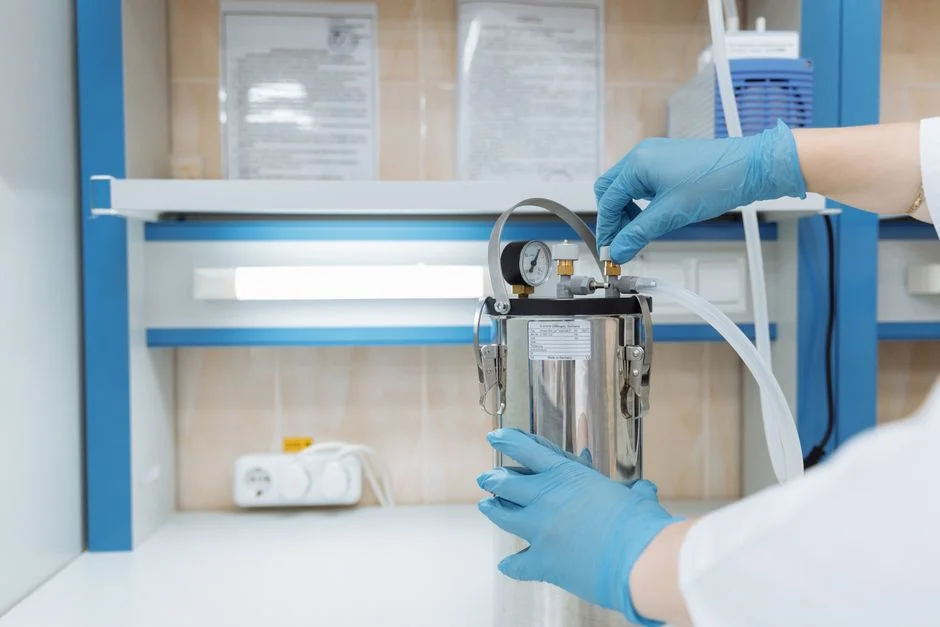
Pick MBR when the plant has tight effluent limits (low nutrients, low TSS, water-reuse targets), limited footprint, or variable flow that makes clarifier performance unreliable. The EPA MBR fact sheet documents MBR effluent with BOD and TSS around 1 mg/L and turbidity between 0.01 and 1.31 NTU, which is what a reuse polishing train downstream is designed to receive. MBRs are also the right answer when the operations team has the discipline to run a cleaning protocol on schedule — every skipped CIP compounds into a membrane-replacement event.
Stay with CAS (or a conventional A/O configuration) when the stream is largely biodegradable, the site has the land for basins and clarifiers, the discharge permit is conventional secondary, and the operations team lacks membrane-care discipline. CAS sludge is well-understood, feeds standard dewatering hardware, and tolerates the aggressive chemistry and pH swings of a dye or polymer campaign in a way an MBR membrane does not.
Consider a hybrid — CAS followed by an MBR polish, or an MBR with a nanofiltration (NF) stage and concentrate recirculation — when both biological capacity and reuse-grade polish are required. Kappel (2014) reports that NF concentrate recirculation back to the MBR can cut sludge production by 21%, but the trade is increased MBR membrane fouling caused by non-biodegradable colloidal and dissolved organics. On a chemicals stream that already runs hot on refractory organics, the chemistry has to support that trade, and a site pilot is the only defensible way to prove it. The 2026 MBR cost-per-m³ guide covers the economics of these configurations in more detail.
What a Dalton Chemicals Buyer Should Ask in 2026
Translating the technical comparison into a 2026 RFQ is where most projects win or lose money. The first ask is for site-specific pilot or jar-test data on the actual dye, polymer, or specialty-chemical stream; municipal MBR performance numbers from Calls Creek or Cauley Creek are domestic-wastewater references and cannot be presented as a proxy for a chemicals influent (US EPA MBR fact sheet, plant sections). The second ask is vendor disclosure of membrane material (commonly PVDF in modern modules — a DF-series PVDF flat-sheet MBR membrane module is a representative example), pore size (typically around 0.1 µm in submerged flat-sheet modules), air-scour rate, expected CIP frequency, and replacement interval, because those parameters drive OPEX more than the headline CAPEX.
Third, require a guaranteed membrane life under a chemicals-specific cleaning protocol. The EPA MBR fact sheet notes municipal MBR warranties of 3 to 10 years (Zenon has offered 10 years, others 3 to 5), but for industrial systems the guarantees are typically shorter and must be negotiated, with terms tied to screen size and O&M compliance. Fourth, confirm in writing that screening, equalization, and N+1 redundancy are explicitly priced and scoped; retrofitting any of these after installation is the most common source of CAPEX overrun on industrial MBR retrofits. Finally, build a 2026 OPEX model around four line items: energy for air scour and permeate pumps, membrane replacement, cleaning chemicals (sodium hypochlorite and citric acid), and sludge handling — not just the equipment purchase price. A comparable industrial framing for pretreatment upgrades at metals plants is in the 2026 pretreatment-limit playbook for industrial plants, and a peer chemicals-region comparison is in the Cleburne, TX guide.
Frequently Asked Questions
When is MBR clearly worth the cost over CAS for a chemicals plant in Dalton?
MBR is the right call when the plant is constrained on footprint, faces a tight effluent limit (low nutrients or low TSS), or is targeting on-site water reuse, because the EPA MBR fact sheet documents BOD and TSS near 1 mg/L, ammonia-N between 0.10 and 0.72 mg/L, and turbidity between 0.01 and 1.31 NTU at the Georgia MBR sites, at roughly 60% smaller footprint than an equivalent CAS train. If the site has land and the discharge permit is conventional secondary, CAS still wins on cost and operational simplicity.
What drives MBR cost per m³ for an industrial chemicals plant, and what should a 2026 RFQ demand?
The four cost drivers are CAPEX on membranes, skids, and fine screening; OPEX on air-scour and permeate-pump energy; membrane replacement at a negotiated warranty interval (3–10 years on municipal systems per the EPA MBR fact sheet, often shorter on industrial guarantees); and cleaning chemicals (sodium hypochlorite and citric acid) plus sludge handling. A 2026 RFQ should require vendors to break out all four line items and to provide a guaranteed membrane life under the actual cleaning protocol — buyers should refuse quotes that present only an equipment price, and should request vendor- or EPC-side pilot data on the real influent rather than municipal references.