Why Warsaw, IN Chemical Plants Cannot Discharge Straight to Sewer
The Warsaw wastewater treatment plant is permitted to treat 3.9 million gallons per day, drawing flow from the City of Warsaw, Winona Lake, Leesburg, the Tippecanoe and Chapman Regional Sewer District, and two mobile home parks (per warsaw.in.gov). A single combined sewer overflow sits at the intersection of Market Street and Columbia Street, which means hydraulic and organic headroom is finite on the worst day of the month. The plant is designed for domestic sewage, not industrial toxics — that is why the National Pretreatment Program under 40 CFR Part 403 is the regulatory basis for requiring non-domestic discharges to meet pretreatment standards before they enter the collection system (per warsaw.in.gov).
For a Kosciusko County chemical plant engineer, the compliance moment that defines the work is the POTW's four-times-per-year sampling window: the Warsaw Control Authority issues a permit tied to the sewer use ordinance and pulls four compliance samples per year to verify each industrial user (per warsaw.in.gov). The Warsaw Wastewater Laboratory reports results to the Indiana Department of Environmental Management (IDEM) and the Tippecanoe River is monitored above and below the outfalls, so a pass-through event is visible both on the lab bench and in the receiving-water data (per warsaw.in.gov). Because the lab has held the Laboratory Excellence Award yearly since 2003 and passed all Discharge Monitoring Report Quality Analysis evaluations required by the State of Indiana since 2004, the data an engineer is being measured against is high-quality — there is no margin to argue with the number (per warsaw.in.gov).
The Three-Layer Pretreatment Limit Stack for Indiana Chemical Plants
Three separate limit authorities can govern a single discharge to a POTW, and the most stringent applicable one controls — which means a chemical plant engineer near Warsaw, IN must engineer to whichever number is the binding constraint, not whichever one is easiest to find. Pass-through is defined at 40 CFR 403.3(p) as a discharge that exits the POTW into waters of the United States in quantities or concentrations that, alone or in conjunction with other sources, is a cause of a violation of any requirement of the POTW's NPDES permit; interference at 40 CFR 403.3(k) is a discharge that inhibits or disrupts the POTW, its treatment processes, or its sludge processes (per EPA 2026 guidance). If either trigger fires, the industrial user is in violation regardless of whether a numeric limit was exceeded (per EPA 2026 guidance).
Layer 1 is the general and specific prohibitions at 40 CFR 403.5(a) and 403.5(b), which ban any discharge that causes pass-through or interference and list specific prohibited pollutants (ignitable, corrosive, or toxic gases) that are banned regardless of numeric concentration (per EPA 2026 guidance). Layer 2 is the categorical pretreatment standards under 40 CFR Parts 405–471, which set numeric limits by industry; chemical plants typically answer to 40 CFR Part 414 for organic chemicals, plastics, and synthetic fibers or 40 CFR Part 415 for inorganic chemicals, with Part 417, 419, or 433 adjacent for detergents, petroleum refining, and metal finishing (per EPA 2026 guidance). Layer 3 is the local limit set by the POTW's Control Authority in its approved pretreatment program — and that local limit can be more stringent than the federal floor when the receiving plant's hydraulic or biological capacity is constrained. Statutory authority sits in Clean Water Act §307(b), which directs EPA to set pretreatment standards, and §402(n), which authorizes POTW pretreatment programs within the NPDES framework (per EPA 2026 guidance).
| Layer | Authority | Form | Example trigger |
|---|---|---|---|
| 1 — General & specific prohibitions | 40 CFR 403.5(a) and (b) | Qualitative; some pollutants listed | Discharge causes pass-through or interference |
| 2 — Categorical standards | 40 CFR Parts 405–471 (e.g., 414, 415, 419, 433) | Numeric effluent limits by industry | Chemical plant under Part 414 organic chemicals |
| 3 — Local limits | POTW's approved pretreatment program | Site-specific numeric limits | Warsaw POTW tightening metals or hydraulic loading |
When Your Plant Is a Significant Industrial User (SIU)
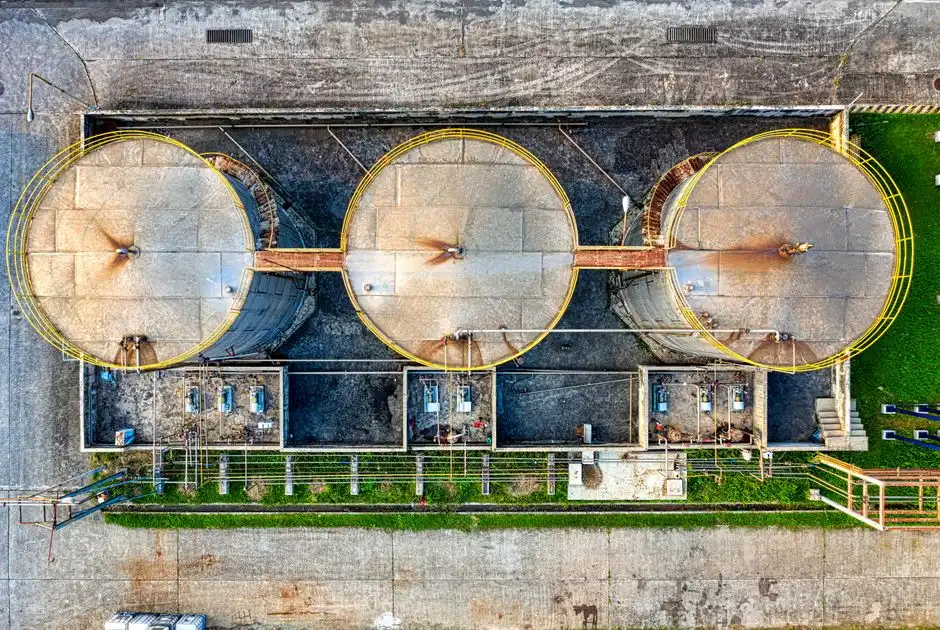
An industrial user becomes a Significant Industrial User when any one of three triggers is met, per 40 CFR 403.3(v): (1) the user is subject to categorical pretreatment standards; (2) the user discharges an average of 25,000 gpd or more of process wastewater; or (3) the user's process waste stream makes up 5% or more of the POTW's average dry-weather hydraulic or organic capacity (per EPA 2026 guidance). Chemical plants almost always hit trigger (1) because they fall under 40 CFR Part 414, Part 415, or an adjacent subpart, and that status carries the heavier monitoring and reporting bar — a baseline monitoring report (BMR) at the point of categorical promulgation or new-discharge startup, plus 90-day compliance reports on a defined schedule.
SIUs operate under a written control mechanism from the POTW, accept routine POTW inspections and sampling under 40 CFR 403.12, and are typically required to implement a slug load control plan under 40 CFR 403.8(f). For batch operators in Indiana, the slug load control plan is where most pass-through excursions actually originate — and it is also where the Warsaw POTW looks first when it sees a receiving-water anomaly on the Tippecanoe. The BMR establishes the baseline pollutant envelope the rest of the compliance program measures against, so any retrofit that shifts the pollutant envelope after startup triggers a BMR amendment, not just a permit modification.
The Six Unit Operations That Carry a Chemical Plant Wastewater Train
Six unit operations, in roughly this order, handle the vast majority of chemical plant wastewater streams that go to a POTW. Not every plant needs all six — the controlling pollutant is the decision logic that picks the subset, and most chemical plants hit two or three problem pollutants simultaneously, making the full train the common case rather than the exception. Equalization dampens batch swings in pH, flow, temperature, and concentration; typical sizing is 4–8 hours for continuous operations and hours to days for batch (per EPA 2026 guidance). A PLC-controlled pH neutralization step handles strong acid or caustic batches and is governed by 40 CFR 403.5(b) plus the local limit, typically a 6–9 pH band.
A dissolved air flotation (DAF) system addresses oils, FOG, and free-floating suspended solids — this is the unit operation that decides whether a chemical plant passes the four-times-a-year TSS check. Chemical precipitation followed by a high-efficiency sedimentation tank (lamella clarifier) handles dissolved metals such as Cd, Cr, Cu, Ni, Pb, Zn under categorical limits like 40 CFR Part 433 for metal finishing or under local metal limits. Biological polishing with an MBR membrane bioreactor reduces BOD and COD before sewer discharge; an MBR also opens the door to on-site reuse. Multimedia or carbon filtration is the polishing step for trace organics, color, or reuse-quality targets and protects downstream RO if the plant is moving toward reuse. A PLC-controlled chemical dosing system ties precipitation and pH correction to real-time influent feedback, which is the most reliable way to keep metal removal on target when batch chemistry drifts.
| Unit operation | Influent problem solved | Parameter controlled | Regulatory driver |
|---|---|---|---|
| Equalization basin | Batch swings in pH, flow, temperature, concentration | Hydraulic and concentration surges | 40 CFR 403.5(a) pass-through/interference; 40 CFR 403.8(f) slug load control |
| pH neutralization (PLC-controlled dosing) | Strong acid or caustic batches | pH (typically 6–9 local limit) | 40 CFR 403.5(b) specific prohibitions; local limit |
| Dissolved air flotation (DAF) | Oils, FOG, free-floating TSS | TSS, oil & grease | 40 CFR 403.5(a) pass-through; categorical standard; local limit |
| Chemical precipitation + lamella clarifier | Dissolved metals (Cd, Cr, Cu, Ni, Pb, Zn) | Total metals | Categorical standard (e.g., 40 CFR Part 433); local limit |
| Biological polishing (activated sludge / MBR) | High COD/BOD | BOD, COD | Categorical standard; local limit on BOD/COD to POTW |
| Multimedia or carbon filtration | Trace organics, color, residual TSS | Trace organics; reuse-quality targets | Local limit; reuse targets if applicable |
Warsaw-Specific Realities: 3.9 MGD POTW, FOG Program, and Tippecanoe River Monitoring

Several constraints are unique to Kosciusko County and they should change the engineering trade-off, not just the permit number. The Warsaw plant's 3.9 MGD design capacity and single combined sewer overflow at Market and Columbia mean hydraulic and organic headroom is finite, which is why the POTW tightens local limits and runs its own FOG (fats, oil, and grease) program for restaurants to keep restaurant discharges from squeezing out industrial capacity (per warsaw.in.gov). The Tippecanoe River is monitored above and below the outfalls, so a pass-through event at the POTW is detectable on both sides — the usual dilution defense does not hold (per warsaw.in.gov).
Maintenance and construction personnel operate more than 120 miles of sanitary, storm, or combined sewer and 50+ lift or pump stations, so any slug load that reaches the collection system travels a long, observable path before it hits the headworks (per warsaw.in.gov). Indiana is not a NPDES-authorized state for the industrial pretreatment program, which means the underlying federal framework under 40 CFR Part 403 governs directly and IDEM acts as the state interface for reporting and enforcement rather than running its own delegated pretreatment program. For a chemical plant engineer, that has a practical consequence: when the Warsaw POTW finds an excursion, the case file goes to IDEM, and the federal citations travel with it.
Building the Equipment Train: Four Decision Axes in Order
Walking through four decision axes in order produces a defensible equipment train rather than a parts list. Axis 1 is the controlling pollutant: identify the parameter most likely to exceed the most stringent applicable limit, then size the train to it. Oils and TSS point to a dissolved air flotation (DAF) system; dissolved metals point to chemical precipitation plus a high-efficiency sedimentation tank (lamella clarifier); high COD/BOD points to biological polishing with an MBR membrane bioreactor; pH swings point to equalization plus a PLC-controlled chemical dosing system (per EPA 2026 guidance). In practice, most chemical plants hit two or three of these simultaneously, which is why the full train is the common case rather than the exception.
Axis 2 is SIU status and the applicable standard. Under a categorical standard, the federal number is the floor and the local limit is usually the binding constraint; non-categorical plants still have to prevent pass-through and interference under 40 CFR 403.5(a), which is qualitative but no less enforceable. Axis 3 is flow pattern. Batch operations with long cycle times or shared collection systems need equalization sized to hours or days; continuous operations can run 4–8 hours of retention, and over-sizing equalization is cheap insurance against a single NPDES excursion (per EPA 2026 guidance). Axis 4 is water reuse. An MBR-plus-RO path produces reuse-quality water and reduces fresh-water purchases, while pure discharge-to-sewer operations can stay on conventional activated sludge or a simpler aerobic basin. Equalization and PLC-controlled dosing are the two pieces most often under-scoped, and they are the most common root cause of a failed compliance event at a chemical plant (per EPA 2026 guidance). For related decision logic on DAF vs clarifier selection, the DAF vs clarifier comparison for chemical plant wastewater walks through the same controlling-pollutant logic, and a 2026 DAF system process flow diagram walkthrough shows how the DAF ties into equalization and downstream biological polishing. Plants with cyanide-bearing streams should also review the online cyanide analyzer buyer's guide for the analyzer layer that protects a biological step from a slug load.
Frequently Asked Questions
How is the right size of a chemical plant equalization basin determined for the Warsaw POTW?
Size equalization to dampen the longest batch cycle, not the average flow — typically 4–8 hours of retention for continuous operations and hours to days for batch (per EPA 2026 guidance). On a 3.9 MGD plant like Warsaw's, over-sizing equalization is cheap insurance because the cost of a single pass-through excursion and IDEM report dwarfs the marginal basin cost.
How many times per year does the Warsaw POTW sample industrial users?
The Warsaw Control Authority samples industrial users four times per year to verify compliance with the sewer use ordinance and reports the results to IDEM (per warsaw.in.gov). The Tippecanoe River is also monitored above and below the outfalls, so a pass-through event is independently visible in receiving-water data (per warsaw.in.gov).
Which federal categorical standard applies to a chemical plant near Warsaw, IN?
Most chemical plants answer to 40 CFR Part 414 (organic chemicals, plastics, and synthetic fibers) or 40 CFR Part 415 (inorganic chemicals), with Part 417, 419, or 433 adjacent for detergents, petroleum refining, and metal finishing (per EPA 2026 guidance). Confirm current numeric values in 40 CFR rather than relying on memory, because EPA revises subparts on a multi-year cycle.
What paperwork does an SIU chemical plant have to file in Indiana?
SIUs file a baseline monitoring report (BMR) at categorical promulgation or new-discharge startup, 90-day compliance reports on a defined schedule, and operate under a written slug load control plan under 40 CFR 403.8(f) (per EPA 2026 guidance). The Warsaw POTW inspects and samples under 40 CFR 403.12 and forwards compliance results to IDEM.
Does Indiana run its own NPDES pretreatment program, or does EPA oversee it directly?
Indiana is not a NPDES-authorized state for the industrial pretreatment program, so the federal framework under 40 CFR Part 403 governs directly and IDEM acts as the state interface for reporting and enforcement (per EPA 2026 guidance; per warsaw.in.gov). A comparable regulatory setup and equipment train is documented in the pretreatment compliance playbook for petroleum plants.