Why Yates Center Mines Are Re-Opening the DAF-vs-Clarifier Question in 2026
Yates Center-area mines, quarries, alumina plants, and aggregate wash operations are being forced back to the DAF-versus-clarifier question in 2026 because the compliance floor and the water-supply floor are both tightening at the same time. Under 40 CFR Part 437, the federal effluent limitations covering Metal Mining (Subpart A), Ore Mining (Subpart B), and Aluminum/Alumina (Subpart C) point sources set monthly average limits on TSS, total recoverable metals, pH, and oil and grease, and any primary clarifier must protect that limit rather than chase it (per EPA 40 CFR 437, as discussed in mining pretreatment compliance for US basins).
On top of that, the Yates Center region sits in a water-stressed basin where process water is increasingly recycled, evaporation pond capacity is shrinking, and state agencies are pushing operators toward closed-loop clarification trains with ZLD or near-ZLD targets. The 2025–2026 surge in lithium, copper, and other critical-minerals demand is also bringing smaller hydromet and aggregate wash plants online in and around Yates Center, many of them with no legacy wastewater infrastructure that must make a defensible DAF-or-clarifier decision on day one. Layered onto the regulatory and supply pressure is a recurring Yates Center-area operational complaint: skim rejection of oil-coated drilling or cutting fines overwhelms gravity settlers, and operators are looking for a separator that actually floats what the clarifier leaves behind.
How a DAF Separates Mining and Metals Wastewater
A dissolved air flotation unit saturates a pressurized recycle side-stream, typically 20–30% of the clarified flow, at 4–6 bar with air, then depressurizes the stream through a needle-valve nozzle back into the flotation cell, releasing 30–50 µm micro-bubbles that attach to chemically conditioned floc and lift it to the surface (per SigmaDAF / Clearwater Industries, 2026-04-27). The skimmate is scraped by a paddle skimmer into a collection trough and clarified water is drawn off below the floating blanket. Hydraulic residence time inside a DAF cell is 3–5 minutes, roughly 30–50× faster than a conventional clarifier, which matters when haul-truck washdown or a crusher upset sends a TSS slug through the train. Mining slurries are not fed raw; they need coagulant (ferric sulfate or alum for metal-hydroxide co-precipitation when arsenic, lead, or iron is in solution) and an anionic polyacrylamide flocculant to bridge fine clays and metal precipitates into a buoyant floc. Jar-test dose optimization is the standard tuning method — the Logan, UT wastewater plant study identified 30 mg/L aluminum sulfate as the optimum coagulant for suspended-algae removal (USU thesis 1072, 2011-11-22), a method that translates directly to mining-feed flocculation. The float layer typically runs 3–8% dry solids and is sent to a plate-and-frame filter press for sludge dewatering; on most mining duties the float is the dominant sludge stream and the underflow auger is largely a safety feature rather than a production outlet. A well-conditioned DAF on mining feed routinely achieves 70–90% TSS removal (per SigmaDAF / Clearwater Industries, 2026-04-27). For a representative cross-flow design built for this duty, see the DAF system for mining and metals wastewater; the conditioning chemistry should be held by a PLC-controlled coagulant and flocculant dosing skid tied to a flow-paced setpoint.
How a Clarifier (Conventional or Lamella) Separates Mining and Metals Wastewater
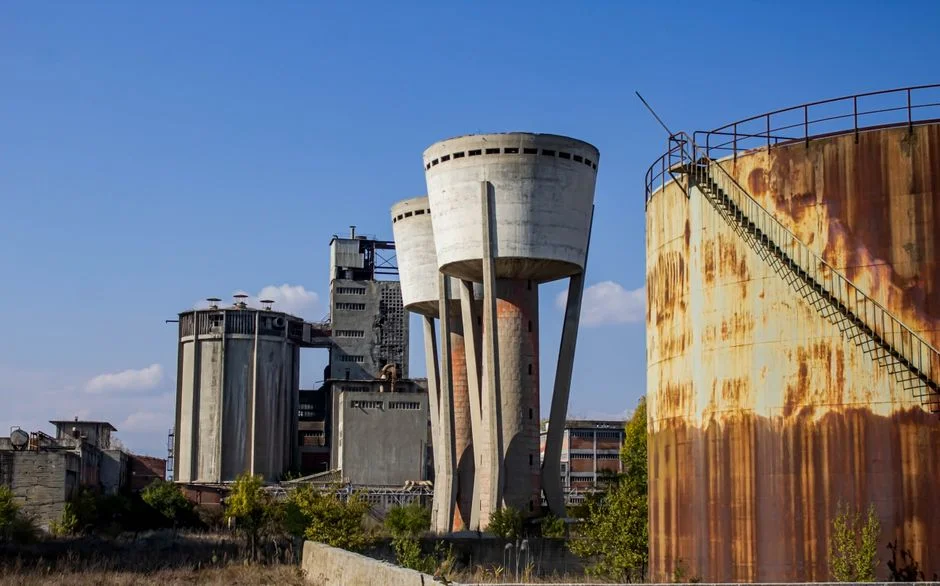
Conventional circular clarifiers rely on gravity settling: feed enters a central well, flocculant-conditioned slurry spreads radially, and heavy solids drop to a bottom rake that drives sludge to a central hopper. They are simple, robust, and inexpensive per m² of footprint, but they are inefficient on particles below ~50 µm because settling velocity scales with the square of particle diameter (Stokes' law), so clay slimes do not fall fast enough inside the 2–4 hour residence window of a conventional unit. Lamella (inclined-plate) clarifiers fix that geometry by stacking 60° plate packs, multiplying effective settling area 5–10× per unit footprint and reaching 20–40 m/h surface loading rates (per HydropureWater HST design data). In mining duty the lamella is almost always paired with sludge-blanket or blanket-contact operation: a portion of the underflow is recirculated to seed floc growth, trading skimmer simplicity for a denser 3–6% underflow that integrates directly with a paste thickener or backfill plant. Polymer dosing per m³ is generally lower than DAF because there is no recycle saturation stream consuming flocculant downstream, and there is no need for ferric coagulant unless the same clarifier is doubling as a precipitation reactor for dissolved metals. Clarifier effluent is typically lower in residual TSS than DAF effluent on heavy slimes, but higher in residual oil and FOG — that asymmetry is the hinge the 40 CFR 437 selection turns on. A representative HST design that captures this geometry for mining and metals duty is the high-rate lamella clarifier for mineral fines.
DAF vs Clarifier: Side-by-Side Parameter Matrix
The table below is the single citable screen an engineer can take into an internal review. Rows 8–10 lean on the FPAC / FPBC / FPHF DAF model segmentation as evidence that manufacturers already build for these exact conditions (per SigmaDAF / Clearwater Industries, 2026-04-27). Numbers without a 40 CFR 437 citation are design values from the sources above; where the research did not supply a number, the cell is qualitative and flagged as a buyer input.
| Parameter | DAF (Dissolved Air Flotation) | Clarifier (Lamella / Conventional) |
|---|---|---|
| TSS feed range | 50–5,000 mg/L (floatable fines) | 500–50,000 mg/L (settling slimes) |
| Dominant-fraction selection | DAF for low–mid TSS or floatable load | Clarifier for heavy slimes |
| Specific gravity of dominant fraction | <1.2 (floatable fines, oil-coated slimes) | >1.4 (ore fines, clays, tailings) |
| Oil and grease handling | Handles >50 mg/L O&G routinely | Poor; O&G coats plates and rises in the clarifier |
| Hydraulic residence time | 3–5 minutes | Lamella 20–40 minutes; conventional 2–4 hours |
| Footprint per equivalent duty | 0.05–0.20 m² | Lamella 0.10–0.25 m²; conventional 0.5–1.0 m² |
| Economy-of-scale crossover | DAF favored at <100 m³/h | Lamella favored at >200 m³/h |
| Chemical cost | Higher (coagulant + floc + recycle energy) | Polymer flocculant only in most duties |
| Sludge integration | Float → plate-and-frame filter press | Underflow → paste thickener or backfill plant |
| Hydraulic upset behavior | Absorbs TSS spike in 3–5 minutes | Spike resuspends sludge blanket |
| Effluent character | Excellent feed for media filter / ion exchange | Excellent feed for RO on clays (low residual TSS) |
| Capex vs civil trade | Higher unit capex, much smaller civil footprint | Lower unit capex, larger civil and structural footprint |
Lamella clarifier 20–40 m/h surface loading per HydropureWater HST design data; FPAC / FPBC / FPHF model segmentation per SigmaDAF USA / Clearwater Industries, 2026-04-27. The Yates Center water-stress context tilts the capex-vs-civil trade toward DAF wherever footprint is constrained.
Mapping the Choice to 40 CFR Part 437 Subcategories in Yates Center
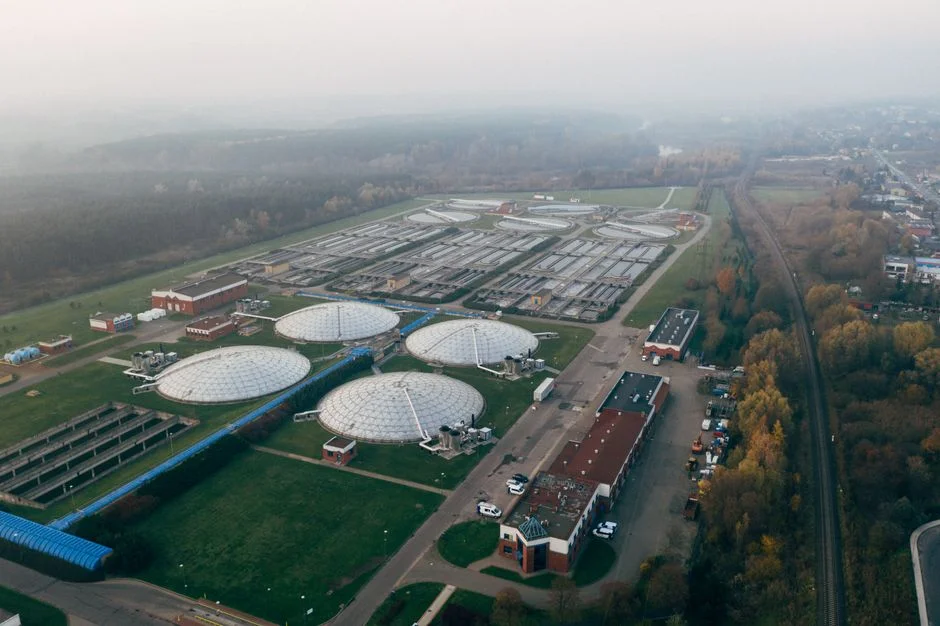
Under 40 CFR Part 437, neither DAF nor a clarifier alone meets monthly average effluent limits — both feed a downstream polishing train (media filtration, ion exchange, RO, or chemical precipitation). What primary clarification must deliver is 60–85% TSS removal and 30–60% total suspended metals removal, with the bias chosen to protect the binding downstream constraint (per EPA 40 CFR 437). DAF effluent carries lower residual oil and FOG, which is the right call when Subpart oil/grease limits are tight. Clarifier effluent carries lower residual TSS on heavy slimes, which is the right call when the binding constraint is a TSS-derived metals limit. For an alumina plant under Subpart C, the binding constraint is often 2.0 mg/L total recoverable iron as a monthly average; for a copper/moly operation under Subpart A, the limit set is typically expressed as total recoverable metals with TSS capped to keep the metals in scope. The table below maps the typical 437 subcategory constraints to the primary-clarifier bias a Yates Center plant should select.
| 40 CFR 437 subcategory | Feed character at Yates Center | Primary-clarifier bias | Reason |
|---|---|---|---|
| Subpart A — Metal Mining (copper/moly) | Heavy slimes dominate; bulk TSS-derived metals limit binds | Lamella clarifier + DAF polish | Heavy slimes settle; underflow feeds paste thickener; DAF polisher only if O&G is also in the matrix |
| Subpart B — Ore Mining / aggregate wash / quarry | Oil-coated cutting fines float; clarifiers cannot skim them cleanly | DAF primary | Floatable fines demand micro-bubble separation; the local operational complaint maps directly to this segment |
| Subpart C — Aluminum / Alumina (Bayer) | Mixed floatable red-mud fines and heavy Bayer slimes | Matched: DAF for floatable fines; clarifier for heavy slimes; or lamella-then-DAF series | Match density to the dominant fraction; a series train is the defensible 2026 architecture for combined feeds |
| Subpart B-adjacent — aggregate wash / quarry | Oil-coated cutting fines, low-to-moderate TSS | DAF primary | Yates Center-area aggregate wash and quarry plants adjacent to Subpart B operations are the segment most likely to lead with DAF as primary |
The Five-Question Decision Tree for a Yates Center 2026 Spec
Before you finalize a P&ID, run your feed through these five questions in order. The first question that pushes you off "both viable" decides the unit operation.
- What fraction dominates the feed? Floatable fines, FOG, or buoyant precipitates point to DAF; settling slimes, dense ore fines, or clays point to a clarifier. This is the question that most often decides the unit operation and the one that pushes a procurement engineer off the "both viable" answer first.
- What is the binding 40 CFR 437 subcategory constraint? A TSS-derived metals limit biases the train toward clarifier effluent; an oil/grease limit biases it toward DAF effluent. Confirm the subcategory and the binding parameter before sizing anything.
- What is the hydraulic scale? DAF is favored at <100 m³/h, lamella at >200 m³/h, with a hybrid crossover band in between. Conventional clarifiers lose on footprint across the whole range at a Yates Center site with civil constraints.
- What does the downstream train look like? A paste thickener or backfill plant integrates with clarifier underflow; a plate-and-frame filter press on float integrates with DAF. The answer locks the sludge-handling line item — see the plate-and-frame filter press for sludge dewatering for the DAF float case.
- Is the feed combined? When both floatable and settleable fractions are present in meaningful mass, a clarifier-DAF series (clarifier for bulk TSS, DAF for O&G polish) is the most defensible 2026 architecture, with upstream conditioning chemistry controlled by a PLC-controlled chemical dosing skid tied to a flow-paced setpoint.
Plants that answer "both viable" to questions 1–3 should default to a clarifier-DAF series rather than picking one unit and asking it to do both jobs. For a parallel regional context, see the parallel DAF-vs-clarifier decision in a comparable US basin.
Per-Stream Unit Pick and Downstream Train for Yates Center Plants
The table below closes the loop by showing how the primary pick connects to dewatering and polish, so the P&ID writes itself instead of needing to be reassembled from the prose.
| Yates Center stream | Primary | Dewatering step | Polishing train | Why this pick |
|---|---|---|---|---|
| Quarry / aggregate wash water (oil-coated cutting fines) | DAF | Plate-and-frame filter press on float | Multi-media filter → RO or reuse | Lamella cannot skim the oil-coated fraction cleanly |
| Copper / moly process water on heavy slimes | Lamella clarifier | Paste thickener on underflow | DAF polish only if O&G also binds; otherwise multi-media filter → RO | Heavy slimes settle cleanly; underflow integrates with paste plant |
| Alumina (Subpart C) feed with mixed red mud and Bayer slimes | Lamella clarifier for bulk TSS → DAF for floatable fraction | Filter press on combined sludge | Ion exchange → RO on the polished stream | Series train protects both the TSS-derived metals limit and the iron ceiling |
| Mine dewatering overflow with colloidal clays | Lamella clarifier → DAF polish | Filter press on DAF float | RO on combined clarifier/DAF effluent | Clay-dominant feeds overload the DAF bottom auger and underperform on TSS in DAF alone |
| Lithium / critical-minerals hydromet raffinate | DAF | Small filter press on float | Ion exchange → RO | DAF strips residual flocculant and precipitates; smaller hydromet footprint favors compact unit |
For every configuration in the table above, the chemical conditioning skid should be specified as a single line with the DAF or clarifier, so the jar-test dose is held by PLC rather than operator judgement. The multi-media filter for downstream polishing and the RO system for water-reuse closure complete the train on the discharge side. For a related metals-finishing stream decision, see the DAF vs clarifier for fabricated metals wastewater guide.
Frequently Asked Questions
What does a DAF system for mining wastewater cost in 2026?
The research does not supply a 2026 unit price for a DAF or a clarifier on a Yates Center mining duty, so the engineer has to request a budgetary quotation tied to the specific flow, TSS, and contaminant-fraction profile of the stream. What the sources do support is the cost lever inside the train: a well-conditioned DAF produces a thick sludge that may need little further dewatering, which reduces the downstream sludge-handling line item, and DAF is documented as a tool for recycling process water and materials in mining applications (per Clearwater Industries, 2026-04-27; Fluence). A buyer should ask the vendor to quote the DAF, the chemical conditioning skid, and the sludge-dewatering step as a single line, so the sludge-handling saving is visible in the comparison.
How do I pick a DAF or clarifier supplier for a Yates Center mining plant in 2026?
Qualifying a supplier means verifying their track record with metal-bearing effluents and their ability to support the jar-test-to-PLC conditioning loop the train depends on. Ask the vendor for documented pilot study data from similar metallurgical processes, post-commissioning support for automated chemical dosing systems, and evidence of compliance with 40 CFR Part 437 limits for the specific subcategory the plant falls under. A 2026 RFQ should require the DAF, the chemical conditioning skid, and the sludge-dewatering step to be quoted as a single line, so the supplier is on the hook for integrated performance rather than individual unit specs.
Can a DAF alone meet 40 CFR 437 monthly average effluent limits in 2026?
No. A DAF is a primary clarifier delivering roughly 70–90% TSS removal and substantial oil/grease stripping, but it does not, by itself, meet 40 CFR 437 monthly average limits on total recoverable metals or TSS for any subcategory (per EPA 40 CFR 437; per SigmaDAF / Clearwater Industries, 2026-04-27). A polishing train — media filtration, chemical precipitation, ion exchange, or RO — is required downstream, and the RFQ should specify that polishing step from day one.
Is a lamella-DAF series a defensible 2026 architecture for combined feeds?
Yes. A common 2026 arrangement for Yates Center combined feeds is a lamella clarifier for bulk TSS reduction followed by a DAF cell for oil/FOG polishing and final TSS trim before media filtration or RO. This series protects both the binding 40 CFR 437 TSS constraint and the oil/grease constraint with each separator doing what it does best, and it is the architecture the five-question decision tree defaults to when the first three questions all return "both viable".