Why Mining and Metals Plants Near Travellers Rest Face a Two-Layer Permit Regime
Mining and metals plants near Travellers Rest, United States, meet pretreatment limits before sewer discharge by operating under a stacked regulatory framework: any effluent generated at a U.S. mine requires an NPDES permit covering water and wastewater treatment scenarios (Fluence, 2024), and discharges to a local publicly owned treatment works (POTW) must additionally satisfy 40 CFR Part 403 pretreatment rules and any South Carolina categorical standards applicable to the facility's SIC code.
Permit holders list constituent concentrations and loads and comply with local discharge limits, and the permit cycle typically requires periodic self-monitoring reports to the control authority (DOE/NREL ACS ES&T Engineering baseline, 2021). For metals finishing, aggregate washing, and beneficiation plants in the greater Greenville–Travellers Rest corridor, that two-layer structure is the controlling constraint in 2026. Direct surface-water discharges are uncommon because most facilities send effluent to a municipal sewer rather than a receiving stream, so the local control authority's pretreatment program is where compliance is decided. Rising demand for lithium, copper, uranium, and battery-grade metals is amplifying permit scrutiny, and operators should expect tighter metals and sulphate limits in the next permit cycle even where legacy limits have been loose (Fluence, 2024; DOE/NREL ACS ES&T Engineering, 2021). A defensible 2026 submittal documents both the federal authority (NPDES eligibility, categorical standards) and the local authority (POTW discharge limits, Significant Industrial User status) on the same drawing.
What Mine-Influenced Water (MIW) Actually Contains
Mining-influenced water (MIW) is defined by a combination of metals and sulphates leaching into solution, lowered pH, and increased suspended solids when ore meets water in a mill, stockpile, or tailings basin (ChemREADY). Documented contaminants in MIW include dissolved metals and metalloids such as arsenic, iron, and manganese, high total dissolved solids and salinity, sulphates, suspended solids, oils, and process reagents from flotation and leaching circuits (ChemREADY; Fluence, 2024). Acid rock drainage from pits and tailings plus saline brines foul equipment and aquifers if they leave the site uncontrolled, and beneficiation plus slurry transport is typically the largest water consumer at a mine, so contact-water segregation is the first control point a process engineer should lock in (DOE/NREL ACS ES&T Engineering, 2021). Untreated flows create a long list of operational headaches: acid runoff from pits and tailings, groundwater impacts, saline brines that foul equipment, and aquifer contamination, which is why so many plants target the main sources first — process water, contact water, and stormwater that touches ore or tailings (ChemREADY). The influent profile — low pH, high TSS, dissolved metals, and variable sulphate — dictates the unit operations in the next section; simple pH adjustment and clarification are no longer enough because residual dissolved metals, not settleable solids, are usually the parameter that pushes a plant out of compliance with a local limit.
The 2026 Pretreatment Process Train Travellers Rest Plants Are Standardising On
The process train that has converged across U.S. mining pretreatment retrofits runs in six steps, each with a defensible role. These steps ensure compliance by addressing specific contaminants at the source. Step 1 — Equalisation and source segregation: separate contact water, pit dewatering, and stormwater that touches ore or tailings so that each stream is treated against its own chemistry rather than blended into a worst-case composite (ChemREADY). Step 2 — pH adjustment and metals precipitation: many plants raise pH to ≥8 so dissolved metal ions meet hydroxide and form dense, insoluble solids that settle and dewater well (ChemREADY). Step 3 — Coagulation, flocculation, and solids removal: coagulants neutralise surface charge and flocculants link fines into strong flocs for downstream separation, with jar tests used to lock the dose before full-scale deployment (ChemREADY). A choice is made at this step between high-rate inclined-plate clarifiers, conventional clarifiers, and dissolved air flotation, and the trade-off is covered in detail in the DAF vs clarifier for mining wastewater guide, with the bubble-size and loading-rate physics set out in the micro-bubble flotation design criteria reference. Step 4 — Dissolved-metals polishing: ion exchange or membrane separation is documented in the DOE/NREL baseline for residual metals that slip past precipitation (DOE/NREL ACS ES&T Engineering, 2021). Step 5 — Sludge dewatering: filter presses are described as the gold standard for high-solids cake that suits dry stacking, with high-pressure builds operating above 30 bar for tougher duties and producing stable, stackable cakes (ChemREADY). Step 6 — Reuse: treated water returns to the process, dust suppression, or — where local rules allow — irrigation, and reusing the water in the circuit is the lever that turns pretreatment from a cost centre into a water-stability strategy (ChemREADY; Fluence, 2024).
Design Parameters Engineers Should Hand to a Vendor in 2026
A comparable quote from multiple vendors is best achieved by providing the same parameter block. The five inputs that should appear in every 2026 RFQ for a mining pretreatment skid are summarised below.
| Parameter | What to specify | Why it matters |
|---|---|---|
| Flow range | Average daily flow (m³/d), peak diurnal flow (m³/h), peak instantaneous (m³/h), batch vs continuous | Sizes equalisation, DAF, lamella, and dewatering equipment; do not size on monthly averages |
| Influent characterisation | TSS, total metals by species (As, Fe, Mn, Cu, Zn, Pb, Ni, Cd), sulphates, pH, temperature, oil & grease if present | Defines coagulant, flocculant, and pH-adjuster doses; jar tests should be run before dose lock |
| Effluent targets | The most stringent of (a) local POTW discharge limits, (b) South Carolina categorical standards, (c) plant reuse spec | Drives chemistry set-points and whether polishing (ion exchange, RO) is required |
| Sludge handling target | Dry-stack cake solids (%) or landfill acceptance criteria | Drives filter press sizing rather than throughput; high-pressure builds are needed for dry stacking |
| Monitoring & reporting | Continuous pH and flow, composite sampling for metals, SCADA integration, periodic SMR cadence to the control authority | Required for compliance and feeds the SMRs the local POTW expects; covered in the composite sampler buying guide for SMRs |
Two further items belong in the cover note. First, the chemical dosing package should be specified as a single PLC-controlled coagulant and pH dosing skid rather than loose pumps, so that set-points, interlocks, and audit trails live in one controller. Second, the operator should request a jar-test report and a mass balance from each bidder, since vendor performance claims are not interchangeable across ore bodies (ChemREADY).
Equipment Choices That Actually Fit a Mining Pretreatment Skid
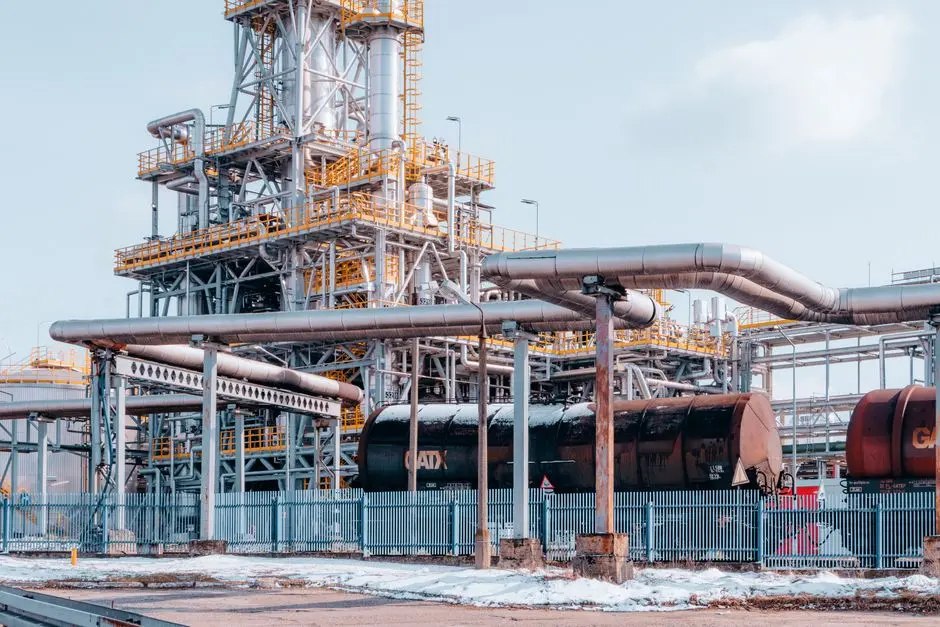
Five unit operations cover the bulk of 2026 mining pretreatment skids in this region. Effective design requires selecting the right equipment for specific facility needs.
A lamella clarifier with sludge recirculation delivers combined flocculation and inclined-plate separation in a small footprint and is the right workhorse when the stream is mostly settleable solids and the operator wants to hold floc inside the tank to reduce polymer spend. A DAF system for mining-influenced water is the better fit when the stream carries colloids, oils, or ultrafine particles that do not settle, and DAF units are routinely applied across the flow range that hits aggregate wash water and metals finishing rinses. A multi-media filter polishing DAF or clarifier effluent protects downstream ion exchange or RO membranes from particulate fouling and is the cheapest insurance against premature membrane replacement. A PLC-controlled coagulant and pH dosing skid ties coagulant, flocculant, pH adjuster, and precipitant into one repeatable recipe so the operator is not tuning four pumps by hand during a shift. Finally, a plate and frame filter press for mining sludge turns the solids that came out of the clarifier or DAF into a stackable cake suitable for dry stacking, and the right plate and frame filter press is the piece of equipment that determines whether the back end of the train is compliant or a recurring landfill problem (ChemREADY).
Decision Framework: Reuse, Pretreat-to-POTW, or Haul Off
The disposal decision for a Travellers Rest plant manager involves three primary options. Each approach offers distinct trade-offs for operational cost and regulatory compliance.
- Reuse wins when freshwater scarcity, hauling cost, or community pressure is high and process water quality needs are achievable with on-site treatment; reusing the water in the circuit is the lever that turns pretreatment from a cost centre into a water-stability strategy (ChemREADY; Fluence, 2024).
- Pretreat-to-POTW is the default when local limits are achievable, sewer capacity is available, and the plant wants to avoid brine disposal; this is the most common path for aggregate wash water and metals finishing rinses in the greater Greenville area, where the municipal sewer is the receiving entity.
- Hauling off site is the legacy baseline and remains a fallback, but trucking cost climbs with volume and the operator loses direct control of effluent quality, which is why plants that have run the numbers often find on-site treatment changes the maths with big savings on trucking and direct control over outcomes (ChemREADY).
Track ROI inputs honestly — flow, solids, power, labour, and polymer — plus avoided hauling and avoided POTW surcharges, and compare options on a one-page view with payback and risk (ChemREADY). For a peer benchmark on a comparable corridor, see the mining pretreatment near Bristol for comparison guide, which lays out the same decision tree for a similar small-town jurisdiction.
Frequently Asked Questions
What counts as a Significant Industrial User and how does 40 CFR Part 403 apply to a metals or aggregate plant?
A Significant Industrial User is an industrial discharger subject to categorical pretreatment standards, or any industrial user that discharges an average of 25,000 gpd or more of process wastewater, or that contributes a process waste stream of five percent or more of the POTW's average dry-weather hydraulic or organic capacity, among other criteria under 40 CFR Part 403. A metals finishing or aggregate wash plant near Travellers Rest that crosses those thresholds will be designated an SIU by the local control authority and must obtain a pretreatment permit, comply with applicable categorical standards for its SIC code, and submit periodic self-monitoring reports.
How should a Travellers Rest plant size a 2026 pretreatment skid — and what CAPEX and lead-time should it plan for?
Sizing is driven by the five-parameter block in the design table above, and the operator should request a jar-test report and a mass balance from each bidder before any price is finalised. Rather than quoting a price, the buyer should request line-item pricing on the equalisation basin, the clarifier or DAF, the chemical dosing skid, the multi-media filter, the polishing step (if needed), and the plate and frame filter press, plus delivery, install, and commissioning as separate line items; lead times for fabricated skids in 2026 should be requested in writing from each vendor because they are the real schedule risk on a permit-driven retrofit.
How do composite sampling and self-monitoring reports flow back to the local POTW?
Continuous pH and flow are recorded at the discharge, and a 24-hour composite sampler pulls flow-proportional aliquots for metals and other categorical parameters on a cadence set by the control authority. Those results are compiled into a self-monitoring report and submitted to the POTW, typically monthly, with any excursions flagged and corrective action documented; the hardware and software side of that loop is covered in the