
What Regulations Apply to Mining and Metals Discharges Near Bristol, US
Any U.S. mine generating wastewater must hold an EPA-issued NPDES permit under the framework described in US EPA's industrial wastewater guidance (S1). The Mineral Mining and Processing Effluent Guidelines and Standards, codified at 40 CFR Part 436, were promulgated in 1975 and amended in 1976, 1977, 1978, and 1979, and cover wastewater discharges from mine drainage, mineral processing operations, and stormwater runoff (S2). These Part 436 limits are incorporated directly into the NPDES permit issued to a discharger, so the rules of the relevant subpart flow through to the permit holder (S2).
The first design task is to identify the right subpart. EPA lists dimension stone (Subpart A), lightweight aggregates (H), mica/sericite (I), trona (P), rock salt (Q), mineral pigments (T), lithium (U), fire clay (AA), attapulgite/montmorillonite (AB), kyanite (AC), shale/common clay (AD), aplite (AE), kaolin (AG), ball clay (AH), feldspar (AI), talc/steatite/soapstone/pyrophyllite (AJ), and garnet (AK) as reserved subparts under 40 CFR Part 436 (S2). A Bristol-area quarry, pigment operation, or specialty-aggregate plant should confirm which reserved subpart applies to its commodity and read the corresponding effluent limits in the permit. For most other mining subparts, the limits on TSS, pH, settleable solids, oil & grease, and total metals are spelled out in the subpart table itself (S2).
Sewer discharge in the U.S. is typically governed by a local POTW pretreatment program. A Bristol-area operation discharging to a municipal sewer must reconcile the NPDES permit (which carries the 40 CFR Part 436 subpart limits) against the local sewer authority's specific pretreatment limits, surcharge thresholds, and monitoring frequency. The controlling value is whichever is more stringent. Confirm the applicable subpart, pull the current local sewer limits, and treat the two documents as a single compliance envelope before any equipment is selected.
The Pollutant Envelope of Bristol-Area Mining and Metals Wastewater
Mining wastewater contains high levels of suspended solids and can be highly acidic (S3). It is common to find metals, heavy metals, organic compounds, and metalloids such as iron, arsenic, and manganese in mining effluent, and in some instances, the wastewater is highly brackish (S3). That pollutant envelope drives the pretreatment train.
The pollutant load is also seasonal. Surface mine acid runoff, mine drainage, and tailing piles can pollute receiving waters after significant rainfall; in drier regions, processing ores can toxify aquifers (S3). A Bristol-area plant should expect storm-driven swings in flow and acid load rather than a flat diurnal curve. Water uses that drive wastewater quality include equipment cooling, dust control, extraction, washing, transport of coal or minerals, mineral processing, and precious-metal reclamation from ore (S3). Each of these contributes suspended solids, dissolved metals, or both.
Because the influent is variable, the design must include equalization and continuous online pH and temperature monitoring as a baseline. Before any unit operation is sized, the engineer should request a 12-month site sampling campaign covering pH, TSS, total dissolved solids, total metals (at minimum iron, manganese, arsenic, copper, zinc, lead, nickel, cadmium, and chromium), ammonia, and oil & grease, then reconcile that dataset against the local POTW's specific limits. Without influent data, even a well-specified train will fail its first compliance event.
Designing the Pretreatment Train: From Equalization to Discharge
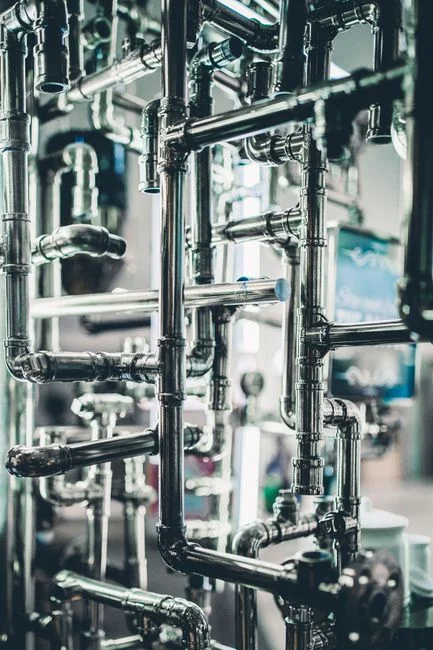
A working pretreatment train for a sewer-discharging mining or metals plant in the Bristol area follows seven steps. Each step targets a specific pollutant from the envelope above.
Step 1 — Equalization and pH adjustment. Restoring pH toward neutral improves water quality and helps dissolved metals precipitate; the right dosage of pH adjusters controls acidity in mining wastewater (S3). A PLC-controlled coagulant, flocculant, and pH dosing skid sized to the peak acid load keeps the downstream train inside its operating envelope.
Step 2 — Coagulation and flocculation. Coagulants and flocculants combine suspended solids and small metal particles into larger clumps for easier removal by clarification and post-filtration (S3). Corrosion inhibitors, ion-exchange aids, and biocides are added where needed to protect downstream equipment (S3).
Step 3 — Clarification. A DAF system for mining wastewater pretreatment is the right tool where oil & grease and floatable metals are present; a lamella clarifier for metal-bearing sludge separation suits higher-TSS streams with settleable solids. Both produce a concentrated sludge that feeds the dewatering press.
Step 4 — Metals polishing. Reactive filtration on a continuous-backwash upflow sand filter has been demonstrated to remove copper to 8 µg/L (0.008 mg/L) at a Burrillville, RI installation, illustrating achievable low-µg/L metals effluent for sewer discharge (S4). Downstream of the clarifier, a multi-media filter for suspended solids and turbidity polishing provides the turbidity cut that lets the reactive media work consistently.
Step 5 — Biological polishing (where ammonia is present). Moving-bed biofilm reactors are designed for high-strength and highly variable ammonia loads on HDPE media, with a media geometry that maximizes durability and protected surface area for the nitrifying biofilm (S4). For cold-climate sites, post-lagoon nitrification beds have been documented to operate down to <1 °C (34 °F), with over 100 full-scale installations across North America (S4). Confirm with the supplier that the system is rated for the site's winter water temperature before ordering.
Step 6 — Filtration and disinfection. Backwash media filters and centrifugal separators handle suspended particles; centrifugal units are documented to remove particles up to 2,000 microns (S3). UV or chlorine dioxide provides chemical-free or low-byproduct microbial control prior to discharge.
Step 7 — Sludge handling. A plate and frame filter press for mining sludge dewatering drops clarifier and DAF sludge to a transportable cake for offsite disposal or, where permitted, backfilling.
| Step | Unit operation | Target pollutant(s) | Source |
|---|---|---|---|
| 1 | Equalization + pH adjustment (dosing skid) | Acidity, pH excursions | S3 |
| 2 | Coagulation / flocculation | Colloidal metals, fine TSS | S3 |
| 3 | DAF or lamella clarifier | Floatable metals, oil & grease, settleable TSS | S3 |
| 4 | Reactive sand media + multi-media filter | Dissolved metals (Cu to 8 µg/L documented) | S4 |
| 5 | MBBR or SAGR (if ammonia present) | NH₃-N, NO₃-N (cold-tolerant to <1 °C) | S4 |
| 6 | Backwash filter + UV or ClO₂ | Residual TSS, microbes | S3 |
| 7 | Plate-and-frame filter press | Clarifier/DAF sludge volume | — |
Decision Framework: Selecting the Right Equipment for Your Site
Match the unit operation to the dominant pollutant. DAF or lamella clarifiers handle suspended solids and floatable metals; reactive sand media or ion exchange drives dissolved metals to low-µg/L levels; MBBR or SAGR handles ammonia and nitrate (S3, S4). The Burrillville, RI copper removal to 8 µg/L (0.008 mg/L) is the level of performance a reactive-media filter can deliver; design to that ceiling when the local sewer limit is in the low-µg/L range (S4).
For arid or water-stressed sites, integrate membrane desalination, ceramic UF, or advanced RO plus brine concentration to recover process water and reduce freshwater draw; documented applications cover lithium, zinc-lead-silver smelters, and integrated steel plants (S5). An ultrafiltration system for RO pretreatment and water reuse is the typical guard train ahead of a reverse osmosis system for process water recovery.
Cold-climate or seasonal sites should verify biological nitrification performance at winter temperatures; the SAGR system referenced above is documented to operate at <1 °C (34 °F) (S4). For microbial control on the polished effluent, a UV sterilizer for chemical-free disinfection avoids the chlorination byproducts that some POTWs surcharge.
Before issuing purchase orders, reconcile the train against the local POTW's specific limits list and the 40 CFR Part 436 subpart for the site's mineral commodity. If you are deciding between two suppliers, the differentiator is documented field performance against the actual pollutant you need to remove (e.g., 8 µg/L copper in a full-scale reactive-filter installation, S4), not catalog cut-sheets.
| If the controlling pollutant is… | Then the unit operation is… | Documented reference |
|---|---|---|
| Floating oils, grease, low-density TSS | DAF | S3 |
| Settleable TSS, metal-bearing sludge | Lamella clarifier | S3 |
| Dissolved metals, low-µg/L target | Reactive sand media filter | S4 (Cu to 8 µg/L, Burrillville RI) |
| Ammonia, variable load | MBBR | S4 |
| Ammonia, cold-climate site | SAGR post-lagoon nitrification bed | S4 (<1 °C operation, 100+ installations) |
| Brackish process water, water reuse | Ceramic UF + RO | S5 |
| Residual microbes | UV or ClO₂ | S3 |
Sampling, Reporting, and Staying Compliant Through 2026
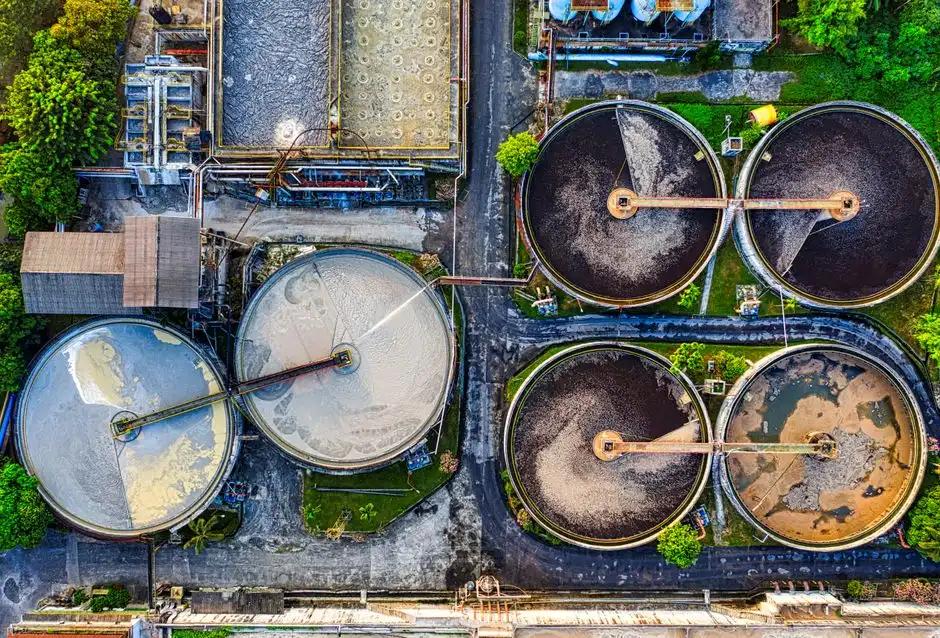
Compliance depends on the sampling program. Start by confirming applicability under 40 CFR Part 436 for the site's specific mineral commodity and verifying that the NPDES permit incorporates the corresponding subpart limits (S2). Then obtain the local POTW's current pretreatment limits, surcharge thresholds, and monitoring frequency, and reconcile them with 40 CFR Part 436 to identify the controlling (more stringent) value on every parameter.
Use online instrumentation for pH, TSS, and flow at the discharge sampling point. Conduct periodic metals and ammonia composite sampling, since both are listed as common parameters in mining wastewater profiles (S3, S4). The PLC-controlled coagulant, flocculant, and pH dosing skid specified earlier is also the natural place to capture pH and flow data for the daily monitoring log. Stock the consumables—replacement media, valves, and calibration standards—through a water-treatment parts and media supplier so a single excursion does not become a multi-day shutdown waiting on spares.
Document chain of custody, calibration records, and corrective actions for any excursion; pretreatment programs typically require a written response within a defined window of any limit exceedance. Finally, plan for stormwater runoff containment, since 40 CFR Part 436 explicitly covers stormwater runoff as part of mining wastewater (S2). A first-time audit at a Bristol-area plant will check all four: the permit, the local limits, the sample logs, and the stormwater plan.
Frequently Asked Questions
What is the typical capital cost of a 40 CFR Part 436 pretreatment train for a Bristol-area mining plant?
The supplied research does not include capital-cost figures for a complete 40 CFR Part 436 train, and pricing varies with flow, influent concentrations, and the local sewer limits. A buyer should request itemized quotations tied to the specific design flow, the documented metals
Frequently Asked Questions
What EPA regulation controls mining wastewater discharge near Bristol, US?
Mining wastewater discharge is primarily governed by the Clean Water Act through the National Pollutant Discharge Elimination System (NPDES) permit program. Facilities discharging into a Publicly Owned Treatment Works (POTW) must also comply with the General Pretreatment Regulations found in 40 CFR Part 403, which prohibit the introduction of pollutants that cause pass-through or interference at the treatment plant.
Which 40 CFR Part 436 subpart applies to my mineral commodity?
40 CFR Part 436 establishes Effluent Limitations Guidelines and Standards for the Mineral Mining and Processing Point Source Category. The specific subpart depends on your extracted material; for example, Subpart B applies to crushed stone, Subpart C to construction sand and gravel, Subpart D to industrial sand, and Subpart J to dimension stone. Operators must identify the exact SIC or NAICS code associated with their mineral extraction process to determine the correct regulatory subcategory.
What is the typical CAPEX range for a mining wastewater pretreatment system sized for a 50 m³/h flow?
For a 50 m³/h (approximately 220 gpm) pretreatment system incorporating clarification and metals precipitation, typical CAPEX ranges from $850,000 to $1,800,000. This estimate varies significantly based on the influent contaminant load, the degree of automation, materials of construction, and the complexity of the sludge dewatering infrastructure required to meet local disposal standards.
How long does it take to design, build, and commission a DAF plus reactive-media metals polishing train for a mining site?
The total project timeline from initial engineering design to full operational commissioning typically spans 10 to 16 months. This schedule includes 3 to 4 months for finalized engineering and permitting, 5 to 9 months for equipment fabrication and site civil works, and 2 to 3 months for mechanical installation, system integration, and performance testing.
What sampling frequency does a local POTW pretreatment program require for heavy metals and pH in 2026?
Under 40 CFR 403.12, Significant Industrial Users (SIUs) are generally required to perform self-monitoring for regulated pollutants at least twice per year. However, local ordinances in the Bristol area may mandate more frequent monitoring, often requiring monthly or quarterly sampling for heavy metals such as lead, copper, and zinc, and continuous or daily pH monitoring to ensure compliance with local discharge limits.