What a Cranks Mining or Metals Wastewater Stream Actually Caries in 2026
A typical Cranks-area mining or metals service stream in 2026 carries a mixed particulate and organic load rather than a single contaminant class. Suspended mineral fines from crushing, washing and conveyance operations sit alongside free and emulsified oil and grease from hydraulic systems, lubricants and cutting fluids. Precipitated metal hydroxides — iron, manganese, aluminum, and co-precipitated heavy metals raised by pH adjustment — add a floc that is light, voluminous, and slow to settle on its own. Hardness and scale ions (calcium, magnesium, silica) round out the matrix and drive downstream fouling.
These plants discharge under US federal pretreatment rules. The applicable categories are 40 CFR Part 420 (ore mining and dressing), 40 CFR Part 421 (nonferrous metals), and 40 CFR Part 440 (ore mining and beneficiation), each governing TSS, metals and pH at the point of discharge to a publicly owned treatment works. Numeric limits vary by subcategory and outfall, so the specifier must confirm the applicable limits with the local control authority before sizing any primary unit. Getting the primary unit wrong shows up predictably: oil carry-over blinds downstream filters, while an undersized clarifier washes out sludge during storm flows and pushes TSS past the permit ceiling.
How a DAF Actually Works in a Metals Plant
Dissolved air flotation (DAF) separates contaminants by floating them rather than settling them. Saturated recycle water is depressurized inside the DAF vessel, releasing a cloud of micro-bubbles that attach to flocculated solids, oil droplets and grease. The bubble-particle agglomerate has a bulk density below water and rises to the surface, where a skimmer or wiper blade sweeps the float layer into a discharge trough. Clarified water exits from below the float blanket.
Polymer chemistry determines DAF effectiveness on an industrial stream. According to ALAR's product description, cationic and anionic polymers added upstream coagulate and flocculate emulsified solids so they attach to micro-bubbles and resist shear inside the cell. ALAR's documentation notes that the right polymer choice promotes stronger floc formation, lower float volume, and lower dissolved-air demand — the three operating variables a buyer should ask a vendor to quantify during jar testing. In some cases, the float can be dosed with additional polymer and fed directly to a dewatering filter without a holding tank, simplifying the train.
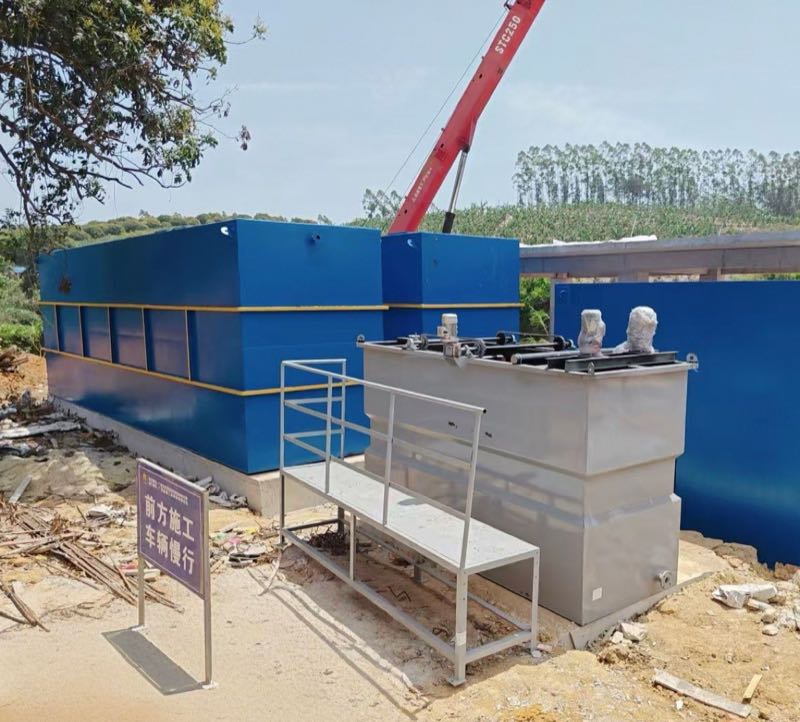
Industrial DAF packages are usually rectangular with a hopper bottom, traveling-bridge sludge collector, surface wiper blades, and an inclined plate that drives float into a discharge trough — the geometry ALAR describes for its combined flotation-settling unit. The micro-bubble mechanism is the proven route for oil-in-water droplet removal, as established in the ResearchGate study on DAF treatment of oil-in-water mixtures (ResearchGate publication 341784696). For a Cranks plant, any stream carrying lubricant, cutting oil or hydraulic fluid is a DAF candidate. A packaged DAF system for mining and metals wastewater is the standard offer for that duty.
How a Conventional or Lamella Clarifier Handles the Same Stream
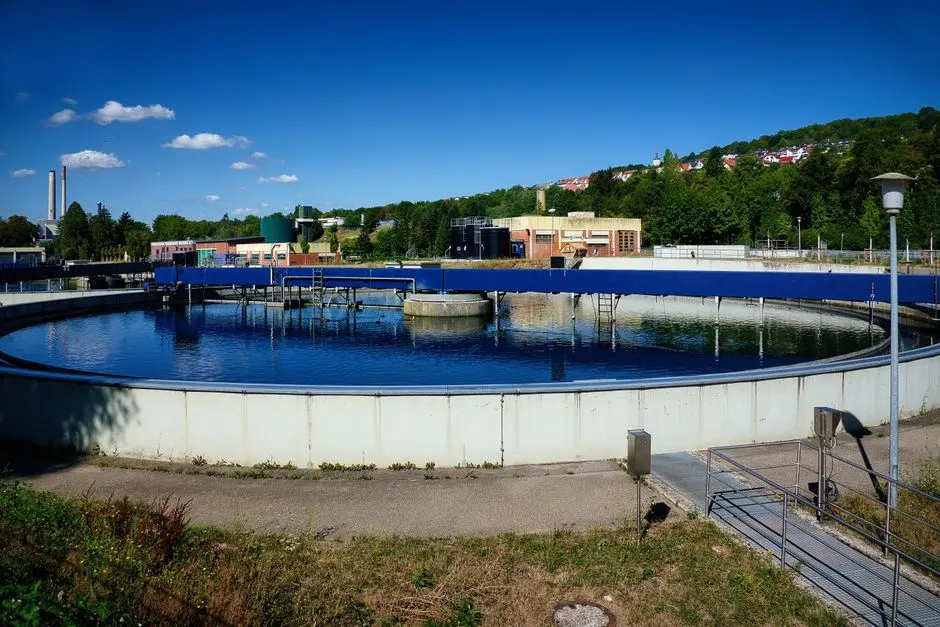
A clarifier separates by gravity, where heavier particles fall to the bottom of a tank and clarified water overflows a weir. A lamella, or inclined-plate clarifier, multiplies the effective settling area by stacking plates at 55–60° inside a compact tank, letting a smaller footprint do the work of a larger conventional basin. HydropureWater's lamella clarifier specification lists a surface-loading range suited to coarse mineral solids in industrial service.
While DAF units rely on flotation, clarifiers require a quiet environment to facilitate settling. Polymer is used ahead of a clarifier to grow floc large enough to settle quickly, but the separation physics is fundamentally different. Floc must fall, so the cell must remain quiet, retention times are longer, and the tank cross-section must be large enough to keep upward velocity below the settling velocity of the target floc. This requirement explains why a lamella clarifier can be compact for a given flow while still being larger than a DAF on light-fines duty.
Clarifier strengths on a mining stream are real: high TSS surges are tolerated, abrasive mineral solids are less damaging to the internals than to fine-bubble DAF nozzles, and there is no compressed-air or saturator system to maintain. Clarifier weaknesses matter just as much: free oil and grease do not settle, they form a surface layer that has to be skimmed separately, and a clarifier responds slowly to influent spikes because the sludge blanket takes hours to adjust. A lamella clarifier for coarse mineral solids is the right reference unit for a feed that is mostly settleable TSS with little oil.
DAF vs Clarifier: Side-by-Side for Mining Duty
The matrix below provides a comparison that a Cranks plant engineer can present to a capex committee, based on the mechanical differences and published evidence regarding DAF and polishing configurations.
| Parameter | Dissolved Air Flotation (DAF) | Conventional / Lamella Clarifier | Hybrid (DAF + Clarifier or integrated DAF-clarifier) |
|---|---|---|---|
| Separation mechanism | Micro-bubble attachment lifts floc and oil to surface | Gravity settling of heavier particles | Float stripper followed by settling polisher, or single tank with both zones |
| Best target contaminant | Free/emulsified oil and grease, light fines, metal-hydroxide floc | Coarse settleable TSS, high surge loads, abrasive mineral solids | Mixed streams with both oil and coarse TSS |
| Footprint for a given flow | Small on oil/light-fines duty | Large on light-fines duty; lamella geometry reduces it for coarse duty | Two tanks, or one integrated tank — vendor-dependent |
| Polymer requirement | Cationic/anionic polymer for floc strength, float volume and air demand (ALAR) | Polymer to grow settleable floc; lower dissolved-air demand but still chemistry-dependent | Two-stage dosing possible; coordinated through a polymer and coagulant dosing system |
| Air / power demand | Saturator pump, recycle water, scraped surface skimmer drive | Sludge raking or bridge drive; no saturator | Combined load; one integrated package can share utilities |
| Sludge form | Float (low moisture, low volume with good polymer) — ALAR notes 10% of original sludge volume as a transfer/holding tank sizing rule | Settled sludge, higher moisture, larger volume | Float from DAF zone, settled sludge from clarifier zone — both routed to dewatering |
| Tolerance to feed surges | Faster response; cell volume is smaller so surge hits effluent sooner | Better surge absorption; sludge blanket buffers swings | Clarifier zone buffers surges after DAF strip |
| Downstream polishing needs | Often paired with a biological or filtration stage for residual organics and metals — the DAF + MMBBR configuration studied for synthetic oily wastewater (SSRN 4731382) is the published reference | Filtration or membrane polish for residual fines and metals | Either configuration can feed the same downstream stage |
Read the table as a rule of thumb, not a substitute for jar testing. ALAR's 10%-of-sludge-volume holding-tank rule is also a useful scope prompt: once a DAF float is generated, the dewatering stage (rotary vacuum drum filter or filter press) should be specified in the same project rather than as a follow-on. For float handling, a sludge dewatering downstream of DAF or clarifier is the typical finish.
Hybrid Setups: DAF-Plus-Clarifier and Integrated DAF-Clarifier Units
Most real Cranks streams are mixed, containing emulsified oil, coarse mineral solids, and metal-hydroxide floc. Neither a DAF nor a clarifier alone is the best answer for these complex inputs, making a hybrid system ideal. Two configurations dominate vendor offerings.
The first is a DAF-ahead-of-clarifier train. The DAF strips oil and the lightest fines, the clarifier polishes settleable carryover, and the clarified water moves to biological, filtration, or metals-precipitation polishing. This is the same architecture described in the SSRN paper on combining DAF with modified moving bed biofilm reactors (MMBBR) for synthetic oily wastewater, where the DAF handles the oil and the downstream reactor handles residual organics. For a Cranks metals plant, the downstream stage is more often a metals-precipitation/filtration train than a biofilm reactor, but the logic — separate the floatables, then polish — is the same.
The second configuration is an integrated DAF-clarifier in a single tank. ALAR markets exactly this geometry, a rectangular hopper-bottomed tank with a traveling-bridge sludge collector and surface wiper blades, for sites that want one footprint instead of two. The hybrid is the right answer in Cranks when the stream carries both emulsified oil and coarse mineral solids, when pad space is constrained, or when a future biological polishing stage is already on the project roadmap. Either path can be served by a packaged DAF system for mining and metals wastewater upstream of a downstream stage.
Decision Framework: Picking the Right Unit for a Cranks Plant in 2026
The choice collapses to three branches once the influent is characterized. The decision inputs a vendor will need to size and quote accurately are the same in every branch.
| If the stream is characterized as… | Then the 2026 primary unit is… | Inputs the buyer must supply to a vendor |
|---|---|---|
| High oil/grease plus light fines and metal-hydroxide floc | Standalone DAF | Design flow, peak flow, expected oil & grease, expected TSS, polymer window, downstream stage |
| Coarse settleable solids, low oil, surge-prone | Conventional or lamella clarifier | Same flow/TSS inputs plus peak-factor and sludge-blanket depth |
| Mixed oil plus coarse TSS, or uncertain influent | DAF + clarifier train, or integrated DAF-clarifier | All of the above, plus pad area constraint and downstream stage selection |
Two non-technical checks belong on the same checklist. First, applicable pretreatment categories — 40 CFR Parts 420, 421, and 440 for mining and nonferrous metals — must be confirmed with the local control authority before any final specification, because numeric limits vary by subcategory and are not generic. Second, the project's track record with packaged, vendor-supported turnkey systems is a procurement signal: the Ontario Mining Association's 2016 post on a clean-tech firm designing a mine-water treatment system is evidence that turnkey DAF/clarifier packages are an established, vendor-supported path for mining operators. The polymer and coagulant dosing system should be specified alongside whichever primary unit is chosen, since the chemistry drives the separation in both DAF and clarifier modes.
For a deeper read on the pretreatment frame that governs these decisions in a nearby US mining corridor, the mining pretreatment compliance guide covers the same regulatory categories from a permit-defence angle. For a sister decision in fabricated metals, the DAF vs clarifier for fabricated metals guide runs the same comparison against a different influent matrix.
Frequently Asked Questions
What capex range should a Cranks plant expect for a DAF versus a clarifier in 2026?
Published unit prices for either system are not in the public research, and a credible budget requires a vendor quote against a specific flow, TSS, oil and footprint envelope. The actionable check is to send each shortlisted vendor the same design flow, peak flow, expected TSS, expected oil & grease, target effluent TSS, available pad area, and downstream stage; the resulting quotes are then comparable on a like-for-like basis.
Which 40 CFR Part 420/421/440 numeric limits should the primary unit be sized to hit?
Numeric limits vary by subcategory and outfall and are not generic, so the local control authority is the source of truth. The actionable check is to obtain the facility's pretreatment permit and any applicable categorical limits (40 CFR Part 420, 421, or
Frequently Asked Questions
For a mining plant in Cranks in 2026, is a DAF or a clarifier better for removing oil and heavy-metal solids?
For mining and metals wastewater in Cranks, Dissolved Air Flotation (DAF) is superior for removing free-floating oils and low-density suspended solids, typically achieving removal efficiencies of 90-95% for emulsified oils. In contrast, conventional clarifiers are better suited for high-density heavy-metal precipitates, such as metal hydroxides, which settle effectively via gravity and flocculation.
If the influent contains a high concentration of both oil and dense solids, a DAF is generally preferred for the primary stage to prevent oil-fouling of downstream metal-removal processes, whereas a clarifier is essential for meeting strict total suspended solids (TSS) limits if the waste stream is predominantly high-gravity mineral tailings.
What flow rate and footprint should we size a DAF or clarifier for in a metals plant, and which inputs must we give the vendor?
Sizing is determined by the hydraulic loading rate, typically 1.0 to 3.0 gallons per minute per square foot (gpm/ft²) for DAF units and 0.25 to 0.5 gpm/ft² for conventional circular clarifiers. Footprint requirements are significantly smaller for DAF systems, often requiring 70-80% less surface area than clarifiers for the same volumetric flow rate due to the accelerated separation kinetics of micro-bubbles.
To receive an accurate quote, you must provide the vendor with the peak and average daily flow rates (MGD), influent pH, temperature, specific gravity of the suspended solids, oil/grease concentration (mg/L), and the target heavy metal concentrations required for discharge compliance.
Can a DAF and a clarifier be used together for mining wastewater, and what is the benefit of an integrated DAF-clarifier unit?
Yes, a DAF and a clarifier can be used in series, where the DAF acts as a primary oil/grease separator followed by a clarifier for secondary polishing of heavy metal precipitates. Integrated DAF-clarifier units combine these stages into a single vessel, utilizing the DAF for surface skimming and the lower clarifier zone for sludge collection.
The primary benefit of an integrated unit is a reduction in total plant footprint and piping complexity, as well as the ability to handle fluctuating influent loads where heavy metal concentrations vary throughout the production cycle, ensuring both fats/oils and metal solids are managed within one treatment footprint.
How do polymer type and float moisture content change the downstream sludge tank and dewatering filter sizing for a DAF?
DAF float typically contains 3% to 5% solids, meaning downstream dewatering equipment must be sized to handle high-volume, low-consistency sludge. The selection of a high-molecular-weight cationic or anionic polymer is critical; improper polymer dosing results in a "wet" float that increases the volume of sludge, requiring larger sludge holding tanks and higher capacity filter presses or centrifuges.
By optimizing polymer dosage to achieve a drier float (up to 8-10% solids), you can reduce the required volumetric capacity of downstream dewatering filters by 30-50%, significantly lowering energy consumption and disposal costs for the processed filter cake.
Which US federal pretreatment standards (40 CFR) apply to a Cranks mining or nonferrous metals wastewater discharge in 2026?
For mining and metals facilities in the United States, wastewater discharge is governed by 40 CFR Part 440 (Ore Mining and Dressing Point Source Category) or 40 CFR Part 421 (Nonferrous Metals Manufacturing Point Source Category). These regulations mandate specific concentration limits for pollutants such as arsenic, cadmium, copper, lead, and zinc.
In 2026, facilities must ensure their treatment systems are capable of meeting the categorical pretreatment standards for existing sources (PSES) or new sources (PSNS), which are enforced by local Publicly Owned Treatment Works (POTWs) or via National Pollutant Discharge Elimination System (NPDES) permits for direct discharges.