Why Sanford Fabricated Metals Plants Are Re-evaluating Primary Clarification in 2026
Sanford, NC fabricated metals plants discharging to the local POTW are getting squeezed on two fronts in 2026: tighter enforcement of sewer-use ordinance limits on oil and grease, and surcharges that activate the moment a plant crosses 100 mg/L oil and grease or 250 mg/L TSS in a composite sample (typical Southeast POTW surcharge trigger; per municipal sewer-use ordinances in the Carolinas). The typical fabricated metals influent envelope at a Sanford CNC, stamping, or parts-washing operation runs 50–500 mg/L TSS, 100–1,000 mg/L oil and grease, pH 6–9, with trace Cu, Ni, Zn, and Fe carried in on parts-wash rinse water and stamping draw compounds. The primary clarifier sets the floor on every one of those parameters, so the choice between a dissolved air flotation unit and a settling clarifier determines whether the plant hits 40 CFR Part 433 categorical standards and the local sewer-use limits, or pays surcharges every month.
40 CFR Part 433 (Metal Finishing) imposes technology-based daily maximum limits on total metals (Cu, Ni, Pb, Zn, Cr), oil and grease, and TSS for any fabricator discharging to a POTW. Part 433 does not pick the equipment — it sets the ceiling — but the primary clarifier is the unit that determines whether the downstream precipitation, filtration, and pH-adjust train can meet those ceilings consistently. Plant engineers who pick a clarifier on a high-oil stream end up chasing emulsified oil into the precipitation stage, where it consumes NaOH or Na₂CO₃, fouls sand filters, and pushes sludge volume up by 20–40% (HydropureWater field data, 2026).
How a DAF Unit Actually Separates Oil and Solids
A dissolved air flotation system separates by floating, not by settling. The process train is coagulant injection (typically a metal salt or cationic polymer) at a pH-adjusted flocculation stage, followed by saturation of a side-stream recycle with air at 60–80 psig in a pressurized saturator, and then release of that recycle into the flotation tank through a pressure-reduction valve. The pressure drop nucleates a cloud of 30–50 μm microbubbles (SigmaDAF USA process description, 2026) that attach to the conditioned floc and lift oil droplets and fine particulates to the surface in under 5 minutes of hydraulic residence time. A paddle skimmer scrapes the float layer; heavier settleable solids drop to the bottom collection zone and are augered out.
On a fabricated metals stream, the strength of a DAF is its ability to capture both free oil and emulsified oil (broken by the coagulant step) and to lift the fine metal-bearing TSS that would otherwise report as a cloudy overflow on a settling clarifier. The ClearFox application matrix (2026) notes that DAF is strong on free and emulsified oil plus particulate COD/TSS, weak on dissolved metals and soluble COD — a critical distinction for engineers designing the downstream precipitation stage. DAF does not remove dissolved Cu, Ni, Zn, or Cr; it only removes what is already particulate or floatable.
For a typical Sanford job shop, two DAF model families fit. The SigmaDAF FPAC is a low-profile cross-flow separator built for small-to-medium flow rates with very high TSS and FOG loads — exactly the profile of a CNC coolant and tramp-oil stream. The COMPACT skid is pre-assembled with chemical conditioning, sensors, and a PLC panel, handling flows of 66 GPM (≈15 m³/hr) or less on a single skid and scaling to two-skid modular systems above that (SigmaDAF USA, 2026). For plants with floor-space constraints, the round-tank vertical-upward-flow DAF design eliminates the dead zones of rectangular horizontal units and uses up to 15% less chemical at equivalent removal (ClearFox, 2026) — a meaningful OPEX line for shops running 1–2 shifts.
How a Lamella or Conventional Clarifier Separates Solids
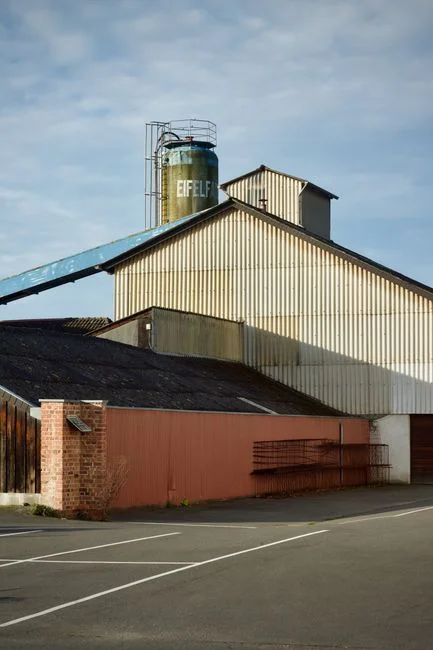
A lamella clarifier (inclined-plate settler) and a conventional rectangular clarifier both separate by gravity, but the lamella geometry multiplies the effective settling area inside a small footprint. HydropureWater's lamella unit operates at 20–40 m/h surface loading rate, compared to ~1–3 m/h for a conventional clarifier — a 10× footprint reduction at equivalent flow. The trade-off is that lamella performance depends on the solids actually settling, not floating, which is the exact failure mode on a fabricated metals stream carrying emulsified oil and low-density metal hydroxide floc.
Clarifier strengths on metals streams are real and worth stating: low CAPEX, no saturator or air compressor, simple operation, and a dense underflow that feeds a plate-and-frame filter press efficiently. Gravity clarifiers on metals streams typically produce 2–4% dry-solids underflow, which is thick enough to skip a separate sludge thickener. Clarifier weaknesses are also real: poor capture of free oil (oil sheens pass over the plates and re-enter the effluent), poor capture of emulsified oil (droplets ride the upward convection currents between plates), and poor capture of low-density metal hydroxide floc without a coagulant aid. On a stream with more than ~50 mg/L oil and grease, a lamella clarifier will oil-foul its plates within weeks and lose 30–50% of its design hydraulic capacity (HydropureWater field data, 2026).
The honest framing for a Sanford engineer: a clarifier is the right primary when oils are negligible and the goal is heavy-metal sludge thickening. It is the wrong primary when the influent looks like a stamping-shop or parts-wash floor drain.
DAF vs Clarifier for Fabricated Metals Wastewater: 2026 Comparison
The head-to-head table below summarizes the parameters a Sanford engineer will weigh against vendor quotes and POTW limits. All removal bands are typical operating ranges for metals-finishing streams, not nameplate claims. CAPEX bands are 2026 turnkey installed costs in the US Southeast for a 50 m³/hr system and include tanks, skids, controls, and chemical dosing — but exclude building, plumbing outside the battery limits, and permitting.
| Parameter | DAF (e.g., HydropureWater) | Lamella Clarifier (e.g., HydropureWater lamella) |
|---|---|---|
| Mechanism | Microbubble float (30–50 μm bubble attachment) | Gravity settle on inclined plates |
| Hydraulic loading rate | 15–25 m/h | 20–40 m/h |
| Free oil removal | 80–95% | 10–30% |
| Emulsified oil removal | 60–85% (with coagulant) | <10% |
| TSS removal | 60–90% | 40–70% |
| Dissolved metals (Cu, Ni, Zn) | Negligible — needs precipitation downstream | Negligible — needs precipitation downstream |
| Footprint at 50 m³/hr | ~8–12 m² (skid) | ~10–15 m² plus sludge hopper |
| Float/underflow solids | 3–6% dry solids (float) | 2–4% dry solids (underflow) |
| 2026 turnkey CAPEX (50 m³/hr, US SE) | $180K–$320K | $90K–$160K |
| Best fit | Oily streams; FOG > 50 mg/L | Pre-skimmed streams; metals sludge thickening |
Two framing rules follow from the table. First, if oil and grease exceeds ~50 mg/L in the raw stream, a clarifier alone will not meet POTW limits — DAF, or DAF followed by a clarifier for sludge thickening, is required. Second, the CAPEX gap of roughly $90K–$160K between a DAF skid and a lamella clarifier package at 50 m³/hr is typically recovered in 2–4 years through lower POTW surcharges and reduced sludge disposal volume (HydropureWater field data, 2026). A useful cross-reference for plants weighing the metals-stream trade-off is the DAF vs clarifier decision framework for mining and metals wastewater, which applies the same logic to higher-TDS streams.
Matching the Choice to a Sanford Plant Profile
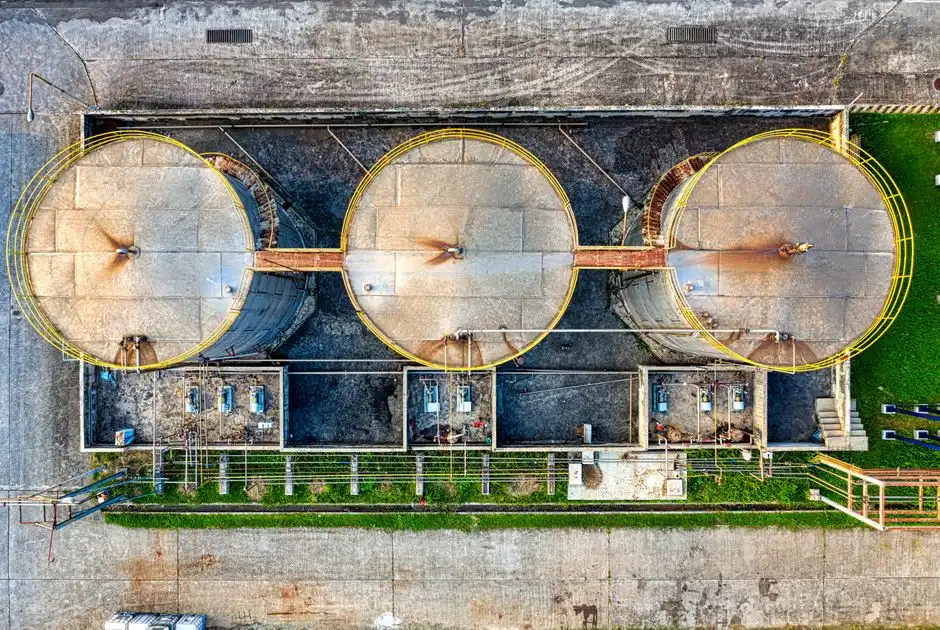
Three plant archetypes cover the bulk of the Sanford fabricated metals market. Each maps to a different primary clarifier choice, and each has a defensible written rationale the engineer can put in front of the EHS team and the POTW pretreatment inspector.
Profile A — Small CNC/machining shop, 5–20 m³/hr. The stream is mostly soluble cutting fluid, tramp oil, and metal fines from machine tool sumps. The oil load will break a clarifier within weeks. Specify a skid-mounted HydropureWater DAF system at the low end of its flow range with automatic chemical dosing, and route the DAF float to a small plate-and-frame filter press for dewatering. Reject a clarifier as the primary because the oil load is the controlling parameter, not the metal load.
Profile B — Medium stamping/fabrication plant, 20–80 m³/hr. The stream mixes drawing compound, quench oil, and parts-wash rinse water with significant TSS. This is the most common 2026 configuration in this segment: DAF as the primary for oil and TSS capture, then a lamella clarifier as a sludge thickener feeding a filter press. The DAF handles the oil; the lamella thickens the combined DAF underflow and clarifier underflow to 3–5% dry solids, which a filter press can dewater to 25–35% cake. The total system CAPEX is higher than a clarifier-only train, but the POTW compliance is consistent.
Profile C — Large structural metals or coating plant, 80–300 m³/hr, with upstream oil removal. If the plant already runs an API separator, belt skimmer, or coalescer that pulls oil and grease below 30 mg/L, a lamella clarifier is sufficient as the primary and DAF would be over-specified CAPEX. Specify a HydropureWater lamella clarifier sized for the post-skim flow, followed by chemical precipitation for dissolved metals. This is the segment where clarifier-only makes the most economic sense.
Process Train After the Primary Clarifier: Hitting 40 CFR Part 433 in 2026
The primary clarifier is step two, not step five. A defensible 2026 process train for a Sanford fabricator discharging to a POTW runs equalization → pH adjust → primary clarifier (DAF or lamella) → multimedia filtration → chemical precipitation for dissolved metals → sand/carbon polish → discharge. The primary clarifier removes oils and particulates; everything downstream exists to hit the 40 CFR Part 433 daily-max limits on total Cu, total Ni, total Pb, total Zn, total Cr, oil and grease, and TSS (40 CFR Part 433, Metal Finishing categorical standards).
For dissolved metals, raise the pH into the 8.5–9.5 band with NaOH or Na₂CO₃ to precipitate Cu, Ni, and Zn as hydroxides; chromium requires reduction from Cr(VI) to Cr(III) under acidic conditions before precipitation. A HydropureWater automatic chemical dosing skid with pH and ORP probes on a closed-loop control loop is the standard 2026 configuration for this step — manual dosing drifts and creates the slug violations that pretreatment inspectors flag.
| Stage | Equipment | Function | Typical Removal |
|---|---|---|---|
| 1. Equalization | HDPE tank, mechanical mixer | Buffer flow and load swings | — |
| 2. pH adjust | Chemical dosing skid | Bring pH to coagulation optimum | — |
| 3. Primary clarification | DAF or lamella clarifier | Remove oils, FOG, TSS | 60–95% oil; 40–90% TSS |
| 4. Multimedia filtration | Multi-media filter | Capture carryover floc and fines | 20–40% additional TSS |
| 5. Metal precipitation | NaOH/Na₂CO₃ dosing + sludge clarifier | Precipitate dissolved Cu, Ni, Zn, Cr | 90–99% dissolved metals |
| 6. Sludge dewatering | Plate-and-frame filter press | Reduce sludge volume for disposal | 3–6% → 25–35% cake |
Sludge handling closes the cost loop. DAF float typically runs 3–6% dry solids; a plate-and-frame filter press raises that to 25–35% cake, cutting disposal mass and landfill cost by roughly 5–8× (HydropureWater field data, 2026). The full pretreatment compliance picture is covered in more depth in the EPA 40 CFR 403 pretreatment compliance guide, and the broader metal-bearing wastewater train is mapped in the 2026 process train for metal-bearing industrial wastewater.
Frequently Asked Questions
When is a DAF mandatory for a fabricated metals plant?
A DAF is effectively mandatory when free or emulsified oil and grease exceeds ~50 mg/L in the raw wastewater, when TSS is above 200 mg/L, or when the local POTW's sewer-use ordinance sets a daily-max oil and grease limit that a clarifier cannot meet. At those loadings, a settling clarifier will oil-foul and consistently violate the discharge ceiling.
Can a lamella clarifier replace DAF on a fabricated metals stream?
Only if upstream oil removal — a skimmer, coalescer, or API separator — already pulls oil and grease below 30 mg/L. Above that threshold, the inclined plates oil-foul within weeks and the lamella loses 30–50% of its design hydraulic capacity. If the upstream oil removal is not in place, a clarifier-only train is not a defensible 2026 choice.
What 2026 CAPEX should a Sanford plant budget for a 50 m³/hr DAF?
A turnkey DAF skid in the US Southeast typically runs $180K–$320K installed at 50 m³/hr, versus $90K–$160K for an equivalent lamella clarifier package. The CAPEX gap is recovered in 2–4 years through lower POTW surcharges, reduced chemical consumption in the precipitation stage, and lower sludge disposal mass (HydropureWater field data, 2026).
Which materials of construction hold up on metalworking fluids?
304 stainless steel is the standard for fabricated metals DAF and clarifier wetted parts. 316 stainless steel is preferred when chloride-bearing cutting fluids or acidic rinse waters are present, since 304 is vulnerable to pitting and stress-corrosion cracking above ~150 ppm Cl⁻. Polypropylene and HDPE tanks, as used in the ClearFox DAF line (2026), offer the highest corrosion resistance for aggressive acidic rinse waters and chloride-heavy streams.
Does the DAF remove dissolved heavy metals like Cu, Ni, Zn, or Cr?
No. DAF removes floatable and particulate matter only — free oil, emulsified oil (after coagulation), and particulate TSS. Dissolved Cu, Ni, Zn, and Cr pass through the DAF unaffected and must be removed downstream by pH adjustment and hydroxide or sulfide precipitation, followed by multimedia filtration and/or ion exchange, before the effluent can meet 40 CFR Part 433 daily-max limits.