Why Milwaukee Mining and Metals Plants Cannot Pick by Brand
Milwaukee-area metals plants in 2026 are not choosing between two catalogs; they are choosing between two influent streams. The first stream is floatable — cutting oils, die-release lubricants, graphite, and floatable mineral slimes out of foundry operations in the Menomonee Valley. The second stream is settleable — iron and steel pickle liquor hydroxide floc (Fe(OH)3), plating rinse-water metal hydroxides, and fine foundry sand. In most equalization tanks those two streams arrive mixed, which is why a single technology rarely wins outright. The compliance picture is just as layered: plants discharging to the Milwaukee Metropolitan Sewerage District (MMSD) sewer work under MMSD Chapter 11 industrial pretreatment limits, while plants discharging to the Menomonee River or Kinnickinnic River work under Wisconsin DNR NR 211 and the federal metal-finishing and ore-mining effluent guidelines at 40 CFR 433 and 40 CFR Part 440. The 2026 cost reality is unforgiving — a packaged DAF in the 50–200 GPM class runs roughly 2–3× the capital of an equivalent lamella clarifier, so picking wrong is a six-figure miss before polymer and disposal costs even enter the spreadsheet (HydropureWater field data, 2026).
The same logic shows up in peer guides for other metals hubs, like the Huntsville mining DAF vs clarifier guide and the South Weber mining/metals DAF vs clarifier guide — the technology decision is always driven by the influent taxonomy, not the brand sheet.
How a DAF Clarifier Actually Treats Mining and Metals Wastewater
A DAF system clarifies wastewater by attaching 30–50 µm micro-bubbles to flocculated particles and floating them to the surface, where a paddle skimmer strips the sludge into a trough. The mechanical sequence is: fill the tank with clean water, pull clarified effluent through a recirculation pump, pressurize to roughly 60–80 psig in a saturation tank where air dissolves, then release to atmospheric pressure inside the flotation cell, where the dissolved air comes out of solution as micro-bubbles that nucleate on floc surfaces. Heavier particles that escape the bubble layer drop to a bottom auger. In a metals plant the standard conditioning train is coagulant (typically ferric chloride or alum at 50–300 mg/L), pH adjustment to 7.5–9.5 with lime or NaOH, and an anionic polymer flocculant at 0.5–5 mg/L, dosed either through a 15–45 second serpentine flocculation tube or in mix tanks when longer contact time is required (per Clearwater Industries, 2026-04).
What DAF does that lamella cannot is collapse the residence time on floatable material. FOG-coated fines and graphite lift out in 3–5 minutes versus the 2–4 hours a gravity clarifier needs, and benchmark removal reaches 95% on TSS and FOG, with downstream sludge volume cut by roughly 70% (per H2Flow, 2026). Standard packaged units such as the DAF system cover 4–300 m³/h across 13 models, which is the typical sizing band a single Milwaukee plant will fall into.
How a Lamella Clarifier Treats Settleable Metal-Hydroxide Sludge
A lamella clarifier is a compact gravity settler built around a pack of plates inclined at 55–60°. Flocculated water enters the plate pack, dense floc drops the short plate distance (typically 50–100 mm) and slides down to a hopper, and clarified water rises counter-current through the pack. Surface loading climbs to 20–40 m/h versus 1–2 m/h in a conventional rectangular basin — that is the entire engineering reason lamella exists. For Milwaukee steel pickling and plating operations, where the dominant solids are Fe(OH)3, Cr(OH)3, and Ni(OH)2 generated at controlled pH, those dense hydroxide flocs settle cleanly on the inclined plates without any air system at all.
The trade-off is equally concrete: lamella does not capture FOG or floatable fines, so any oils, coolants, or graphite that reach the lamella pass through and either re-emulsify downstream or violate the MMSD FOG cap (typically 100 mg/L sewer). Footprint is the lamella clarifier's strongest pitch — a unit at the same hydraulic loading occupies roughly 1/5–1/10 the floor area of an equivalent rectangular clarifier, which matters inside older Menomonee Valley plant bays where every square foot is column-bay space. Sludge recirculation from the hopper back to the floc chamber densifies the underflow, cuts polymer demand, and produces a thicker cake for downstream dewatering, as detailed in the HydropureWater high-efficiency lamella clarifier design. For a generic pretreatment framing that complements the metals view, the EPA pretreatment compliance guide for chemical plants walks through the same NR 211 / 40 CFR logic from the chemical side.
Side-by-Side Parameter Table: DAF vs Lamella Clarifier
The numbers below are the ones a procurement engineer needs in front of them when a vendor walks in. They reflect packaged skid equipment in the 50–200 GPM class and standard metals-plant conditioning chemistry (HydropureWater field data, 2026; H2Flow DAF specifications, 2026).
| Parameter | DAF system | Lamella clarifier | Hybrid DAF → Lamella |
|---|---|---|---|
| Typical influent TSS | 50–5,000 mg/L | 200–3,000 mg/L (settleable) | 50–5,000 mg/L mixed |
| FOG / oil tolerance | High — designed for FOG | None — FOG passes through | High — captured upstream |
| Floatable-solids capture | 30–50 µm bubble flotation | Not captured | Captured in DAF stage |
| Settleable-solids capture | Partial (bottom auger) | Primary mechanism | Captured in lamella stage |
| Surface / hydraulic loading | 5–25 m/h (depending on model) | 20–40 m/h | DAF at peak, lamella at avg |
| Residence time | 3–5 min flotation | 1–2 hr settling | Combined |
| Typical removal efficiency | 92–97% TSS (up to 95% per H2Flow) | 80–90% TSS on settleable only | 95%+ combined TSS |
| Sludge dry solids | 3–6% | 2–4% | 3–5% blended |
| Footprint (relative) | Larger (surface-area limited) | 1/5–1/10 of rectangular basin | Intermediate |
| CapEx (50–200 GPM, 2026 USD) | $250,000–$450,000 | $80,000–$180,000 | $350,000–$600,000 |
| Best Milwaukee use case | Foundry coolants, oils, floatable fines | Pickle liquor hydroxide, plating rinse | Mixed equalization tank flows |
Milwaukee-Specific Influents and Which Technology Wins
Foundry and iron-casting operations clustered in the Menomonee Valley — gray iron, ductile iron, and non-ferrous casting shops — produce wastewater loaded with die-release oils, graphite floatables, and fine foundry sand, and DAF is the right primary because the floatable fraction is what drives the failure mode. Lamella alone will let the graphite and oils pass through. Steel pickling lines (sulfuric and hydrochloric) generate FeSO4/FeCl2-derived hydroxide floc that is dense and fast-settling, with typically low oil loading, so a lamella clarifier is the right primary and DAF is only added if upstream rolling-mill oils are mixed in. Electroplating and metal finishing shops — zinc, nickel, and chromium lines common in the Milwaukee industrial corridor — typically run a lamella clarifier with pH/ORP-controlled hydroxide precipitation as the primary, with a DAF polish step only when surfactant or oil from cleaning stages is documented. Non-ferrous ore-processing and metal-recovery operations (limited in the metro but present in surrounding Wisconsin) lean toward DAF first because flotation/beneficiation wash water carries residual reagents and floatable fines that punish a clarifier.
| Milwaukee sub-sector | Dominant load | Recommended primary | Why |
|---|---|---|---|
| Foundry / iron casting | Oils, graphite, fine sand | DAF | Floatable fraction breaks lamella |
| Steel pickling | Fe(OH)3 floc | Lamella | Dense, fast-settling, low FOG |
| Electroplating / metal finishing | Cr/Ni/Zn hydroxides + occasional surfactant | Lamella primary, DAF polish | Hydroxide settles; DAF only if FOG confirmed |
| Non-ferrous ore / beneficiation | Reagents, floatable fines | DAF | Reagent residues and floatables defeat lamella |
| Mixed equalization | Both fractions present | Hybrid DAF → Lamella | Jar test confirms; both loads must be hit |
The Jar Test: The One Step Milwaukee Plants Cannot Skip
No procurement decision on a $250k+ DAF or an $80–150k lamella should clear engineering review without a 6-beaker jar test on the actual plant wastewater. The protocol is standard: pull 1 L grab samples into each beaker, dose coagulant (ferric chloride or alum) across a 50–300 mg/L range, adjust pH to 7.5–9.5 with lime or NaOH, dose anionic polymer at 0.5–5 mg/L, run 1 minute of rapid mix at 100–150 rpm, then 15–20 minutes of slow mix at 25–30 rpm to build floc. After flocculation, split the decision: half the beakers settle for 5 minutes to simulate lamella, the other half pass through a bench saturator to simulate 1 minute of DAF flotation. Measure supernatant TSS, residual metals (Fe, Cr, Ni, Zn) by ICP, and sludge volume index for each beaker (HydropureWater field protocol, 2026).
The decision rule is hard: if the DAF-beaker supernatant TSS is less than 30% of the lamella-beaker TSS, the floatable load is real and DAF wins. If lamella matches within 15% and FOG is absent in grab samples, lamella wins on capex and opex. If DAF wins but the FOG load is intermittent (one shift a week, batch dumps), a lamella primary with a smaller DAF polish is the rational hybrid. The chemistry train in both halves of the test should be fed by an automatic coagulant and polymer dosing skid so the bench data translates to full-scale operation. Milwaukee-area contract labs (Greenfield Avenue, Waukesha) run this protocol for $400–800, and most DAF vendors will run it free as part of a competitive bid.
2026 Cost and Compliance Picture for Milwaukee
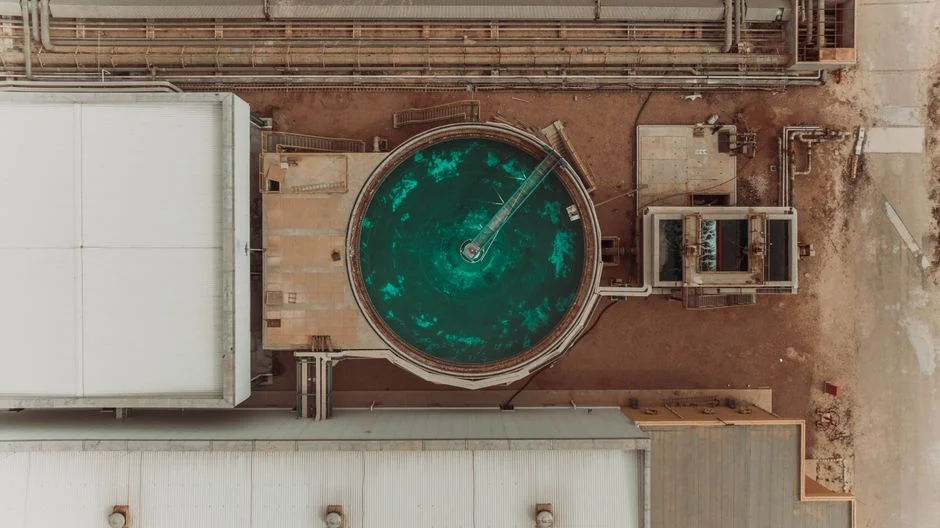
CapEx ranges in 2026 dollars, packaged skid, FOB Milwaukee, sit in three bands: DAF only $250,000–$450,000 at 50–200 GPM, lamella only $80,000–$180,000 equivalent, and the hybrid DAF+lamella $350,000–$600,000. These are order-of-magnitude and should be treated as ranges, not firm quotes. OpEx favors lamella: DAF carries the air-saturation pump energy (typically 5–10 HP for the recirculation loop) and consumes roughly 30–40% more polymer per cubic meter treated; lamella runs at 60–70% of DAF opex on a $/m³ basis but cannot meet FOG limits alone, so the comparison collapses unless the influent character is locked down by jar testing.
| Cost / compliance item | DAF only | Lamella only | Hybrid DAF → Lamella |
|---|---|---|---|
| CapEx (50–200 GPM, 2026 USD) | $250,000–$450,000 | $80,000–$180,000 | $350,000–$600,000 |
| Relative OpEx ($/m³) | Baseline (1.0×) | ~0.6–0.7× DAF | ~1.1–1.2× DAF only |
| 40 CFR 433 (TSS ≤60 mg/L monthly avg) | Yes | Yes (on settleable load only) | Yes |
| MMSD Chapter 11 FOG cap (~100 mg/L) | Yes | No — FOG passes through | Yes |
| Wisconsin DNR NR 211 (direct discharge) | Yes with multimedia polish | Yes on settleable; polish required | Yes |
| Sludge handling | Plate-and-frame filter press to 25–35% cake | Same press, slightly wetter feed | Same press, blended feed |
| Downstream disinfection | UV unit sized to clarified flow | UV sized to clarified flow | UV sized to clarified flow |
Compliance hooks line up the same way: EPA 40 CFR Part 440 governs ore mining and dressing; 40 CFR 433 (metal finishing) caps TSS at 60 mg/L monthly average and sets metal limits; Wisconsin DNR NR 211 covers direct discharge to the Menomonee or Kinnickinnic; and MMSD Chapter 11 governs sewer discharge with a FOG cap typically near 100 mg/L. Both DAF and lamella sludge dewater best on a HydropureWater plate-and-frame filter press, which delivers 25–35% dry-solids cake and is the disposal-cost control point on the back end. The 2026 architecture most Milwaukee plants actually install is DAF (sized to peak hourly flow with 25% turndown) → lamella (sized to average flow) → multimedia filter → UV disinfection, with the DAF unit on its own PLC skid so it can swing off when floatable loading drops.
Frequently Asked Questions
How does a Milwaukee metals plant decide between a DAF and a lamella clarifier in 2026?
Run the jar test, but use this as the first-pass rule: if the influent contains a floatable fraction (oils, greases, graphite, coolants), specify a DAF as the primary. If the load is dominated by settleable metal-hydroxide floc with no floatable fraction, specify a lamella clarifier. If both fractions are present in the same equalization tank — the most common Milwaukee case — specify a hybrid DAF primary with a lamella polish.
Can a DAF system handle the high temperatures and oily coolant loads from Milwaukee metalworking?
Yes. Packaged DAF systems routinely treat influents at 40–60 °C with emulsified cutting oils and coolant concentrates. The micro-bubble contact mechanism does not depend on temperature the way gravity settling does, and the air-saturation tank actually performs better with warmer water because gas solubility drops, which means more micro-bubbles per unit of dissolved air.
Which discharge limits do Milwaukee metals plants have to hit, and which equipment reaches them?
Sewer discharges must meet MMSD Chapter 11 — including a FOG cap of roughly 100 mg/L, plus metals limits — and that almost always forces a DAF stage somewhere in the train. Plants discharging directly to the Menomonee or Kinnickinnic rivers work under Wisconsin DNR NR 211 and federal 40 CFR 433 (TSS ≤60 mg/L monthly average for metal finishing) or 40 CFR Part 440 (ore mining). A correctly sized DAF or hybrid train meets both envelopes; a lamella-only train meets TSS but typically misses the FOG envelope.
How much does a Milwaukee jar test cost, and who runs it?
Contract labs on Greenfield Avenue and in Waukesha run the 6-beaker protocol for $400–800 per sample set, and most DAF vendors will run it free as part of a competitive bid. The cost is trivial against a $250k+ equipment decision, and the data is the only defensible basis for the technology choice.
What dewatering equipment handles sludge from both DAF and lamella clarifiers?
Both DAF float and lamella underflow feed the same downstream device: a plate-and-frame filter press, which dewaters the sludge to 25–35% dry-solids cake. The cake is then disposed as industrial waste; the filtrate returns to the head of the treatment train. A progressive-cavity feed pump is the standard slurry pump in front of the press.