Why Buffalo chemical plants face a different DAF-vs-clarifier question
Chemical-plant wastewater in Buffalo is not a municipal settleables problem, and the equipment that worked for a brewery or a refinery will not necessarily work for a specialty-chemical line. Streams that leave a reactor, a parts washer, or a batch neutralization step can swing from pH 2 to pH 12 within a shift, carry emulsified oils and surfactants from cleaning operations, and drop metal hydroxides that look settleable in the lab but ride on colloidal carryover in production. Buffalo's winter influent temperatures — frequently below 10 °C from December through March — also slow both gravity settling and the kinetics of coagulant hydrolysis, which is the first place generic factory-wastewater guidance falls apart for a Buffalo engineer.
The receiving drain is the second local constraint. Any discharge to the Buffalo Sewer Authority (BSA) sewer system falls under 40 CFR Part 403 categorical pretreatment standards, and the BSA local limits often sit below the categorical maximums on oil and grease, total suspended solids (TSS), and pH. The plant engineer is therefore not just choosing between two mechanisms; they are choosing a primary treatment that lets the rest of the pretreatment train hit a discharge permit. Dissolved air flotation (DAF) and conventional gravity clarification attack that problem very differently, and the difference becomes a question of whether the target contaminants are denser than water or lighter than water, and whether the Buffalo POTW will accept the overflow.
How a DAF actually removes chemicals wastewater contaminants
DAF is a buoyancy process, not a settling process. A side recycle stream (typically 20–40% of the forward flow) is pressurized with air inside a saturation vessel; when that recycle returns to the flotation tank, the pressure drop nucleates 20–40 micron micro-bubbles that attach to floc particles and oil droplets and lift them to the surface, where a rotating scoop skims them off as float sludge. The mechanism is documented in DAF Corp's product literature, which describes a micro-bubble generator that produces consistent 20–40 micron bubbles with no coarse air carryover, 24/7, 365 days a year.
The performance range that matters for a Buffalo chemical engineer comes from full-scale analog data, not lab benchtop claims. A 2017 full-scale study of an 800 m³/d slaughterhouse effluent treatment plant (SETP) reported DAF-stage removals of 71.13% TSS, 29% COD, and 28.58% BOD across 17 weeks of three-times-weekly sampling between 2 January 2017 and 1 May 2017, and the same paper cites process-industry chemical-DAF studies reporting TSS removals between 80% and 99% (Woodap et al., 1977; Ho and Tan, 1989; Rusten et al., 1990; Schneider et al., 1995; Núñez et al., 1999; Azbar and Yonar, 2004; Alam et al., 2021; Akhtar et al., 2019; Akhtar et al., 2021, as compiled in the jksus.org SETP study). The reason the two ranges sit in different places is straightforward: the 800 m³/d plant was treating raw slaughterhouse blood and offal without optimized coagulant dosing, while the higher-end process-industry numbers reflect tuned chemistry and well-controlled air-to-solids ratios. For a chemical plant sizing a primary DAF, both anchors are honest: a reasonable design point in real-world conditions is the 71.13% TSS figure, and a well-tuned system can approach the 80%–99% band.
Float-sludge consistency is the other operating point that changes the downstream budget. DAF Corp's commercial specification for a working DAF lists 2%–4% thickened sludge consistency, which is roughly an order of magnitude drier than a clarifier underflow and substantially reduces downstream dewatering load. A chemical plant that already runs a HydropureWater DAF system into a plate press can therefore specify a smaller press and a smaller polymer system than a clarifier-based train would need.
How a conventional clarifier handles the same chemical-plant stream
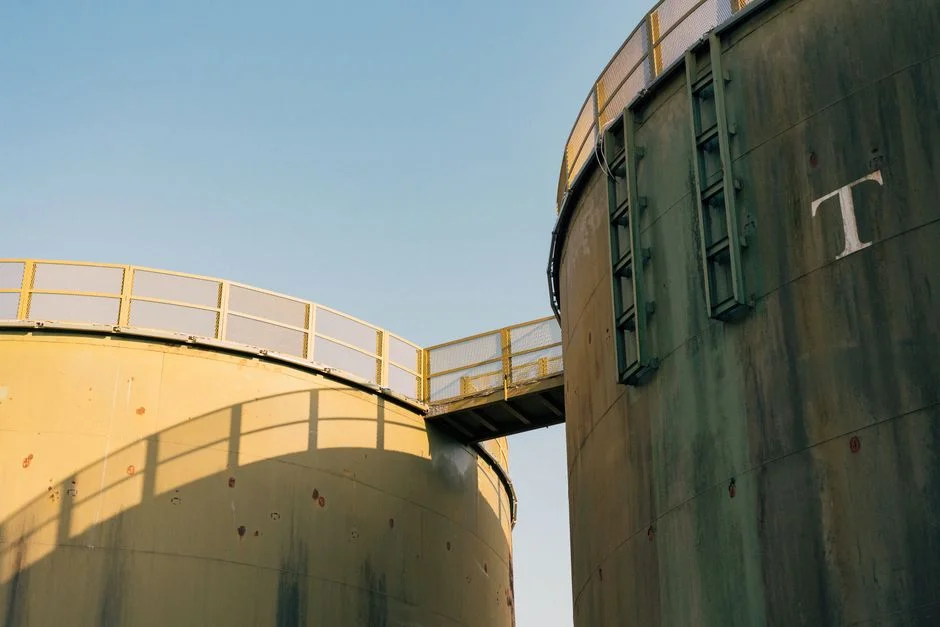
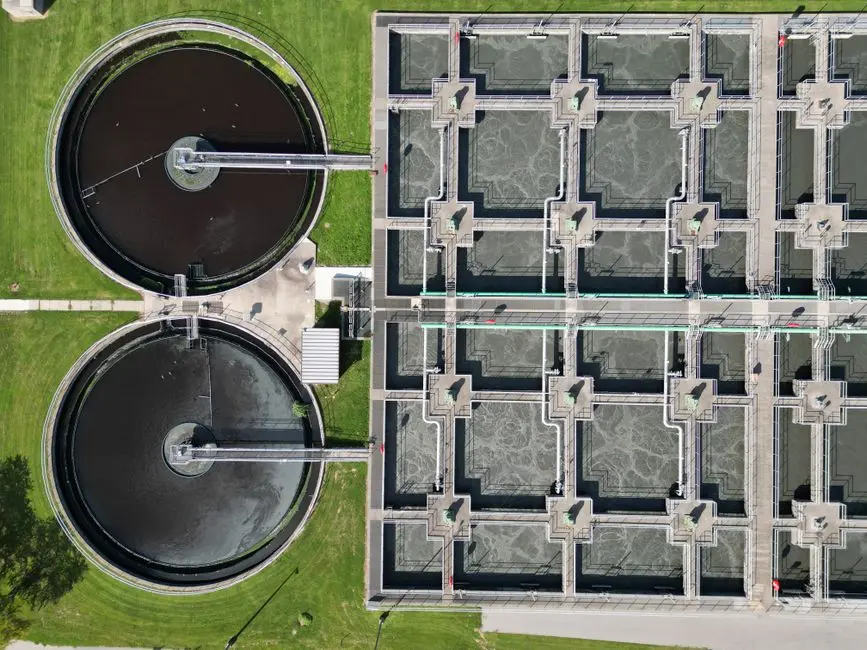
A conventional clarifier is a gravity settler, and gravity only works when the target particle is denser than water and has time to fall. In the same 800 m³/d SETP referenced above, the two secondary clarifiers downstream of the aeration tanks (volumes of 101 m³ and 171 m³) are polishing biological floc after activated sludge, not capturing free oil or chemical precipitates. That distinction matters: a secondary clarifier sees a relatively uniform, well-flocculated feed, while a chemical-plant primary clarifier sees a raw, variable stream with pH swings, hot spots, and intermittent slug loads.
Gravity settling handles dense inorganics well — neutralized metal hydroxides, settleable salts, and cooling-tower blowdown solids fall out cleanly in a properly sized clarifier. The same clarifier is the wrong tool for emulsified oils, surfactant-stabilized colloids, and low-density chemical floc, all of which either stay in suspension or rise. Empirically, clarifier overflow from chemical streams typically fails oil-and-grease and colloidal-TSS limits, which is the exact failure mode that triggers a Buffalo Sewer Authority noncompliance letter. Where a clarifier is the right tool — a stream dominated by settleable inorganics, no oil, modest colloidal load — a HydropureWater lamella clarifier delivers a compact footprint and low operator overhead, which is a real economic and staffing advantage for a small Buffalo plant.
The clarifier also has a real climate advantage in Buffalo winters: no recycle pump, no saturation vessel, no air compressor. Mechanical simplicity means fewer freeze-protection points and a lower standby load when the influent temperature drops. That benefit is real but narrow — it only applies if the contaminants in the stream are the kind that will actually settle.
DAF vs clarifier for chemicals wastewater: head-to-head criteria
The head-to-head comparison the engineer needs for a capital memo breaks out as follows. Numeric anchors below come from the jksus.org SETP study and from DAF Corp's published equipment specifications, both of which are dated commercial or academic sources from 2017 and 2025 respectively. Operating ranges and material specs from the Buffalo Sewer Authority are not part of this research dataset; treat any local-limit numbers as inputs you must request from BSA before sizing, not as values to be quoted in the memo.
| Criterion | DAF (chemical service) | Conventional / lamella clarifier |
|---|---|---|
| Target contaminants | Free and emulsified oil, low-density floc, colloids, surfactant streams | Settleable inorganics, metal hydroxides, biological floc polishing |
| TSS removal (process-industry chemical-DAF, tuned) | 80%–99% (jksus.org citations: Woodap 1977, Ho & Tan 1989, Rusten 1990, Schneider 1995, Núñez 1999, Azbar & Yonar 2004, Alam 2021, Akhtar 2019/2021) | Limited to settleable fraction; not effective on colloidal or buoyant TSS |
| TSS removal (full-scale 800 m³/d DAF, 17-week 2017 sampling) | 71.13% across the DAF stage alone (jksus.org) | Secondary clarifiers downstream polish biological floc; not designed for raw chemical TSS |
| Oil and grease | Structurally suited — buoyant and emulsified fractions attach to micro-bubbles | Not removed reliably; emulsified oil carries through overflow |
| Footprint, circular DAF | 6–70 ft diameter, 10–11,000 gpm, 92%–98% TSS removal (dafcorp.com FC Maximizer) | n/a |
| Footprint, rectangular DAF | 10–1,000 gpm, 85%–90% TSS removal (dafcorp.com RC UniMax) | n/a |
| Surface loading, lamella clarifier | n/a | Higher than conventional; compact footprint; cannot float oils (dafcorp.com comparative data, no specific m/h figure supplied) |
| Sludge consistency | 2%–4% dry solids (dafcorp.com) | Typically <1% underflow; higher downstream dewatering load |
| Chemical compatibility | Standard 304L stainless tank for corrosive chemical service (dafcorp.com) | Weirs, drives, and sludge rakes require similar material upgrades for chemical duty |
| Mechanical complexity | Recycle pump, saturation vessel, air system, rotary joint, scoop | Drive mechanism, rake, scum beach; simpler |
| Cold-climate operation (Buffalo winter) | Stable under variable chemical loading; equalization and recycle-line freeze protection needed | Fewer mechanical points to freeze-protect; settling kinetics slow in cold influent |
| Effluent clarity for downstream reuse | Below 20 ppm filterable solids in well-tuned systems (dafcorp.com) | Higher residual TSS; not typically suitable as a pre-RO step |
The key procurement-side decision is not the table; it is the column the engineer's influent data falls into. Coagulant and flocculant selection sits between the two technologies and is the same line item either way — a HydropureWater automatic chemical dosing skid supports both DAF and clarifier trains and is typically specified alongside the primary vessel.
When a Buffalo chemical plant should pick DAF over a clarifier in 2026
Pick a DAF as the primary when the influent characterization shows one or more of the following: emulsified oils or surfactants above the BSA oil-and-grease limit; latex, polymer, or plastic-residue carryover; metal-hydroxide floc with a measured settled density below 1.0 g/mL; or a footprint constraint that rules out a clarifier of equivalent hydraulic capacity. The 80%–99% chemical-DAF TSS removal band reported in the jksus.org process-industry citations gives a defensible design point for tuned chemistry, and the 71.13% figure from the 800 m³/d full-scale DAF is the honest design point for a system running on real production wastewater without aggressive optimization.
The categorical pretreatment framing is the second decision lever. Under 40 CFR Part 403, chemical manufacturers discharging to a POTW must meet local limits on oil and grease, TSS, pH, and any listed toxic organics or metals. A conventional clarifier cannot reliably meet a low oil-and-grease limit on an emulsified stream; a DAF can, which is why BSA's enforcement on chemical-sector discharges in 2026 effectively selects DAF for any process that runs a parts washer, a surfactant-based cleaner, or a batch with organic-phase reagents. Engineers should pull the BSA local discharge limits before locking the P&ID; the categorical standard sets the floor, the local limit sets the actual constraint.
Pick DAF when water reuse is on the roadmap. DAF effluent below 20 ppm filterable solids (dafcorp.com) feeds an ultrafiltration or reverse-osmosis polish step without intermediate coagulation, while clarifier effluent carries enough residual TSS and colloids to foul RO membranes within weeks. For a Buffalo plant under pressure to cut sewer discharge and reuse process water, a HydropureWater DAF system is the right anchor for the reuse train, not just for compliance.
When a conventional clarifier is still the right answer
Pick a clarifier when the stream is dominated by settleable inorganics, neutralized metal hydroxides, or cooling-tower blowdown with no oil and no surfactant carryover. In that envelope a lamella clarifier delivers a smaller footprint than a conventional circular tank, cuts chemical consumption relative to a conventional design (a vendor-claimed benefit carried in DAF Corp's lamella comparison material; ask the supplier for a project-specific figure), and avoids DAF's recycle-pump and saturation-vessel energy penalty. For a Buffalo plant whose waste is essentially a salt-and-metal-hydroxide stream with a manageable TSS, the clarifier is mechanically simpler, easier to operate, and tolerates the shock solids loads that would otherwise upset a DAF's air-saturation system.
The other scenario where a clarifier wins is the dedicated industrial sewer with no oil limit and a TSS cap high enough that gravity settling meets it. A HydropureWater lamella clarifier in that service is low-maintenance, has no air system to freeze-protect, and can be operated by a two-person environmental team without specialized DAF training. The decision rule is narrow but real: settleable inorganics, no oil, no reuse, no colloidal carryover — then the clarifier is the cheaper, simpler answer.
2026 implementation checklist for a Buffalo chemical plant
- Characterize the influent before sizing anything. Sample pH, temperature, TSS, oil and grease, and surfactant content across at least one full production week, and ideally across a season so winter data is included. The jksus.org 800 m³/d study used 17 weeks of three-times-weekly sampling for the same reason — short snapshots systematically overstate or understate the worst case.
- Confirm 40 CFR Part 403 categorical pretreatment applicability and pull BSA local discharge limits. The categorical standard sets the floor; the BSA local limit is the actual number the primary must hit. Lock these before any equipment bid goes out.
- Match the DAF vendor's bubble-size specification to the air-to-solids ratio quoted. DAF Corp cites 20–40 micron micro-bubbles as the key to consistent performance. If a competing vendor cannot show a bubble-size distribution and a matching air-to-solids design point, the 80%–99% removal number is not defensible.
- Plan downstream sludge dewatering around the primary's output. DAF float at 2%–4% dry solids (dafcorp.com) feeds a HydropureWater plate and frame filter press with a much smaller footprint than a clarifier-underflow duty. Budget the press off the primary's output consistency, not off a generic spec.
- Build cold-weather design margin into equalization and recycle lines. Buffalo winter influent is the operating case, not the exception. Insulate and heat-trace the DAF recycle line and the saturation vessel; size equalization for at least 24 hours of peak cold-weather flow. If you have not done that, the summer performance number will not survive January.
- Cross-check the POTW pretreatment submittal with a peer review. The 2026 EPA pretreatment and sewer discharge guide is a useful reference framing for categorical standards, but BSA's local limits are the binding number — request them in writing before the submittal.
Frequently Asked Questions
What is the typical 2026 capital cost difference between a DAF system and a clarifier for a Buffalo chemical plant?
Neither the jksus.org SETP study nor the DAF Corp commercial literature in the supplied research provides a 2026 dollar figure for either technology at chemical-plant scale. The procurement move is to request a budgetary quote for both trains on the same hydraulic basis (peak flow, peak TSS, target effluent quality) from at least two vendors, and to compare on installed cost plus 5-year energy and polymer consumption rather than on sticker price. The clarifier will be cheaper to buy and cheaper to run; the DAF will be more expensive to install but should reduce downstream dewatering and water-reuse cost enough to close the gap when oil and TSS limits are binding.
How do I verify a DAF supplier's TSS removal claim before I sign the purchase order?
Ask for the bubble-size distribution (target band is 20–40 micron micro-bubbles per DAF Corp's published spec) and a quoted air-to-solids ratio, then cross-check both against a pilot run on your actual stream over at least four weeks including a cold-weather week. Ask for at least two reference installs in chemical manufacturing, and call the reference to confirm that the supplier's 80%–99% process-industry removal claim held on emulsified or surfactant-laden feeds. The 71.13% full-scale DAF result in the 800 m³/d jksus.org study is a reasonable conservative design point if a pilot is not feasible.
Does the Buffalo Sewer Authority's pretreatment program force a DAF for any chemical-plant discharge?
40 CFR Part 403 categorical pretreatment applies to chemical manufacturers discharging to a POTW, and the BSA local limits sit below the categorical maximums on oil and grease and TSS in most cases. A DAF is the only one of the two technologies that can reliably hit a low oil-and-grease limit on an emulsified stream, so for any process line carrying oils, surfactants, or latex residues, the BSA enforcement posture in 2026 effectively selects DAF. For a stream with no oil and only settleable inorganics, a clarifier can meet BSA limits; pull the local limits in writing before sizing.
Can a lamella clarifier handle a chemical-plant wastewater with variable pH and metal precipitation?
A lamella or conventional clarifier handles neutralized metal-hydroxide streams well, because the precipitates are dense and settle readily. The clarifier does not handle the upset case well: a slug of low-pH influent will redissolve the hydroxide, the metal will not settle, and the overflow TSS will spike. A DAF with pH adjustment and coagulant dosing upstream tolerates the same upset because the floc is formed under controlled chemistry rather than relying on precipitation equilibrium. For a Buffalo plant with frequent batch swings, that upset tolerance is a defensible reason to prefer DAF even when the average chemistry looks settleable.