
DAF vs Clarifier for Waynesboro Chemical Plants: The Short Answer
For a Waynesboro-area chemical plant in 2026, pick a dissolved air flotation (DAF) system as the primary clarifier whenever the drain carries emulsified oils, latex, solvents, or light colloidal solids typical of organic chemicals manufacturing; a conventional gravity clarifier only wins for streams dominated by heavy, fast-settling inorganic TSS at low FOG. The head-to-head removal gap is decisive: a food-processing case cited by Ecologix (2026) showed 95% FOG removal with DAF versus 70% for a clarifier on the same stream, and DAF Corp's FC Maximizer delivers 92-98% TSS removal at flows from 10 to 11,000 GPM (dafcorp.com). The threshold rule is plain — if FOG or emulsified organics exceed a few hundred mg/L, DAF; if the stream is mostly heavy inorganic settleables such as catalyst fines or lime carryover, a clarifier is defensible.
That recommendation is reinforced by the local regulatory layer, not generic vendor preference. Waynesboro discharges typically fall under 40 CFR Part 414 (Organic Chemicals, Plastics & Synthetic Fibers) and flow to the South River / Shenandoah system and ultimately the Chesapeake Bay, where Virginia plants are working to TN ≤ 8 mg/L and TP ≤ 2 mg/L targets per the EPA CBP/TRS 288/99 BNR evaluation (1999). A DAF that strips oil and colloids upstream protects downstream BNR capex; a clarifier that lets emulsified organics bleed into the biology loads it unnecessarily. Use that two-sentence summary as the answer block in your memo and then read the rest of this article for the data, the conditioning chemistry, and the cost band procurement will ask for.
What Actually Comes Out of a Waynesboro Chemical Plant Drain
Four contaminant families drive the DAF-vs-clarifier decision on a chemical plant drain, and most 40 CFR 414 subcategories produce a mix of all four rather than a clean settleables stream. First, emulsified oils and solvents from reactor cleaning, vessel washes, and product transfers form stable oil-in-water emulsions that are near-neutral density and do not settle under gravity — they form a scum layer a clarifier cannot skim cleanly. Second, suspended polymers and latex from emulsion polymerization carry-overs are similarly buoyant and often sticky, blinding clarifier sludge scrapers. Third, heavy inorganic TSS — catalyst fines, sulfates, lime, and metal hydroxide sludges — settles readily and is the one fraction where a clarifier genuinely performs. Fourth, high-TDS dissolved salts from neutralization and acid regeneration stay in solution and pass through either clarifier; they are not a clarifier-vs-DAF issue at all, but they do affect downstream RO or BNR.
Komline's plain-language test for DAF suitability is the right framing for a Waynesboro engineer: a DAF is the right tool for material that settles slowly, persists in suspension, or tends to float, while a clarifier is right for material that settles quickly under gravity (komline.com). Emulsified oil and latex sit firmly in the first category. The complicating factor is that batch chemical manufacturing swings pH and temperature across wide ranges, and both parameters shift coagulant demand and settling velocity — a clarifier sized for warm, neutral-pH settleables can be undersized for a cold, acidic batch dump. That variability is one of the strongest practical arguments for DAF on a chemicals stream: the micro-bubble contact mechanism tolerates a wider floc size and density distribution than gravity settling does, which makes DAF more forgiving of upset conditions typical of specialty chemical operations.
DAF and Clarifier Compared: Process, Footprint, and Operating Load
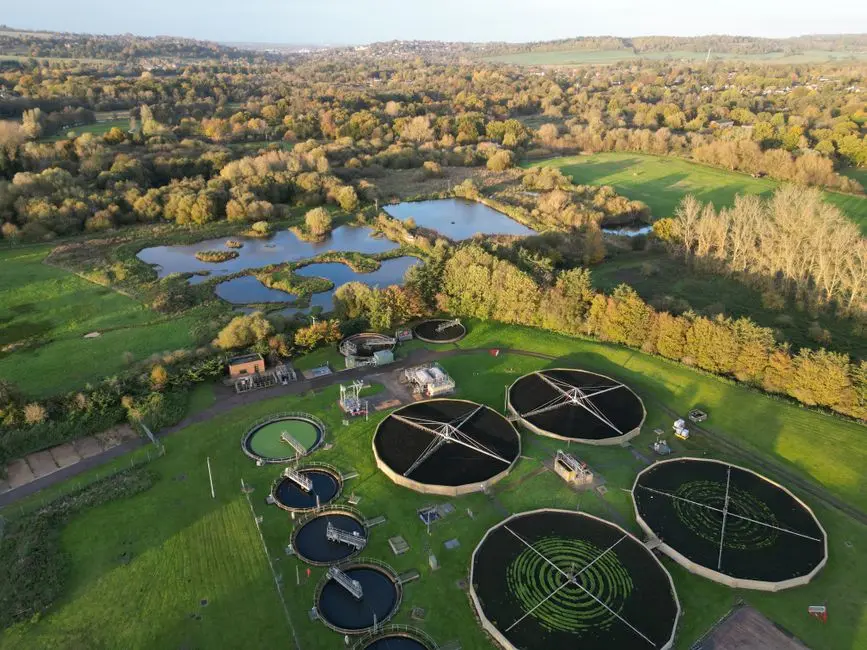
This is the table a procurement manager can sign off on without re-reading the article. The values reflect the published ranges from Ecologix (2026), DAF Corp product data, and Komline's engineering guidance, and they are the basis for every selection rule that follows.
| Parameter | DAF (round, e.g. FC Maximizer) | DAF (rectangular, e.g. RC UniMax) | Gravity Clarifier |
|---|---|---|---|
| Removal mechanism | 20–40 µm micro-bubbles attach to floc and float oil/FOG/colloids to surface for skimming (dafcorp.com) | Same micro-bubble flotation in rectangular basin | Gravity settling of heavier solids to a sludge bed; scum layer raked off |
| TSS removal | 92–98% (dafcorp.com) | 85–90% (dafcorp.com) | ~90% on heavy inorganic settleables (Ecologix 2026) |
| FOG / oil & grease removal | ~95% (Ecologix 2026 case data) | ~90–95% typical | ~70% on the same stream (Ecologix 2026) |
| Typical hydraulic residence | Minutes (shallow tank, zero-velocity concept) | Minutes | Hours (deep tank, long retention) |
| Footprint | Compact; 6–70 ft diameter rounds skid-mountable (dafcorp.com) | Compact rectangular skid units 10–1,000 GPM | Large floor area + deep tank + sludge scrapers |
| Sludge consistency | 2–4% DS float, easy to dewater (dafcorp.com) | 2–4% DS float | Wetter, more variable underflow |
| Key utilities | Air compressor, recycle pump, polymer/coagulant feed, skimmer drive | Same as round DAF | Sludge pump, chemical feed, scraper drive; mostly passive hydraulics |
| Best-fit stream | Emulsified oil, latex, light colloids, FOG > few hundred mg/L | Same as round DAF, longer/narrower sites | Heavy inorganic settleables, low FOG |
| Hybrid configuration | DAF primary + clarifier or MBR polish on residual TSS (Ecologix 2026 FAQ) | Same | Often paired downstream of DAF for polishing |
For a Waynesboro chemical plant with the mixed stream typical of 40 CFR 414, the round DAF and the rectangular DAF both outperform a clarifier on FOG and on light colloids; the choice between them is mostly site geometry. If you want a packaged skid for a tight retrofit, the round FC Maximizer pattern is hard to beat; if your building is long and narrow, the RC UniMax-style rectangular unit fits better. If your upstream biology or downstream membrane is sensitive to TSS bleed-through, plan a DAF-primary + clarifier/MBR-polish hybrid rather than sizing either unit for full removal alone. For day-to-day operating problems on a DAF once installed, the DAF system troubleshooting guide covers the seven issues that drive most unplanned downtime on packaged units.
Why 40 CFR 414 and Chesapeake Bay Rules Push Waynesboro Plants Toward DAF
40 CFR Part 414 sets the effluent guidelines for the Organic Chemicals, Plastics & Synthetic Fibers category — the rule most Waynesboro-area specialty chemical plants, including DuPont-area suppliers and contract manufacturers along the I-64 / I-81 corridor, discharge under. The subcategory limits cover TSS, BOD, COD, oil and grease, and a long list of priority pollutants, and the rule generally expects Best Available Technology (BAT) — historically chemical clarification plus biological or physical polishing — as the basis for compliance. Chemical conditioning upstream of the primary clarifier is therefore a BAT expectation, not an option you can drop to save on polymer.
The watershed layer is what makes the Waynesboro decision sharper than the same decision in a non-tidal watershed. The South River and the Shenandoah ultimately drain to the Chesapeake Bay, where Virginia plants are working to TN ≤ 8 mg/L and TP ≤ 2 mg/L under the EPA CBP/TRS 288/99 BNR evaluation (1999). The same report gives two relevant local data points: the DuPont Waynesboro plant at 2.0 MGD with $0 reported BNR capital (the work fit inside existing basins), and the City of Waynesboro WWTP at 4.0 MGD with $3.5M total BNR capital, or $875,000 per MGD of design flow (CBP/TRS 288/99, 1999). Virginia's average cost per additional pound of nitrogen removed across the studied plants was $0.48/lb — the lowest of the three states — but the absolute retrofit spend on individual plants like Waynesboro and Harrisonburg ran into the millions.
The implicit point for an engineer writing a recommendation is that BNR capex at the receiving plant is already a live issue locally, and a primary clarifier that lets emulsified organics bleed into that biology loads it unnecessarily. A DAF that strips oil and light colloids upstream protects both the industrial plant's discharge compliance under 40 CFR 414 and the receiving WWTP's nutrient capex under the Chesapeake Bay rules. A clarifier that achieves 70% FOG on the same stream does not.
Chemical Conditioning: The Step That Actually Decides the Winner
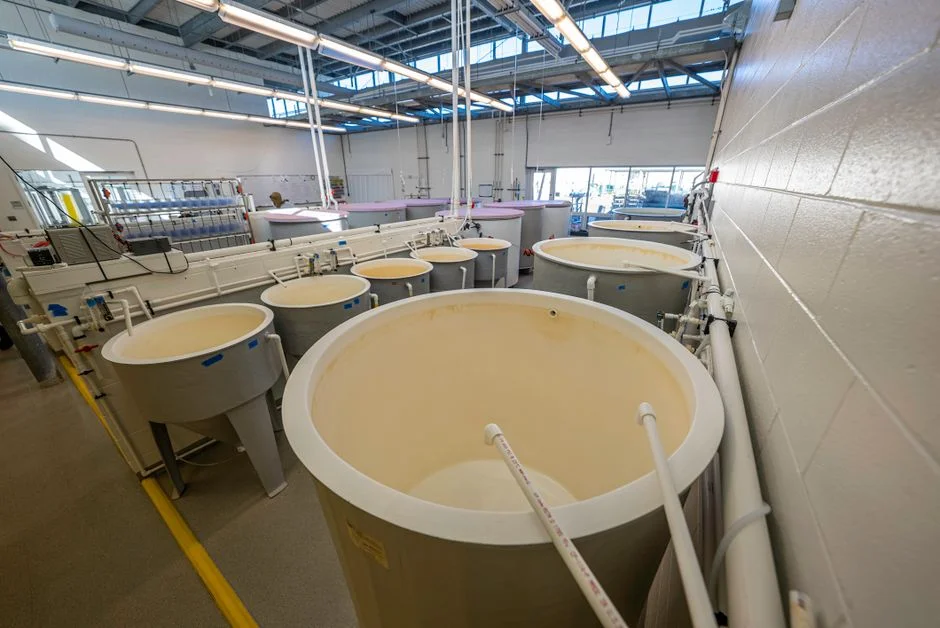
Both DAF and clarifier usually need the same three conditioning steps for a 40 CFR 414 stream: a coagulant (alum, polyaluminum chloride, or ferric chloride), an anionic or cationic flocculant, and pH adjustment with NaOH or H2SO4 to the optimal coagulation window (typically pH 6–8 for alum/PAC and 4–7 for ferric). What differs is how forgiving each unit is of the floc you produce. A DAF's 20–40 µm micro-bubbles attach to an already-flocculated particle and float it regardless of floc density, so DAF tolerates a wider floc size distribution and tolerates the lower-density, oil-laden flocs that dominate chemicals wastewater. A clarifier's floc has to be heavy and dense enough to settle against hydraulic upflow, which is hard to engineer for emulsified oil and polymer-laden streams — the floc either stays buoyant or breaks under the rake.
Komline notes that "chemical conditioning is often used to increase the effectiveness of the dissolved air flotation process" and that a simple jar test or on-site pilot typically determines feasibility before purchase (komline.com). The same logic applies to a clarifier, but the operating window is narrower. For a Waynesboro plant with a new or variable stream, the practical recommendation is to run a jar test for coagulant selection and dose, then a DAF pilot on the actual wastewater to confirm float quality and TSS reduction under continuous operation. Both Komline and DAF Corp explicitly offer pilot rentals for this purpose (komline.com; dafcorp.com). For a plant that wants to lock the chemistry side of the train under automatic control, an automatic chemical dosing system sized for the coagulant, flocculant, and pH adjuster flows stabilizes dose across batch swings and is the single most cost-effective way to keep either clarifier or DAF performing to design numbers.
2026 CAPEX and OPEX Bands for a Waynesboro-Scale DAF vs Clarifier
Cost is the section procurement will read first, so the numbers below are framed as defensible bands rather than sticker prices. They draw on DAF Corp's published flow range (10–11,000 GPM, dafcorp.com), Ecologix's relative-cost commentary (2026), and the CBP/TRS 288/99 local retrofit data for the cost of downstream cleanup if the primary clarifier underperforms.
| Cost driver | Packaged DAF (50–500 GPM, skid-mounted) | Large rectangular DAF (>1 MGD, civil build) | Gravity Clarifier (concrete, equivalent flow) |
|---|---|---|---|
| Equipment CAPEX | Low-to-mid six figures USD (Dafcorp.com flow range; Ecologix 2026) | Higher; civil + tank dominate | Lower equipment cost; tank + scraper mechanism dominate |
| Civil / land cost | Low (compact shallow tank, skid-mount) | Moderate | High (large footprint, deep tank, sludge pit) |
| Power / utilities | Air compressor + recycle pump (Ecologix "moderate") | Similar, scaled | Scraper drive + sludge pump; mostly passive |
| Chemical OPEX | Coagulant + flocculant + pH adjuster; moderate | Similar | Coagulant + flocculant often heavier dose; sludge hauling adds |
| Sludge handling | Float at 2–4% DS, easy to dewater (dafcorp.com) | Same | Wetter underflow, more variable |
| Downstream BNR protection value | High — protects $875k/MGD class retrofit capex (CBP/TRS 288/99, 1999) | Same | Lower — 70% FOG lets more organics load biology |
| Total cost of ownership | Usually wins for chemicals streams with oil/FOG | Wins at high flow with mixed stream | Wins only for heavy inorganic settleables, low FOG |
The local benchmark that frames the whole conversation is the City of Waynesboro $875,000 per MGD BNR capital cost reported in CBP/TRS 288/99 (1999). If a primary clarifier that lets 30% of the FOG bleed through pushes the receiving plant's BNR retrofit cost up by even one category on that table, the primary-clarifier capex difference between DAF and clarifier is dwarfed. For a 2026 spec on a packaged chemical-plant skid, the dissolved air flotation system covers 4–300 m³/h in 13 models and is the natural starting point for a procurement-side comparison quote.
Decision Checklist: Pick DAF or Clarifier for Your Waynesboro Stream in 2026
Run your stream through the four questions below in order. If three or four point to DAF, spec a packaged DAF and an automatic chemical dosing skid, then confirm with a jar test or on-site pilot before purchase. If two or more point to a clarifier (or a lamella clarifier for footprint-constrained sites), pull in vendor data on heavy-inorganic case studies before sizing.
- FOG or emulsified organics above ~200 mg/L? Default to DAF. A clarifier's 70% FOG removal on the same stream (Ecologix 2026) is not enough to protect downstream biology.
- Stream dominated by heavy, fast-settling inorganic TSS (catalyst fines, lime, metal hydroxide sludge)? Default to a clarifier or a lamella clarifier. The settling is fast, the floc is dense, and DAF's float mechanism adds nothing.
- Footprint constrained or retrofitting an existing building? DAF wins. Packaged rounds from 6–15 ft diameter skid-mount in tight spaces (dafcorp.com); rectangular units fit long, narrow bays.
- Downstream BNR or MBR sensitive to FOG / solids overload? DAF wins. CBP/TRS 288/99 (1999) shows $875k/MGD BNR retrofit capex locally — the cost of letting the primary clarifier underperform is paid downstream.
If the answers point to DAF, the next two steps are mechanical: pull a quote on a dissolved air flotation system sized to your peak hourly flow (4–300 m³/h across 13 models) and pair it with an automatic chemical dosing system for coagulant, flocculant, and pH adjustment. Then run a jar test on a real plant sample, and if the polymer vendor or DAF supplier offers a pilot, run that too before signing the PO. For a similar decision logic in another chemicals corridor, the Bishop chemicals wastewater DAF vs clarifier 2026 guide and the Morristown chemicals wastewater DAF vs clarifier 2026 guide walk the same checklist for different watersheds.
Frequently Asked Questions
Can a DAF and a clarifier be used together on chemicals wastewater?
Yes — a DAF primary followed by a clarifier or lamella clarifier as a polishing step on residual TSS is a standard hybrid for mixed streams, and Ecologix's 2026 FAQ explicitly lists DAF + clarifier as a valid configuration. This is the right answer when your stream carries both emulsified oil (DAF's strength) and heavy inorganic settleables (clarifier's strength), and it is a common arrangement in 40 CFR 414 plants with diverse batch operations.
What federal rule covers a Waynesboro chemical plant discharge?
Most Waynesboro-area specialty chemical plants fall under 40 CFR Part 414 — Organic Chemicals, Plastics & Synthetic Fibers — with subcategory-specific TSS, BOD, COD, oil and grease, and priority-pollutant limits. Local discharge into the South River / Shenandoah / Chesapeake Bay watershed adds a TN ≤ 8 mg/L and TP ≤ 2 mg/L nutrient overlay per EPA CBP/TRS 288/99 (1999), so BAT-level treatment plus chemical conditioning upstream of the primary clarifier is the standard compliance posture.
How do I confirm DAF will work on my specific stream before I buy?
Run a jar test first to screen coagulant type and dose, then run a DAF pilot on actual plant wastewater. Both Komline and DAF Corp offer on-site pilot rentals (komline.com; dafcorp.com) sized from roughly 48 GPM upward, and a 2–4 week pilot will give you a defensible removal number and polymer dose for your procurement package.
Does DAF replace biological treatment?
No. DAF is a primary clarifier — it strips TSS, FOG, and light colloids but does not remove dissolved BOD, ammonia, or nutrients. BNR, MBR, or RO is still required downstream for 40 CFR 414 nutrient and dissolved-pollutant compliance. The DAF's job is to protect that downstream biology, which is the capex item the rest of the train is sized around.
What flow rate is realistic for a packaged DAF at a chemical plant?
DAF Corp's FC Maximizer covers 10–11,000 GPM in standard sizes with the round skid pattern at 92–98% TSS removal, and the RC UniMax rectangular line covers 10–1,000 GPM at 85–90% TSS (dafcorp.com). The packaged DAFs cover 4–300 m³/h (roughly 18–1,320 GPM) across 13 models, which fits the typical 50–500 GPM envelope of a single chemical plant train.
Related Equipment
- HydropureWater lamella clarifier — specifications, capacity range, and technical data