Why High-Efficiency Sedimentation Tanks Outperform Conventional Clarifiers
A high-speed microsand concrete sedimentation tank removes 95%+ of total suspended solids (TSS) by combining micro-sand ballast, inclined plates, and sludge recirculation. Surface loading rates reach 20–40 m/h versus 1–3 m/h in conventional clarifiers. At influent TSS of 50–500 mg/L, typical removal is 92–97%, with footprint reduced by up to 70% versus gravity tanks.
Conventional sedimentation tanks need large footprints because surface loading stays at 1–3 m/h. Fine particles (<50 μm) often leave only 60–80% TSS removal. Ballasted systems dose 2–3 g/L of fine sand (100–200 μm) to raise floc density and push loading to 20–40 m/h—up to 10x faster. The train has three stages: coagulation/flocculation with polymers, micro-sand adsorption into dense flocs, then inclined-plate shallow-depth settling. Chemical use can drop by up to 30% versus conventional systems (per HydropureWater 2024 benchmarks).
Footprint cuts of up to 70% lower land and civil costs. Semiconductor plants that must hold effluent TSS below 30 mg/L often fail with traditional clarifiers unless they add heavy filtration. A high-rate primary stage cuts filter load, extends media life, and reduces backwash. One textile plant cut tank area from 200 m² to 60 m² with a HydropureWater lamella clarifier, cutting CAPEX by about 40% while holding continuous compliance (HydropureWater field data, 2025).
How a High-Speed Microsand Concrete Sedimentation Tank Separates Solids
High-efficiency sedimentation raises particle settling velocity by weighting flocs and shortening the fall path. Rapid-mix coagulation runs at G-values of 500–1000 s⁻¹. Polyaluminum Chloride (PAC) is typically dosed at 10–50 mg/L to destabilize colloids, then anionic polymer at 0.5–2 mg/L builds bridges between particles.
Micro-sand (100–200 μm) is then held at 2–3 g/L as ballast. Sand density near 2.65 g/cm³ lifts ballasted floc density to 1.2–1.5 g/cm³, versus about 1.05 g/cm³ for unballasted flocs. Settling velocity moves from 0.1–0.5 m/h to 10–30 m/h under those conditions. Water then enters plates or tubes spaced 50–80 mm at 55–60°, so particles travel centimeters rather than meters to be captured.
| Parameter | Conventional Clarifier | High-Efficiency Tank (Ballasted) |
|---|---|---|
| Surface Loading Rate | 1–3 m/h | 20–40 m/h |
| Floc Density | ~1.05 g/cm³ | 1.2–1.5 g/cm³ |
| TSS Removal Efficiency | 60–80% | 92–97% |
| Settling Velocity | 0.1–0.5 m/h | 10–30 m/h |
| Chemical Consumption | Baseline (100%) | 70% (30% reduction) |
About 5–10% of settled sludge returns to the flocculation zone. That seed recycle improves efficiency by 15–20% because existing flocs catalyze new growth. Micro-sand loss through the hydrocyclone averages 0.5–1% per cycle and must be budgeted in OPEX. Wastewater with oil and grease above 50 mg/L can coat sand and plates; plants then need how DAF systems remove oil and grease before sedimentation ahead of the clarifier.
High-Efficiency Sedimentation Tank Types: RL vs. RP vs. Lamella Clarifiers Compared
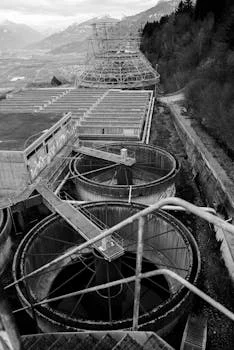
Tank selection follows hydraulic and solids loading, not brand labels. RL, RP, and standard lamella units each fit different load patterns. RL units suit industrial wastewater with obstruction settling plus inclined tubes when influent TSS swings widely. For manufacturer-side layout notes, see the high efficiency sedimentation tank manufacturer technical guide.
| Dimension | RL Type | RP Type | Lamella Clarifier |
|---|---|---|---|
| Process Flow | Obstruction + Tubes | High-scale inlet cleaning | Inclined plates only |
| Loading Rate | 20–30 m/h | 25–35 m/h | 30–40 m/h |
| Footprint | Medium | Smallest | Largest |
| Sludge Solids % | 3–5% | 4–6% | 2–4% |
| Best Application | Industrial (Variable loads) | Municipal Sewage | High-flow, Low-turbidity |
A semiconductor fab in Shanghai saw TSS swing from 50 mg/L to 500 mg/L. An RP unit looked attractive for footprint, but the team chose RL for load stability. Annual chemical cost fell about 25%, and effluent stayed under 20 mg/L TSS for recycle. Heavy-metal streams still need pre-treatment for heavy metals in semiconductor wastewater before RL or RP clarification so precipitates form before solids capture.
How Does a Primary Sedimentation Tank Differ?
A primary sedimentation tank is a low-rate gravity clarifier that settles readily settleable solids at 1–3 m/h without micro-sand ballast. It suits coarse TSS and large footprints, not fine colloids that need 20–40 m/h ballasted loading. Most plants we size for industrial parks keep primary tanks only when land is cheap and influent solids are already coarse.
High-efficiency units replace or shrink that primary stage when land is scarce or effluent TSS must stay under 30 mg/L without oversized filters. Spec ranges for plate geometry and ballast dose are collected in high efficiency sedimentation tank specifications and design parameters.
Key Design Parameters and How They Impact Performance
High-efficiency tank performance is set by plate spacing, plate angle, sand dose, loading, recycle, and flocculation time. Leaving those bands causes floc carryover or plate blinding. Spacing at 50 mm maximizes area; 80 mm is safer for fibrous or high-solids feeds. Plate angle must stay at 55–60° so sludge self-slides; shallower angles trap solids on the plates.
| Parameter | Optimal Range | Impact of Deviation |
|---|---|---|
| Plate Spacing | 50–80 mm | Narrower = higher efficiency; wider = lower clogging risk |
| Plate Angle | 55–60° | <55° causes sludge buildup; >60° requires more height |
| Micro-sand Dosing | 2–3 g/L | <2 g/L reduces floc density; >3 g/L increases OPEX |
| Hydraulic Loading | 20–40 m/h | >40 m/h leads to TSS escape (<90% removal) |
| Recirculation Ratio | 5–10% | Higher ratio improves floc but increases energy use |
| Flocculation Time | 5–10 min | <5 min leads to weak flocs; >10 min requires large tanks |
Troubleshooting Tip: If effluent TSS exceeds 50 mg/L, check micro-sand first. Hold 2–3 g/L with 100–200 μm sand. Oversized sand settles without capturing fines; undersized sand leaves with the effluent. PLC-controlled chemical dosing for sedimentation tanks keeps PAC, polymer, and sand dose inside those bands without constant manual trim.
Cost Breakdown and ROI: When High-Efficiency Sedimentation Makes Financial Sense
Upfront cost for a high-speed microsand concrete sedimentation tank exceeds a basic gravity clarifier, yet total cost of ownership is often lower. Hydrocyclones, scrapers, and precision dosing raise CAPEX. Civil volume can be up to 10x smaller, and a 30% chemical cut usually returns the premium in 3 to 5 years.
| Cost Category | RL Type (100–1000 m³/h) | OPEX per m³ Treated |
|---|---|---|
| CAPEX Range | $150,000 – $500,000 | - |
| Chemicals | - | $0.02 – $0.05 |
| Energy | - | $0.01 – $0.03 |
| Sand Replenishment | - | $0.005 – $0.01 |
| Maintenance | - | $0.005 – $0.01 |
On a 500 m³/h train, polymer and coagulant savings can exceed $50,000 per year versus conventional clarification. Footprint savings of $30,000 or more in land and concrete often tip the ROI case. Budget sand recovery at $20,000–$50,000 and polymer storage at $10,000–$30,000. Underflow volume drops further when plants add sludge dewatering solutions for sedimentation tank underflow.
What Clarifier Selection Criteria Should Engineers Use?
Clarifier selection criteria for industrial wastewater start with wastewater type, flow, influent TSS, oil content, and the discharge or recycle TSS limit. RL fits variable industrial loads; RP fits steady municipal sewage; plain lamella fits high-flow, low-turbidity water. Flow below 100 m³/h can use a standard lamella; 100–1000 m³/h usually needs ballasted RL or RP to keep the pad small.
- Wastewater Type: RL for variable industrial loads; RP for municipal sewage; lamella for low-turbidity surface water.
- Flow Rate: <100 m³/h → standard lamella; 100–1000 m³/h → ballasted RL or RP.
- Influent TSS: If TSS stays >500 mg/L, add a pre-treatment DAF systems for high oil/grease wastewater or a coarse basin first.
- Oil and Grease: Above 50 mg/L, pretreat before plates and sand loops.
- Compliance Limits: Targets <10 mg/L TSS need sand filters or ultrafiltration after the clarifier.
- Pilot Data: Prefer vendors that pilot your chemistry, especially food and textile feeds.
- Sludge Handling: Match underflow solids (2–6%) to your press or thickener capacity.
If loads swing and space is tight, choose RL. If the load is steady municipal flow and footprint is the only constraint, choose RP. Pair the High-Efficiency Sedimentation Tank (Lamella Clarifier) with dosing and sludge gear sized to the same peak hour, not average day.
Troubleshooting Common Problems in High-Efficiency Sedimentation Tanks
Peak performance needs steady hydraulic and chemical balance. These five faults cover most plant calls we see after commissioning.
- High Effluent TSS (>50 mg/L): Often from micro-sand below 2 g/L or polymer above 2 mg/L, which makes flocs buoyant. Hold sand at 2–3 g/L and polymer at 0.5–2 mg/L.
- Excessive Sand Loss (>1% per cycle): Points to hydrocyclone wear or flocculation G-value above 1000 s⁻¹. Inspect the recovery pump and trim mixers to 500–700 s⁻¹.
- Plate Clogging: Driven by oil/grease above 50 mg/L or fibers. Install a pre-treatment DAF system or open spacing to 80 mm.
- Sludge Blanket Rising: Means withdrawal is low or loading exceeds 40 m/h. Raise sludge takeoff toward 5–10% of influent flow.
- Poor Floc Formation: Low mixing energy or wrong polymer charge. Raise G-value to 700–1000 s⁻¹ and use anionic polymer on mineral-heavy industrial wastewater.
Who This Is For and Next Step
This guide is for plant engineers and EPCs sizing primary clarification under tight land or TSS limits. Look elsewhere if the stream is mostly free oil above 50 mg/L with little settleable solids—start with flotation, not ballast. When you have flow, TSS range, and a discharge target, request a sized package via request a sedimentation tank quote with those three numbers attached.
Frequently Asked Questions
What is the difference between a high-efficiency sedimentation tank and a conventional clarifier?
Conventional clarifiers settle by gravity at 1–3 m/h. High-efficiency tanks add micro-sand ballast and inclined plates so loading reaches 20–40 m/h with up to 70% less footprint. Floc density rises from about 1.05 g/cm³ to 1.2–1.5 g/cm³, which is why fine TSS removal climbs into the 92–97% band at 50–500 mg/L influent.
How much micro-sand is needed for a high-efficiency sedimentation tank?
Operators hold 2–3 g/L of 100–200 μm sand in the flocculation zone. Hydrocyclones recycle most of that inventory, but abrasion and carryover still remove 0.5–1% per cycle. Quarterly top-up keeps density and settling velocity inside design limits without overdosing OPEX.
What is the typical TSS removal efficiency of a lamella clarifier?
With correct chemistry, a lamella clarifier removes 92–97% TSS at influent 50–500 mg/L. Fine colloids still stay above 90% removal when plate area and polymer bridges are adequate. Loading above 40 m/h usually pushes removal under 90% even with good sand dose.
Can high-efficiency sedimentation tanks handle industrial wastewater with heavy metals?
Yes after metals are precipitated as hydroxides or sulfides by pH and chemical adjustment. The clarifier then captures those solids at 20–40 m/h loading. See pre-treatment for heavy metals in semiconductor wastewater for precipitation sequencing before RL or RP tanks.
What are the maintenance requirements for a high-efficiency sedimentation tank?
Clean inclined plates monthly to limit biofilm and scale. Replenish micro-sand quarterly to offset 0.5–1% cycle loss. Calibrate polymer and coagulant dosing pumps weekly so dose stays at 10–50 mg/L PAC and 0.5–2 mg/L polymer under normal industrial TSS loads.