Why Morristown Chemical Plants Are Re-asking the DAF vs Clarifier Question in 2026
For Morristown chemical factories in 2026, choose DAF when the stream is oily, has FOG, or carries low-density flocs that float; choose a gravity clarifier (especially lamella) when the dominant load is heavy TSS, metal hydroxides, or lime softening sludge. NJDEP pretreatment limits under N.J.A.C. 7:14A govern discharge, and EPA design data (Process Design Manual, 1975/2026 use) shows DAF and clarifiers are complementary, not competing, in most chemical plants.
N.J.A.C. 7:14A sets categorical discharge limits for BOD, TSS, oil and grease, and metals that vary by user category, and local limits issued to a specific Morris County SIU (significant industrial user) frequently override EPA defaults — particularly for chemical manufacturers whose streams include catalyst metals or solvent residues. The Morris County industrial corridor hosts specialty chemical, pharma intermediate, and coatings plants whose mixed organic/inorganic streams cannot be answered with one technology, which is why the DAF-vs-clarifier debate has resurfaced in 2026 capital plans. Both major commercial guidance publishers updated their comparison content in 2026, signaling renewed buyer interest driven by NJDEP pretreatment enforcement and capacity expansion across the corridor. The EPA's Process Design Manual for Suspended Solids Removal (EPA 625/1-75-003a, January 1975) remains the authoritative U.S. design baseline, and its Table 7-2 (primary clarifier parameters) and Table 7-4 (DAF applications) still define the operating envelope a Morristown engineer defends in front of NJDEP. For a peer-reviewed take on how an Ohio chemical plant works through similar pretreatment limits, see this chemical plant pretreatment compliance guide.
Chemical Wastewater Comes in Three Streams — and the Choice Depends on Which You Have
Most generic DAF-vs-clarifier articles fail because they assume one "industrial wastewater" exists; in a Morristown chemical plant there are at least three distinct streams, and each one points to a different unit operation. EPA Section 1.2 of the 1975 Process Design Manual splits wastewater solids into soluble (<0.001 µm), colloidal (0.001–1 µm), supracolloidal (1–100 µm), and settleable (>100 µm) fractions, and the split between floatable, settleable, and colloidal material is what determines whether a DAF or a clarifier will do the work. A 2026 Ecologix comparison reports 95% oil and grease removal on a food/chemical DAF case versus roughly 70% for a clarifier on the same stream (per Ecologix 2026 update), which is why FOG-dominant streams (solvents, surfactants, polymer emulsions, lubricant carryover) consistently favor DAF. Heavy TSS and metal-hydroxide streams — lime softening sludge, catalyst recovery washwater, pigment plant clarifier feed, plating rinse neutralized with caustic — favor gravity clarifiers because the particles are dense, settle readily, and produce a thick, low-moisture underflow that downstream dewatering handles cheaply; Ecologix cites 90% solids reduction in a mining clarifier case at lower overall cost. The third case, colloidal or low-density floc streams from fine chemical synthesis washwater, can go either way and is where EPA Chapter 4 jar testing becomes the deciding step rather than vendor literature. Pairing that jar testing with an automatic chemical dosing system lets an engineer hold coagulant dose within ±5% during the test, which is the precision EPA Section 4.4 calls for when comparing polymer and metal-coagulant performance across the same feed.
DAF vs Clarifier: 2026 Performance and Parameter Comparison
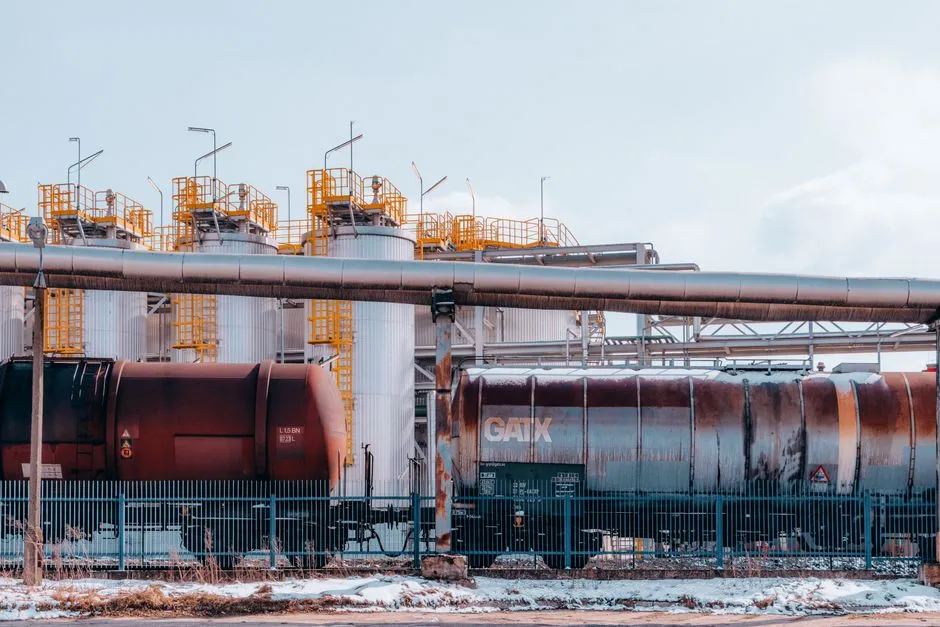
The matrix below is the screenshot most Morristown procurement managers will forward internally; numbers are drawn from EPA Table 7-2, EPA Table 7-4, the 2026 Ecologix comparison, and HydropureWater DAF and lamella clarifier product specifications. DAF strengths cluster around FOG and floatable solids: 70–95% oil and grease removal (Ecologix 2026), very small footprint (typically 0.05–0.15 m² per m³/h for a packaged DAF unit), fast startup, and a 4–300 m³/h flow range across the 13-model HydropureWater DAF line. Clarifier strengths cluster around heavy and inorganic loads: 85–95% TSS removal on metal-hydroxide and lime streams, lower chemical OPEX (no polymer demand in many cases), and the ability to handle dense sludges that would overwhelm a DAF float layer. The lamella clarifier variant changes the footprint math entirely — surface loading of 20–40 m/h on a HydropureWater High-Efficiency Sedimentation Tank versus roughly 1–2 m/h on a conventional clarifier (per EPA Table 7-2 conventional primary clarifier overflow rates of 24–48 m/d converted to surface-loading basis), a 4–8× improvement that is critical on tight Morristown sites. EPA Table 7-2 specifies primary clarifier overflow rates of 24–48 m/d and detention times of 1.5–2.5 h at average flow; EPA Table 7-4 specifies DAF air-to-solids ratios of 0.01–0.05 lb air/lb solids and hydraulic retention of 20–60 minutes. For a deployable option while permanent equipment is being installed, a trailer-mounted mobile DAF (WesTech, 2026 spec) can be brought online in a single day, though both permanent DAF and permanent clarifier still need equalization, chemical feed, and sludge handling downstream. See the HydropureWater DAF system and the HydropureWater lamella clarifier for flow-band and loading data relevant to a 50–200 m³/h chemical plant.
| Parameter | Dissolved Air Flotation (DAF) | Conventional Clarifier | Lamella Clarifier |
|---|---|---|---|
| TSS removal (typical) | 60–80% | 50–70% | 85–95% (heavy/inorganic) |
| FOG / oil removal | 70–95% | 50–70% | 60–75% |
| Metals (as hydroxide) removal | 40–70% (with coagulant) | 80–95% | 85–95% |
| Footprint (m² per m³/h) | 0.05–0.15 | 0.5–1.5 | 0.15–0.4 |
| Hydraulic retention | 20–60 min (EPA 7-4) | 1.5–2.5 h (EPA 7-2) | 30–90 min |
| Surface loading | 5–25 m/h | 1–2 m/h (24–48 m/d) | 20–40 m/h |
| Air-to-solids ratio | 0.01–0.05 lb/lb (EPA 7-4) | N/A | N/A |
| Best-fit stream | FOG, oils, low-density flocs | High-TSS, settleable solids | Metal hydroxides, lime sludge, dense TSS |
CAPEX and OPEX Reality Check for a 50–200 m³/h Chemical Plant
Translating the matrix into a defensible 2026 budget requires explicit ranges rather than a single number. Permanent stainless DAF units in 2026 for the 50–200 m³/h band — which is the typical Morristown chemical-plant flow envelope and matches the middle of the HydropureWater DAF 4–300 m³/h range — typically run $40K–180K USD CAPEX depending on material (304 vs 316 SS), skimmer drive, and integrated polymer make-down. A lamella clarifier in the same flow band typically comes in 20–40% below an equivalent DAF on CAPEX because there is no air compressor package, no saturator vessel, and a smaller building footprint; the trade-off is taller tank height for the inclined plates. DAF OPEX is higher per m³ treated because of compressed air (typical 5–8 kWh per m³ for the saturator recycle pump), polymer consumption, and skimmer drive power, but OPEX is frequently offset by lower civil cost on space-constrained Morristown sites where a lamella would require deeper excavation. The hidden cost in either case is downstream sludge handling — DAF float at 3–6% dry solids and clarifier underflow at 1–3% both need dewatering, and a plate and frame filter press is the workhorse that pushes cake to 25–35% DS for disposal. Ecologix (2026) explicitly rates DAF OPEX as "moderate (air compressor, pumps)" relative to clarifier, which aligns with the operating-cost split above. For a peer-engineer's view of how these choices look in a different regulatory jurisdiction, see this 2026 guide on chemicals wastewater DAF vs clarifier in Lakeland.
| Cost Element (50–200 m³/h, 2026) | Permanent DAF | Lamella Clarifier |
|---|---|---|
| CAPEX range (USD) | $40K–$180K | $25K–$120K |
| Major cost drivers | SS skimmer, saturator, recycle pump, compressor | Inclined plate pack, sludge hopper, scraper |
| OPEX drivers | Compressed air 5–8 kWh/m³, polymer, skimmer drive | Lower polymer demand, sludge pumping |
| Building / civil cost | Lower (small footprint) | Higher on tight sites (tall tank) |
| Downstream dewatering | Plate-and-frame press on float (3–6% DS feed) | Plate-and-frame press on underflow (1–3% DS feed) |
| Operator skill required | Moderate (air-saturation tuning) | Low-to-moderate |
Decision Framework: Which Should Your Morristown Chemical Plant Choose in 2026?
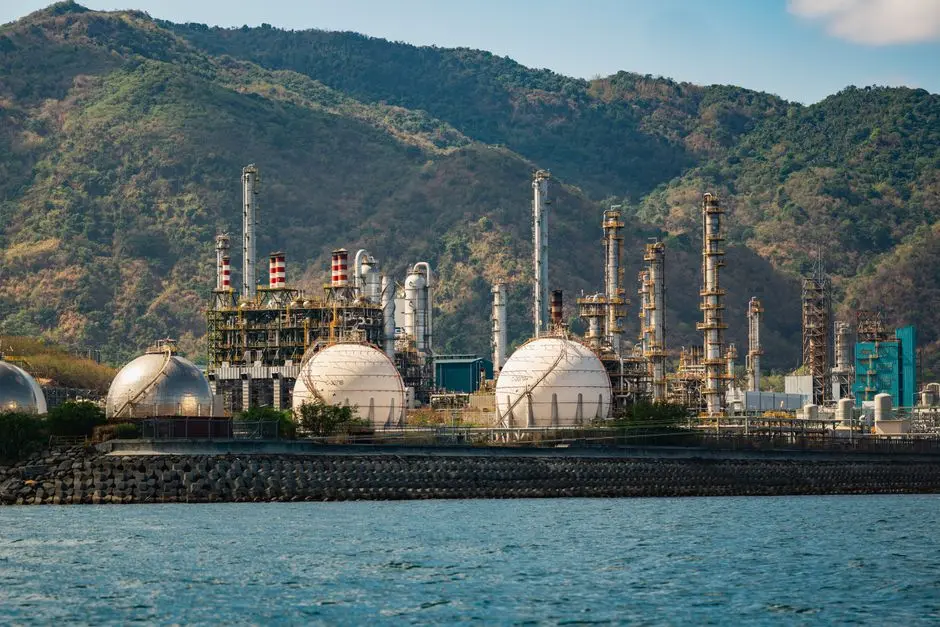
Use this four-step rule on a single page of your basis-of-design document and NJDEP will see a defensible selection trail. Step 1: classify the stream using the typology above — FOG-dominant, heavy-TSS/metal-hydroxide, or colloidal/low-density floc. Step 2: compare NJ local limits (per your NJDEP permit, often stricter than N.J.A.C. 7:14A defaults for copper, nickel, zinc, lead, and oil and grease) against technology removal benchmarks from Ecologix 2026 and EPA Tables 7-2/7-4. Step 3: confirm site footprint against the matrix above — a 0.05–0.15 m² per m³/h DAF fits where a 0.5–1.5 m² per m³/h conventional clarifier will not. Step 4: choose. If FOG is greater than 50 mg/L or any oil sheen is present, specify DAF first and a lamella clarifier as polish; if TSS is greater than 500 mg/L with metal hydroxide or lime sludge, specify a lamella clarifier first and DAF only if downstream polishing for residual oil is required. For genuinely mixed streams — which is the most common Morristown case in specialty and pharma-chemical plants — specify a DAF + lamella clarifier train rather than choosing one; EPA Chapter 7 supports this hybrid approach and it is the configuration the 2026 Ecologix guide explicitly recommends for complex streams. Always pilot or jar test per EPA Chapter 4 before final selection, and meter coagulant with an automatic chemical dosing system so the test results translate cleanly to full-scale operation.
Morristown-Specific Recommendation and Next Step
For most Morris County chemical plants in 2026, the defensible answer is DAF as primary FOG and oil removal followed by a lamella clarifier for TSS and metal-hydroxide polishing — the hybrid train, not either unit alone. The equipment band that fits 4–300 m³/h flows at 20–40 m/h lamella surface loading is the HydropureWater DAF system paired with a HydropureWater lamella clarifier, and both are sized for the 50–200 m³/h envelope most Morristown plants sit inside. Before committing CAPEX, run a documented jar-testing or pilot program per EPA Chapter 4 methodology — NJDEP expects a basis of design that traces each design parameter back to site-specific data, not vendor cut-sheets — and use that test to lock in coagulant type, dose, and air-to-solids ratio before the purchase order is cut.
Frequently Asked Questions
Is a DAF or a clarifier better for oily chemical wastewater in Morristown?
DAF. A 2026 Ecologix case study shows 95% oil and grease removal on a food/chemical stream with DAF versus roughly 70% for a clarifier, and EPA Table 7-4 lists oil and grease separation as a primary DAF application with air-to-solids ratios of 0.01–0.05 lb/lb.
When does a lamella clarifier outperform DAF on chemical wastewater?
When the stream is heavy TSS, metal hydroxide, or lime-softening sludge. Lamella surface loading of 20–40 m/h (HydropureWater High-Efficiency Sedimentation Tank) versus 5–25 m/h for DAF lets the lamella handle dense settleable solids at higher flux, and EPA Table 7-2 supports clarifier use for chemical-sedimentation sludges.
Can a Morristown plant run DAF and a clarifier in series?
Yes, and for mixed FOG-plus-metal streams it is usually the right answer. Ecologix 2026 explicitly recommends hybrid trains for complex streams, and EPA Chapter 7 supports combining flotation upstream with gravity sedimentation downstream for chemical plant wastewater.
What CAPEX should a Morristown chemical plant budget for a 50–200 m³/h DAF in 2026?
Permanent stainless DAF units in that flow band typically run $40K–$180K USD CAPEX in 2026, with the spread driven by material of construction (304 vs 316 SS), skimmer drive, and integrated polymer make-down (HydropureWater DAF product range, 2026).
What NJDEP rule governs chemical plant discharge to the Morristown sewer?
N.J.A.C. 7:14A, the NJDEP industrial pretreatment rules, which set categorical local limits for BOD, TSS, oil and grease, and metals by user category. Site-specific permits frequently impose limits stricter than the rule defaults, especially for copper, nickel, zinc, and lead at chemical manufacturing SIUs.