Why Vadodara's Industrial Effluent Problem Demands a Properly Engineered ETP
An EHS manager at a chemical plant in the Nandesari GIDC, served a GPCB show-cause over a single non-compliant effluent parameter, faces the same hard question every Vadodara plant owner eventually faces: can our existing ETP actually meet the consent conditions we signed for, and if not, what do we replace it with? The industrial clusters around Vadodara, Chhota Udaipur and Ankleshwar house chemical, pharmaceutical, fertilizer and engineering units whose effluents carry the same pollutant families the US EPA defines as typical of industrial wastewater — oils and grease, solvents, heavy metals, suspended solids and colour (S4, en.wikipedia.org/wiki/Effluent). The difference is that in Gujarat those loads are discharged into a state water-stress regime, and GPCB consent conditions are enforced against them.
Local evidence shows the effluent is treatable. A 2018 study from the Department of Microbiology and Biotechnology Centre, Maharaja Sayajirao University of Baroda (S2, Hingurao & Nerurkar, Applied Biochemistry and Biotechnology 185(3):691-704, 2018-01, doi:10.1007/s12010-017-2680-4) used a methylotrophic bacterial consortium seeded from the Ankleshwar CETP to lower COD of fertilizer, chemical and pesticide industry effluents from the 950–2000 mg/L range to below detection limits in 60–96 hours in batch and 9–15 days in continuous operation, with all operating variables (COD, BOD, pH, MLSS, MLVSS, SVI, F/M ratio) held within permissible range. That study is direct Vadodara-region validation that a properly specified biological stage works on Gujarat industrial effluents.
Water-stress economics reinforce the engineering case. With industrial water costs rising, reuse-grade polishing is a real operating saving, not a green-washing slogan, and recognised upgrade routes (membrane and constructed-wetland polishing) are documented in the academic literature (S1, Schrader, Direct Nanofiltration of Wastewater Treatment Plant Effluent, University of Twente, doi:10.3990/1.9789036523325; S5, Lei, Removal of Micropollutants from Wastewater Treatment Plant Effluent by Constructed Wetlands, Wageningen University and Research, doi:10.18174/575408). An undersized or mis-specified ETP is therefore both a compliance risk and a missed economic opportunity.
The Regulatory Frame Every Vadodara ETP Must Satisfy
Every ETP in the Vadodara cluster must be designed against the consent regime, not against a vendor's standard skid. Consent to Establish (NOC) under the Water Act, 1974 is required before any ETP is built; Consent to Operate is required before any treated effluent is discharged, reused or sent to a CETP, and both are issued by the Gujarat Pollution Control Board. The consent will name your discharge route and the parameter limits you must meet, and it is non-negotiable in the event of an inspection.
Three discharge routes exist, each with different consent implications. (a) Discharge to the GIDC sewer for treatment at a member CETP — viable for plants inside the sewer network, but membership is conditional on trade-effluent quality, hydraulic load and tariff, and it is not a substitute for an in-house primary stage. (b) Discharge to surface water or land under GPCB-specified effluent standards, which requires a polish train sized to those limits. (c) On-site reuse for cooling, boiler make-up, gardening or process rinsing, which still requires a consent and a UF/RO polish train. The CETPs at Nandesari, Ankleshwar and Vatva remain the practical shared-treatment route for member units; the MSU Baroda study explicitly used an Ankleshwar-CETP-sourced consortium, which is itself a reminder that the regional CETP system is the genetic source of the biology that works on Gujarat effluent (S2, 2018).
Two adjacent obligations are routinely missed in ETP scopes. Air emissions from the sludge-handling area need GPCB consent under the Air Act, and the dewatered cake is a hazardous waste or solid waste depending on the pollutant profile, with disposal only through an authorised handler. Worker-safety obligations under the Factories Act apply to confined-space entry, chemical handling and biogas safety. A vendor who quotes an ETP without naming these is quoting a process, not a compliant project.
How to Characterise Your Effluent Before You Spec the Plant
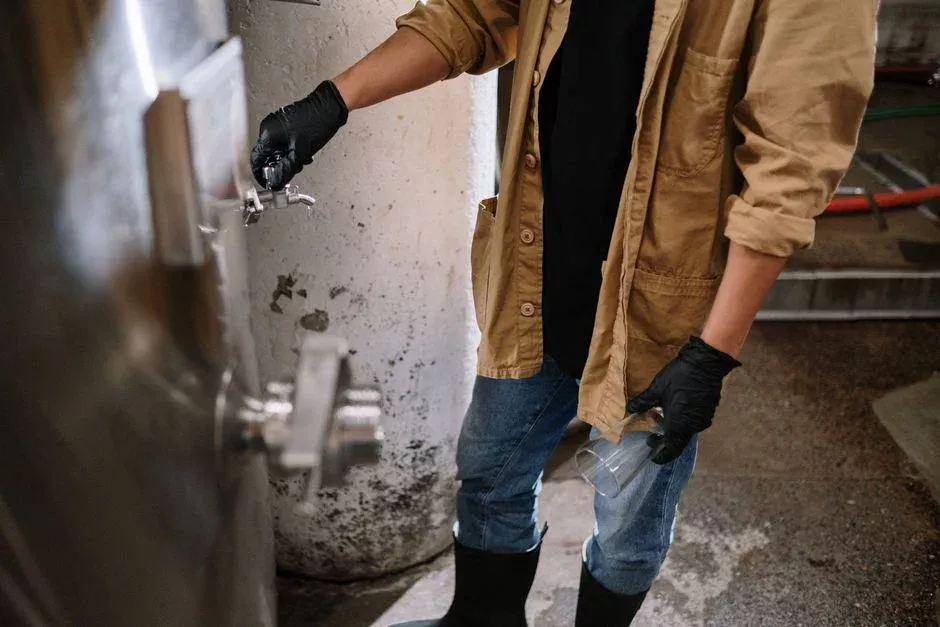
The single most common cause of a failing ETP is a design basis built on a vendor's default rather than on the buyer's actual effluent. A defensible characterisation set covers: average and peak flow (m³/day, plus the diurnal pattern), pH and temperature, total/dissolved/suspended solids, COD, BOD, oil and grease, and the industry-specific pollutants — cyanide, hexavalent chromium, phenols, ammonia, TDS, residual chlorine or solvents. Toxicity (inhibition of activated sludge) must also be screened, because a single inhibitory stream can wipe out a biological stage.
Grab samples are not enough. A 7- to 14-day composite sampling campaign, taken across all process streams including batch discharges, CIP waste and floor wash, is the basis of any defensible design. The Vadodara University study (S2, 2018) is a useful reference for the operating variables a designer must track once the plant is running — COD, BOD, pH, MLSS, MLVSS, SVI and F/M ratio. Those exact parameters should be mapped to the PLC tag list and the daily operating log, so that consent reporting and process control share the same numbers.
Output of characterisation is a design basis document that fixes: design flow and peak factor, influent concentrations, target effluent quality (the consent limits, not the vendor's brochure), reuse objective if any, sludge production estimate, and an envelope of inlet toxicity. Until that document exists, any vendor quotation is a guess, and the buyer's best protection is to refuse to issue a PO on guessed flows.
The 2026 ETP Process Train for a Vadodara Chemical or Pharma Plant
Reading a vendor proposal critically means knowing which equipment belongs in which stage. The four-stage train (preliminary, primary, secondary, tertiary) is the conventional frame for industrial ETP design (S3, laljicorporation.com/effluent-water-treatment-plant.html). Below is what a buyer should expect to see in a 2026 proposal for a chemical or pharma plant in the Vadodara belt, with the operating parameters a serious vendor will state in writing.
Stage 1 — Preliminary. A rotary mechanical bar screen for ETP headworks followed by grit removal protects downstream pumps, blowers and biological reactors from rags, plastics and coarse solids. Skipping this stage is the cheapest way to wreck an MBR.
Stage 2 — Equalisation and primary separation. An equalisation tank with diffused aeration homogenises flow and load, followed by either a lamella clarifier for high-suspended-solids streams or a dissolved air flotation for oil and grease removal where surfactants, emulsified oil or SBR-style latex residues dominate. The MSU Baroda study (S2, 2018) operated on effluents that were already through a primary stage; a high-efficiency sedimentation tank is the workhorse for the chemical cluster, and an automatic chemical dosing for coagulation and pH correction package is what makes the primary stage actually do its job.
Stage 3 — Biological. Activated sludge (conventional, SBR or MBBR) is the default; for space-constrained sites, variable loads, or plants targeting near-reuse quality, an MBR membrane bioreactor for the biological stage replaces the secondary clarifier and delivers sub-1 µm filtered effluent in a single step, with the MBR module as the replaceable element. The S2 study confirms that the same pollutant envelope (COD 950–2000 mg/L, real Gujarat fertilizer, chemical and pesticide effluents) is biotreatable to below detection limits given the right consortium and residence time.
Stage 4 — Tertiary polish and disinfection. A multi-media filter upstream of UF and RO, followed by a ultrafiltration polish after the biological stage and, where reuse or ZLD pre-concentration is the objective, an RO system for reuse or ZLD pre-concentration. Disinfection with a UV steriliser for ETP disinfection before reuse or discharge avoids the chlorinated byproduct risk that comes with breakpoint chlorination on industrial effluent. Sludge from primary, biological and chemical stages is dewatered on a plate and frame filter press for ETP sludge dewatering, and the cake goes to an authorised handler.
| Stage | Process objective | Typical equipment | Key design input |
|---|---|---|---|
| 1 — Preliminary | Remove rags, plastics, grit | Rotary bar screen, grit chamber | Peak flow, screen aperture |
| 2 — Equalisation + primary | Homogenise flow; remove SS, oil & grease | EQ tank, lamella clarifier or DAF, chemical dosing | Diurnal flow, oil & grease load |
| 3 — Biological | Degrade dissolved organics (COD, BOD) | Activated sludge / SBR / MBR | Influent COD/BOD, F/M, toxicity |
| 4 — Tertiary + disinfection | Polish to consent or reuse quality | MMF, UF, RO, UV | Target effluent quality, reuse objective |
| Sludge line | Reduce sludge volume for disposal | Sludge thickener, filter press | Sludge volume, cake dryness target |
Own ETP vs CETP Membership vs Zero-Liquid Discharge: The 2026 Decision
The choice between owning a full ETP, joining a CETP, or going to ZLD is driven by inlet TDS, land area, CETP access, capex/opex appetite, the consent trajectory, and whether any portion of the effluent can be reused. A 2026 decision matrix for a Vadodara plant is below.
| Route | Best-fit condition | Capex exposure | Compliance exposure | Reuse potential |
|---|---|---|---|---|
| Own ETP + discharge to GIDC sewer / surface water | Inside sewer network, or land available for on-site discharge; moderate TDS | Lowest | Direct to GPCB consent; sensitive to standard tightening | Limited without tertiary polish |
| CETP membership (Nandesari, Ankleshwar, Vatva) | Member unit with pretreatment meeting CETP trade-effluent rules | Lower than full own ETP | Shared; inherits cluster non-compliance risk and tariff | CETP-dependent |
| Zero-liquid discharge (own ETP + RO + MVR/evaporator) | High-TDS stream; no discharge option; water-stress site | Highest | Lowest — eliminates discharge consent risk | Maximum — most water reused on site |
| Hybrid (own primary/secondary + CETP for residual, or own ETP + RO concentrate to evaporator) | Mixed TDS; partial reuse feasible | Mid-to-high | Site-specific | Site-specific |
Own ETP + discharge remains the default for plants outside the GIDC sewer network, but it leaves the plant fully exposed to GPCB consent conditions and to any future tightening of discharge standards. CETP membership at Nandesari, Ankleshwar or Vatva lowers capex for member units but binds the unit to the CETP's tariff structure, pretreatment requirements and any collective non-compliance risk of the cluster. ZLD is the highest capex and opex route, but it de-risks against future consent tightening, eliminates freshwater intake for many uses, and is increasingly the expectation for high-TDS streams in Gujarat's water-stressed districts. Many 2026 Vadodara plants run a hybrid: own primary/secondary feeding a CETP for the residual, or own full ETP with RO concentrate going to a mechanical vapour recompression or multiple-effect evaporator. The right answer is site-specific and is decided by the design basis, not the vendor.
What a Serious ETP Vendor Should Deliver in Vadodara
Turn the spec into a screening checklist before issuing an enquiry. Engineering deliverables should include a process design basis, P&ID, GA drawing, hydraulic profile, equipment list with motor and material specs, PLC scope, and an operating-cost model covering power, chemicals, spares and labour. The design basis must reference the buyer's characterisation data; if it does not, the quotation is a guess.
Compliance deliverables are the second filter. The vendor should demonstrate that the design meets the GPCB consent limits you are targeting, provide a hazardous-waste handling plan for the sludge cake, and assist with the Consent to Establish and Consent to Operate applications. Lifecycle deliverables matter because an ETP is a 15- to 20-year asset: a performance guarantee tied to effluent quality, defined warranty terms on membranes and instruments, a recommended spares list, and operator training. Local presence is the third filter — a Gujarat-based service team with a documented response time, and a track record of running plants in the Vadodara, Bharuch, Ankleshwar or Vatva industrial belt, not just a catalogue sale.
Frequently Asked Questions
How do I size an ETP for my Vadodara plant and what data does a vendor need to quote accurately?
Sizing is anchored in the design basis, not in a generic flow number. A competent vendor will ask for your 7- to 14-day composite characterisation (flow, pH, COD, BOD, TSS, oil & grease, industry-specific pollutants) and your consent limits before quoting. The MSU Baroda study (S2, 2018) is a useful local reference: it treated real Gujarat fertilizer, chemical and pesticide effluents at 950–2000 mg/L COD and reached below-detection-limit effluent, which confirms that biological sizing on this matrix is feasible but must be matched to your specific load. Without composite data, any "standard" kLD figure in a vendor quotation is a placeholder.
What capital cost should I budget for an ETP in Vadodara in 2026?
There is no defensible generic price in the public research for an industrial ETP in 2026, and any single figure would mislead you. The cost drivers that move the number are: design flow, influent load (especially COD and TDS), discharge route (GIDC sewer vs surface water vs reuse), whether ZLD is in scope, the reuse grade required, soil and geotechnical conditions, and the consent-driven level of instrumentation. The action is to ask each shortlisted vendor for an itemised capex split by stage and by major equipment, and a separate operating-cost model (kWh/m³, chemical cost/m³, consumable replacement cost/m³), then compare on the same envelope.
How do I screen an ETP supplier in Gujarat before issuing a PO?
Use the lifecycle-deliverables filter: process design basis with your data, P&ID and hydraulic profile, GPCB-aligned consent design, hazardous-waste handling plan, performance guarantee tied to effluent quality, defined membrane and instrument warranties, recommended spares list, operator training, and a Gujarat-based service team with documented response time. Ask for a reference list of running plants in the Vadodara, Bharuch, Ankleshwar or Vatva belt and visit at least one. A vendor who will not put a performance guarantee on effluent quality in writing is pricing in the risk of failure, and that risk lands on the buyer.
What are the GPCB consent obligations I must meet before treated effluent can be discharged or reused?
Consent to Establish under the Water Act, 1974 is required before any ETP is built, and Consent to Operate is required before any treated effluent is discharged, reused or sent to a CETP — both are issued by GPCB and will name your discharge route and parameter limits. If you discharge to a GIDC sewer for treatment at a member CETP, you are bound by that CETP's trade-effluent rules; if you discharge to surface water or land, you must meet the GPCB-specified effluent standards; if you reuse on site, you still need consent and a polishing train. Air consent under the Air Act and authorised disposal of the dewatered cake are separate obligations that must be in the project scope from day one.
Related Equipment
- RO system for reuse or ZLD pre-concentration — specifications, capacity range, and technical data