Why Nagpur Industrial Effluent Compliance Is Getting Tighter in 2026
MPCB's Schedule-I general standards now drive 90% of consent-to-operate conditions across MIDC Hingna, MIDC Butibori, and the Nagpur Urban agglomeration: pH 5.5–9.0, suspended solids ≤100 mg/L, BOD ≤30 mg/L (3-day, 27°C), COD ≤250 mg/L, and oil & grease ≤10 mg/L (per MPCB Schedule-I, 2025 consolidated consent framework). On top of that, MPCB Schedule-VI imposes tighter sector-specific effluent limits on pharmaceutical formulation units — typically COD ≤100 mg/L post-treatment, total nitrogen ≤10 mg/L, and zero detectable solvents in the final discharge for Red-category consent holders.
The capacity pressure is real. NIT-treated common effluent treatment capacity across the 13 MIDC estates in Vidarbha has not kept pace with the 1,200+ industrial units clustered in Hingna alone. CETP surcharge invoices now run ₹8–22 per m³ for over-capacity hydraulic loads (MPCB regional office Nagpur, 2025-09 surcharge schedule), which is forcing pharma and pesticide operators to either invest in in-house ETP upgrades or face consent revocation. The 2025 MPCB directive direction also pushes Red and Orange-category units — pharma formulation, pesticide, and bulk-drug intermediates — toward Zero Liquid Discharge, with new CTO renewals in Hingna increasingly conditioned on a ZLD roadmap.
MPCB Discharge Limits Every Nagpur Plant Must Hit
Before you specify a single piece of equipment, lock down the discharge envelope. The table below is what MPCB Nagpur's regional office applies to consent renewals under the Water Act 1974 and Air Act 1981, covering Nagpur, Wardha, Bhandara, Gondia, Chandrapur, and Gadchiroli districts. Pharma units face the tighter Schedule-VI column; everything else falls under Schedule-I general standards. CTO renewals are typically valid 5 years for White category, 3 years for Green, and 2 years for Orange and Red.
| Parameter | MPCB Schedule-I (General) | MPCB Schedule-VI (Pharma Formulation) | Inland Surface Water (US EPA, for context) |
|---|---|---|---|
| pH | 5.5–9.0 | 6.0–8.5 | 6.0–9.0 |
| Total Suspended Solids (TSS) | ≤100 mg/L | ≤50 mg/L | ≤30 mg/L (30-day avg.) |
| BOD (3-day, 27°C) | ≤30 mg/L | ≤10 mg/L | ≤30 mg/L |
| COD | ≤250 mg/L | ≤100 mg/L | Not specified (uses BOD) |
| Oil & Grease | ≤10 mg/L | ≤5 mg/L | ≤10 mg/L |
| Total Nitrogen | ≤10 mg/L | ≤10 mg/L | Variable by basin |
| Total Phosphorus | ≤5 mg/L | ≤2 mg/L | Variable by basin |
| TDS | ≤2,100 mg/L | ≤1,500 mg/L | ≤500 mg/L (drinking source) |
Two things to flag for Vidarbha specifically: MPCB's Nagpur regional office has been rejecting CTO renewals when discharge TDS exceeds 2,100 mg/L even if the unit is connected to a CETP, because downstream RO at the CETP cannot handle the salt load. And for Red-category units — bulk drug, pesticide formulation, and distillery — ZLD is now the default consent condition rather than the exception.
Matching Treatment Technology to Nagpur's Industrial Effluents
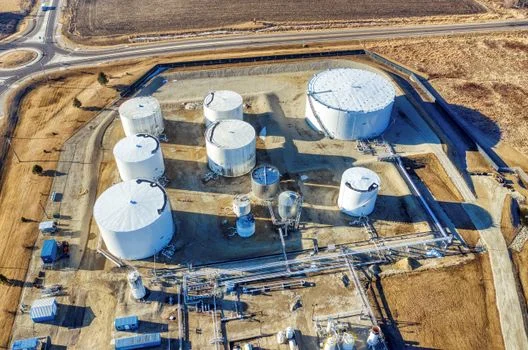
Influent characteristics drive train selection, not vendor catalogues. For Nagpur's dominant sub-industries, here is the decision matrix an engineer should walk through before sizing a single pump.
| Sub-industry | Typical Influent | Recommended Train | Key Design Parameter |
|---|---|---|---|
| Pharma formulation (Hingna MIDC) | COD 5,000–25,000 mg/L, variable pH 2–11, recalcitrant solvents | Equalization → pH correction → Coagulation/DAF → MBR (SRT 25–40 days) → RO → Evaporator (ZLD) | MBR MLSS 8,000–12,000 mg/L |
| Fertilizer / urea (Nagpur Urban, Koradi belt) | NH₃-N 200–800 mg/L, urea carryover 50–200 mg/L, high pH | Equalization → Ammonia stripping (pH 11, 60°C) → Breakpoint chlorination → Nitrification-denitrification → MBR | Stripping tower air:liquid ratio 3,000:1 |
| Thermal power (Khaperkheda, Koradi-adjacent) | High TSS from ash pond leachate, oil, heavy metals, low BOD | Clarifier → Lime softening → dissolved air flotation system → MGF → RO | DAF loading 25–40 m/h |
| Engineering / MSME (Butibori) | Mixed metalworking fluids 500–2,000 mg/L oil, heavy metals | Oil skimmer → dissolved air flotation system → Biological (SBR/MBBR) → Sand/Media filter | DAF removal 80–95% FOG |
DAF consistently precedes biological treatment because floatation removes 30–50% of the aeration tank organic and suspended load before it reaches the basins, which directly shrinks MBR tank volume and cuts aeration energy by 20–30%. The MBR membrane bioreactor system is now the default biological step in Vidarbha pharma projects because it tolerates the variable loadings that SBR and conventional ASP cannot — peak COD swings of 3–5× are routine in formulation batches.
Cost Benchmarks: ETP and ZLD CAPEX/OPEX in 2026
Generic "depends on size" guidance is useless in a budget meeting. The numbers below reflect 2026 Vidarbha project data for civil + mechanical + electrical + instrumentation, excluding land and 33 kV power infrastructure.
| System Size & Scope | CAPEX Band (INR) | OPEX Band (INR/m³) | Typical Payback |
|---|---|---|---|
| 50 m³/d secondary biological ETP only | ₹15–25 lakh | ₹3–8 | 3.5–4.5 years |
| 100 m³/d MBR system (no RO) | ₹25–45 lakh | ₹12–22 | 3.0–4.0 years |
| 250 m³/d MBR + RO reuse (no ZLD) | ₹55–95 lakh | ₹18–42 | 2.5–3.5 years |
| 500 m³/d full ZLD (MBR + RO + MEE) | ₹1.8–3.2 crore | ₹65–140 | 3.5–5.0 years |
The dominant cost drivers in Vidarbha are influent COD load (each 1,000 mg/L above 2,000 mg/L adds roughly ₹8–12 lakh to MBR sizing for a 100 m³/d plant), target reuse percentage (pushing reuse from 50% to 80% typically doubles RO membrane area), and automation level — PLC with HMI runs ₹2–4 lakh additional; full SCADA with remote telemetry runs ₹6–10 lakh. An industrial RO system with 95% recovery materially shrinks ZLD OPEX because the brine stream feeding the multi-effect evaporator is reduced by roughly 80% versus a 70% recovery design. Payback compresses to 2.5–3.5 years once you offset CETP surcharges (₹8–22/m³) and fresh-water tanker costs (₹18–35/m³ in Nagpur Urban) against reuse. For projects that bundle ZLD polishing with a packaged drinking water line, the JY integrated water purification skid cuts both footprint and installation hours.
Recommended Treatment Train for Common Nagpur Sub-Industries
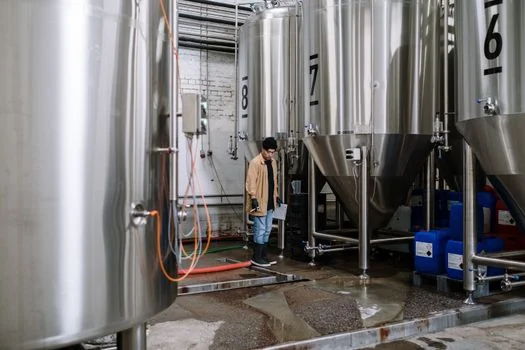
Below is the concrete shortlist an EPC consultant in Nagpur can put into a P&ID this quarter. Flows and equipment models are matched to the four sub-industries that make up the bulk of MIDC Hingna and Butibori's water-quality load.
Pharma formulation (MIDC Hingna): Equalization (8–12 hr HRT) → pH correction → dissolved air flotation system at 4–300 m³/h → MBR membrane bioreactor system with DF series PVDF flat sheet membrane module at 0.1 μm nominal pore size → industrial RO system with 95% recovery → MEE/ATFD for ZLD polish. Sludge from DAF and MBR is conditioned with polyelectrolyte and dewatered on a plate and frame filter press (1–500 m² range) targeting 22–28% DS cake.
Fertilizer / agro-chemical (Nagpur Urban, Koradi belt): Ammonia stripping tower → breakpoint chlorination → activated sludge or MBBR → lamella clarifier with 20–40 m/h surface loading → tertiary sand filter. The lamella clarifier's high surface-loading rate is the design choice that keeps the footprint small enough to retrofit into an existing ETP compound in Hingna's older plots.
Thermal power (Khaperkheda, Koradi-adjacent units): Clarifier → lime softening → DAF → multimedia filter (MGF) → RO; ash-pile runoff is segregated and treated through a heavy-metal precipitation step before rejoining the main stream. Sludge handling uses the same plate and frame filter press (1–500 m² range) for both clarifier underflow and softening sludge.
Distillery / fermentation (emerging in Wardha district): Anaerobic UASB (COD removal 70–85%, biogas yield 0.35–0.42 m³/kg COD removed) → MBBR → RO → evaporation. ZLD is mandatory; no seasonal discharge is permitted by MPCB for this sub-industry.
Frequently Asked Questions
What are the MPCB discharge limits for industrial wastewater in Nagpur's MIDC Hingna? Schedule-I general standards apply to most units: pH 5.5–9.0, TSS ≤100 mg/L, BOD ≤30 mg/L, COD ≤250 mg/L, oil & grease ≤10 mg/L, TDS ≤2,100 mg/L. Pharmaceutical formulation units under Schedule-VI face tighter COD ≤100 mg/L and BOD ≤10 mg/L post-treatment.
How much does a 100 m³/day ETP cost in Nagpur in 2026? A 100 m³/d MBR system (secondary treatment only) runs ₹25–45 lakh CAPEX and ₹12–22 per m³ OPEX. Adding RO reuse for 80% recovery pushes the system into the ₹55–95 lakh band.
Is Zero Liquid Discharge mandatory for pharma units in MIDC Hingna? MPCB's 2025 consent renewal direction strongly favors ZLD for Red and Orange-category units — including formulation, bulk drug, and pesticide. New CTO renewals in Hingna are being conditioned on a ZLD roadmap even when not yet strictly mandatory.
What pore size MBR membrane works for pharma effluent in Vidarbha? 0.1 μm flat-sheet PVDF (DF series) is the spec most EPCs have standardized on for pharma ETP in MIDC Hingna, because it holds up against solvent micro-emulsions that foul hollow-fiber designs within 6–9 months.
How long is the typical payback for an in-house ETP versus paying CETP surcharges? 2.5–4.5 years is the typical Vidarbha payback band when CETP surcharges (₹8–22/m³) and fresh-water costs (₹18–35/m³ tanker) are displaced by treated-water reuse at 60–80% recovery.