Why Bhopal and Mandideep Effluent is Not a Generic Wastewater Problem
Mandideep's basic-drug industrial effluent is documented as highly variable in composition, shifting with each plant's batch production schedule, and containing soluble organics that resist removal by precipitation or adsorption on biological flocs — a 2019 biodiversity-journal bioassay study on Mandideep ETPs (Bij, 2019) makes this point directly. The numbers in that study are the real design brief, not a textbook BOD figure.
Raw effluent from Lupin Ltd ETP-I showed 100% fish survival in I, II and IV quarters but flipped to an LC50 at 85% dilution in III quarter — a single bad batch moved toxicity by orders of magnitude within one plant (Bij, 2019). Raw effluent from Lupin ETP-II was acutely toxic at 6% dilution in II quarter and 11.25% in III quarter, against 100% survival in I and IV quarter (Bij, 2019). Vista Organics raw effluent killed 100% of test fish at 1% concentration in I and II quarters due to highly acidic pH, with LC50 at 5% dilution in III quarter (Bij, 2019). The same study reported that after RO treatment, effluent from both Lupin and Vista Organics recorded 100% fish survival in 100% preliminary tests across all four quarters (Bij, 2019) — establishing a multi-stage train ending in membrane polishing as a proven path to non-acute-toxic discharge.
The 2026 Regulatory Frame for a Bhopal ETP
Any ETP in Bhopal operates under consent to establish and consent to operate issued by the Madhya Pradesh Pollution Control Board (MPPCB), enforced through the Water (Prevention and Control of Pollution) Act, 1974 and the Air Act, 1981, with discharge standards aligned to CPCB's industry-specific schedules. The Mandideep bioassay study explicitly monitored treated effluent against CPCB guidelines and ran the toxicity test as per BIS:6582-1971 using guppy (Poecilia reticulata) (Bij, 2019) — the same BIS method MPPCB inspectors reference for pharmaceutical-category ETPs in Mandideep. The University of Twente PhD on direct nanofiltration of WWTP effluent cites the EU Water Framework Directive as the reuse-quality benchmark for agricultural or potable reuse (Schrader, Twente, 2018) — a useful 2026 reference point for Bhopal units targeting recycle, even though the binding standard in MP remains the CPCB/MPPCB consent number. For 2026, expect consent conditions to push harder on real-time effluent monitoring, ZLD scrutiny for new capacities, and bioassay or whole-effluent-toxicity evidence for pharma; verify how a vendor's proposed train addresses each of these before discussing price.
Process Train: What a Correctly Scoped Bhopal ETP Actually Contains
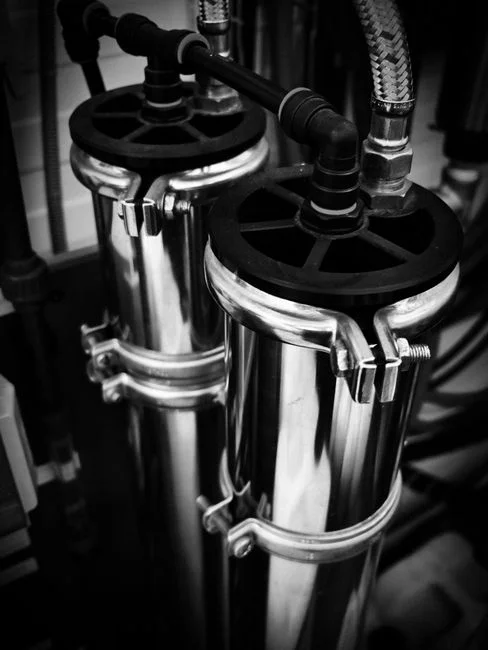
The front end must include screening (rotary or bar), flow and load equalization with mixing, and pH correction. The Mandideep data shows acidic excursions capable of 100% mortality in fish at 1% concentration (Bij, 2019), so equalization volume has to absorb batch swings rather than just dampen diurnal flow. Primary treatment covers grit removal and primary clarification; for pharma influents with high SS, a DAF pre-treatment ahead of the biological stage is often justified, since DAF handles oil, grease and colloidal loads that primary clarifiers pass through. The biological stage is the choice point: conventional activated sludge (lowest CAPEX, largest footprint, sensitive to toxic shocks), SBR (better shock absorption in batch-fed plants like Mandideep, smaller footprint), or an MBR system for near-reuse effluent (membrane-scoured biology, smallest tankage, higher membrane OPEX) — the choice should be driven by influent variability and reuse intent, not by vendor preference. The tertiary stage typically includes multi-media filtration, activated carbon for trace organics, and a polishing membrane; the Mandideep bioassay shows the difference between raw and RO-treated effluent is the difference between LC50 6% and 100% survival (Bij, 2019), so the polishing step performs the essential safety work. The sludge line must include thickening plus a sludge dewatering filter press and, for ZLD-bound plants, a dryer; sludge handling is where many cheap quotes cut corners, leading to housekeeping issues and consent-renewal fights.
Choosing the Biological Train: MBR vs SBR vs Conventional Activated Sludge
Conventional activated sludge (CAS) carries the lowest CAPEX and is well-understood, but a Mandideep-style variable and occasionally toxic influent will knock out biomass — an acidic batch like the Vista Organics 100% mortality at 1% event (Bij, 2019) can crash a CAS tank that has no equalization. SBR operates in time rather than space, handles batch-fed plants naturally, occupies a smaller footprint than CAS, and tolerates shock loads — a strong fit for pharma batch schedules documented in the Mandideep study. MBR combines activated sludge with submerged membranes, delivers near-reuse quality, and tolerates high MLSS; a Wageningen University thesis on constructed wetlands and micropollutant removal (Lei, WUR) positions membrane-coupled polishing as the more reliable route to polishing WWTP effluent, at the cost of higher membrane spend but the smallest biological footprint. For reuse intent — cooling tower make-up, gardening, process rinse — MBR plus RO/UF is the natural fit; for discharge-only with stable influent, SBR or CAS is the economical choice. The wrong pairing costs the buyer in either OPEX or consent-renewal pain. Procurement leads comparing MBR system for near-reuse effluent options against SBR packages should also weigh the MBR membrane module replacement cycle as a recurring OPEX line.
| Parameter | Conventional Activated Sludge (CAS) | Sequencing Batch Reactor (SBR) | Membrane Bioreactor (MBR) |
|---|---|---|---|
| Footprint | Largest | Smaller than CAS | Smallest biological footprint |
| CAPEX | Lowest | Moderate | Higher (membranes) |
| Shock-load tolerance | Low — biomass washout risk on toxic batches | Good — time-based operation absorbs swings | Good — high MLSS, membranes retain biomass |
| Effluent quality | Suitable for discharge after clarification | Suitable for discharge after clarification | Near-reuse; typically paired with RO/UF |
| Sludge handling | Standard | Standard | Higher MLSS changes dewatering demand |
| Best fit on Mandideep bioassay evidence | Risky without equalization | Strong for batch-fed pharma | Strong where reuse or tight consent limits apply |
What Moves a Bhopal ETP Quote Up or Down in 2026
Daily flow rate and peak hourly flow set the baseline: a 50 m³/day pharma ETP and a 500 m³/day textile ETP are not the same procurement, since equalization, biological volume, and pumping scale linearly with peak flow. Influent load (BOD/COD/SS/TDS) sets biological volume and aeration; the Mandideep study reports that "effluent has high Chemical Oxygen Demand (COD), Biochemical Oxygen Demand (BOD), Suspended Solids (SS) and Total Dissolved Solids (TDS) and cannot be discharged without proper treatment" (Bij, 2019) — that is a load profile a vendor must size to, not assume. Tertiary scope decides whether the plant ends at clarification or extends to filtration, carbon, UF, RO/NF; the Mandideep data makes the case that polishing is what converts an acutely toxic raw effluent into a non-toxic treated one. Automation level — PLC with HMI versus fully SCADA-integrated with remote MPPCB data push — is increasingly relevant for 2026 consent renewals that expect telemetry. Sludge handling depth — thickening only, filter press, or filter press plus dryer — each step changes footprint, OPEX and consent-compliance posture differently. Vendor scope clarity is the most often missed item: does the quote include design, equipment, civil, erection, commissioning, and a one-year performance warranty against the consent parameters? A Bhopal buyer should treat a quote missing any of these as incomplete. Buyers comparing RO polishing stage pricing should also confirm whether an UF pre-filter and an automatic chemical dosing system are bundled or quoted separately.
| Cost driver | Why it swings the quote | What a Bhopal buyer should verify |
|---|---|---|
| Daily / peak flow | Equalization, biological volume, pumping scale linearly with peak flow | Vendor uses your measured peak, not a generic capacity |
| Influent BOD/COD/SS/TDS | Sets aeration demand and biological volume | Vendor has seen your influent data, not a textbook profile |
| Tertiary scope (clarifier vs filtration vs carbon vs RO/NF) | Polishing is what converts acutely toxic raw effluent to non-toxic treated | Mandideep bioassay evidence (Bij, 2019) is acknowledged in the design basis |
| Automation (PLC vs SCADA + telemetry) | 2026 consent renewals expect remote data | MPPCB data-push capability is quoted, not a future option |
| Sludge handling depth | Thickening vs filter press vs filter press + dryer | Consent-compliance posture and O&M cost explained, not just equipment list |
| Vendor scope (design, equipment, civil, erection, commissioning, warranty) | Missing items reappear as change orders | One-year performance warranty against consent parameters is in writing |
How to Evaluate a Bhopal ETP Manufacturer Before You Sign
Ask for influent characterization specific to your SIC code and product mix, not a generic pharma or textile profile — vendors who push a standard package without asking for your batch schedule are likely to under-size equalization. Ask which biological train they recommend for your influent variability and why, and what their MLSS, F/M, and SRT design point is; an engineer who cannot answer this is selling tanks, not treatment. Ask for a reference plant in Bhopal or Madhya Pradesh with operating data they can share, and ideally arrange a site visit to a running plant on a similar influent. Ask how the proposed train will hold up under a toxic-batch event like the Mandideep LC50 episodes (Bij, 2019) — the answer should reference equalization, pH correction, and possibly a by-pass-to-quench step. Ask what the warranty covers against the MPPCB consent parameters, not just against equipment failure, and what the AMC and spare-parts commitment look like in year 2 and year 5. For teams new to wastewater scope, the BOD water treatment process guide and the MBR plant operation and maintenance guide set the technical baseline a credible vendor should already speak to. For comparable municipal framing outside MP, the Ahmedabad domestic sewage treatment guide and the Pune ETP engineering and buyer guide show the same consent-to-discharge logic that Bhopal buyers will be working against.
Frequently Asked Questions
What is a realistic ETP budget for a Bhopal pharma or chemical plant in 2026?
The research does not provide an INR-per-m³ figure for a Bhopal ETP. Buyers should request a cost breakdown indexed to daily flow, influent BOD/COD/SS/TDS, tertiary scope (clarification only vs RO/NF), automation level, and sludge-handling depth, and ask each bidder to quote against the same line items so prices can be compared apples-to-apples.
How do I choose between ETP manufacturers in Bhopal without visiting every shop?
Shortlist vendors who request your actual influent data and batch schedule before quoting, name a biological train with stated MLSS/F/M/SRT design points, and provide a reference plant in Madhya Pradesh with operating data. Any bidder offering a standard package without these three items
Frequently Asked Questions
What is the typical cost of an effluent treatment plant in Bhopal for a small or mid-sized pharmaceutical unit in 2026?
For a small to mid-sized pharmaceutical unit with a discharge capacity of 50 to 200 KLD, the capital expenditure (CAPEX) in 2026 typically ranges from ₹25 lakhs to ₹85 lakhs. This investment includes primary, secondary, and tertiary treatment stages, along with basic automation controls.
Operational expenditure (OPEX) should be budgeted at ₹15 to ₹35 per cubic meter of treated water, accounting for electricity, chemical dosing (coagulants/flocculants), and sludge disposal costs. Prices vary based on the specific COD/BOD load and the complexity of the pharmaceutical precursors involved.
How do I select a reliable ETP manufacturer in Bhopal for Mandideep-area pharmaceutical wastewater?
Prioritize manufacturers with proven experience in handling complex pharmaceutical wastewater characterized by high Total Dissolved Solids (TDS) and recalcitrant organic compounds. Verify that the vendor has a localized service team in the Mandideep industrial belt capable of providing 24-hour emergency support to avoid MPPCB compliance violations.
Evaluate potential partners based on their ability to provide comprehensive pilot-scale testing for your specific effluent stream. A reliable manufacturer must provide documented evidence of previous installations in Madhya Pradesh that have successfully met the stringent ZLD (Zero Liquid Discharge) or discharge norms required by local environmental authorities.
Which biological treatment — MBR, SBR or conventional activated sludge — is best for variable pharmaceutical effluent?
Membrane Bioreactor (MBR) technology is generally superior for pharmaceutical effluents due to its ability to handle fluctuating organic loads and produce a high-quality permeate suitable for reuse. MBR systems operate at higher Mixed Liquor Suspended Solids (MLSS) concentrations, typically 8,000 to 12,000 mg/L, allowing for a smaller footprint and better degradation of complex molecules compared to conventional systems.
While Sequential Batch Reactors (SBR) offer flexibility for variable flow, they may struggle with consistent effluent quality if the pharmaceutical waste contains high concentrations of inhibitory compounds. Conventional Activated Sludge (CAS) is generally insufficient for modern pharmaceutical standards due to poor settling characteristics and lack of tertiary filtration capabilities.
What is the realistic lead time from order to commissioning for an industrial ETP in Madhya Pradesh?
The realistic timeline from the issuance of a purchase order to full commissioning is 16 to 24 weeks. This includes 4 to 6 weeks for detailed engineering and civil design, 8 to 12 weeks for mechanical fabrication and procurement of specialized equipment like blowers and membranes, and 4 to 6 weeks for installation, piping, and biological seeding.
Delays are often linked to civil construction timelines and the procurement of long-lead items like high-efficiency pumps or automated filtration units. It is critical to secure early site clearance and power connection approvals to ensure the commissioning phase remains within this 24-week window.
What consent conditions from MPPCB should a 2026 ETP design explicitly address for a pharmaceutical or chemical unit?
Designs must explicitly target compliance with the latest Madhya Pradesh Pollution Control Board (MPPCB) standards for pharmaceutical units, which typically mandate a pH range of 6.5 to 8.5, BOD levels below 30 mg/L, and COD levels below 250 mg/L. For units located in sensitive watersheds, you must design for even stricter parameters, such as COD below 100 mg/L.
The design must also integrate mandatory online continuous effluent monitoring systems (OCEMS) for parameters like pH, TSS, COD, and flow rate, with real-time data connectivity to the MPPCB and CPCB servers. Failure to incorporate these telemetry requirements into the PLC/SCADA architecture at the design stage will result in non-compliance during the Consent to Operate (CTO) renewal process.