What Is BOD in Water Treatment?
Biochemical oxygen demand (BOD) is the amount of dissolved oxygen consumed by aerobic bacteria breaking down organic matter in water, measured by the standard 5-day BOD5 test at 20°C in 300 mL bottles. BOD water treatment aims to reduce influent BOD5 of 200–600 mg/L in untreated sewage to below 20–30 mg/L in the final effluent, typically an 85% removal target for secondary treatment.
The 5-day window is not arbitrary. Researchers found that approximately 68% of total BOD is exerted within 5 days, 90% within 10 days, and 99% within 20 days, and the Royal Commission on Sewage Disposal codified the 20°C / 5-day protocol in its eighth report in 1912. The U.S. EPA later endorsed the same test because anything longer becomes unreliable as microbial populations shift toward nitrifying bacteria (per the standard BOD5 reference protocol).
Two terms matter when you read a lab report. Carbonaceous BOD (cBOD) measures only the carbon-based organics and is isolated by adding a nitrification inhibitor after dilution. Nitrogenous BOD (nBOD) is the additional oxygen demand exerted when ammonia is oxidized to nitrate, and it usually appears in the test after day 5–7. COD (chemical oxygen demand) is the parallel chemical measure in the same mg O2/L units, but it captures organics that biology cannot oxidize — lignins, aromatic hydrocarbons, and some inorganics — so COD is normally higher than BOD unless the effluent is toxic to microbes.
BOD Levels in Real Wastewater Streams
Calibrating a BOD meter against the numbers you actually see in the field prevents both undersized equipment and overspec'd treatment trains. Untreated sewage averages around 600 mg/L BOD5 in Europe and as low as 200 mg/L in the U.S., where severe groundwater or surface water infiltration dilutes the collection system (per the standard BOD5 reference protocol). That ~3× delta between continents is one reason European plants run higher aeration loads on identical-capacity equipment.
Receiving waters tell the same story on a smaller scale. Pristine rivers sit below 1 mg/L cBOD, moderately polluted rivers run 2–8 mg/L, and anything above 8 mg/L is considered severely polluted. A municipal plant running a full three-stage process (primary, secondary, tertiary) should land near 20 mg/L BOD5 or less in the final effluent, which is the engineering target the rest of this article builds toward.
Industrial streams are an order of magnitude higher. Food and beverage, pulp and paper, and textile wastewaters typically run 1,000–10,000 mg/L BOD5 at the influent, and the exact value swings with product mix, wash-water ratios, and batch campaigns. Treat these as a planning range, not a single number, and always sample your own stream before sizing equipment.
| Stream | Typical BOD5 (mg/L) | Notes |
|---|---|---|
| U.S. untreated sewage | ~200 | Diluted by infiltration/inflow |
| European untreated sewage | ~600 | Lower infiltration, stronger waste |
| Industrial (food, pulp & paper, textile) | 1,000–10,000 | Process-dependent; sample first |
| Three-stage municipal effluent | ≤20 | Compliance target for most permits |
| Pristine river | <1 | Background cBOD |
| Severely polluted river | >8 | Triggers fish-kill risk |
How the BOD5 Test Works (and Its Limits)
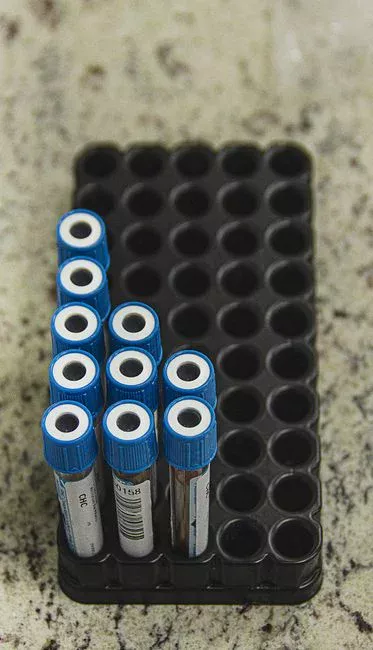
The standard BOD5 test uses 300 mL incubation bottles filled with buffered dilution water, dosed with seed microorganisms, and stored for 5 days in a dark room at 20°C to suppress photosynthetic oxygen production. Dissolved oxygen is measured before and after, and the difference, scaled by the dilution factor, gives BOD5 in mg O2/L. The protocol also requires dilution-water blanks, glucose-glutamic acid (GGA) controls, and seed controls to verify the seed is alive and the dilution water is clean (per the standard BOD5 reference protocol).
For carbonaceous-only measurements, a nitrification inhibitor (typically allylthiourea, ATU) is added after the dilution water so ammonia oxidation does not inflate the result. Without the inhibitor, a sample with high TKN will show a rising BOD5 curve after day 5 as nitrifiers establish, and the 5-day number will understate true cBOD. That is the single most common reason a plant's effluent "looks fine on paper" but its receiving water is still oxygen-starved.
BOD5 has real limits. It needs skilled operators, a 5-day turnaround, and controlled seeding, and reproducibility drops sharply after day 5 as nitrifier populations drift. That lag is the engineering case for rapid surrogate sensors. A 2026 polypyrrole-ferrocene-biofilm electrode achieved a linear range of 4–600 mg O2/dm3, a ~5-minute response, 6% RSD, and R2 = 0.9828 against the standard BOD5 method on real surface waters. The same ternary anode in a 3D-printed microbial fuel cell removed 89% of COD and 92% of BOD from domestic wastewater while generating 2.0 mW·m⁻² (per Bioelectrochemistry, 2026).
BOD Removal Methods: From Pre-Treatment to Polishing
Process selection is the single biggest decision an industrial buyer makes, so the table below pulls the realistic BOD removal ranges and typical effluent bands into one place. The head-to-head format is what a design engineer can hand to a procurement team without further translation.
Pre-treatment is the load-shed step. A DAF pre-treatment system removes FOG, colloidal solids, and a portion of the particulate BOD before the biological reactor, which offloads the aeration tank and stabilizes downstream biology. Conventional activated sludge (CAS) remains the baseline: 85% BOD removal, 30-day average effluent below 30 mg/L, 7-day average below 45 mg/L (per the standard BOD5 reference protocol).
For tighter effluent, an MBR membrane bioreactor with submerged PVDF membranes at <1 μm pore size consistently delivers 10–20 mg/L BOD5 at roughly one-third the footprint of CAS because biomass can be held at 8,000–12,000 mg/L instead of 2,000–4,000 mg/L. Pairing the basin with DF series flat sheet MBR modules keeps the membrane cassette accessible for in-place cleaning, which is what makes the footprint work in practice. SBR systems run in batch mode — fill, react, settle, decant — and land near or below 20 mg/L BOD5 at small-to-mid industrial flows; a recent design guide on SBR design for high-strength industrial BOD walks through the F/M and decant logic for a real amino-acid case. Constructed wetlands are the low-energy polish for sites with land available, dropping residual BOD below 10 mg/L for reuse or sensitive surface discharges.
| Process | Typical BOD removal | Effluent BOD5 band | Best fit |
|---|---|---|---|
| DAF (pre-treatment) | 30–60% (FOG + particulate) | Effluent not discharged alone | Load-shed before biology |
| Conventional activated sludge | ~85% | <30 mg/L (30-day avg) | Municipal / large industrial baseline |
| MBR | 95–99% | 10–20 mg/L | Tight limits, small footprint |
| SBR | 90–95% | ≤20 mg/L | Small/mid flows, batch operation |
| Constructed wetlands | 60–85% | <10 mg/L (after preceding step) | Land-rich tertiary polish |
| MFC (research-stage) | 92% BOD, 89% COD | Lab-scale only | Emerging, not commercial |
Designing a BOD Reduction System: Key Parameters
Process choice sets the ceiling; the design parameters set whether you actually hit it. The food-to-microorganism (F/M) ratio is the master control knob for activated sludge, and conventional systems run at roughly 0.2–0.5 kg BOD per kg MLSS per day. Push F/M above that band and effluent BOD climbs as biomass cannot keep up; drop it too low and you waste aeration energy and risk pinpoint floc. MBR systems run higher MLSS and therefore tolerate higher F/M without losing effluent quality.
Nutrient balance is the second lever. A target BOD:N:P ratio of about 100:5:1 keeps heterotrophs and nitrifiers supplied without leaving residual ammonia or phosphate that would trigger a separate compliance problem. Industrial streams that are high in BOD but low in nitrogen — typical of carbohydrate-heavy food waste — often need ammonia supplementation, while streams already rich in TKN (textile, some chemical waste) may need supplemental carbon for complete denitrification downstream.
Hydraulic retention time (HRT) sits around 6–8 hours for CAS and 4–6 hours for MBR, and sludge age (SRT) is what locks in nitrification. Longer SRT retains slow-growing nitrifiers and pushes effluent BOD lower, at the cost of larger aeration tanks and more mixed-liquor pumping. An A/O package plant bakes a 100:5:1 stoichiometry and a fixed SRT into a buried skid, which is the right starting point for flows under ~50 m³/d where civil works dominate cost.
2026 BOD Effluent Limits Around the World
Compliance is the only number that matters at the end of a design, and the targets diverge sharply by jurisdiction. The U.S. EPA secondary treatment regulation under 40 CFR 133 requires 85% BOD removal with a 30-day average below 30 mg/L and a 7-day average below 45 mg/L; "treatment equivalent to secondary treatment" is the lower bar of 65% removal, 30-day average below 45 mg/L, and 7-day average below 65 mg/L (per the standard BOD5 reference protocol). Industrial discharges to a POTW are typically capped at 250–300 mg/L BOD5 under 40 CFR 403, so the design target at the sewer manhole is very different from the target at the surface-water outfall.
The EU's Urban Waste Water Treatment Directive (91/271/EEC) generally requires BOD5 at or below 25 mg/L at sensitive discharge points, and tighter values apply where the receiving water is designated sensitive under the directive. China's GB 18918-2002 sets the strictest municipal tier (Grade 1A) at BOD5 ≤10 mg/L, which is the benchmark many Asian industrial plants now target for either reuse or surface discharge. For buyers working through real-world permit hits, the 2026 BOD pretreatment compliance examples from Jacksonville pulp & paper plants show how influent strength and local limits interact in practice. A broader 2026 industrial wastewater system comparison covers how the limits map to complete treatment trains across sectors.
| Jurisdiction | Standard / tier | BOD5 limit | Removal target |
|---|---|---|---|
| U.S. EPA secondary | 40 CFR 133 | 30 mg/L (30-day avg), 45 mg/L (7-day avg) | 85% |
| U.S. EPA equivalent to secondary | 40 CFR 133 | 45 mg/L (30-day avg), 65 mg/L (7-day avg) | 65% |
| U.S. POTW pretreatment (typical) | 40 CFR 403 | 250–300 mg/L to sewer | Set locally |
| EU UWWTD (sensitive areas) | 91/271/EEC | ≤25 mg/L | 70–90% |
| China GB 18918-2002 | Grade 1A | ≤10 mg/L | Tightest tier |
| China GB 18918-2002 | Grade 1B | ≤20 mg/L | Standard reuse |
Frequently Asked Questions
What is BOD in water treatment?
BOD (biochemical oxygen demand) is the amount of dissolved oxygen consumed by aerobic bacteria as they break down organic matter in a water sample, measured by the standard BOD5 test over 5 days at 20°C in 300 mL bottles, and expressed in mg O2/L.
What is the difference between BOD and COD?
BOD measures the oxygen demand driven by living microbes over 5 days, while COD measures the total chemical oxidant demand and captures organics that biology cannot break down. BOD is normally lower than COD; if BOD approaches or exceeds COD, the effluent is likely toxic to the seed bacteria.
What is a good BOD level for treated wastewater?
Standard secondary treatment targets 20–30 mg/L BOD5 in the effluent, while reuse-quality or surface-discharge applications typically need <10 mg/L BOD5, achievable with MBR or a constructed-wetland polish on top of conventional biology.
How can BOD be reduced quickly?
The fastest gains come from pre-treating the stream with a DAF unit to strip FOG and particulate BOD, then polishing the biological step with an MBR or SBR to land at <20 mg/L BOD5 — a typical train for high-strength industrial flows.
What is the BOD limit for industrial discharge?
Industrial discharges to a U.S. sewer are usually capped at 250–300 mg/L BOD5 under 40 CFR 403 local limits, while surface-discharge permits are far tighter: ≤25 mg/L under the EU UWWTD for sensitive areas, and ≤10 mg/L under China GB 18918-2002 Grade 1A.